Artwork
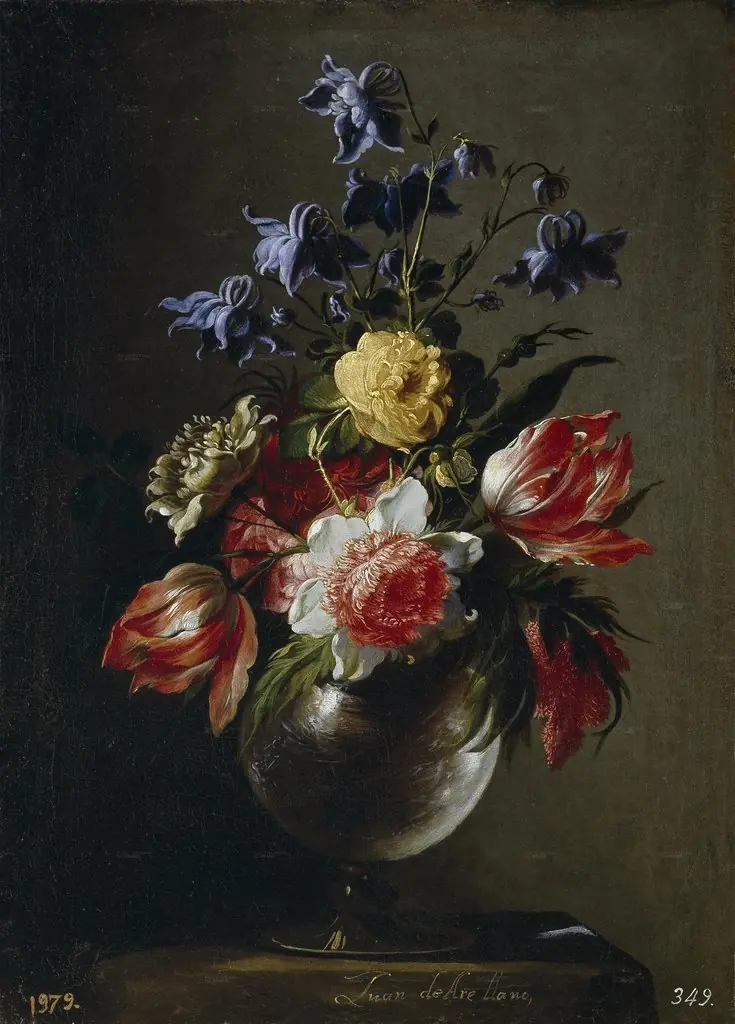
Flowers in a Glass Vase
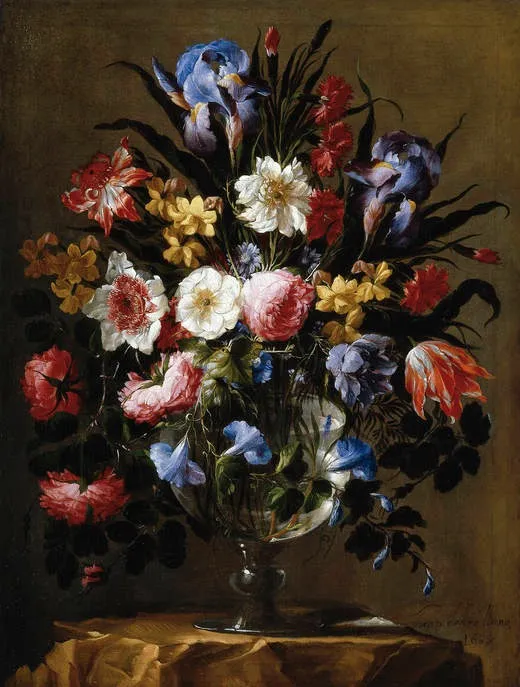
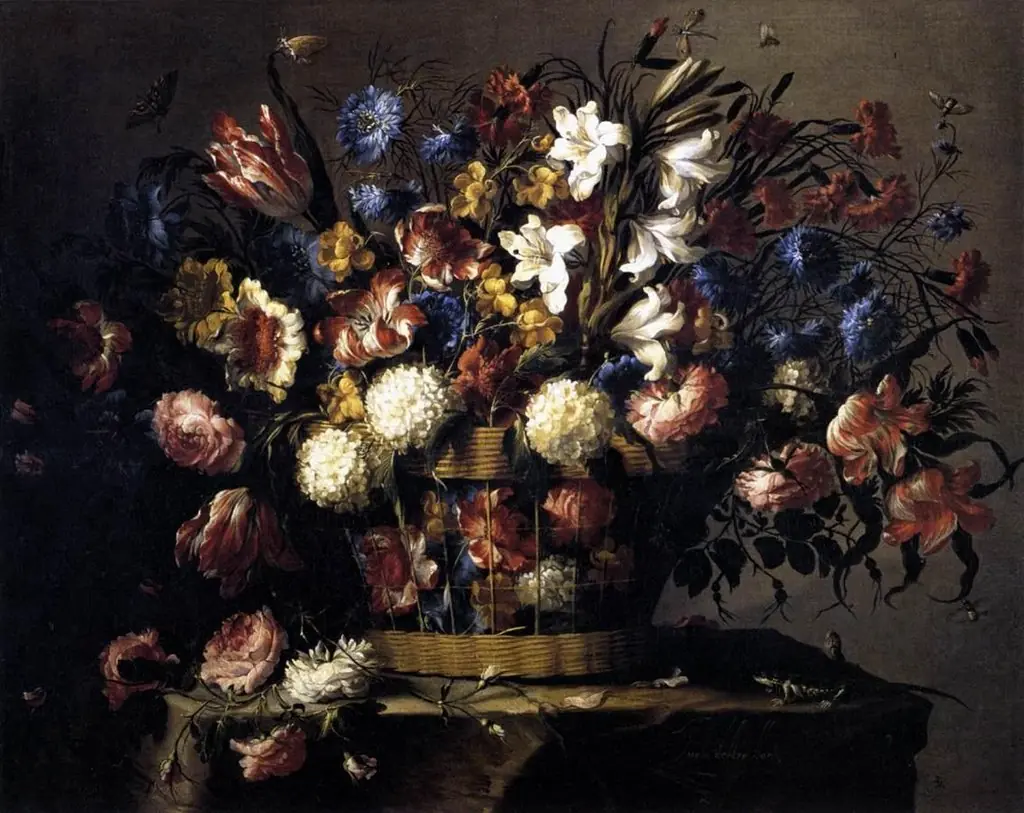
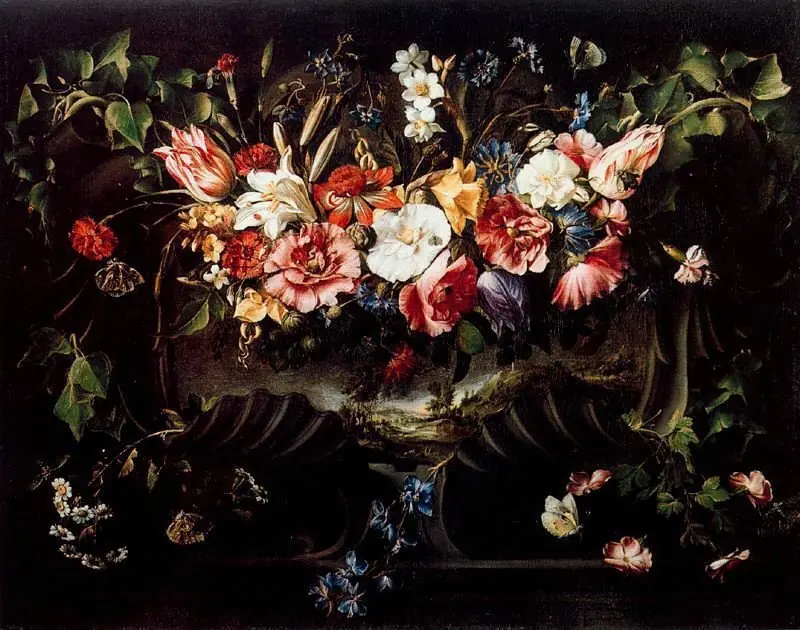
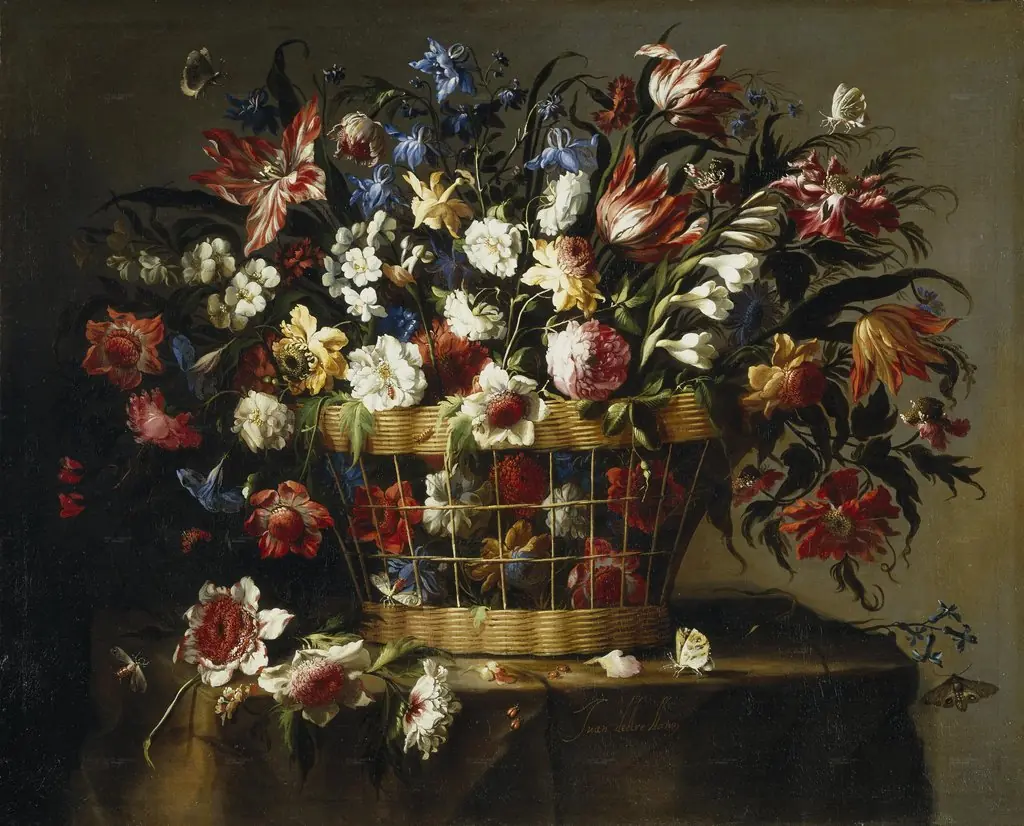
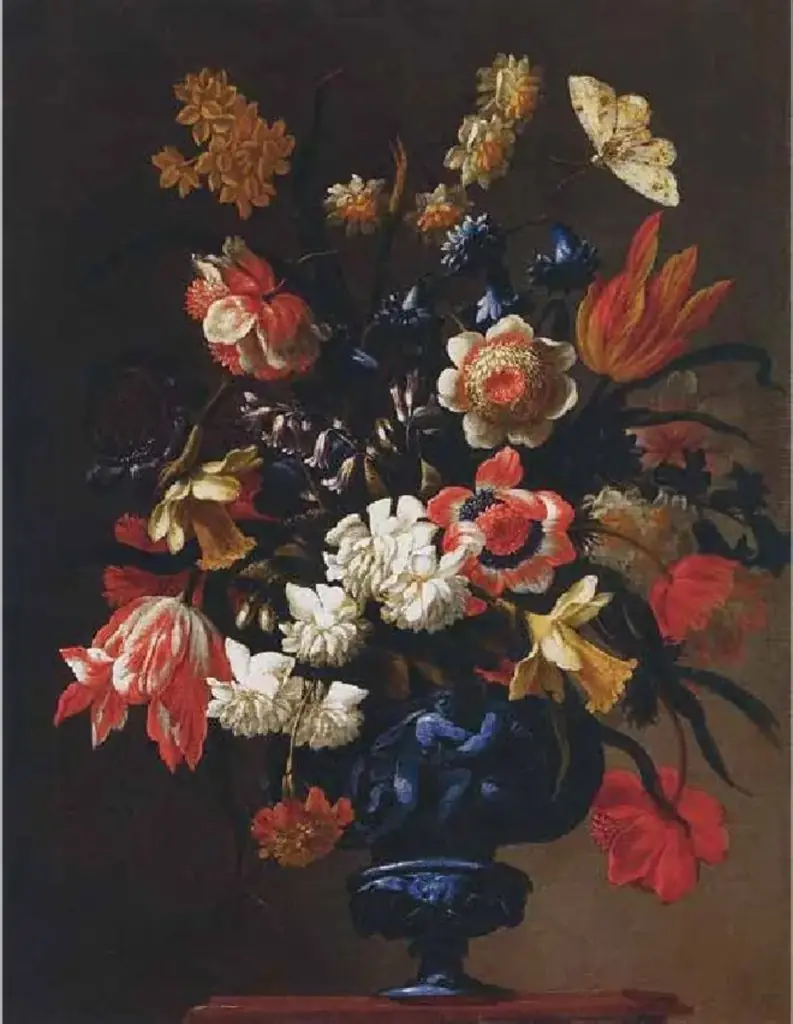
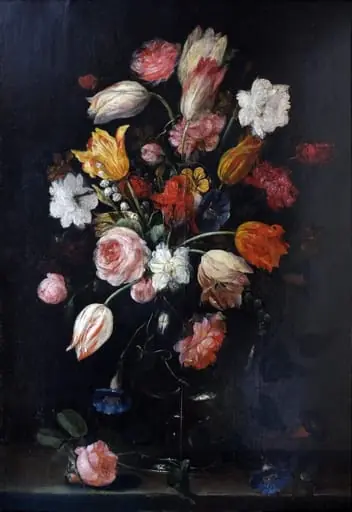
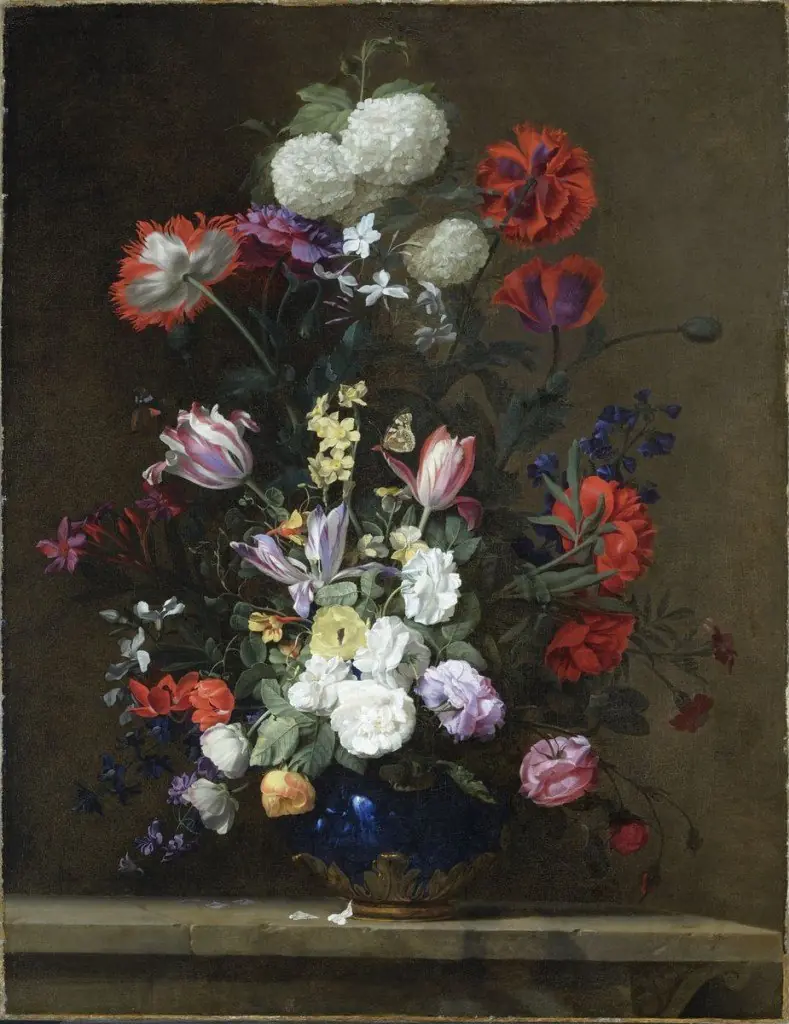
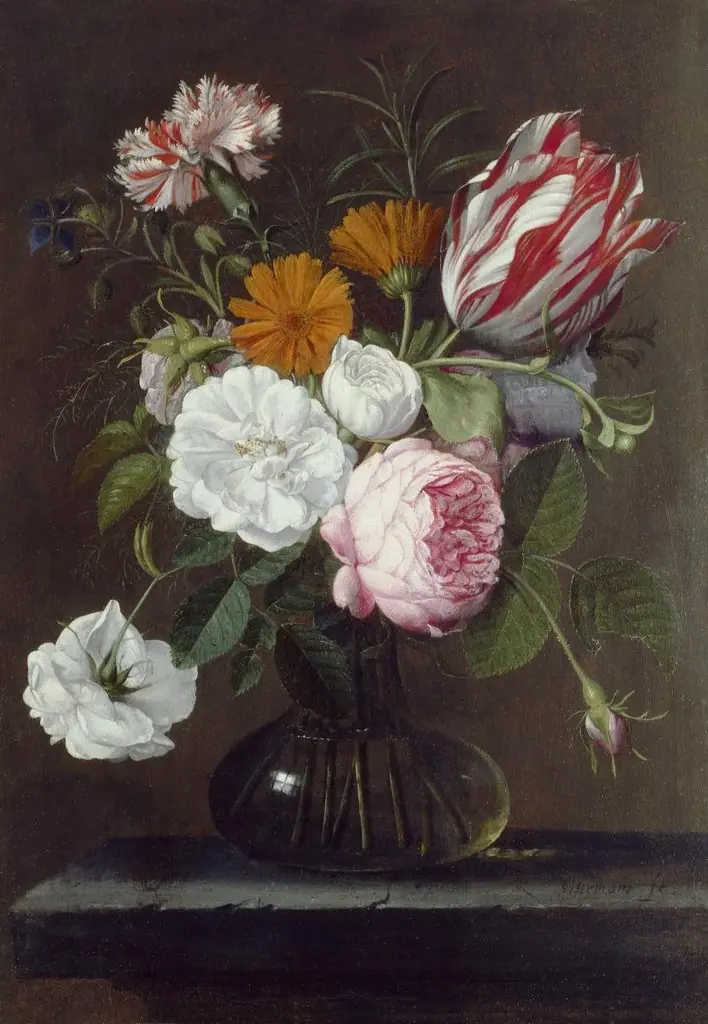
Flowers in a Glass Vase is an oil painting by the Early Baroque Italian artist Juan de Arellano. It dates from 1668 and is held in the collection of the Museo del Prado.
About this work
Overview
The composition reflects the Spanish Baroque tradition of meticulous naturalism, emphasizing botanical detail and the interplay of light on petals and glass.
Painted in 1668 by Spanish artist Juan de Arellano, this oil-on-canvas still life depicts a glass vase brimming with a lush arrangement of seasonal blooms. The composition reflects the Spanish Baroque tradition of meticulous naturalism, emphasizing botanical detail and the interplay of light on petals and glass. It resides in the Museo del Prado, where it exemplifies the period’s fascination with transient beauty and material richness.
Subject & Meaning
The painting presents a dense bouquet of multicolored flowers—pink, white, yellow, red, and blue—spilling from a clear, wide-mouthed vase onto a dark cloth. Each bloom is rendered with precision, suggesting both abundance and impermanence. Such arrangements often carried symbolic weight in Baroque art, hinting at the fleeting nature of life and the divine order in nature’s variety.
Technique & Style
Arellano employed fine brushwork to capture the translucency of glass, the velvety texture of petals, and the delicate curvature of stems. The dark, neutral background isolates the flowers, heightening their chromatic vibrancy. His technique aligns with Flemish and Italian influences, yet his attention to local flora and restrained composition reflect a distinctly Spanish approach to still life painting of the era.
History & Provenance
Created in 1668, the painting entered the Spanish royal collection and was later transferred to the Museo del Prado upon its founding. Its continuous presence in state holdings suggests it was valued by contemporary patrons. Arellano, active in Madrid, was commissioned by aristocratic circles, and this work likely served as a decorative object reflecting both aesthetic taste and social status.
Context
In mid-17th century Spain, still life painting gained prominence as religious themes dominated public art. Floral works like this one offered a secular yet morally inflected alternative, appealing to collectors who appreciated natural observation and refined craftsmanship. Arellano’s output contributed to a niche tradition where botany and art converged under the patronage of the Habsburg court.
Legacy
Arellano’s floral compositions helped define Spanish still life in the Baroque period. While less widely known than his Flemish contemporaries, his precise rendering of flowers influenced later Spanish painters. *Flowers in a Glass Vase* remains a key example of how domestic beauty was elevated through careful observation, preserving a quiet moment of natural splendor for posterity.
Artist & collection
Artist
Juan de Arellano (3 August 1614 – 13 October 1676) was a Spanish painter of the Baroque era who specialized in floral still life paintings.