Artwork
Kreuztragung Christi
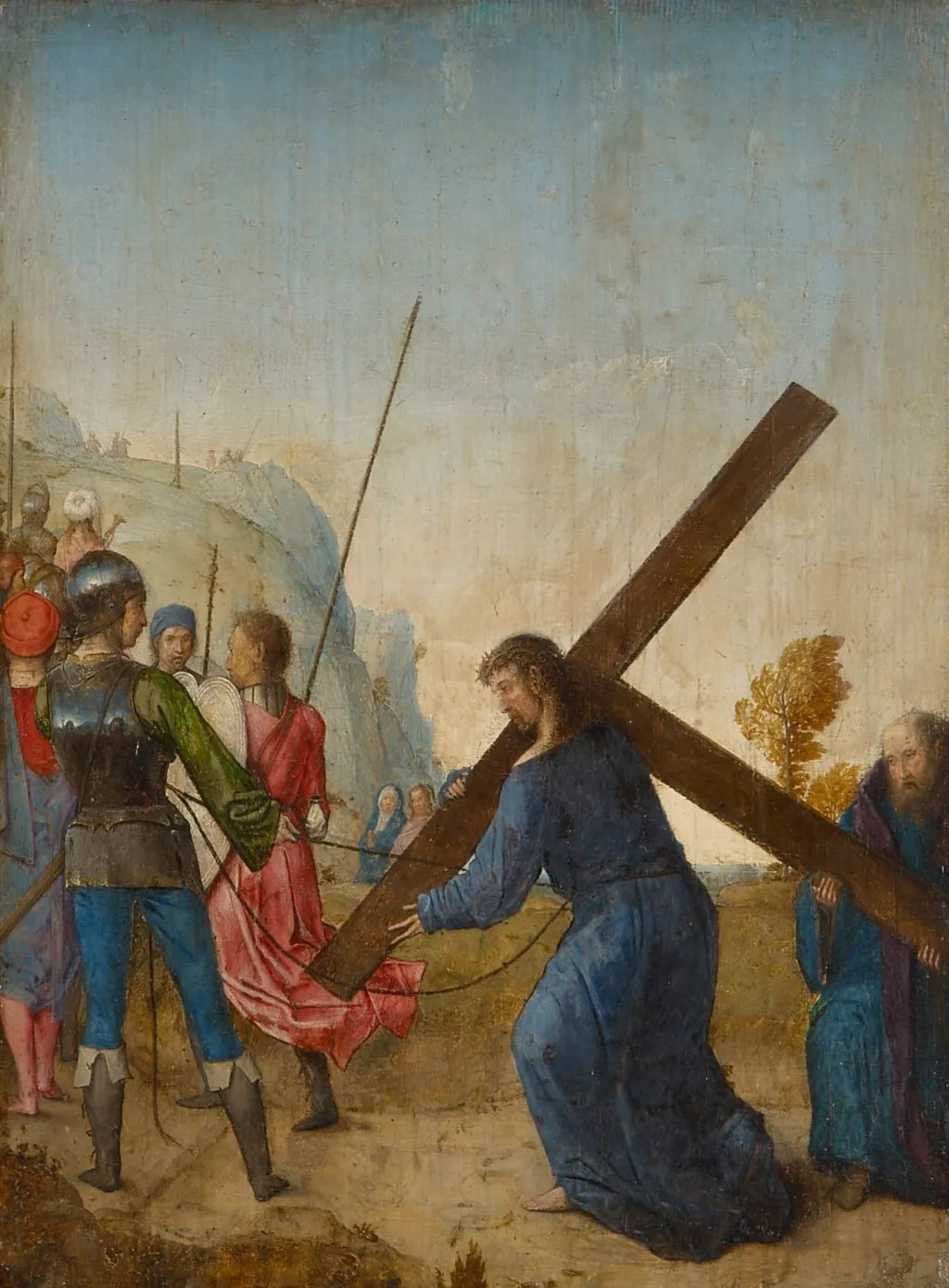
Kreuztragung Christi is an oil painting by the Northern Renaissance artist Juan de Flandes. It dates from 1500 and is held in the collection of the Kunsthistorisches Museum.
About this work
Overview
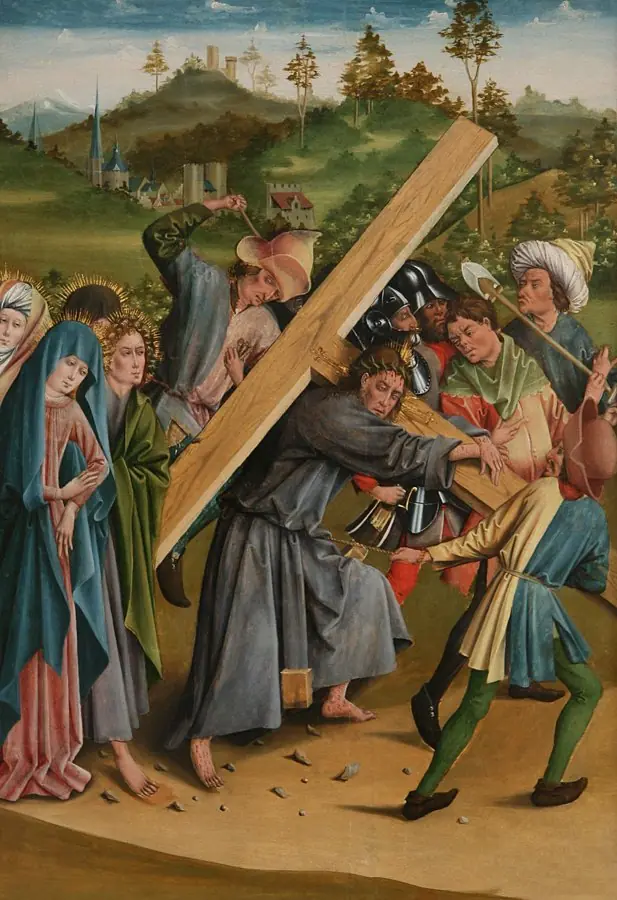
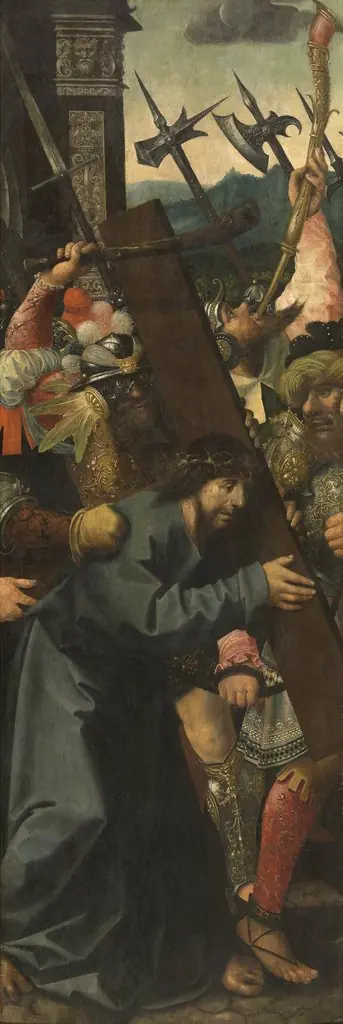
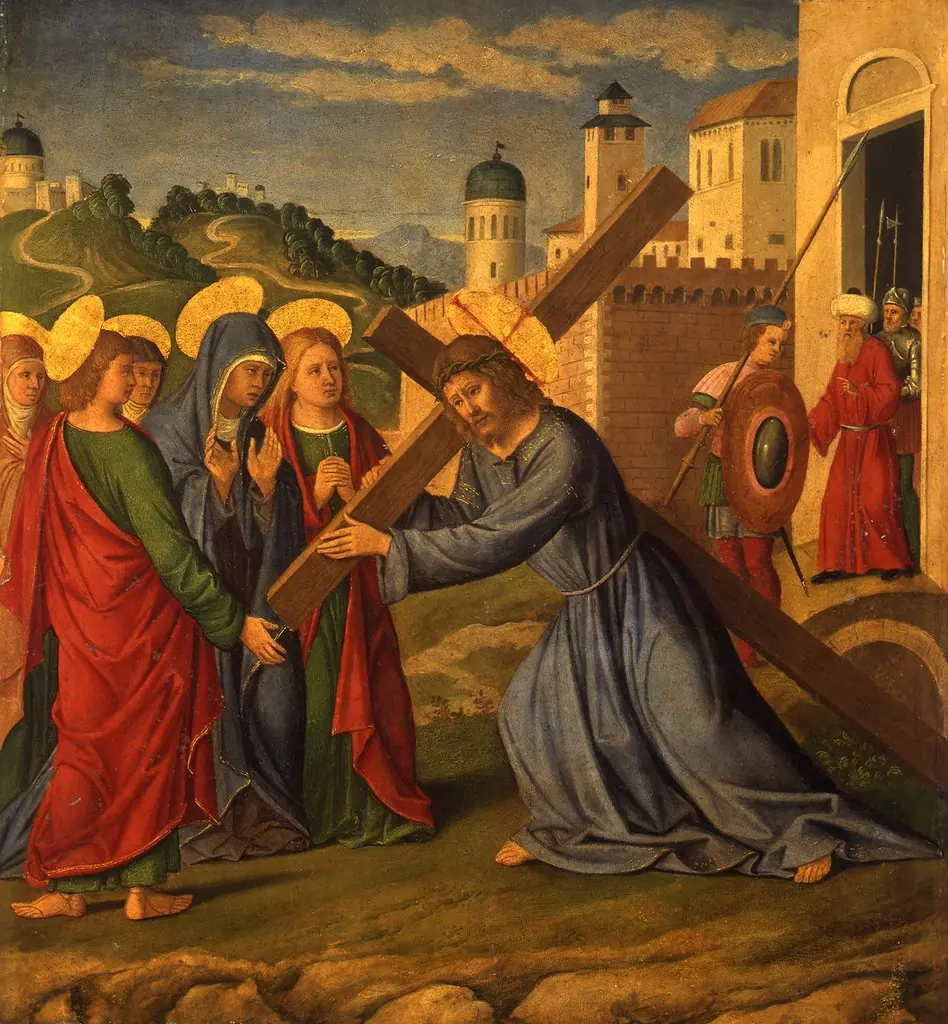
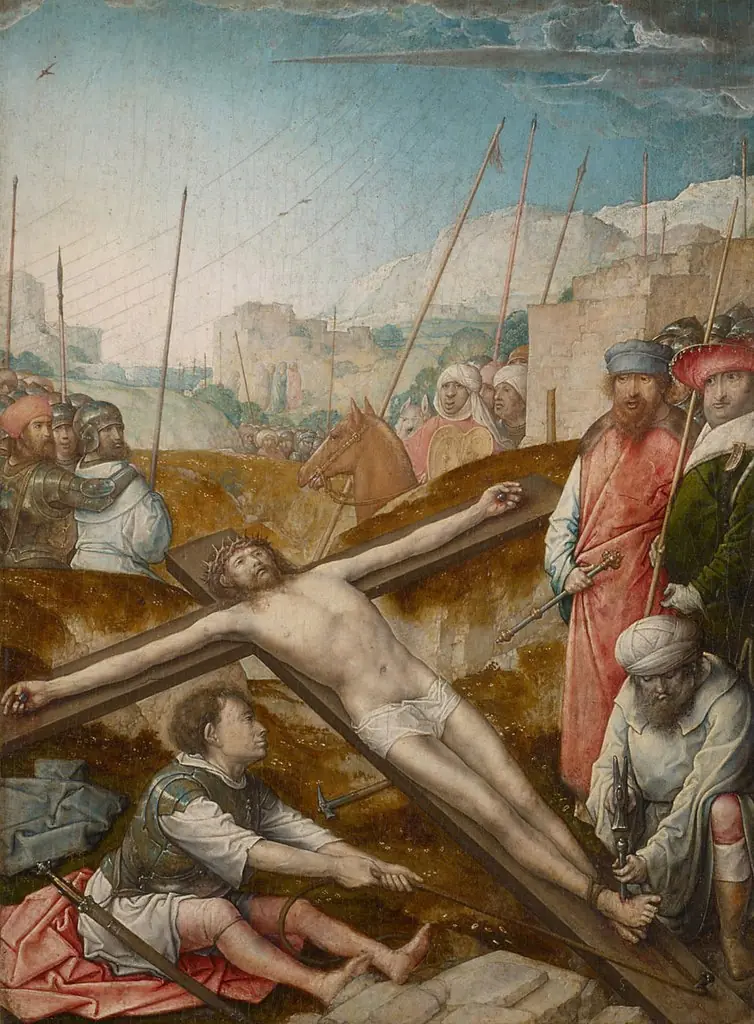
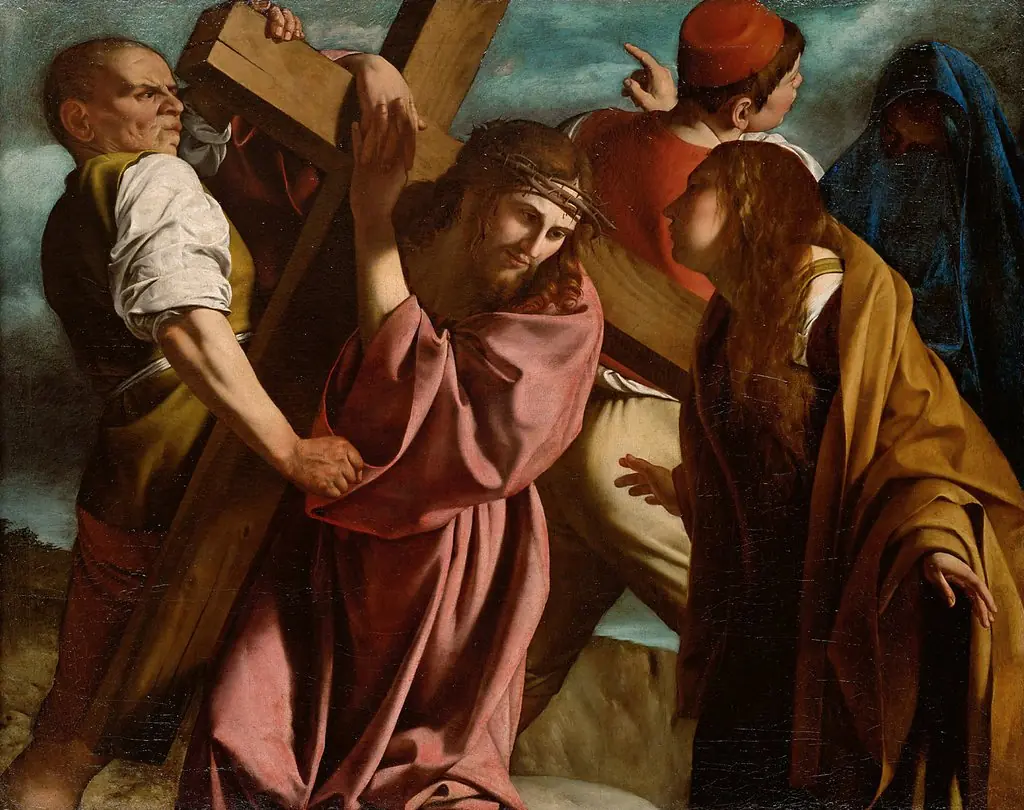
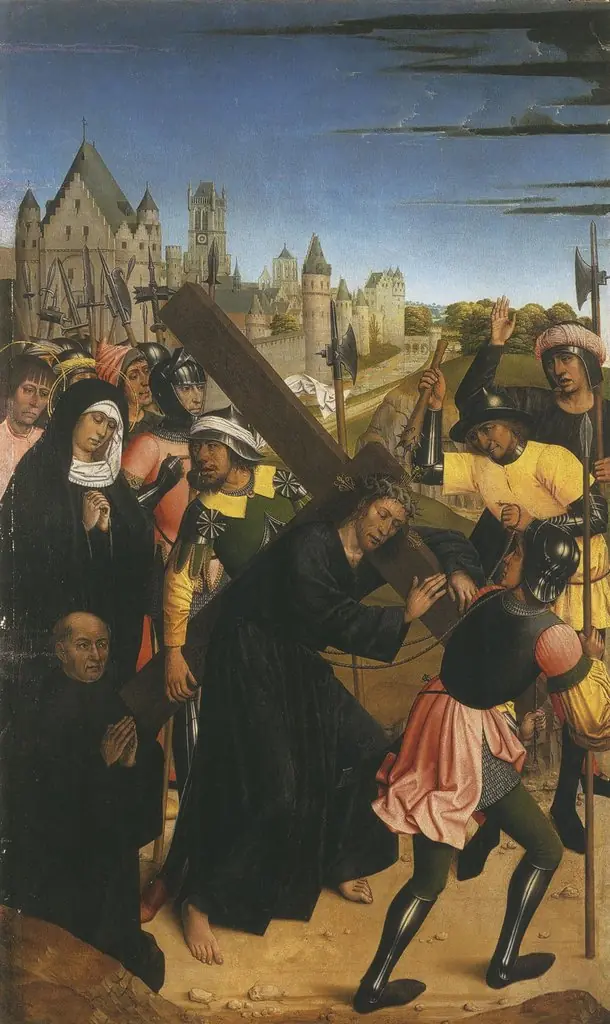
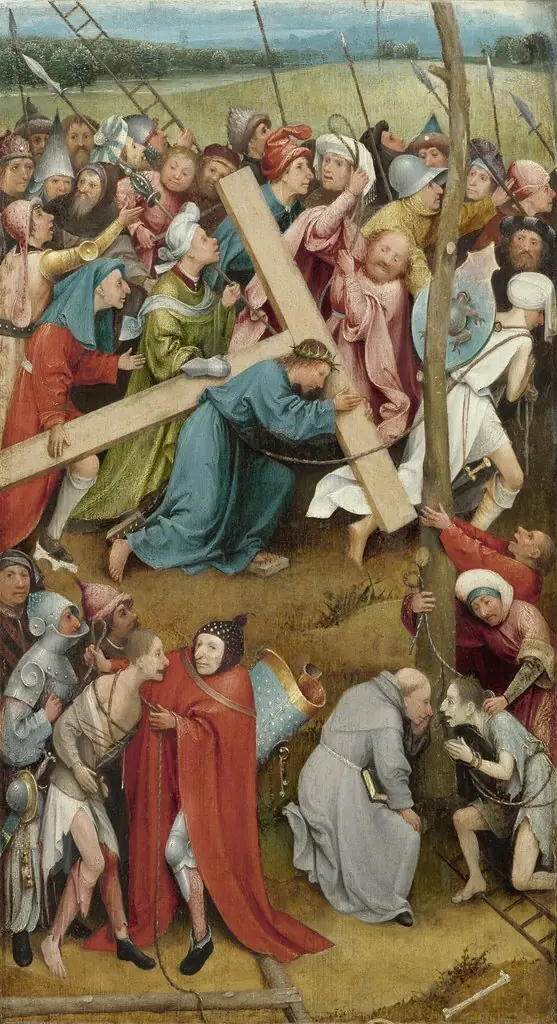
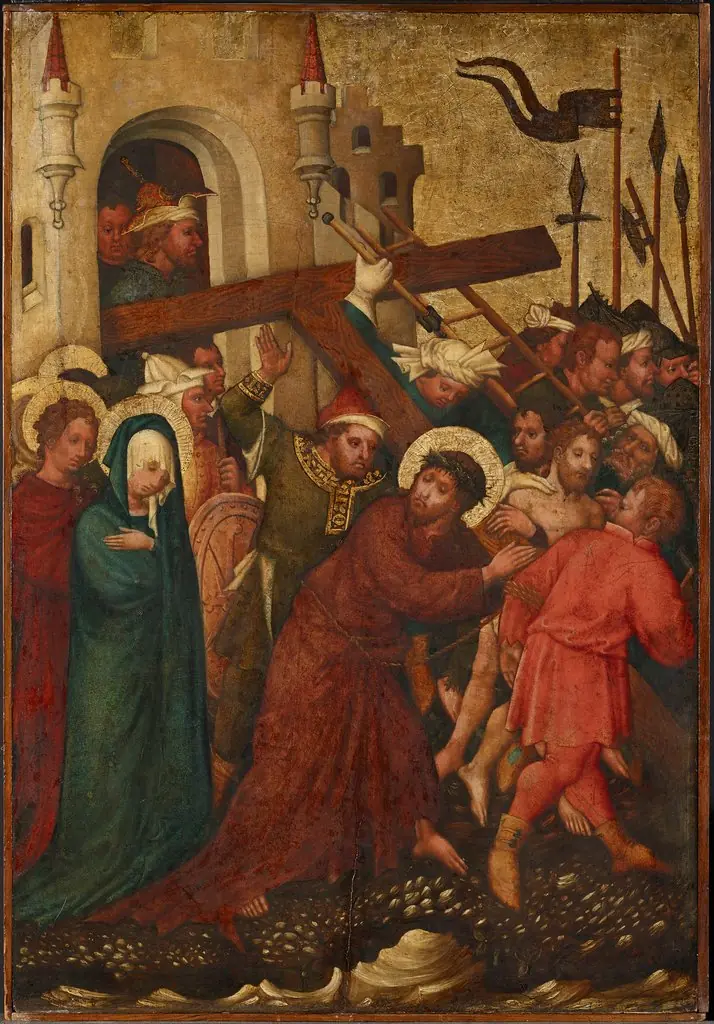
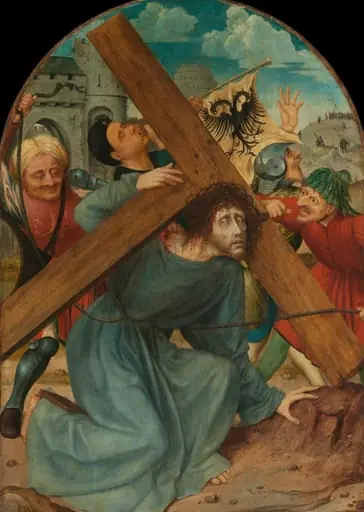
Juan de Flandes’ oil painting titled *Kreuztragung Christi* dates from around 1500 and is part of the collection of the Kunsthistorisches Museum. The work presents a compact, narrative scene of the crucifixion episode, focusing on the physical burden of the cross‑bearer and the surrounding figures who assist or direct him.
Subject & Meaning
The central figure is a weary man, identified as Jesus Christ, struggling under a massive wooden cross. Flanking him are three attendants: a soldier in armor, a man in a red robe, and a bearded figure clothed in blue. Their presence underscores the collective involvement in the Passion narrative, emphasizing both suffering and the ordered procession toward Calvary.
Technique & Style
Executed in oil on panel, the composition relies on flat, vivid coloration rather than the deep chiaroscuro typical of later Renaissance works. Shapes are rendered with clear outlines, and the limited tonal range creates a stylized, almost graphic effect. The sky is rendered in a pale blue, while the earth is depicted with rough, earthy tones and a solitary tree on a distant hill.
History & Provenance
Created at the turn of the sixteenth century, the painting entered the holdings of the Kunsthistorisches Museum, where it remains on display. Its attribution to Juan de Flandes, a Flemish painter active in Spain, aligns with the artist’s known output of devotional images for courtly patrons.
Context
The work reflects the devotional practices of the early 1500s, when visual representations of the Passion were employed to foster personal contemplation. Juan de Flandes, trained in the Northern Renaissance tradition, adapts that visual language to a Spanish court context, merging detailed figure work with a simplified, symbolic landscape.
Artist & collection