Artwork
Christ Nailed to the Cross
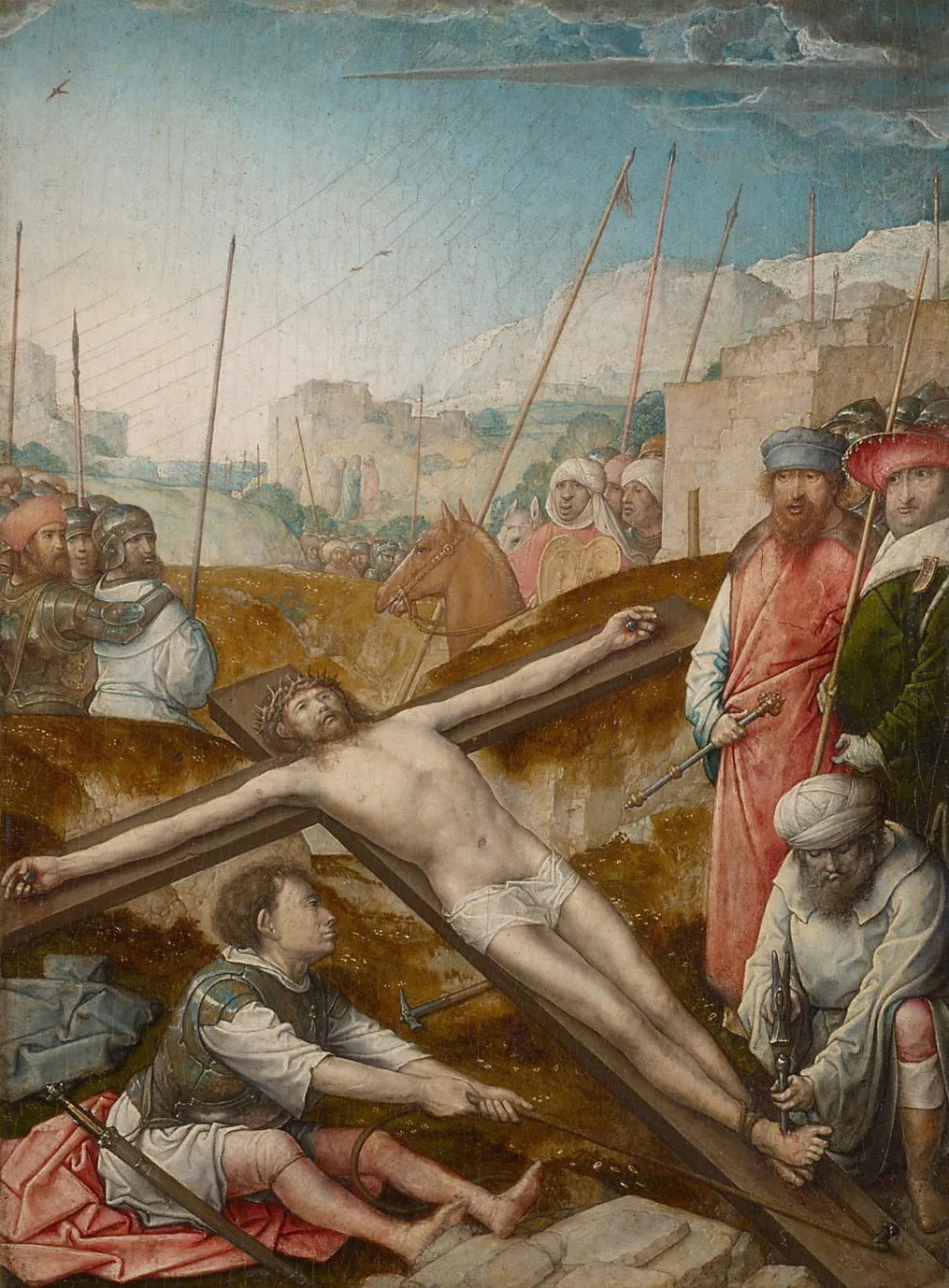
Christ Nailed to the Cross is an oil painting by the Northern Renaissance artist Juan de Flandes. It dates from 1500 and is held in the collection of the Kunsthistorisches Museum.
About this work
Overview
Christ Nailed to the Cross is an oil painting completed around 1500 by Juan de Flandes, a Netherlandish artist active in Spain.
Christ Nailed to the Cross is an oil painting completed around 1500 by Juan de Flandes, a Netherlandish artist active in Spain. It depicts a moment from the Passion narrative with restrained emotional intensity. The work is part of a larger altarpiece commissioned for a Spanish religious institution and is now held in the Kunsthistorisches Museum in Vienna, where it remains one of the few surviving panels from the original set.
Subject & Meaning
The scene captures Christ, stripped and crowned with thorns, being hoisted onto the cross by two Roman soldiers. His weary expression and limp posture convey suffering without theatricality. Surrounding figures—soldiers in armor, onlookers in clerical robes—observe in silence, emphasizing the solemnity of the moment. The composition avoids overt drama, instead inviting contemplation of Christ’s humanity and the quiet brutality of his execution.
Technique & Style
Juan de Flandes employs fine brushwork characteristic of Early Netherlandish painting, with meticulous attention to textures—fabric folds, metal armor, and skin tones. The palette is muted, dominated by earthy browns, deep reds, and cool blues, punctuated by small areas of vivid color like red hats to guide the viewer’s eye. The spatial depth is subtly suggested through layered landscapes and atmospheric perspective, blending Flemish precision with Spanish devotional restraint.
History & Provenance
The painting was originally one of several panels in a polyptych commissioned for the convent of Santa Clara in Palencia, Spain. It remained in Spanish religious collections until the 19th century, when it entered the Habsburg imperial collection. Its transfer to Vienna coincided with the broader dispersal of Spanish ecclesiastical art during secularization, and it has been in the Kunsthistorisches Museum since the early 1800s.
Context
Created during the late Gothic period, the work reflects the fusion of Northern European techniques with Spanish religious sensibilities. Juan de Flandes, trained in the Low Countries, adapted his style for Spanish patrons who favored quiet piety over flamboyance. The painting’s intimate scale and emotional restraint align with devotional practices of the time, where personal meditation on Christ’s suffering was encouraged among monastic communities.
Legacy
Though not widely known outside specialist circles, the painting exemplifies the quiet power of Northern Renaissance religious art in Spain. Its influence is seen in later Spanish devotional works that prioritize emotional subtlety over spectacle. As a surviving fragment of a lost altarpiece, it offers insight into the collaborative nature of early 16th-century religious art production and the cross-cultural exchange between Flanders and the Iberian Peninsula.
Artist & collection



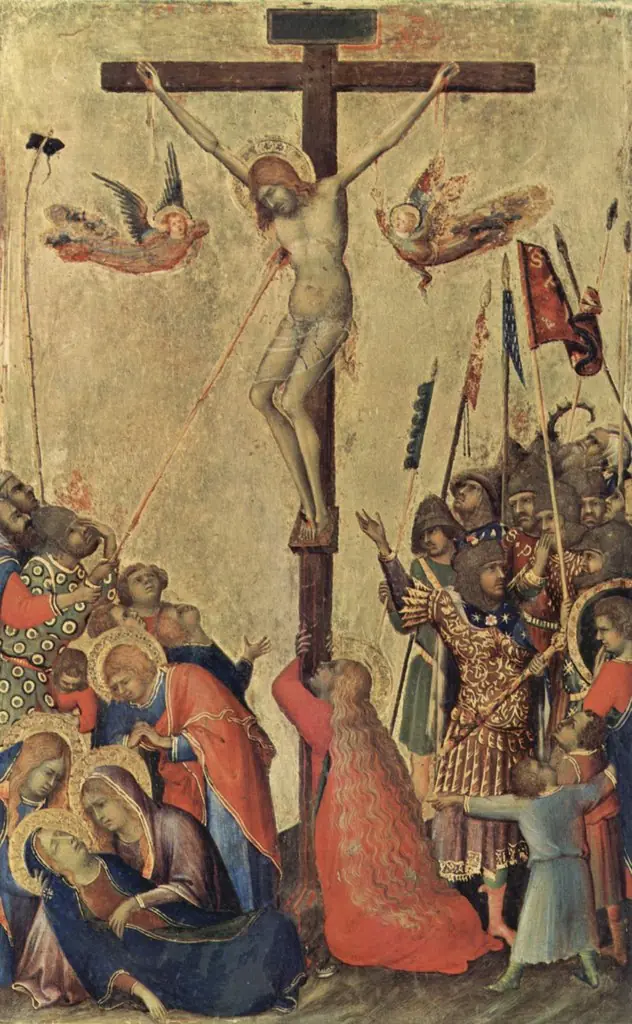 Christ on the Cross
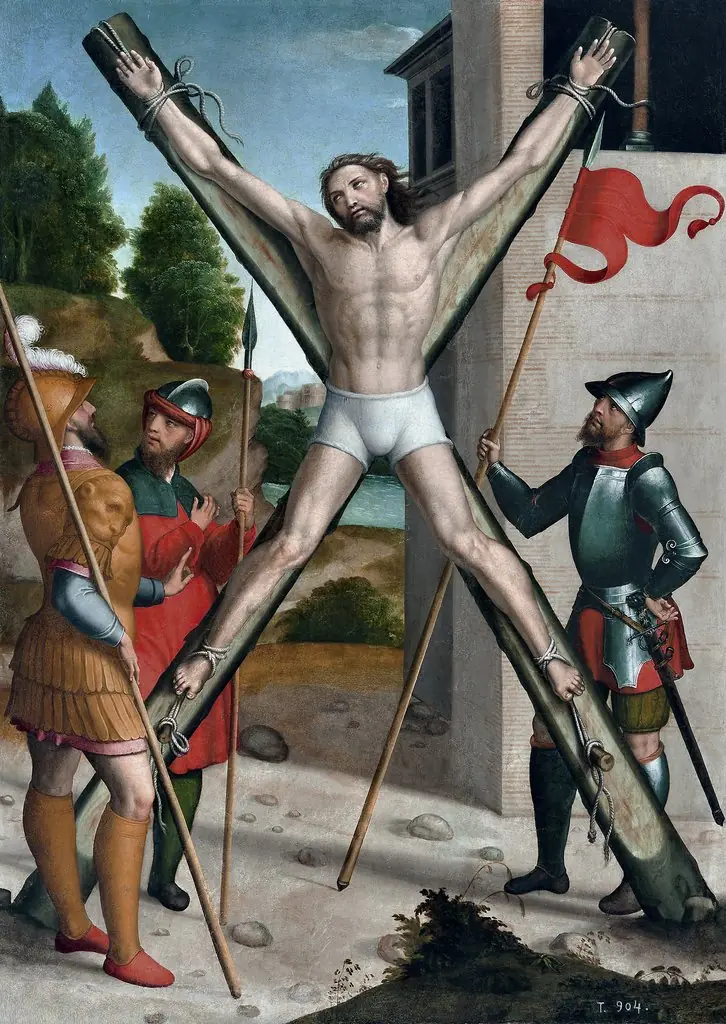 Martirio de San Andrés
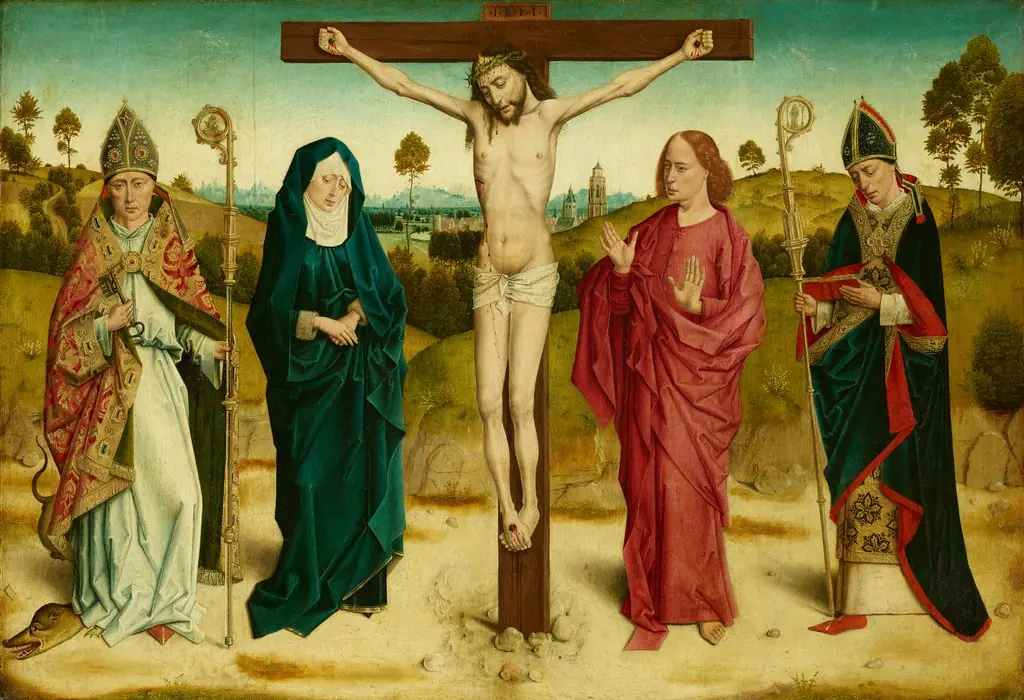 Christ crucified between Mary and John the Evangelist and the saints Adolphus and Ambrosius
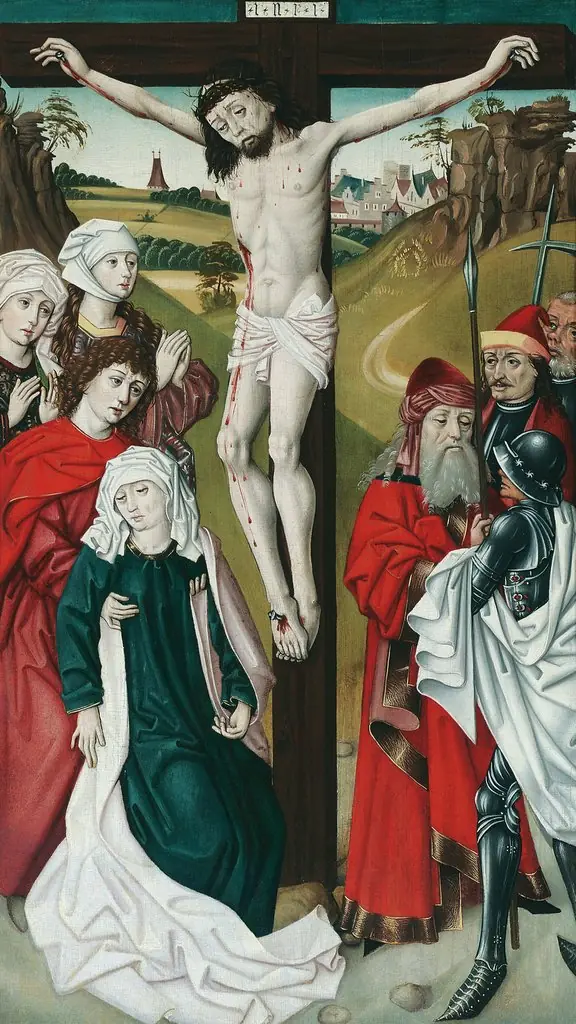 Kreuzigung Christi
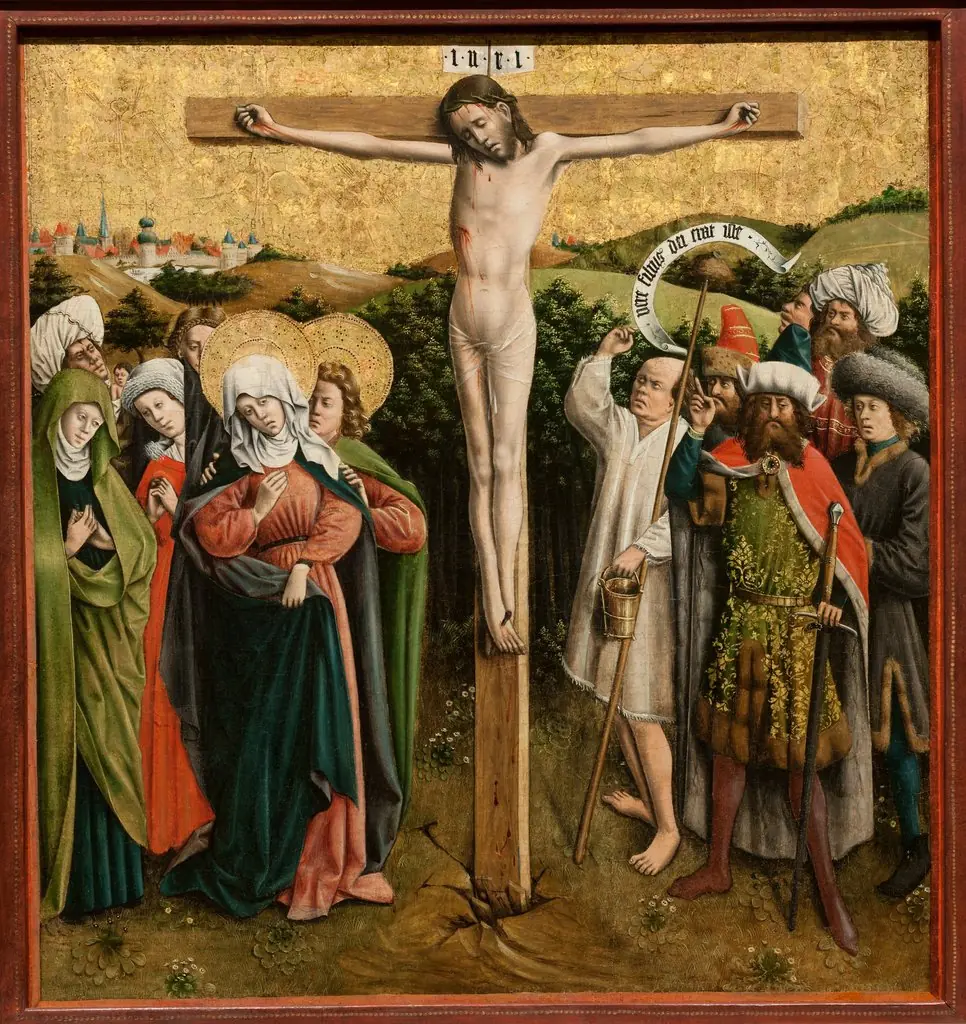 Altarpiece with The Passion of Christ
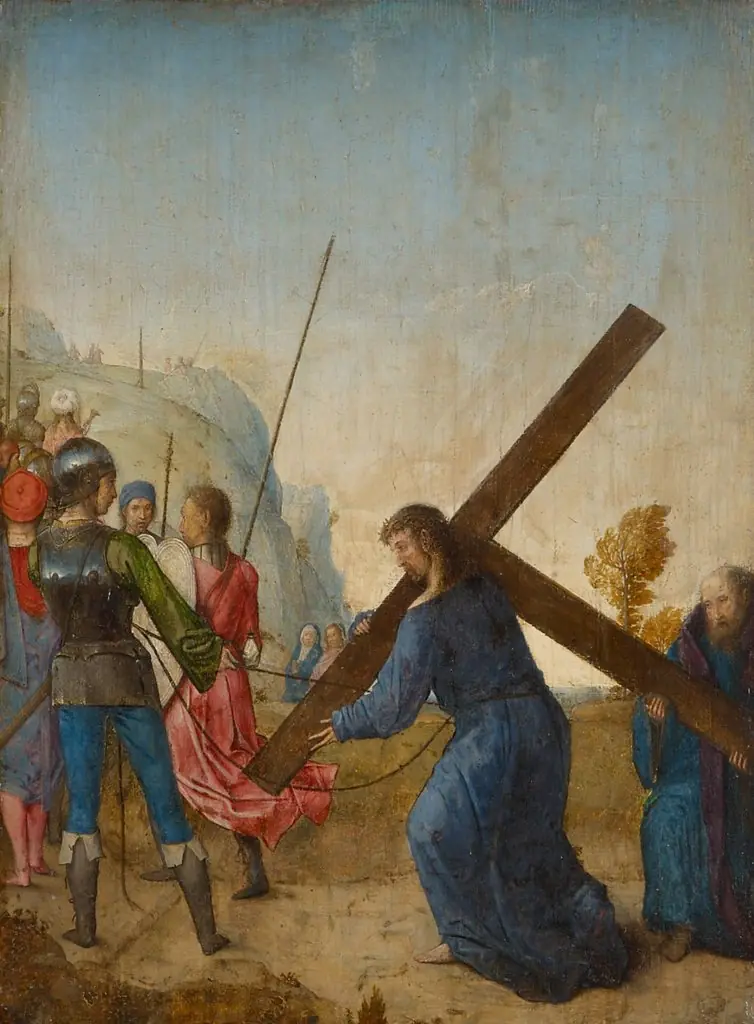 Kreuztragung Christi
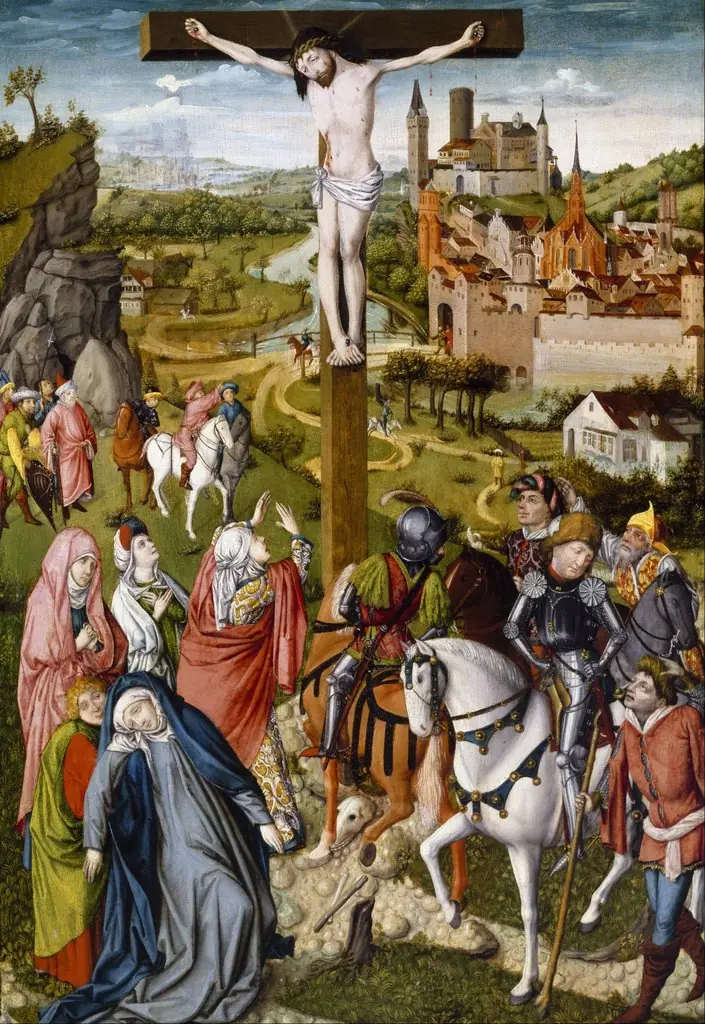 Crucifixion
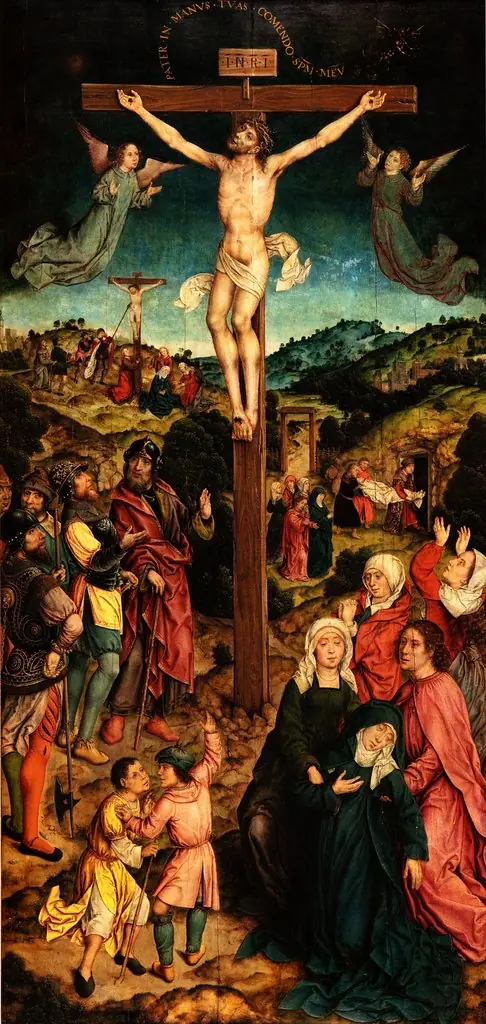 Crucifixion
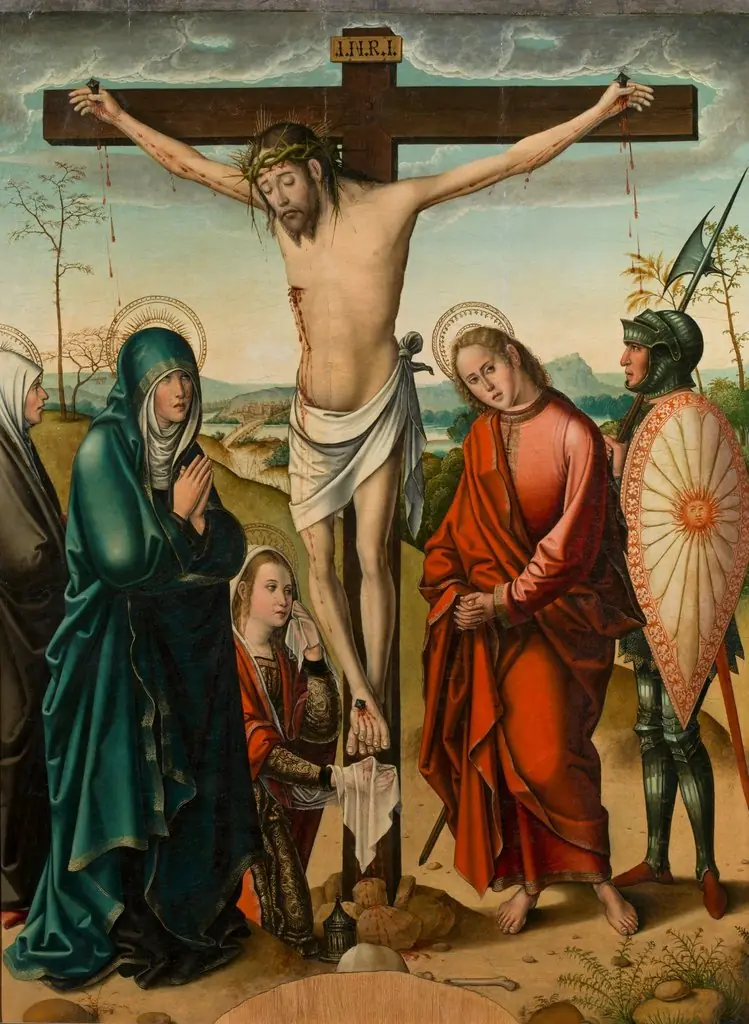 Crucifixión
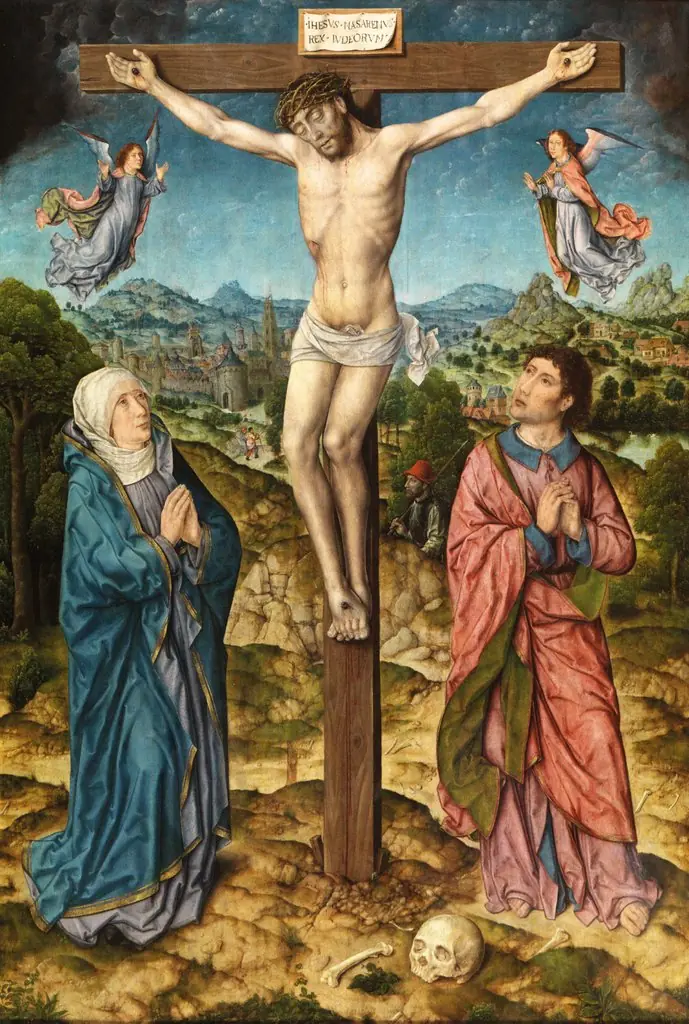 The Crucifixion
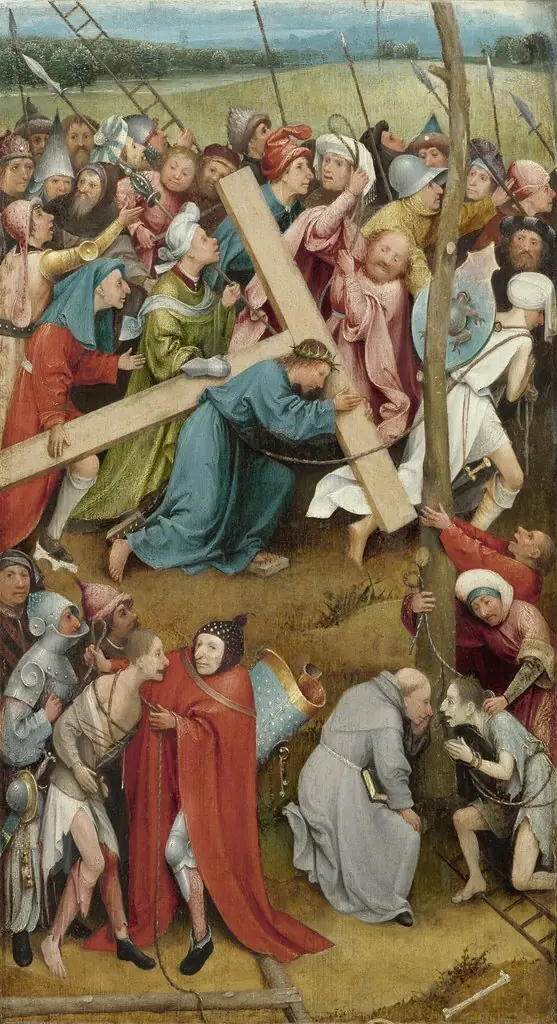 Christ Carrying the Cross
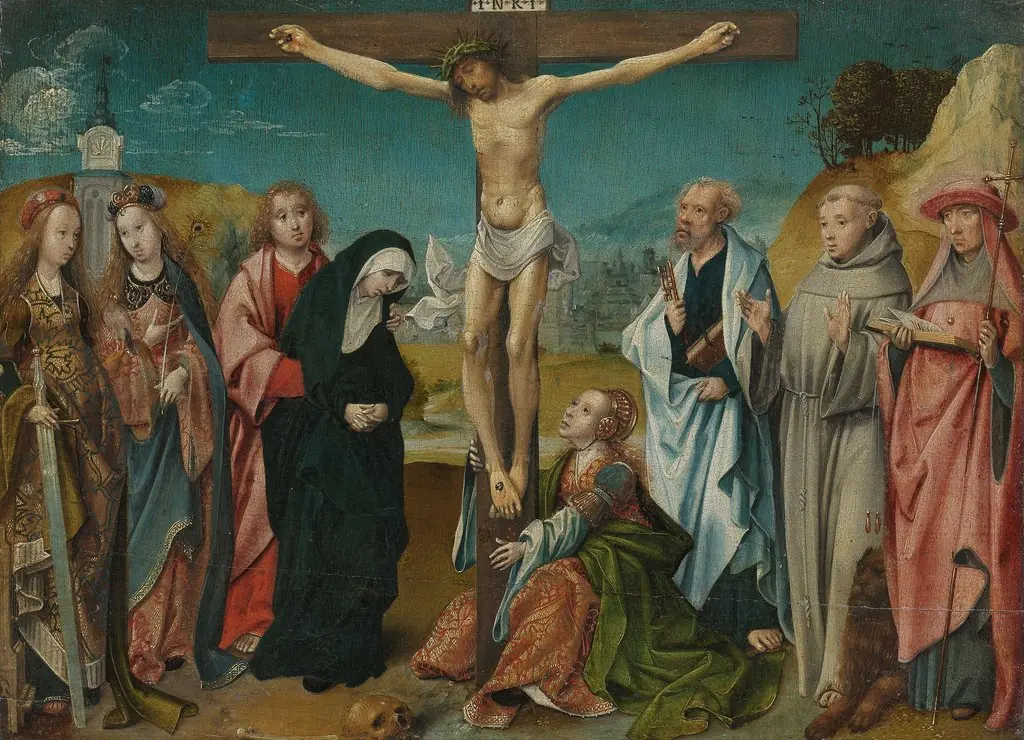 Christ on the cross with the Virgin, St John the Evangelist, Mary Magdalen, and Sts Cecilia and Barbara (left), and Sts Peter, Francis and Jerome (right)