Artwork
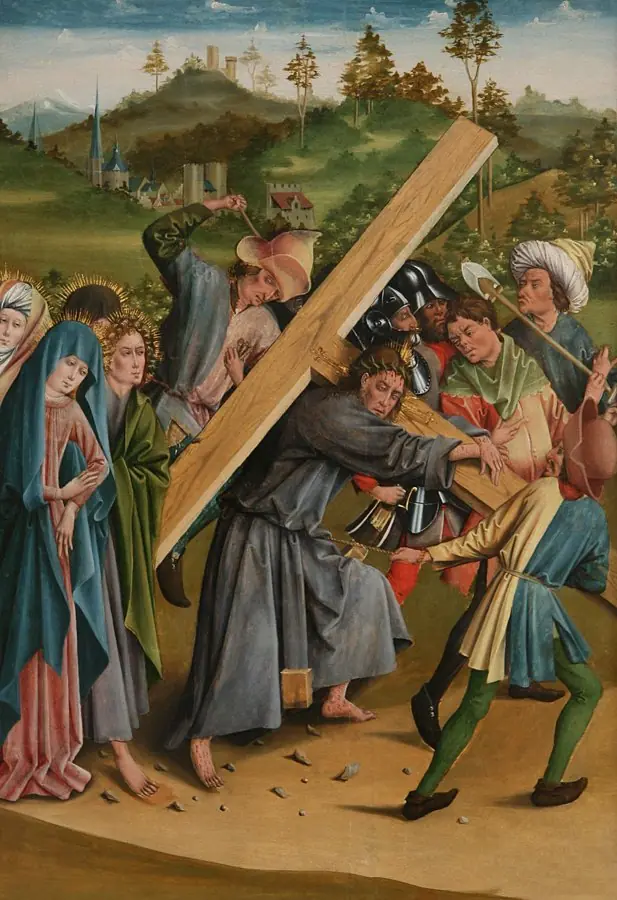
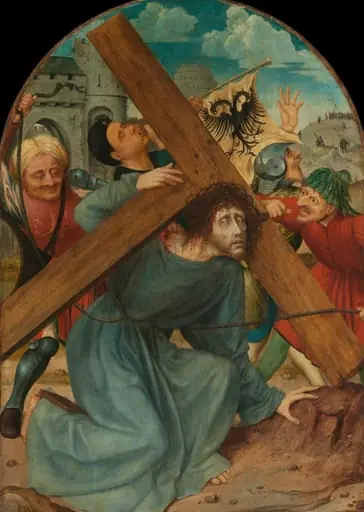
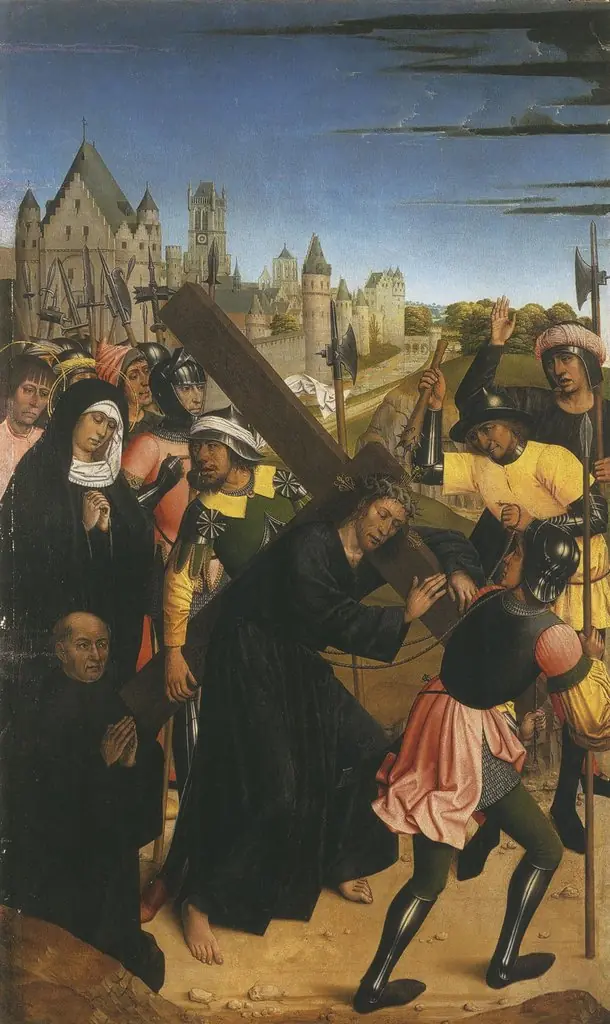
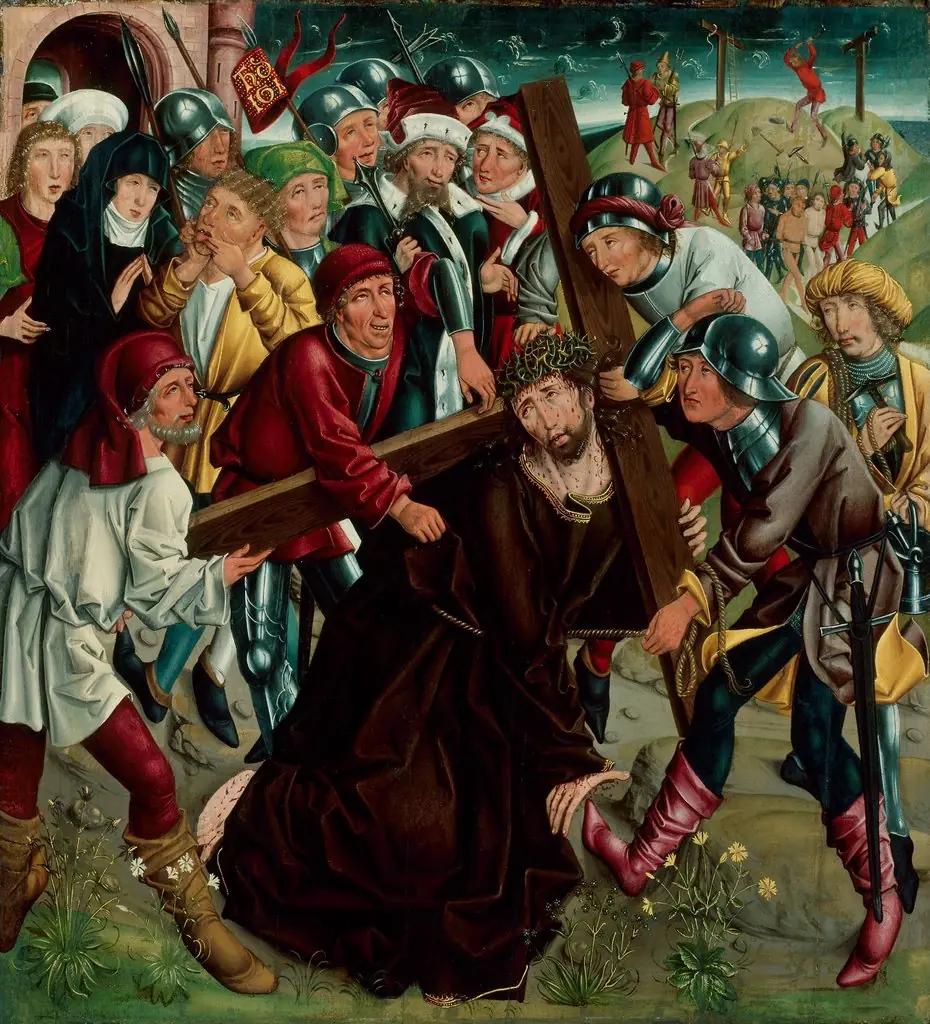
Kreuztragung Christi
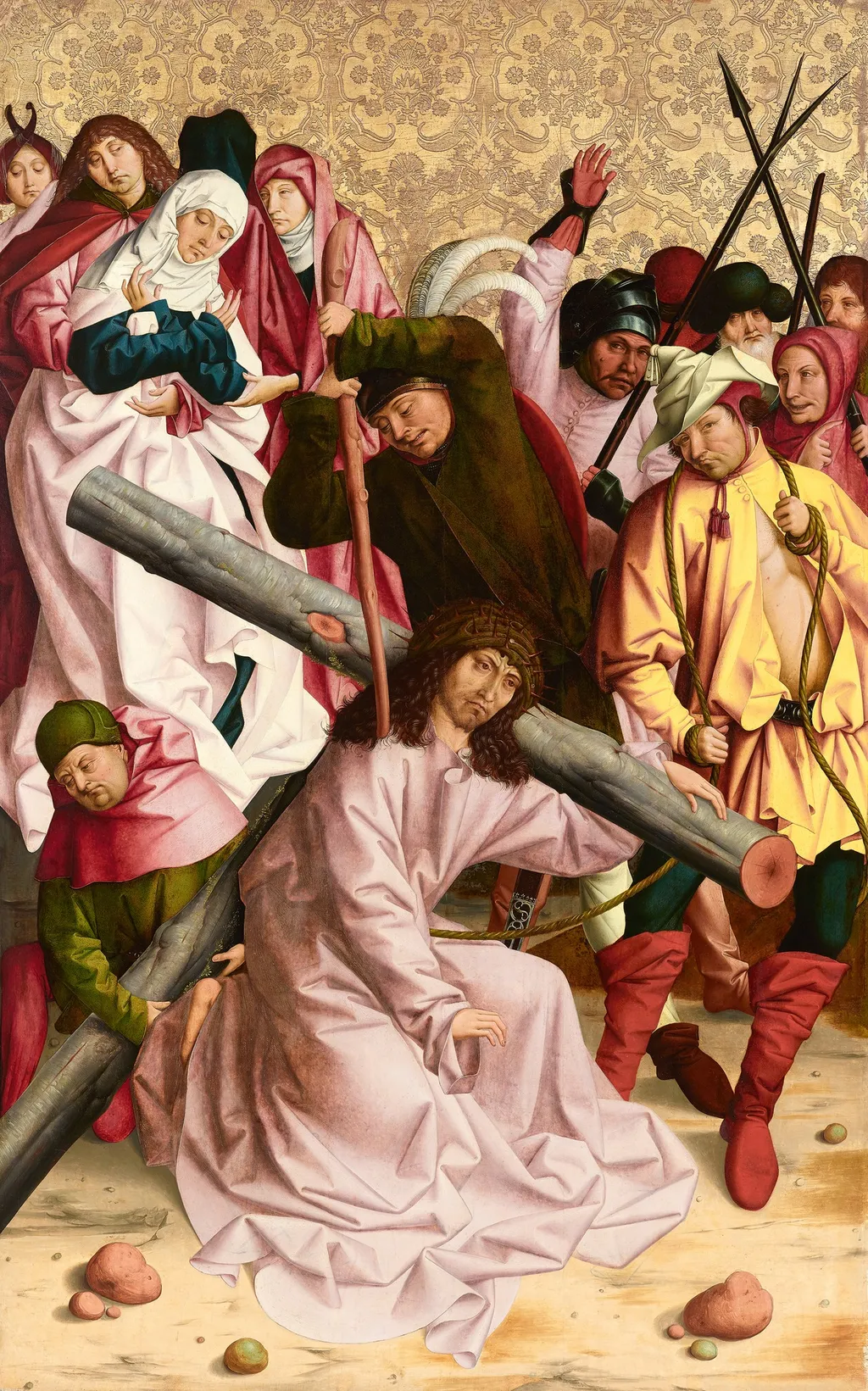
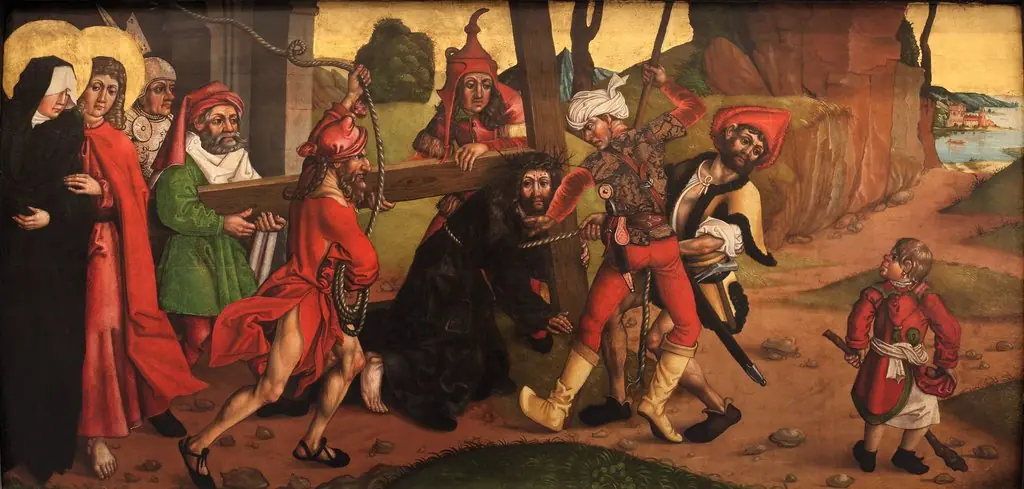
Kreuztragung Christi is an unspecified painting by the Northern Renaissance artist Rueland Frueauf the Elder. It dates from 1496 and is held in the collection of the Kunsthistorisches Museum.
About this work
Overview
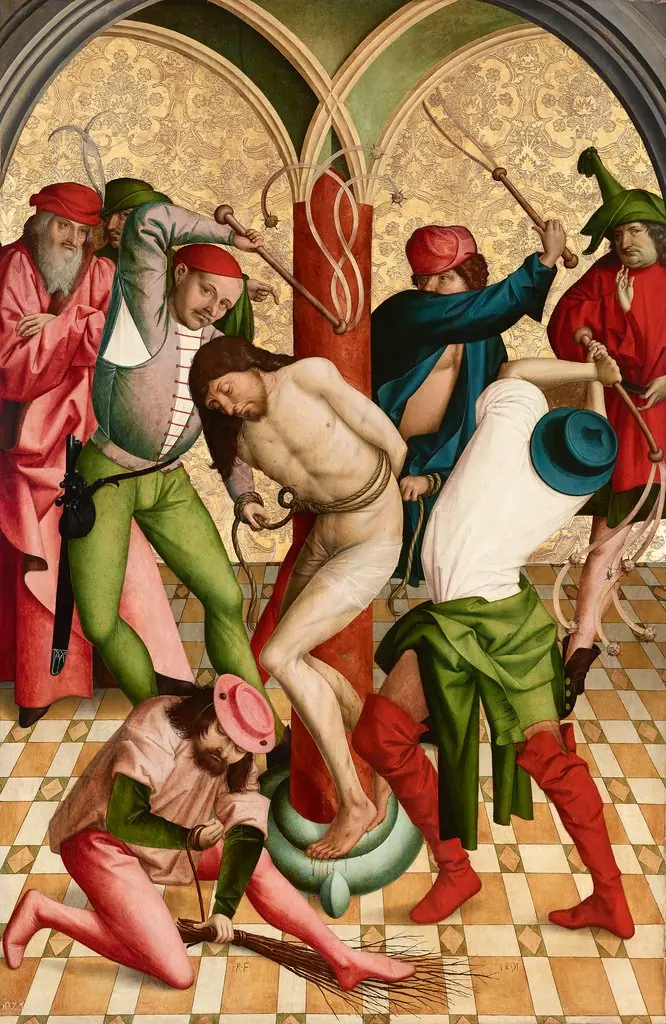
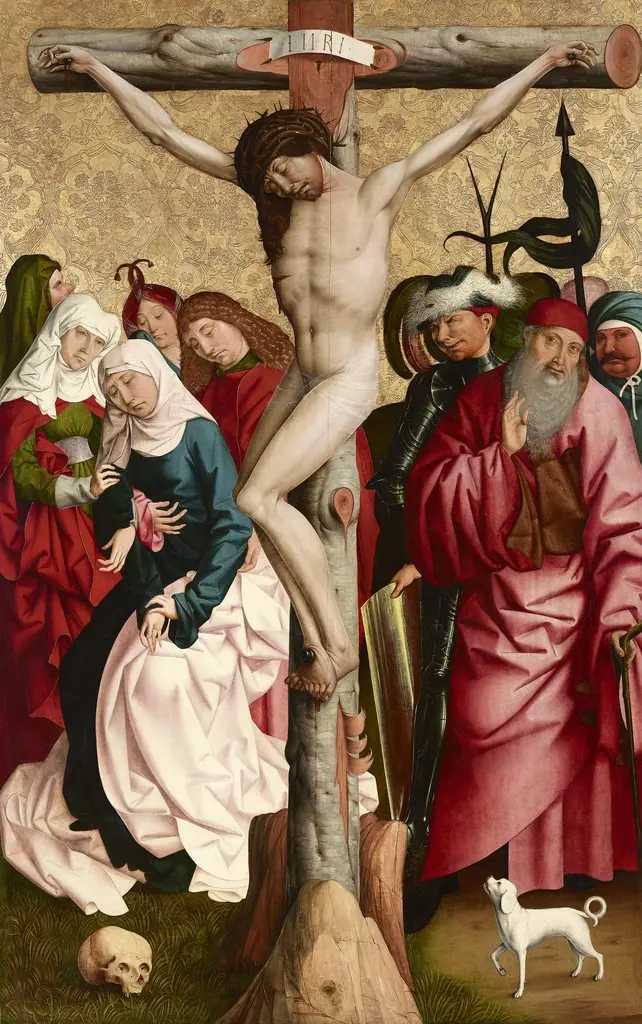
Created in 1496 by Rueland Frueauf the Elder, this religious panel portrays a crucifixion scene now in the collection of the Kunsthistorisches Museum. The central figure, a man in a pink robe, kneels beneath a massive wooden cross, his head bowed in solemnity, while a surrounding crowd observes the event.
Subject & Meaning
The work focuses on the figure of Christ at the moment of bearing the cross, emphasizing his suffering and humility. The surrounding onlookers, rendered in bright, uncomplicated garments, convey a range of reactions—from anxiety to readiness—suggesting the broader human response to divine sacrifice.
Technique & Style
Frueauf employs chiaroscuro to model the central figure, casting his face in shadow while the pink robe catches a soft light, creating a visual contrast that draws attention to the body. The background features a patterned gold-leaf motif, and the rocky terrain adds texture to the composition.
History & Provenance
The painting has remained in Austrian collections, ultimately entering the Kunsthistorisches Museum’s holdings. Its attribution to Frueauf the Elder, a noted late‑Gothic painter, is supported by stylistic analysis and documentation dating to the late 15th century.
Context
Produced during the transition from Gothic to early Renaissance art in the German-speaking lands, the piece reflects contemporary devotional practices. The depiction of a crowd with spears hints at the turbulent social climate of the period, while the gold‑leaf background aligns with liturgical aesthetics of the time.
Own this work as a print
Artist & collection
Artist
Rueland Frueauf the Elder (1440–1507) was an artist, born in Obernberg am Inn.