Artwork
The Close of Day
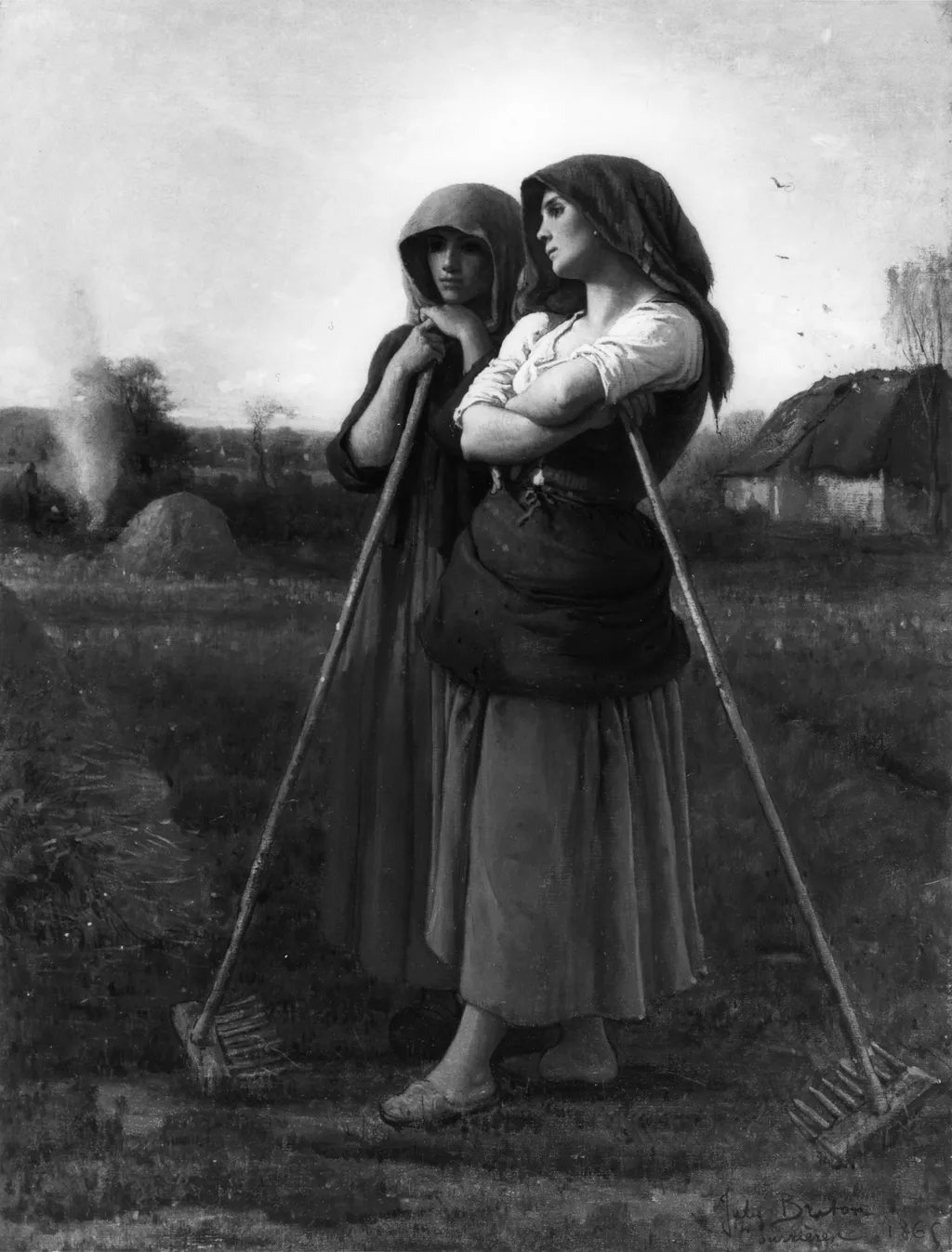
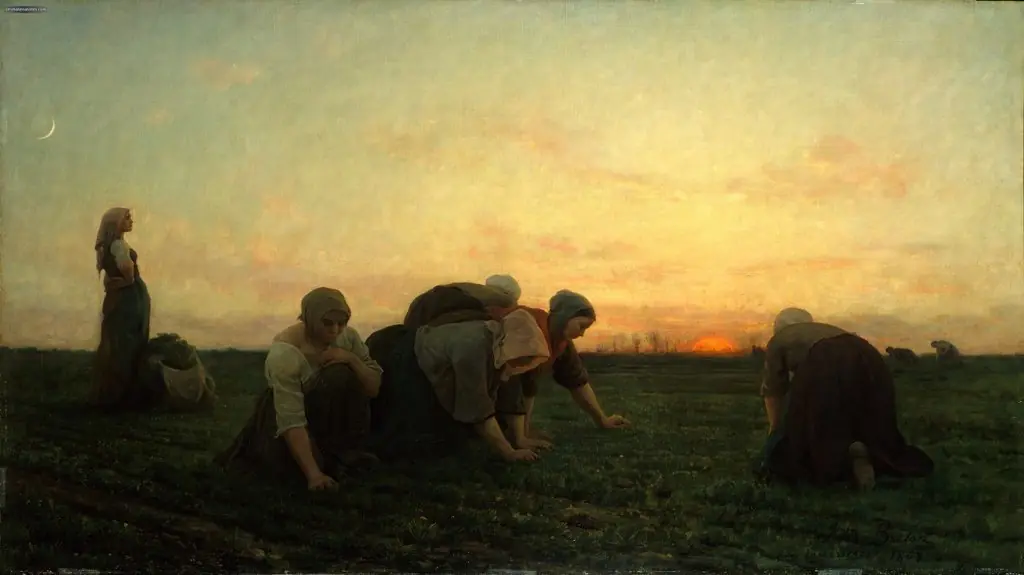
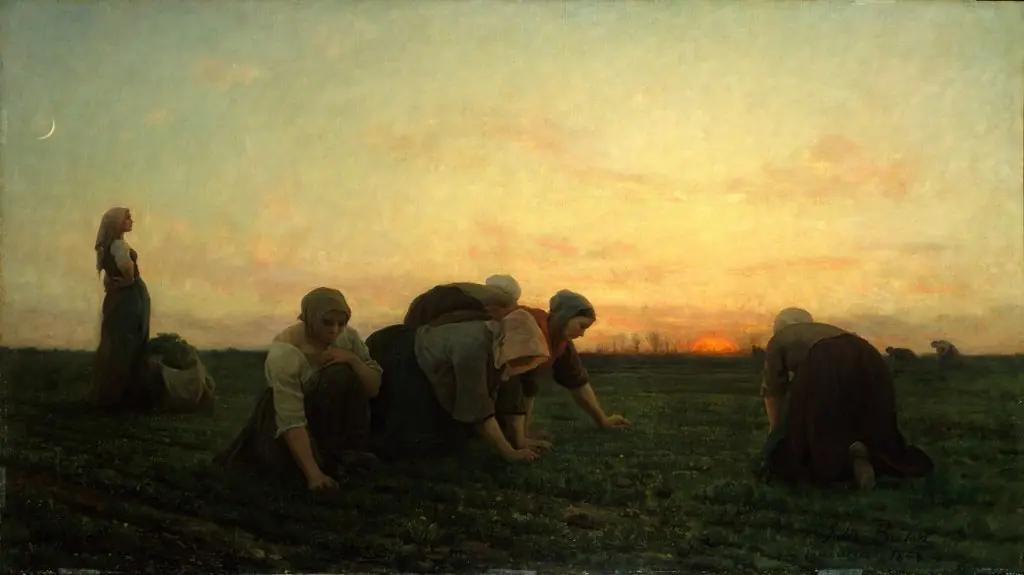
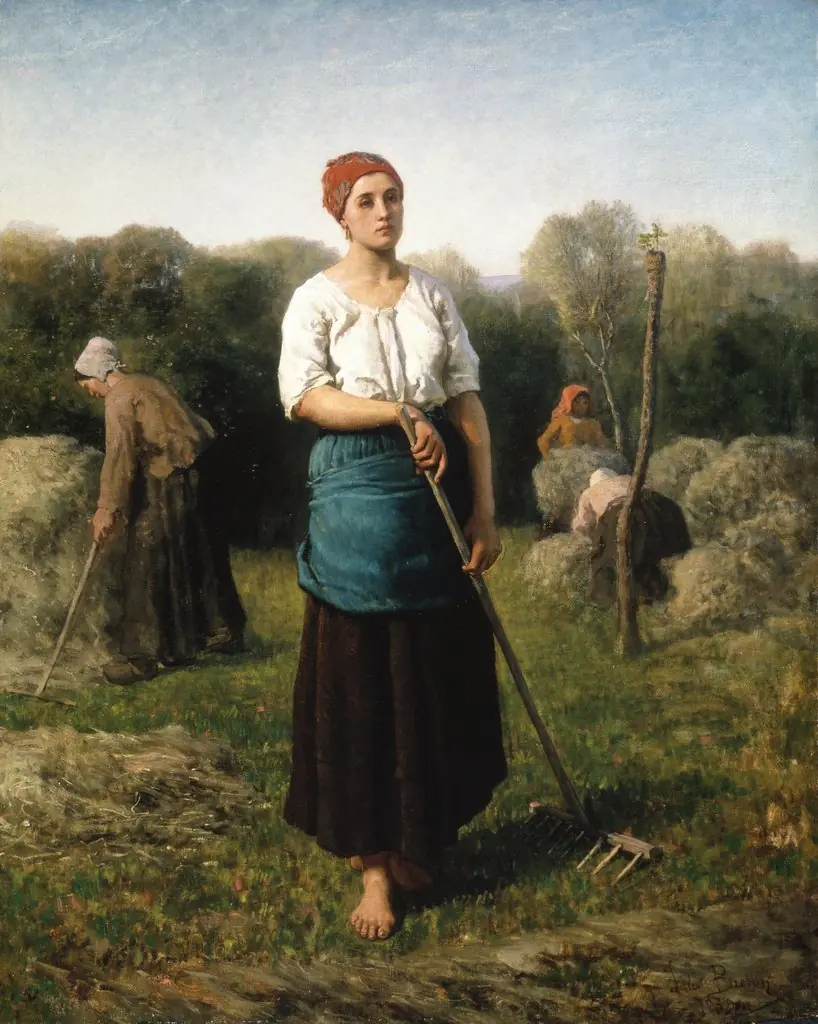
The Close of Day is an oil painting by the Realist artist Jules Breton. It dates from 1865 and is held in the collection of the Walters Art Museum.
About this work
The woman on the left wears a dark dress and a hooded cloak, while the woman on the right is dressed in a white shirt and a dark apron.
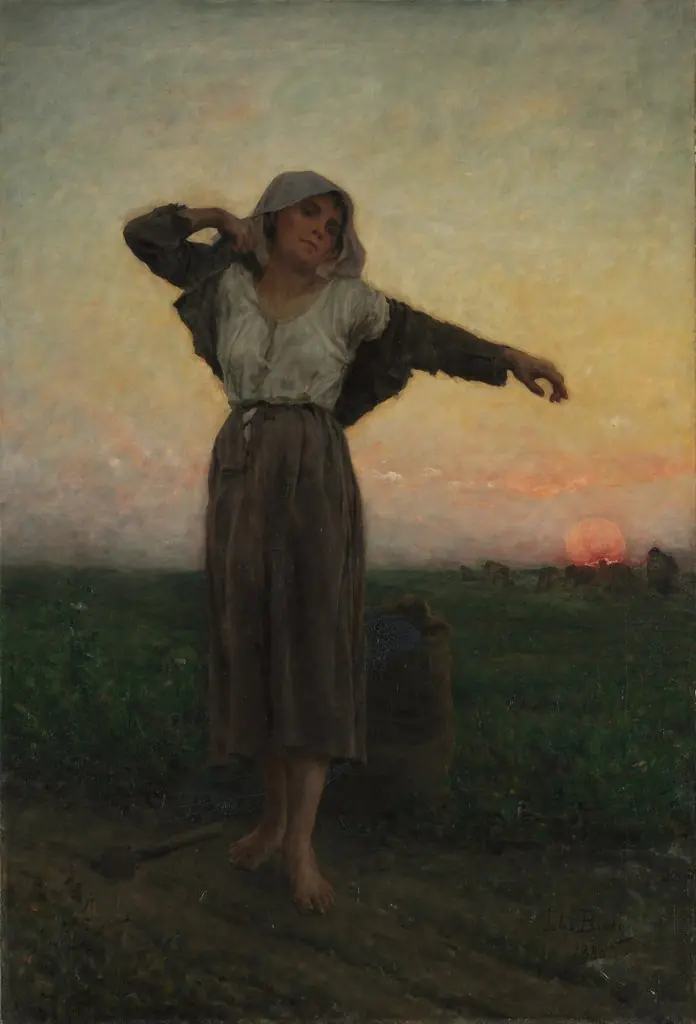
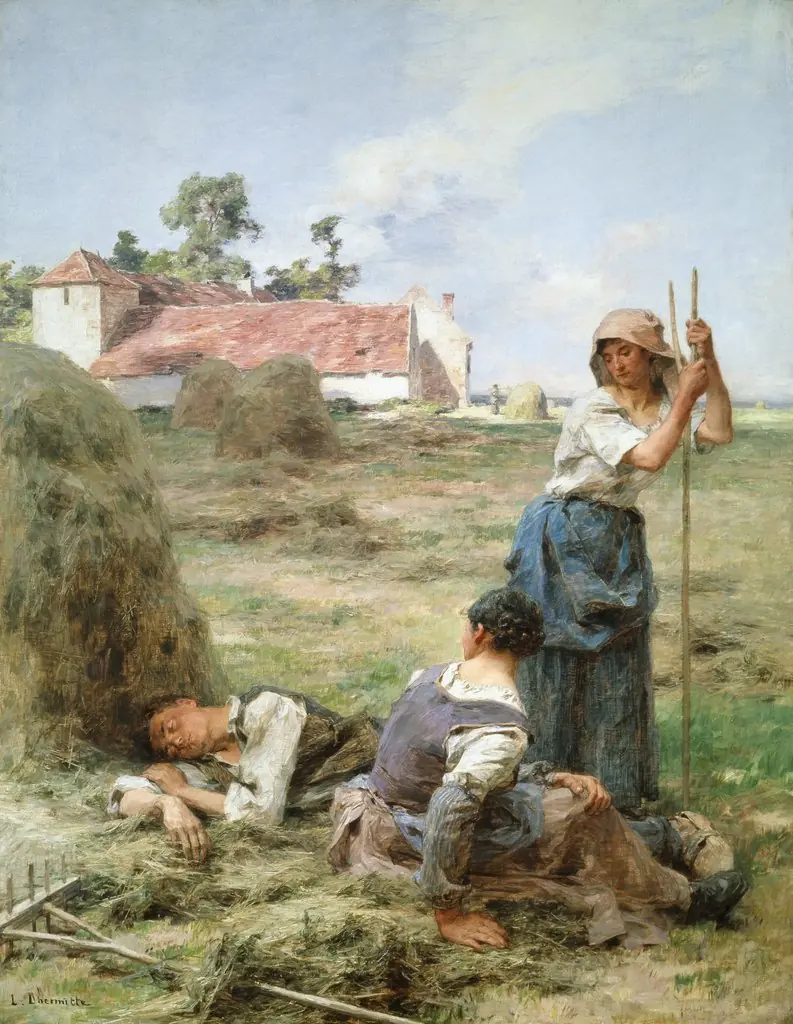
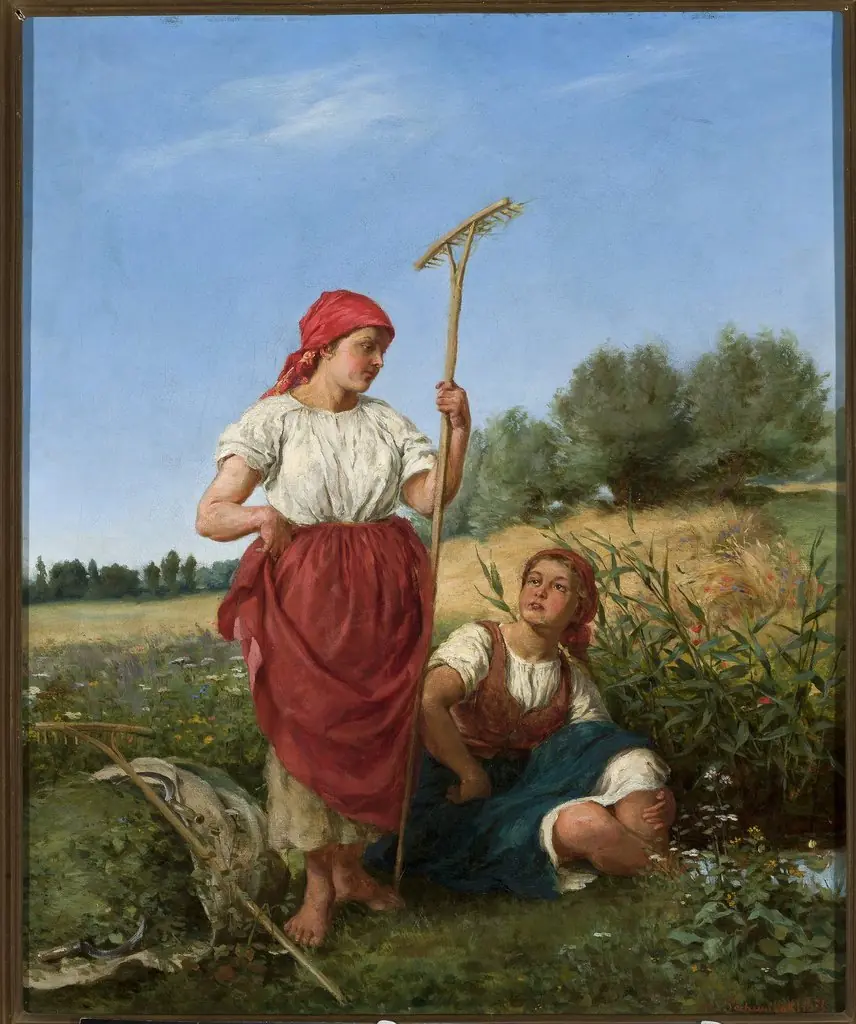
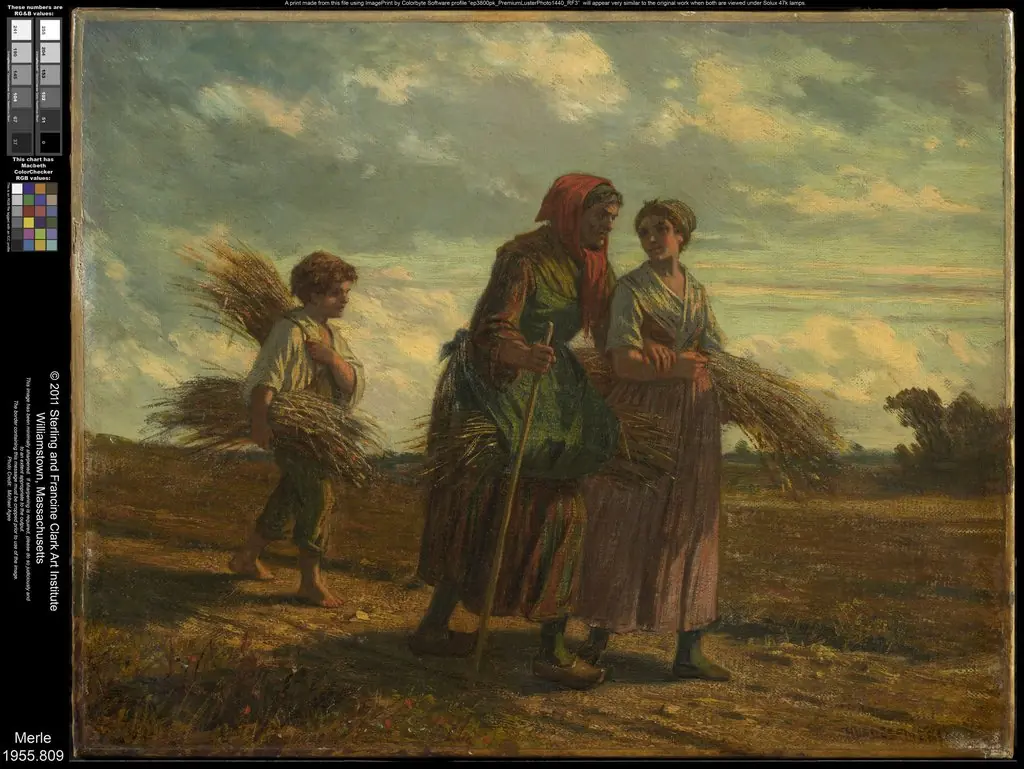
This painting depicts two women standing in a field, each holding a rake. The woman on the left wears a dark dress and a hooded cloak, while the woman on the right is dressed in a white shirt and a dark apron. Both women have long hair and are looking to the left. In the background, there is a field with some trees and a few buildings in the distance.
The painting is done in a realistic style, with attention to detail in the clothing and the landscape. The colors are muted, with shades of brown and green dominating the palette.
The painting is a great example of a genre scene, which was a popular style in the 19th century. If you're interested in learning more about this style, you should check out the work of artist Jules Breton.
Overview
Created in 1865 by French painter Jules Breton, *The Close of Day* is an oil on canvas that captures a tranquil moment in a rural landscape. The composition centers on two women working in a field, their figures rendered with careful observation. The scene is set against a muted horizon of trees and distant structures, emphasizing the quiet rhythm of countryside life.
Subject & Meaning
The work depicts a pair of women, each holding a rake, engaged in agricultural labor. Their attire—a dark hooded cloak on the left figure and a white shirt with a dark apron on the right—highlights the modest dress of laborers. Their gaze toward the left suggests contemplation or anticipation, inviting viewers to consider the dignity of everyday work within the French countryside.
Technique & Style
Breton employs a realistic approach characteristic of mid‑19th‑century Realism, focusing on precise detail in clothing texture and the surrounding terrain. A restrained palette of browns, greens, and subdued earth tones unifies the scene, while soft lighting conveys the waning daylight implied by the title. The brushwork balances fine definition with broader atmospheric washes, reinforcing the naturalist intent.
History & Provenance
Since its completion, the painting has entered the collection of the Walters Art Museum, where it remains on view. Its acquisition reflects the museum’s interest in 19th‑century French genre painting and provides a representative example of Breton’s oeuvre within an American public institution.
Own this work as a print
Artist & collection
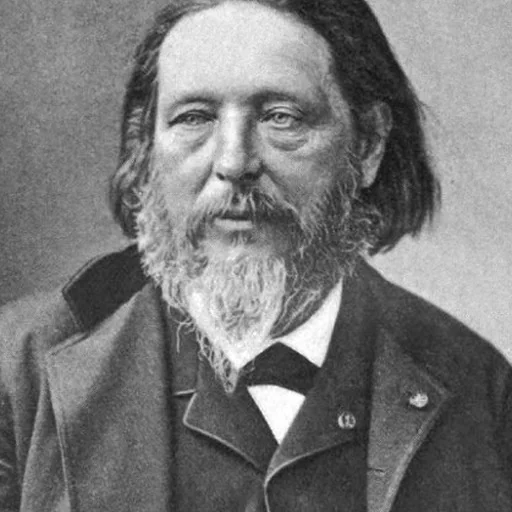
Artist
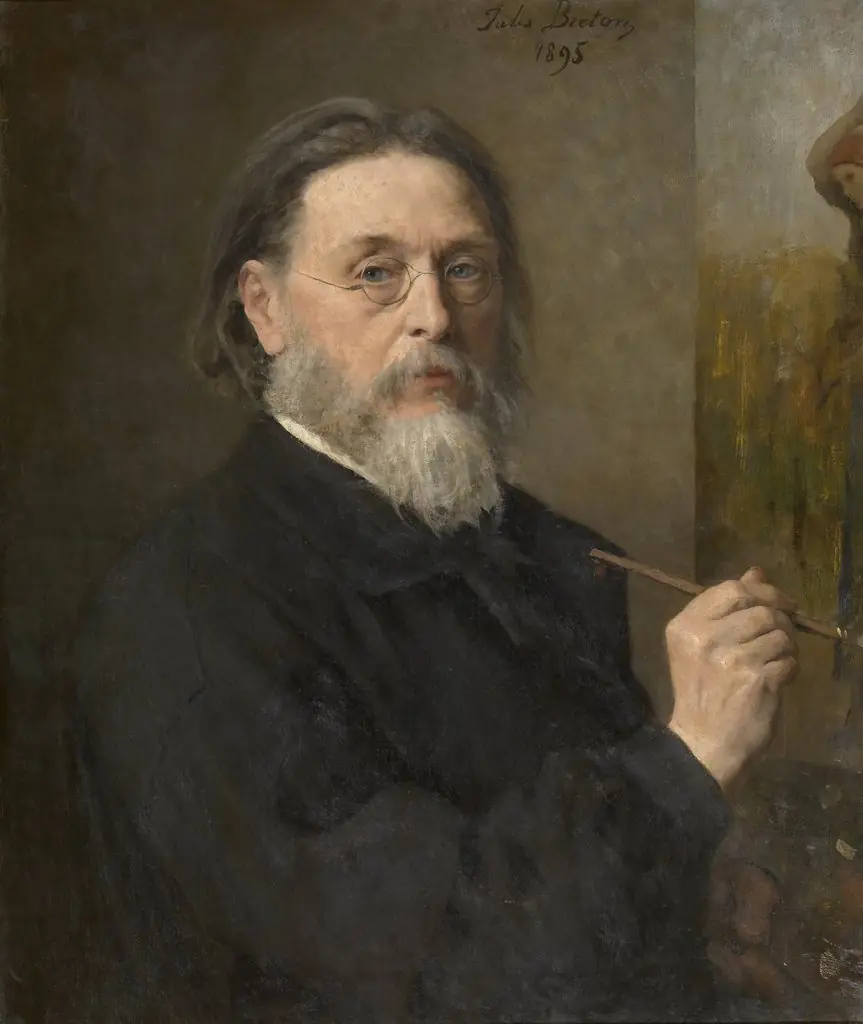
Jules Adolphe Aimé Louis Breton (French pronunciation: ; 1 May 1827 – 5 July 1906) was a 19th-century French naturalist painter.