Artwork
The Gleaner
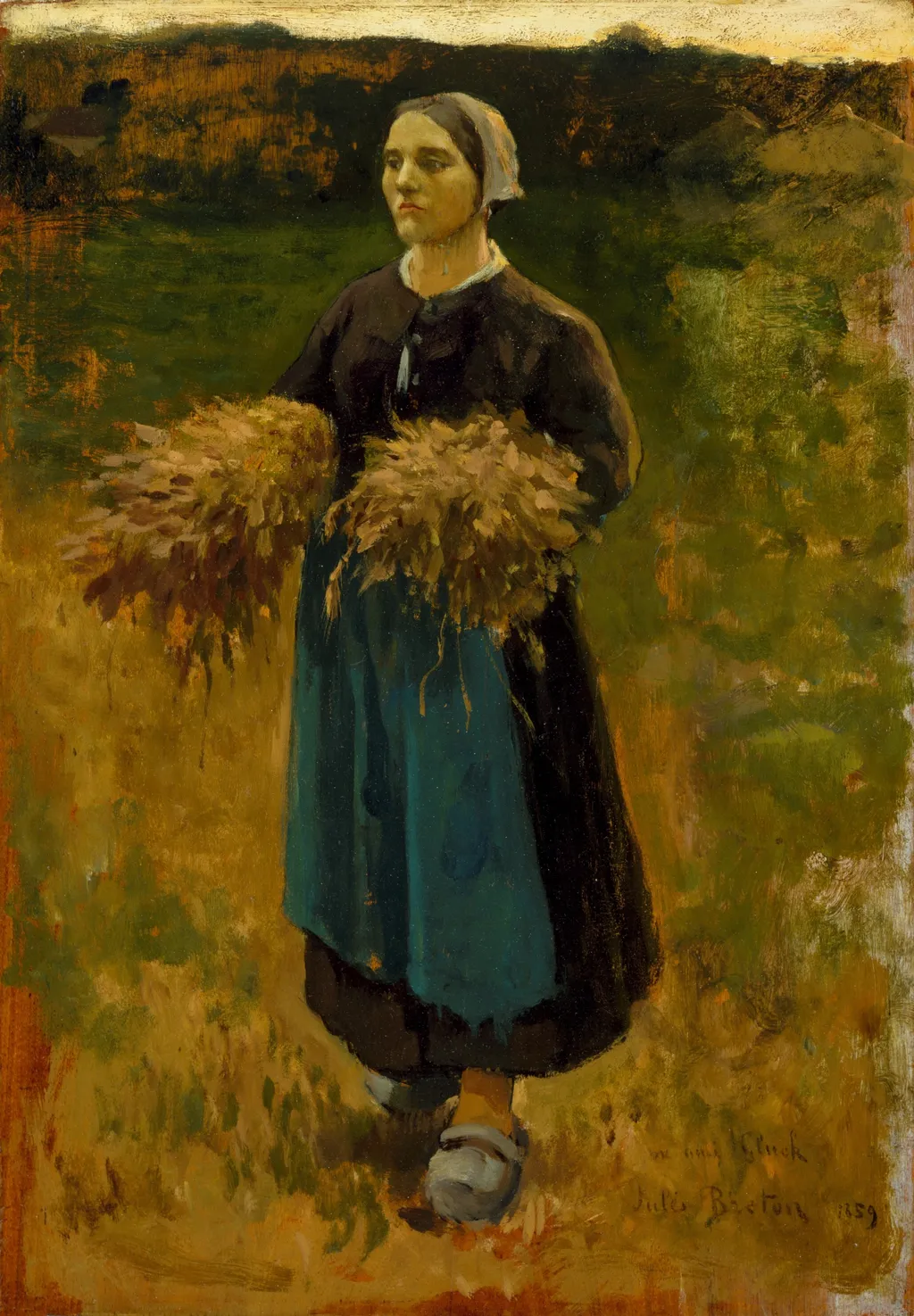
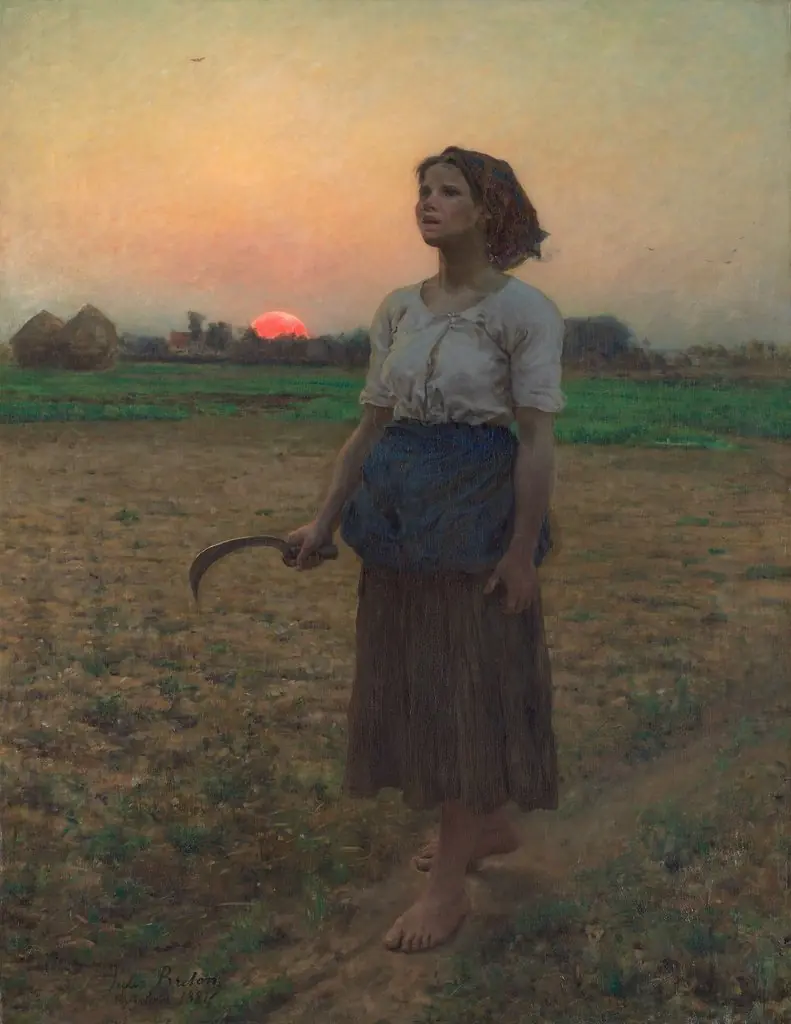
The Gleaner is an oil painting by the Realist artist Jules Breton. It dates from 1859 and is held in the collection of the Museum of Fine Arts, Houston.
About this work
Overview
The painting’s composition and lighting emphasize serenity over hardship, reflecting Breton’s preference for idealized portrayals of peasant life.
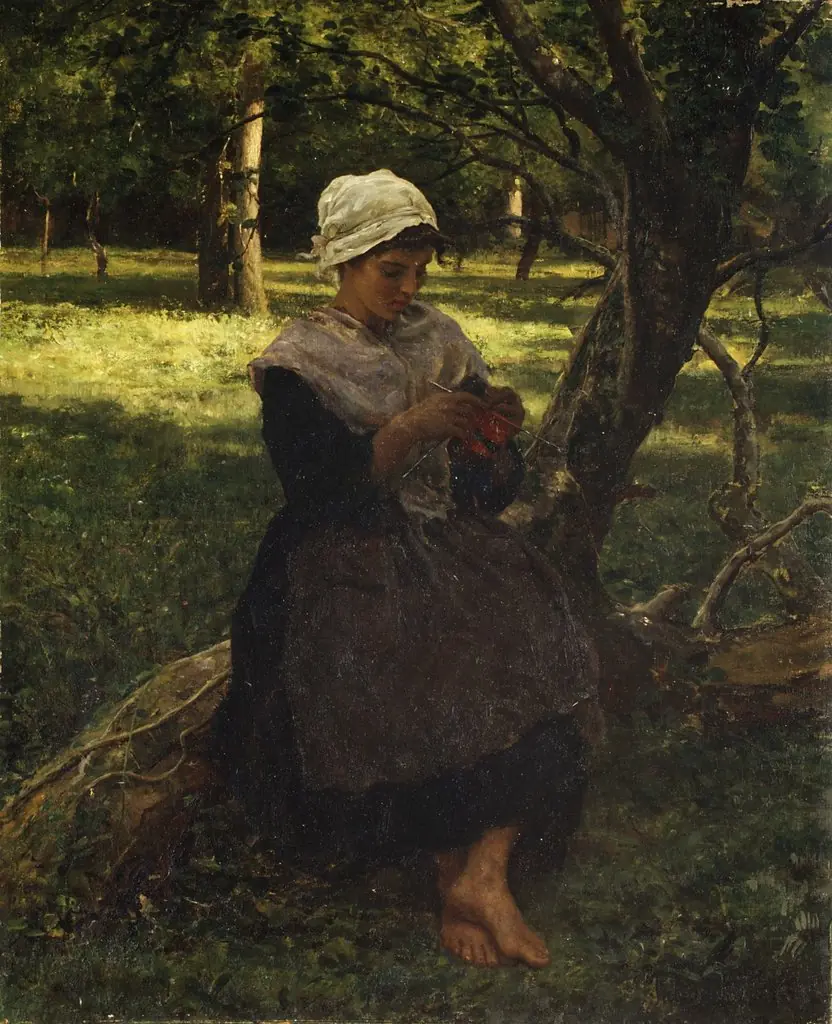
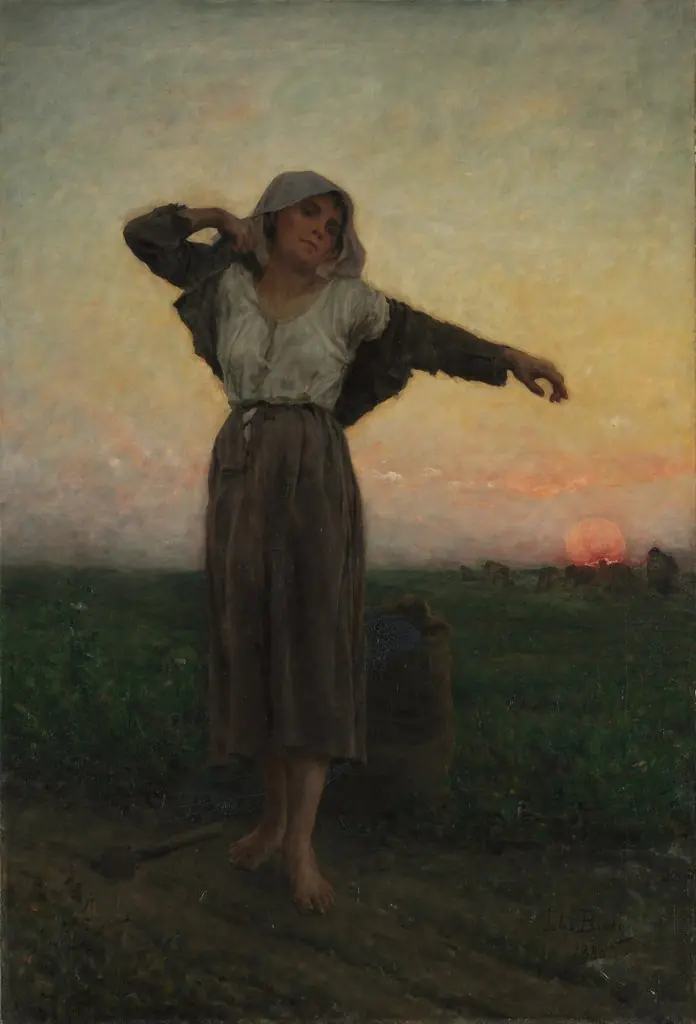
Painted in 1859 by Jules Breton, *The Gleaner* is an oil-on-canvas work that captures a solitary rural laborer in a moment of stillness. Though rooted in the Realist tradition, the scene avoids overt social commentary, instead focusing on the quiet dignity of agricultural work. The painting’s composition and lighting emphasize serenity over hardship, reflecting Breton’s preference for idealized portrayals of peasant life.
Subject & Meaning
The central figure is a woman, dressed in modest, earth-toned clothing, holding a bundle of harvested grain. Her gaze is directed beyond the frame, suggesting introspection rather than exhaustion. The act of gleaning—collecting leftover crops after the main harvest—is rendered not as a sign of poverty, but as a natural, almost ritualistic part of rural existence. The calm expression and composed posture convey resilience without melodrama.
Technique & Style
Breton employed soft, warm tones and delicate brushwork to render the golden light of late afternoon. The texture of the wheat, the folds of the apron, and the weave of the headscarf are rendered with careful attention, enhancing the painting’s tactile realism. The background dissolves into hazy atmospheric perspective, drawing focus to the figure while grounding her in a specific time and place.
History & Provenance
Completed in 1859, the painting entered the collection of the Museum of Fine Arts, Houston, where it remains today. It was produced during a period when French artists increasingly turned to rural subjects, though Breton’s approach differed from the grittier realism of Courbet. His work was widely exhibited in Paris and appreciated for its harmonious composition and emotional restraint.
Context
In mid-19th-century France, agricultural labor remained central to national identity, even as industrialization reshaped urban life. Artists like Breton responded to this shift by romanticizing the peasantry, offering viewers a nostalgic vision of continuity. *The Gleaner* fits within this trend, presenting labor as peaceful and timeless, rather than politically charged or economically desperate.
Legacy
While not as widely discussed as other Realist works, *The Gleaner* exemplifies a strand of 19th-century French painting that prioritized emotional tone over social critique. Its enduring presence in a major American museum reflects its appeal as a quiet, visually cohesive representation of rural life—a counterpoint to more confrontational depictions of labor in the same era.
Own this work as a print
Artist & collection
Artist
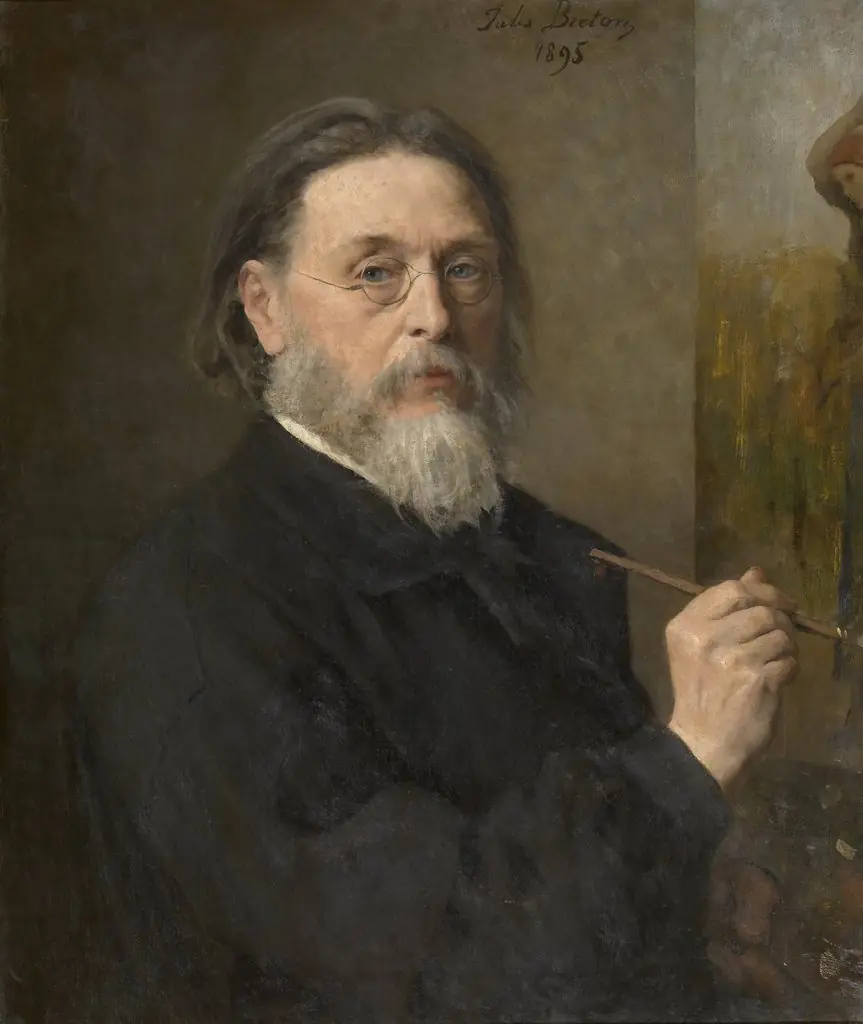
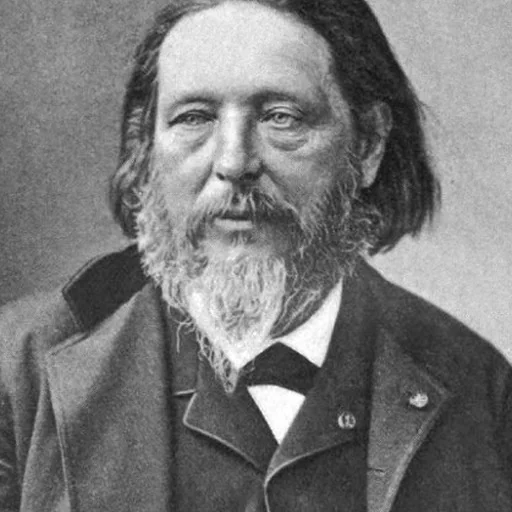
Jules Adolphe Aimé Louis Breton (French pronunciation: ; 1 May 1827 – 5 July 1906) was a 19th-century French naturalist painter.