Artwork
Landscape with Cattle (recto)
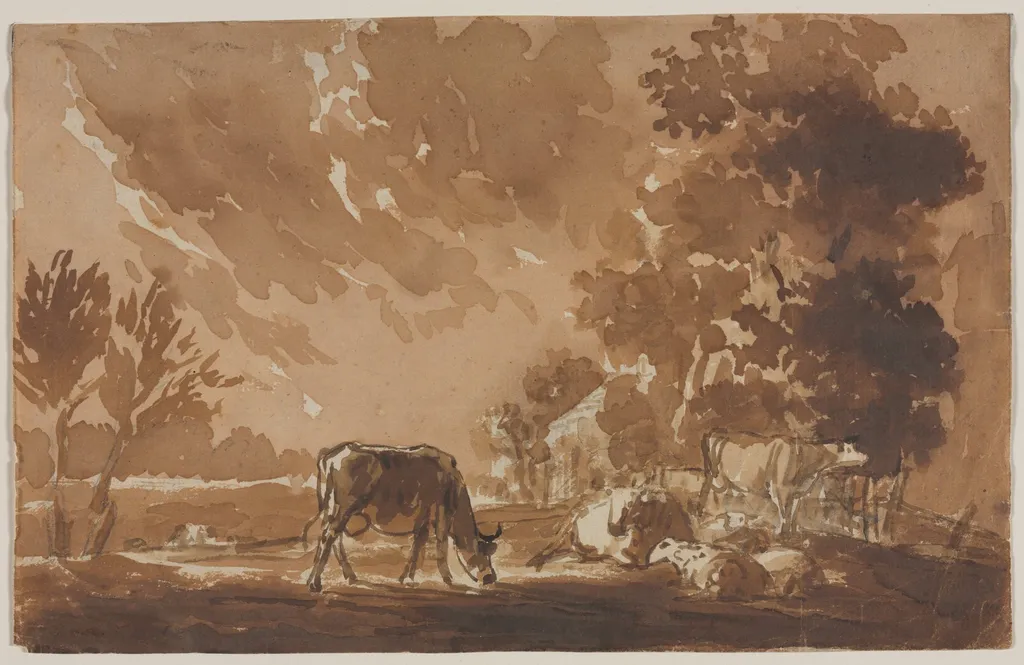
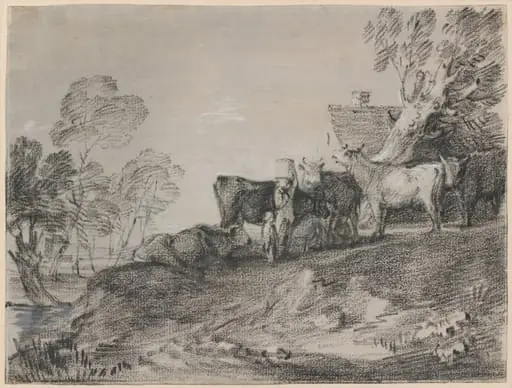
Landscape with Cattle (recto) is a drawing by the Romanticist artist Jules Dupré. It dates from 1804 and is held in the collection of the Cleveland Museum of Art.
About this work
Overview
It belongs to a body of work produced by artists of the Barbizon school who sought to capture rural France with direct observation.
Landscape with Cattle is a pencil and wash drawing attributed to Jules Dupré, likely executed in the early 1830s rather than 1804. It belongs to a body of work produced by artists of the Barbizon school who sought to capture rural France with direct observation. The piece reflects a shift from idealized pastoral imagery toward unembellished, everyday scenes, emphasizing quiet moments in the countryside rather than dramatic narratives.
Subject & Meaning
The drawing portrays two cattle in a subdued rural setting—one standing near a low fence, the other reclining in the grass. A distant shed, partially obscured by bare trees, suggests human presence without intrusion. The absence of human figures and the animals’ stillness convey a sense of solitude and harmony with the land, aligning with Barbizon ideals that valued the dignity of rural life and the quiet rhythms of nature.
Technique & Style
Dupré employed loose, fluid pencil strokes with subtle washes to suggest form and atmosphere. The palette is restrained, dominated by muted browns, grays, and off-whites, evoking the muted tones of winter or early spring. The sketchlike quality—quick lines, minimal detail—indicates an on-site study, prioritizing immediate perception over finish. This approach reflects the Barbizon emphasis on working outdoors and capturing transient light and mood.
History & Provenance
The drawing entered the collection of The Cleveland Museum of Art in the 20th century, though its earlier ownership history is not well documented. It is one of several works by Dupré held in American institutions, reflecting broader interest in 19th-century French landscape drawing among collectors and museums during the postwar period. Its preservation supports scholarly study of Barbizon practices beyond finished paintings.
Context
Produced during the rise of the Barbizon school, this drawing responds to a cultural shift away from academic idealism toward realism rooted in direct observation. Artists like Dupré, Corot, and Millet gathered near the Forest of Fontainebleau to sketch nature as they found it. Such works challenged traditional hierarchies in art by treating humble rural subjects with the same seriousness once reserved for historical or mythological themes.
Legacy
Landscape with Cattle exemplifies how preparatory sketches became valued as independent works, influencing later movements like Impressionism. Dupré’s emphasis on atmosphere and naturalism helped redefine landscape art’s purpose, shifting focus from narrative to sensory experience. Today, such drawings are studied not merely as studies but as vital expressions of a new artistic philosophy grounded in place and perception.
Own this work as a print
Artist & collection
Artist
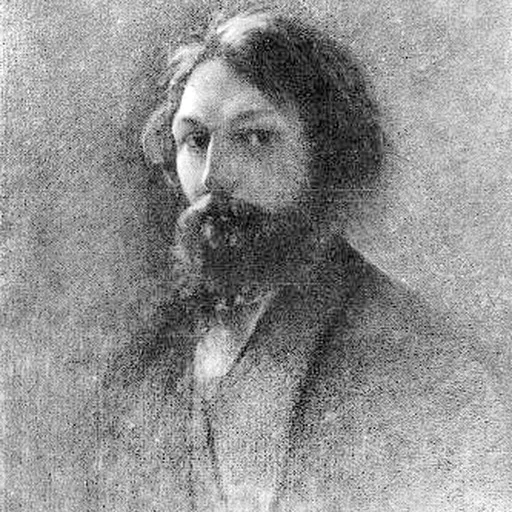
Jules Louis Dupré (French pronunciation: ; April 5, 1811 – October 6, 1889) was a French painter, one of the chief members of the Barbizon school of landscape painters.

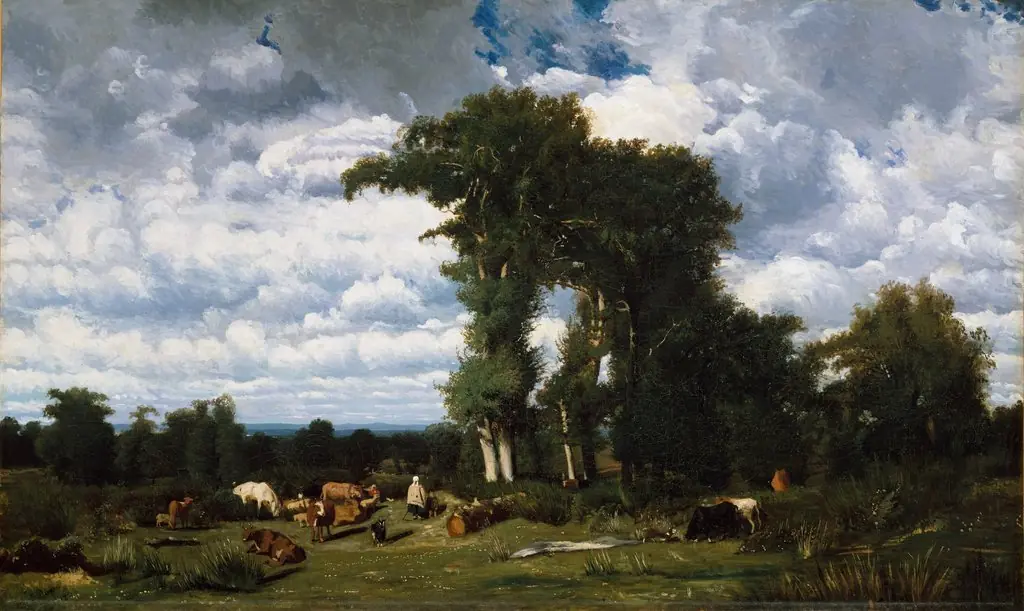
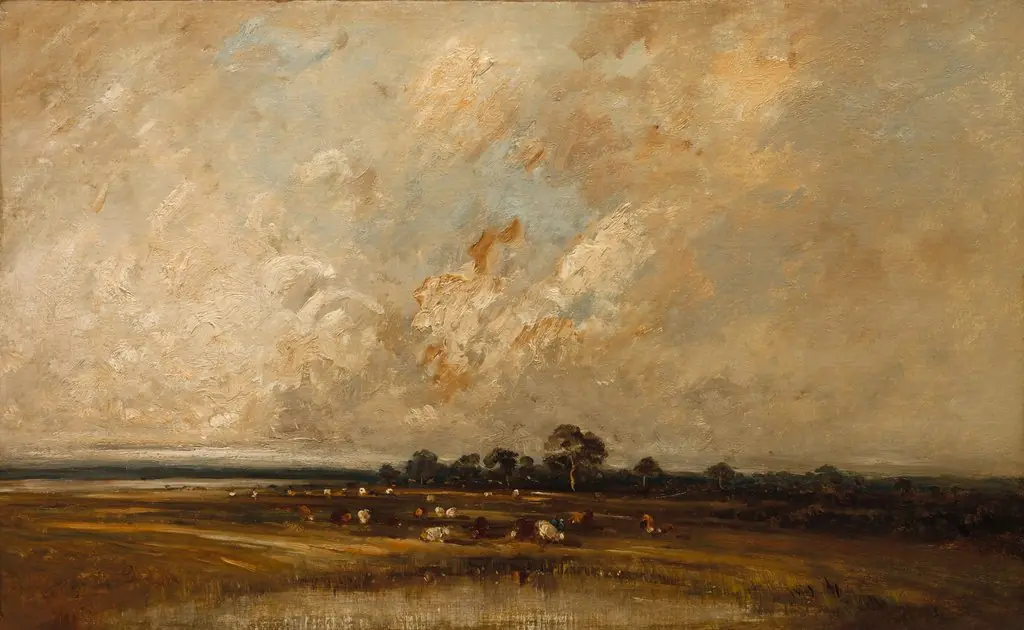
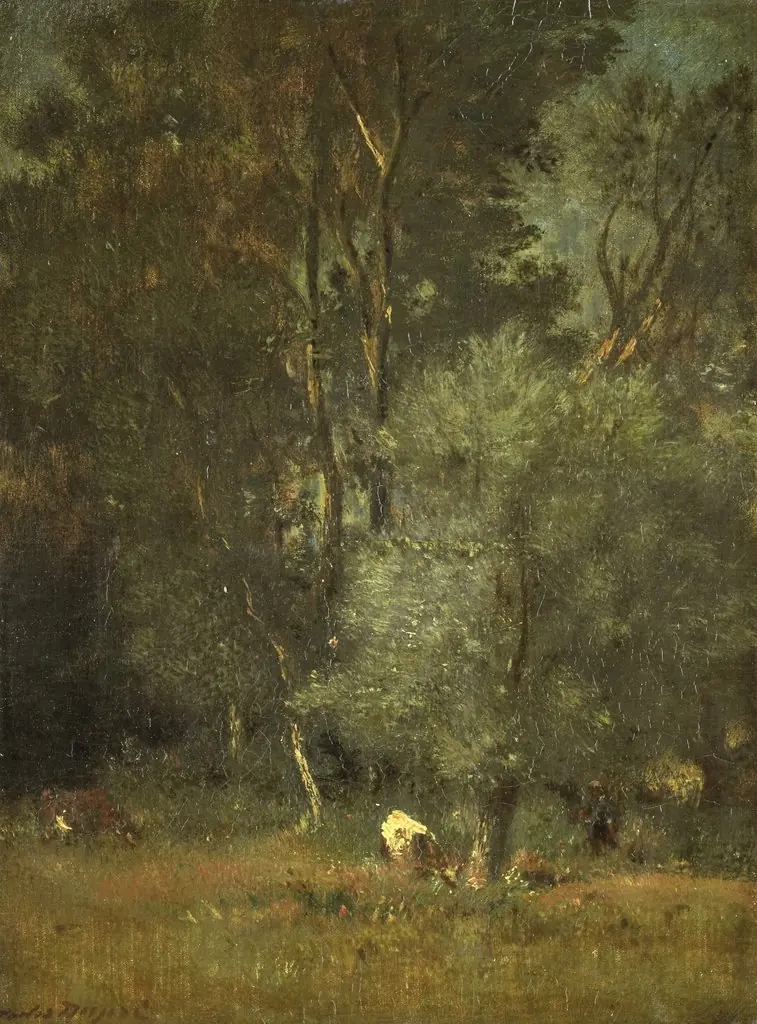
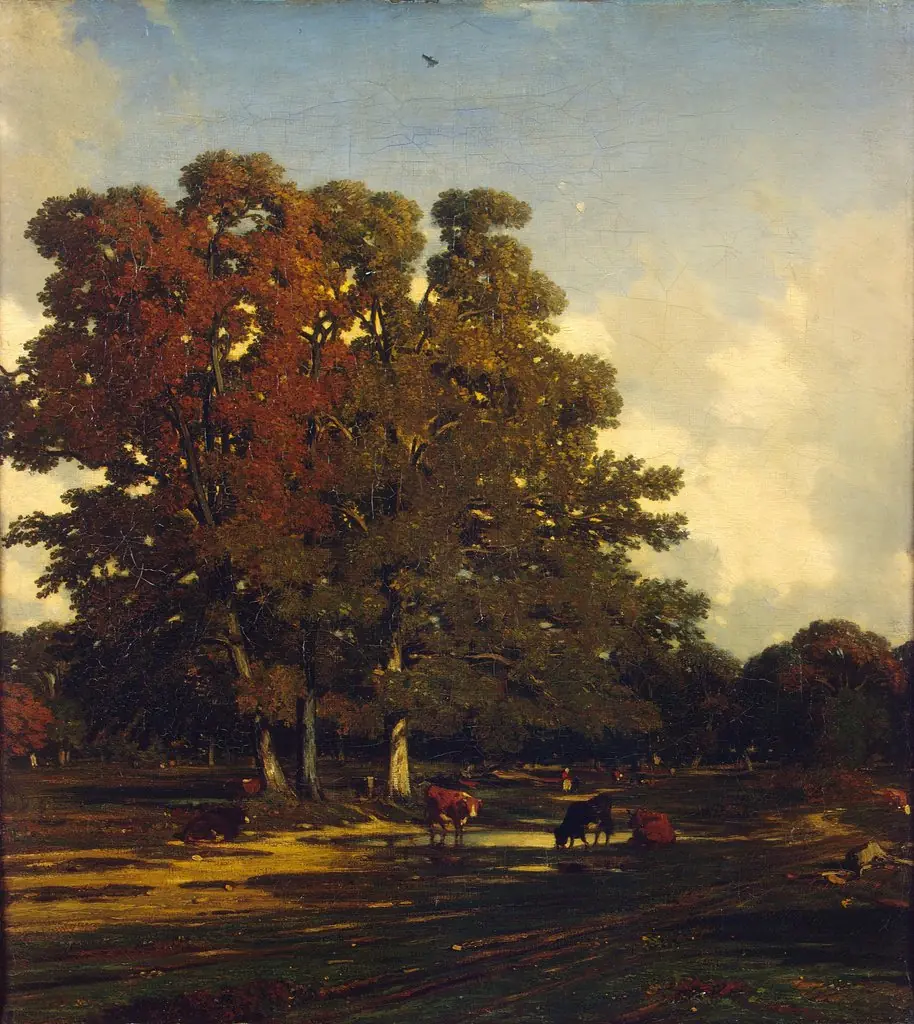
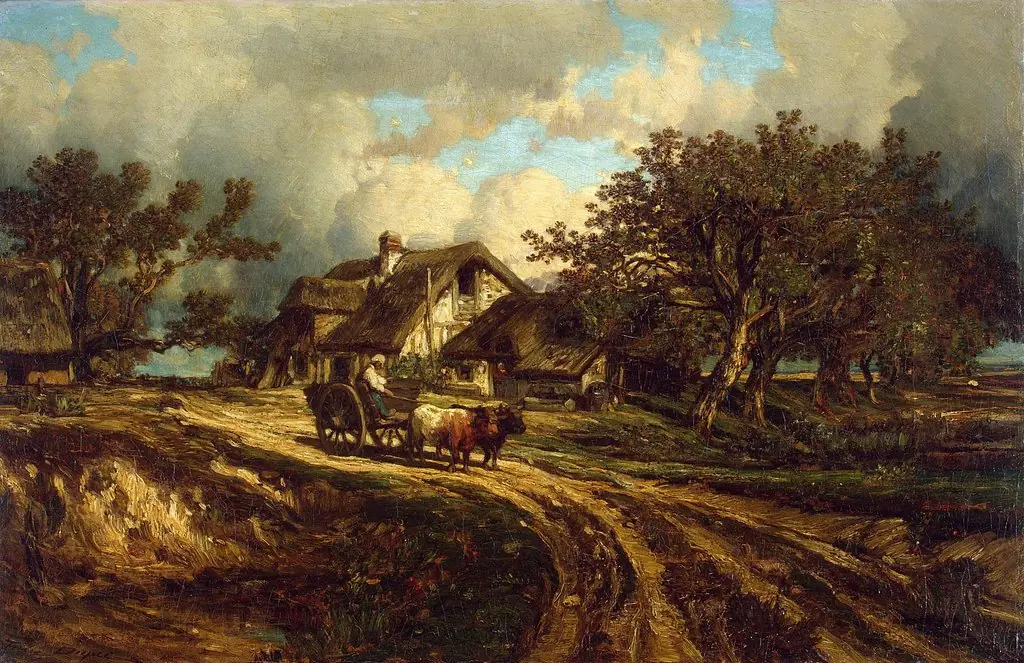
 Landscape with Cattle by a Cottage
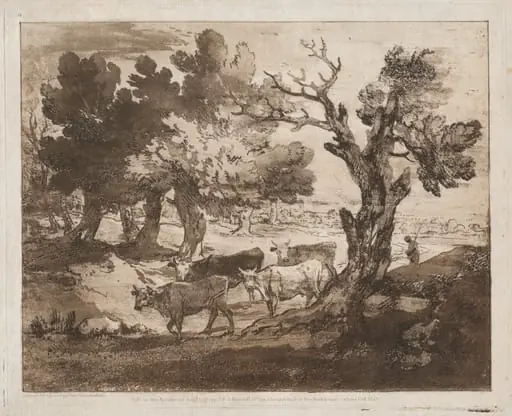 Wooded Landscape with Herdsman and Cows
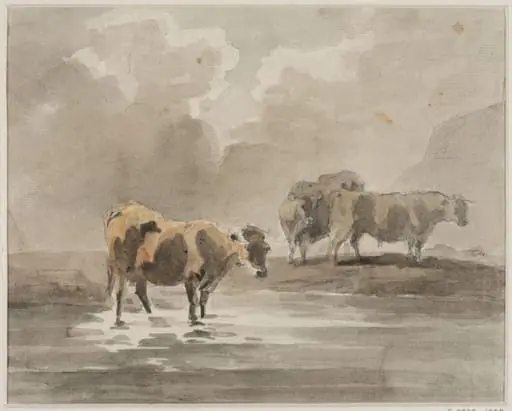 Untitled
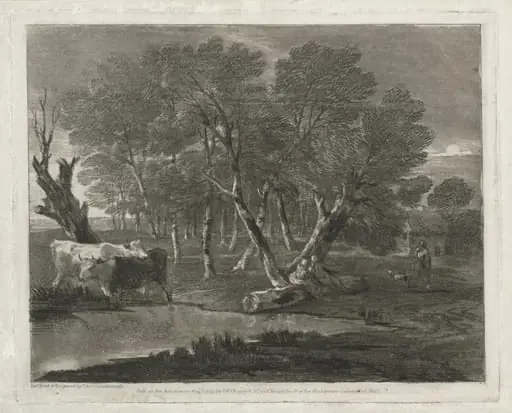 Wooded Landscape with Cows beside a Pool, Figures and Cottage
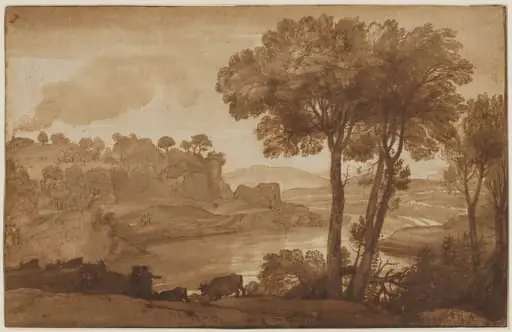 View of the Acqua Acetosa (recto)
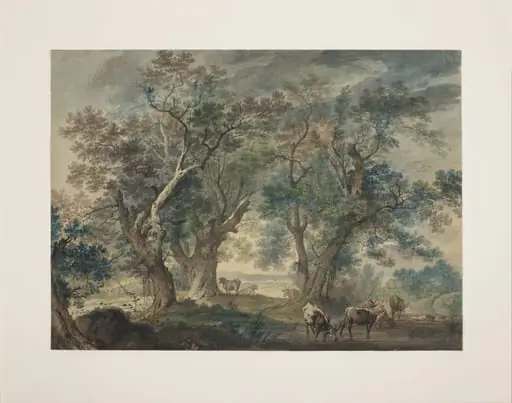 Landscape with cattle drinking at a pool
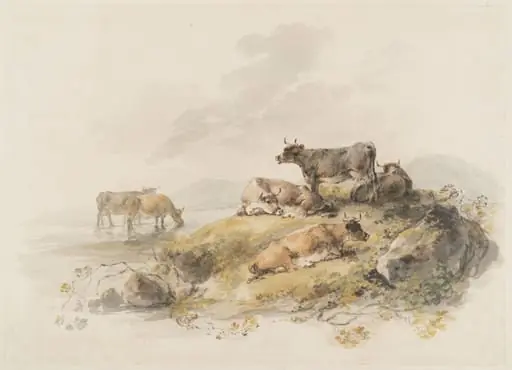 Untitled
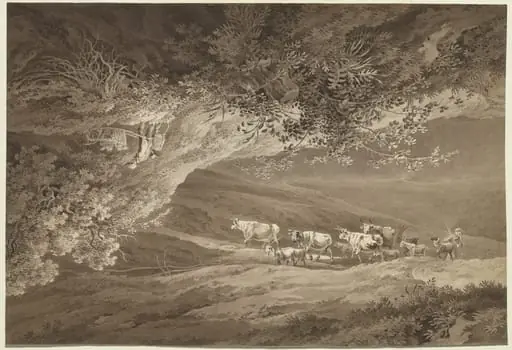 A Landscape with a Herd of Cows and Goats, Surmounted by Another Landscape, Upside-down, with a Man Pushing a Wheelbarrow
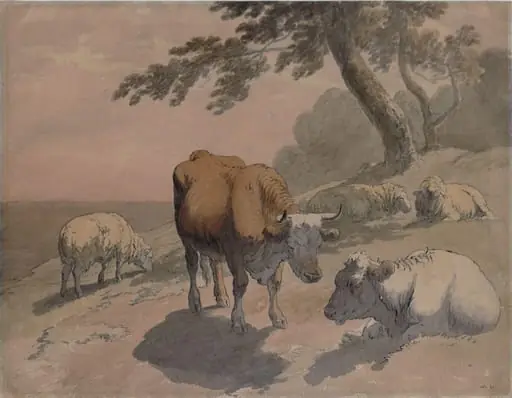 Cows and sheep
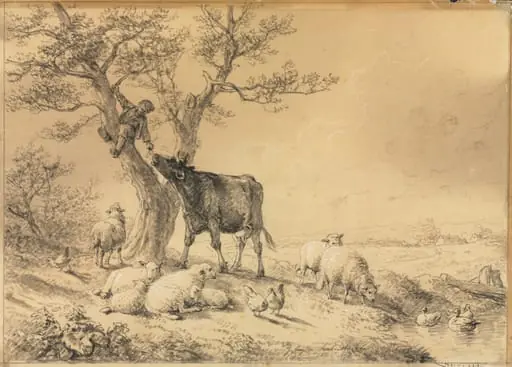 Landscape with Animals and Boy in Tree
 A Meadow with Cattle at the Edge of a Wood
 Italian Coastal Landscape with a Thunderstorm