Artwork
Plants of the Greenhouse
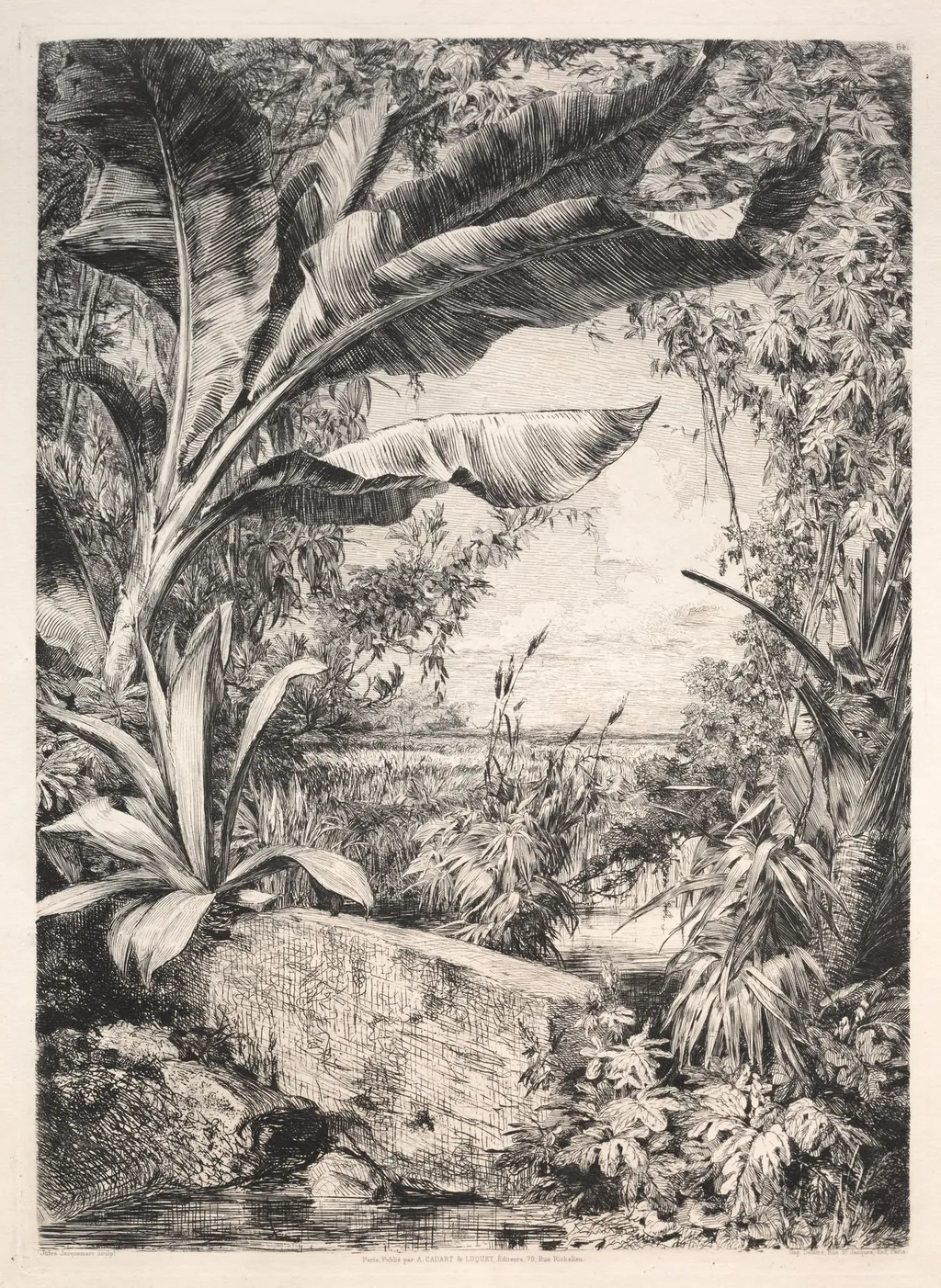
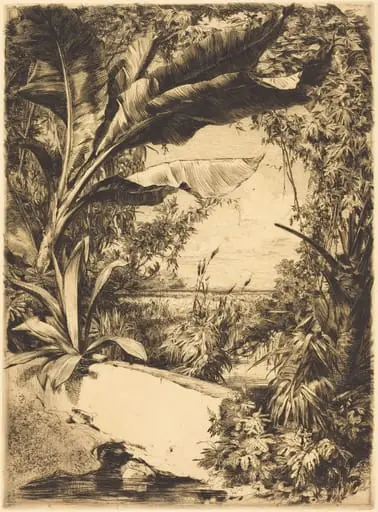
Plants of the Greenhouse is a print by the Impressionist artist Jules Jacquemart. It dates from 1872 and is held in the collection of the Cleveland Museum of Art.
About this work
This was made in 1872, when artists were splitting between two styles: Impressionism (loose, light-filled) and Realism (sharp details).
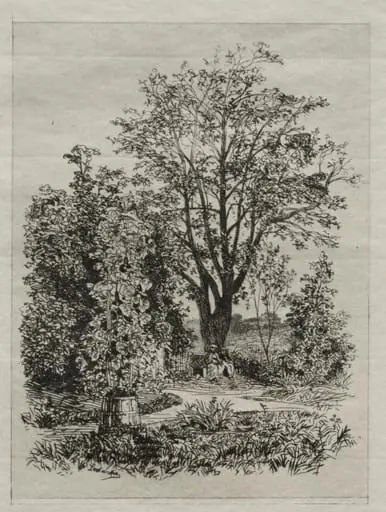
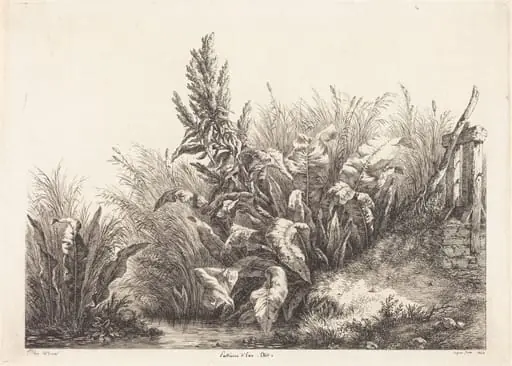
This print shows a tangle of plants—big leaves, skinny reeds, and dense vines—crowded together in a greenhouse. The lines are all scratchy and layered, like someone drew fast with a sharp tool. Light hits the leaves unevenly, making some parts dark and others fuzzy.
The artist focused on how plants grow wild, not polished. This was made in 1872, when artists were splitting between two styles: Impressionism (loose, light-filled) and Realism (sharp details).
Next, check out The Cleveland Museum of Art to see this print in person.
Overview
Plants of the Greenhouse is an 1872 print by French artist Jules Jacquemart, currently in the collection of The Cleveland Museum of Art. Executed in a detailed, textured manner, the work captures a dense interior of cultivated flora. Unlike idealized botanical illustrations, it presents vegetation in a state of unmanaged growth, emphasizing natural disorder over formal arrangement.
Subject & Meaning
The print depicts a crowded assemblage of tropical plants—broad leaves, slender reeds, and twisting vines—pressed together under glass. Rather than presenting them as specimens, Jacquemart renders them as living organisms in active, untamed growth. The composition suggests an environment where nature asserts itself despite human control, reflecting a quiet interest in organic spontaneity over cultivated order.
Technique & Style
Jacquemart employed a fine, incised line technique, building form through layered, scratchy strokes that mimic the texture of foliage and bark. Light is suggested not by wash or tone, but by the density and direction of the lines, creating areas of shadow and haze. The method aligns with etching traditions but leans toward immediacy, avoiding polished finish in favor of tactile, energetic mark-making.
History & Provenance
Created in 1872, the print emerged during a period of shifting artistic priorities in France, when naturalism was being redefined by both Realist and Impressionist movements. Jacquemart, known for his botanical and architectural prints, produced this work as part of a broader engagement with domestic greenhouses—then symbols of scientific curiosity and colonial botany. It entered The Cleveland Museum of Art’s collection through documented acquisition.
Context
In the 1870s, European greenhouses served as laboratories for exotic plant species collected from global expeditions. Artists and scientists alike turned to these spaces as sites of observation. Jacquemart’s print reflects this cultural moment, capturing the tension between controlled cultivation and the unruly vitality of plants, offering a quiet counterpoint to the era’s more celebrated landscape movements.
Legacy
Though not widely exhibited outside specialized collections, Plants of the Greenhouse remains a significant example of 19th-century botanical printmaking that prioritized observation over ornamentation. Its emphasis on texture and informal composition influenced later artists interested in the aesthetics of natural systems, preserving a nuanced record of how plants were perceived beyond scientific illustration.
Artist & collection