Artwork
Patience d'eau, étude (Study of a Patience-Dock)
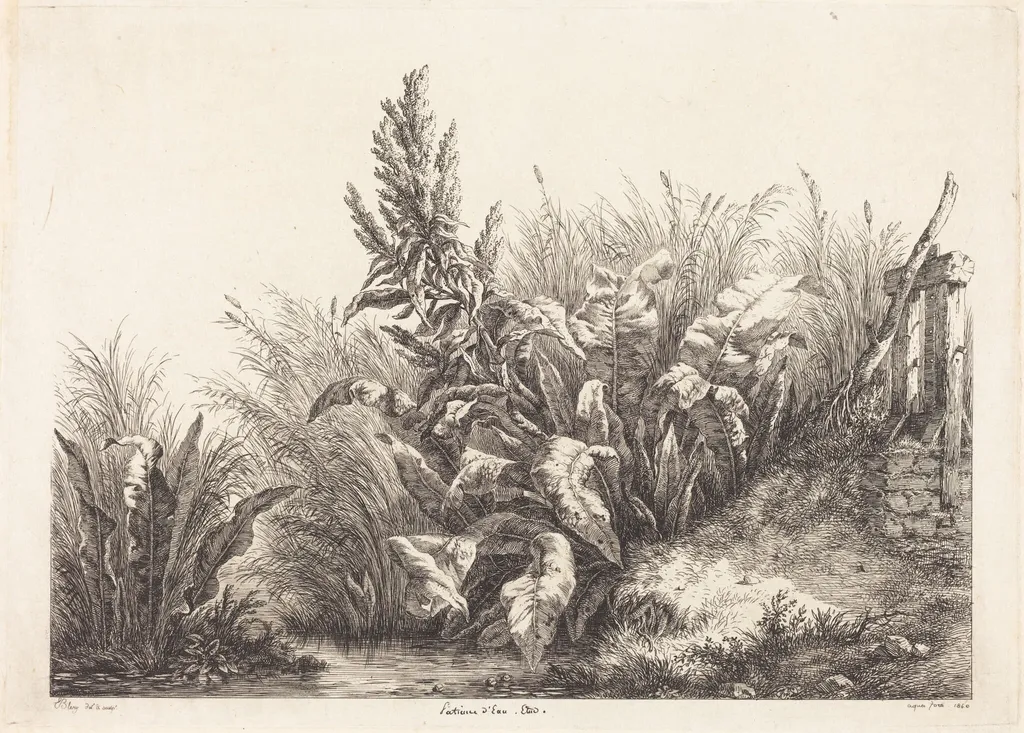
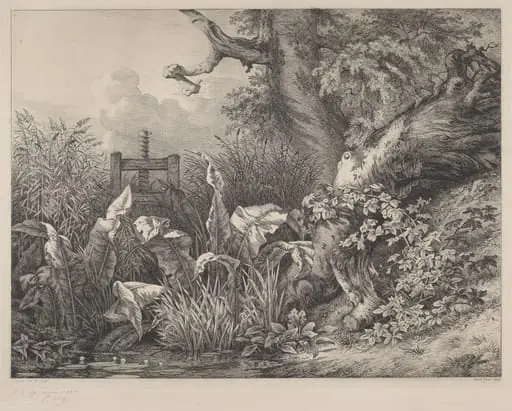
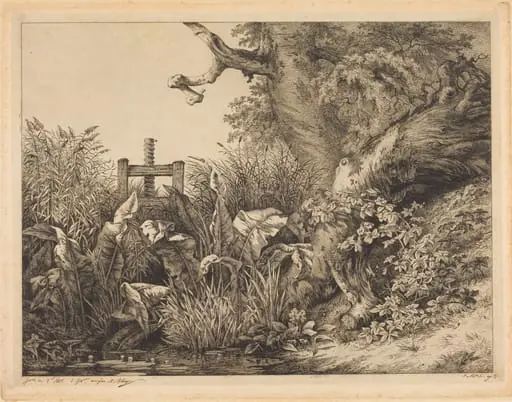
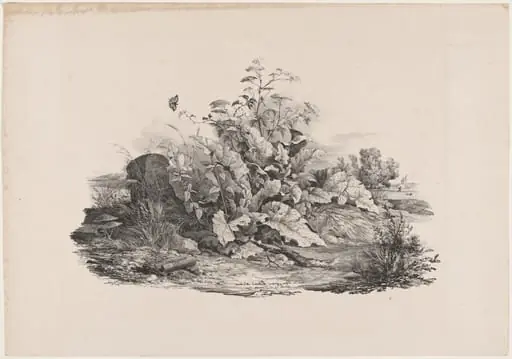
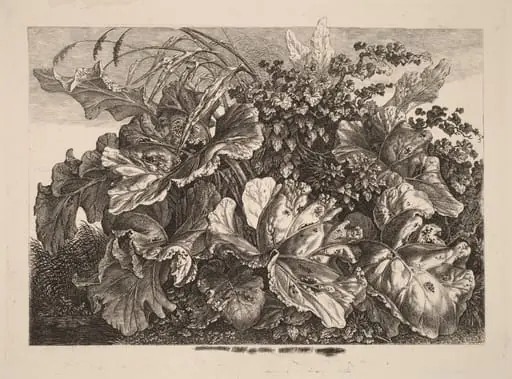
Patience d'eau, étude (Study of a Patience-Dock) is an ink print by the Romanticist artist Eugène Bléry. It dates from 1840 and is held in the collection of the National Gallery of Art.
About this work
Overview
Eugène Bléry’s 1840 print titled *Patience d’eau, étude* presents a quiet natural scene rendered through a combination of etching, engraving, and roulette on a chine collé support. The composition centers on a dense assemblage of foliage, with broad leaves and slender grasses emerging from the ground, while a modest pool of water occupies the rear space, its margins dotted with marginal plants.
Subject & Meaning
The work focuses on the simple yet contemplative observation of a water‑edge environment, emphasizing the calm that arises from the interplay of vegetation and reflective surface. By isolating the botanical elements and minimizing human presence, the image invites viewers to consider the inherent serenity of an undisturbed landscape.
Technique & Style
The chine collé base, a thin paper adhered to a sturdier support, allows delicate detail while preserving structural integrity.
Bléry employed a layered approach, first incising the image with fine etching lines, then reinforcing outlines through engraving, and adding tonal variation via roulette stippling. The chine collé base, a thin paper adhered to a sturdier support, allows delicate detail while preserving structural integrity. Subtle chiaroscuro enhances depth, creating a realistic sense of volume within the plant forms.
Context
Created during the early nineteenth century, the print aligns with Romantic interests in nature’s emotive power and the scientific curiosity of botanical illustration. While not overtly dramatic, its meticulous rendering reflects the period’s fascination with accurate observation, situating the piece within the broader movement that valued both aesthetic feeling and empirical detail.
Artist & collection