Artwork
St. John on the Island of Patmos
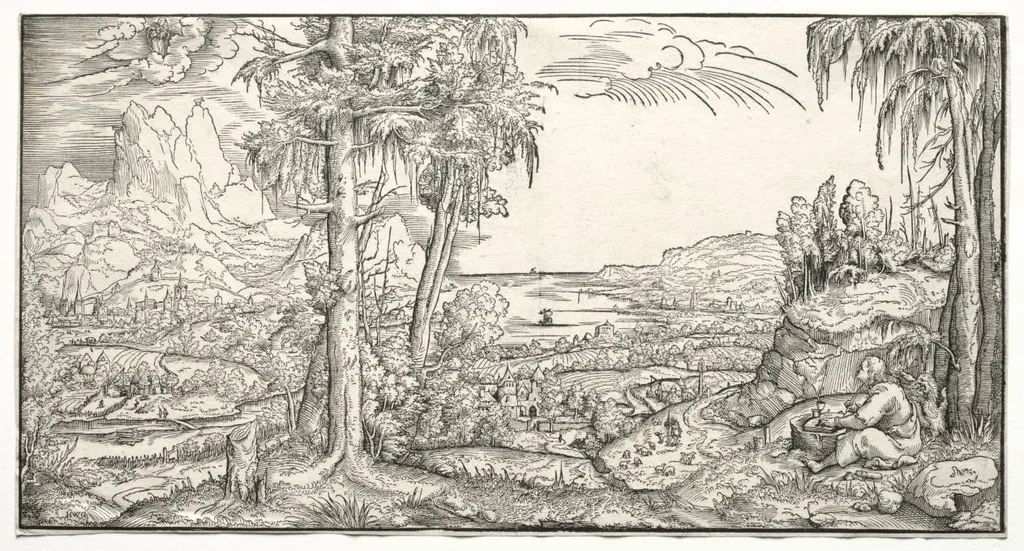
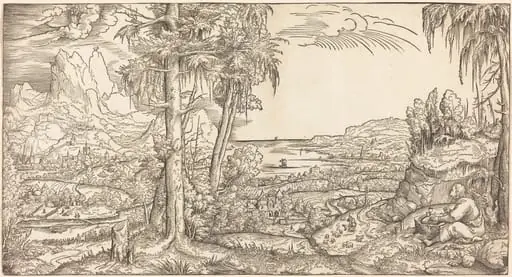
St. John on the Island of Patmos is a print by the Renaissance artist Virgil Solis. It dates from 1550 and is held in the collection of the Cleveland Museum of Art.
About this work
Overview
The surrounding landscape—rugged, expansive, and alive with natural and human activity—frames the moment as both solitary and divinely charged.
This print depicts Saint John the Evangelist during his exile on the island of Patmos, where Christian tradition holds he received the visions recorded in the Book of Revelation. He is shown seated on a rocky outcrop, engaged in writing, while gazing toward a celestial figure above. The surrounding landscape—rugged, expansive, and alive with natural and human activity—frames the moment as both solitary and divinely charged.
Subject & Meaning
The central figure, Saint John, embodies contemplative reception rather than active revelation. Above him, the woman of the apocalypse—often associated with the Virgin Mary—hovers as a luminous apparition, signaling divine communication. The scene emphasizes inner spiritual experience over dramatic spectacle, suggesting that revelation arises from stillness amid isolation, not from grandeur or crowds.
Technique & Style
The composition uses contrasting scales to heighten emotional tension: the small, grounded figure of John is dwarfed by towering cliffs and a vast sky. Detailed rendering of distant farms, ships, and shepherds anchors the vision in a tangible world, while the ethereal figure above remains stylized and glowing. The artist avoids overt theatricality, favoring quiet tension between earth and heaven.
History & Provenance
The print originates from a broader tradition of Northern European religious imagery, likely produced in the late 15th or early 16th century. It reflects the period’s interest in biblical narratives rendered with geographic specificity and symbolic detail. Though the artist’s identity is unrecorded, the work aligns with regional printmaking centers known for devotional subjects and landscape integration.
Context
During the late Middle Ages and early Renaissance, depictions of Saint John on Patmos became popular in devotional art, especially as literacy and personal piety grew. The inclusion of everyday elements—ships, shepherds, farms—reflected a broader cultural shift toward naturalism and the belief that divine truths could be perceived through the observable world.
Legacy
This print contributes to a visual language in which nature serves as both setting and medium for revelation. Its integration of landscape with spiritual vision influenced later artists exploring the relationship between environment and transcendence. Though not widely known today, it exemplifies how religious imagery adapted to contemporary perceptions of the natural world.
Artist & collection

Artist
Virgil Solis or Virgilius Solis (1514 – 1 August 1562), a member of a prolific family of artists, was a German draughtsman and printmaker in engraving, etching and woodcut who worked in his native city of Nuremberg.

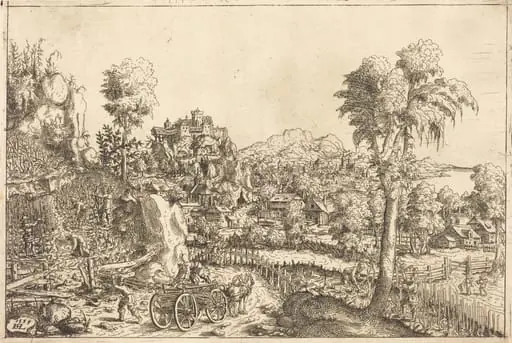 Landscape with a Vineyard
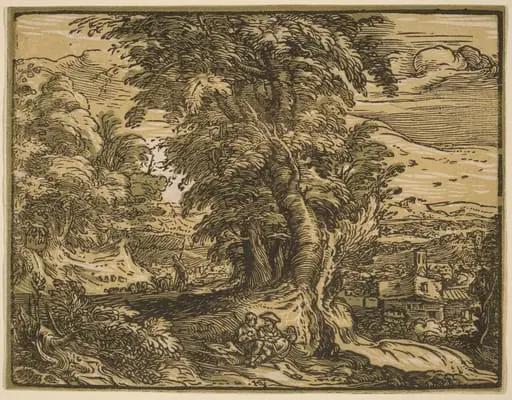 Landscape with a Shepherd Couple
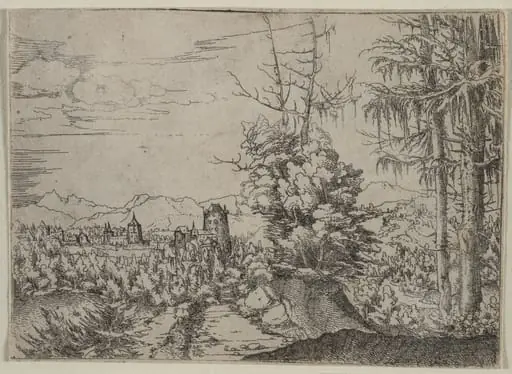 Landscape with Two Pines
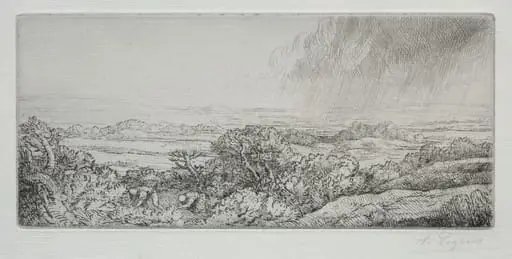 Les Ramasseurs des Champignons
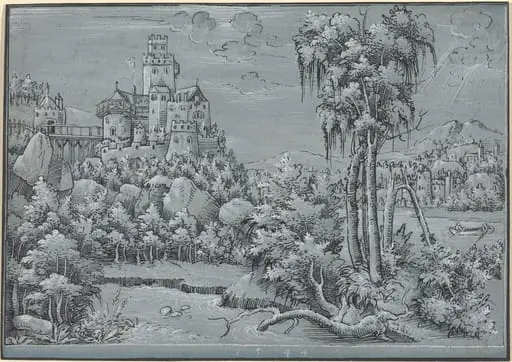 Landscape with a Castle
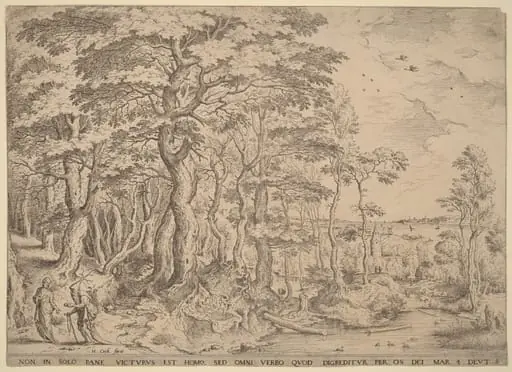 Landscape with the Temptation of Christ
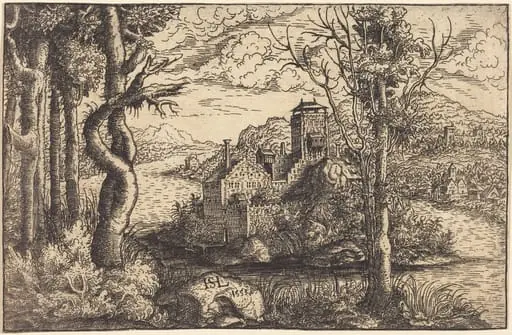 View on a River with a Castle on an Island
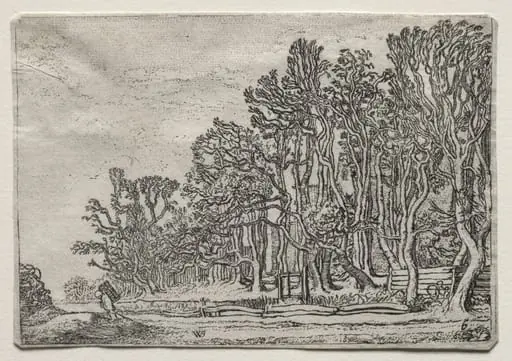 The Set of the Landscapes: Two Plank-Hedges
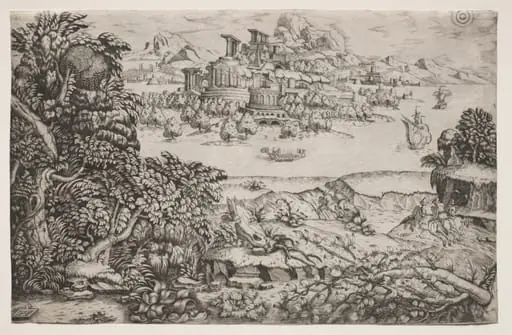 Landscape with a Temple above a Lake
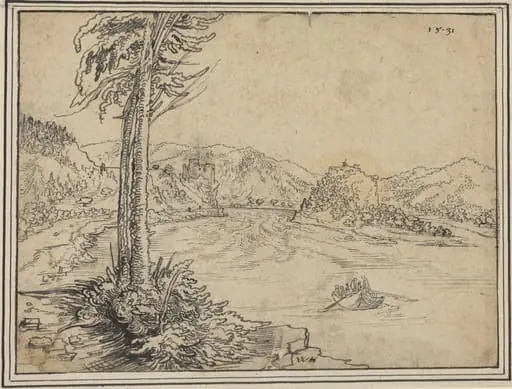 The Rapids of the Danube near Grein
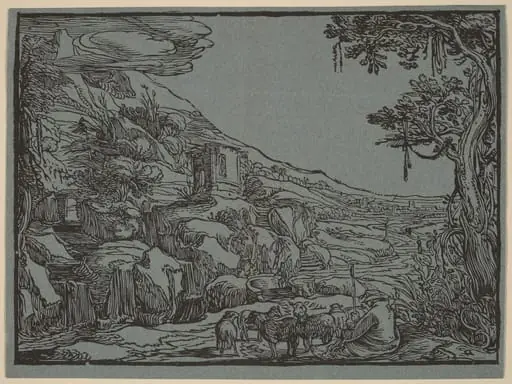 Arcadian Landscape
 Saint John on Patmos