Artwork
Recumbent Christ
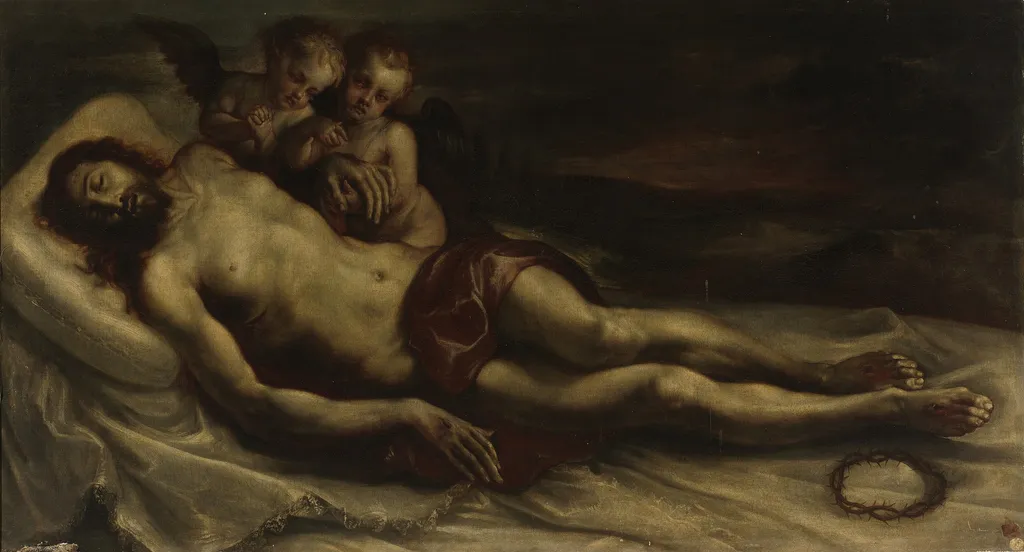
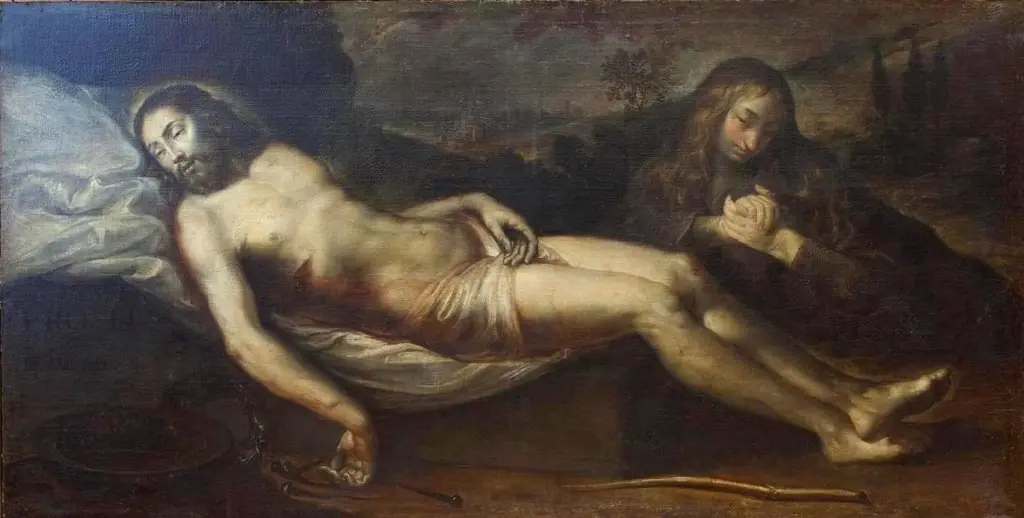
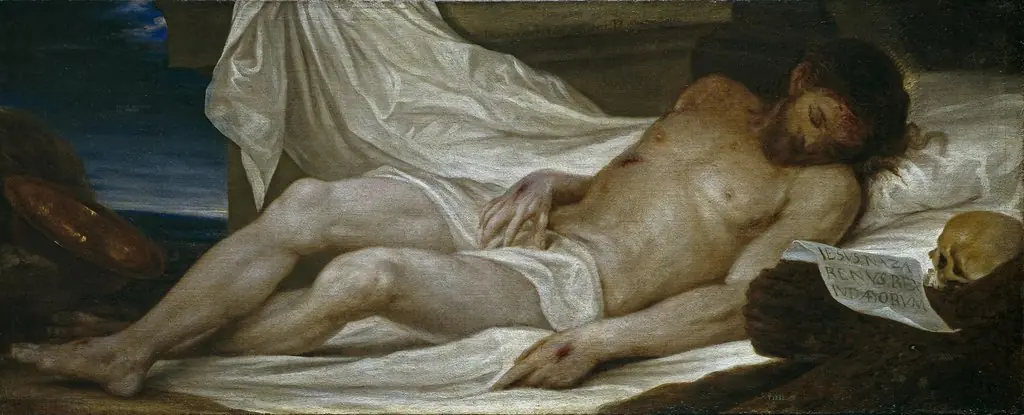
Recumbent Christ is an oil painting by the Early Baroque Italian artist Francisco Camilo. It dates from 1634 and is held in the collection of the Museo del Prado.
About this work
Overview
Francisco Camilo, a Spanish painter of Italian descent, produced this oil painting in 1634 during the early Baroque era.
Francisco Camilo, a Spanish painter of Italian descent, produced this oil painting in 1634 during the early Baroque era. The work portrays Christ in repose, rendered with quiet solemnity. It resides in the Museo del Prado’s collection, reflecting the religious imagery favored in Habsburg Spain. Camilo’s training under his stepfather, Pedro de las Cuevas, grounded him in the conventions of Counter-Reformation art, which emphasized emotional restraint and devotional clarity.
Subject & Meaning
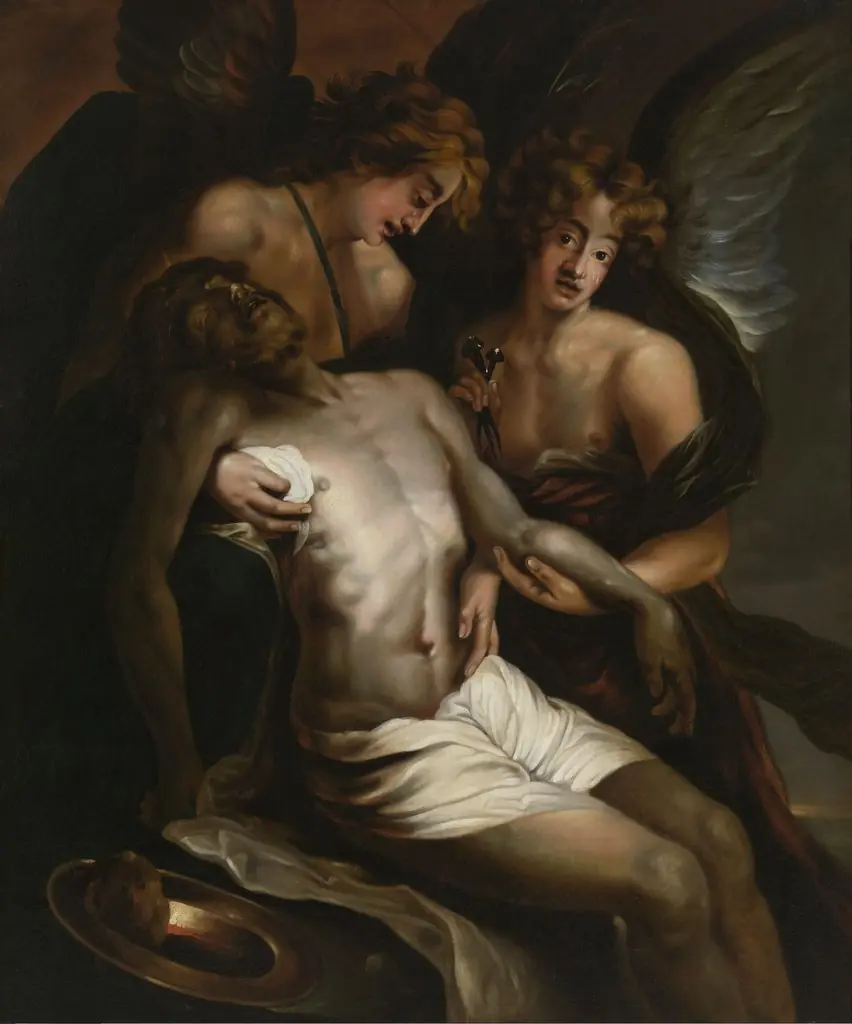
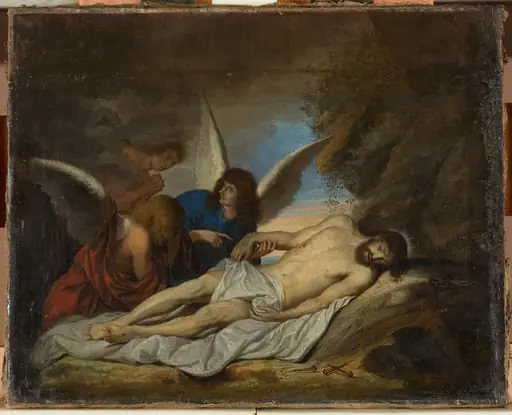
The painting depicts Christ after the crucifixion, lying on a plain cloth, his body exposed yet dignified. A crown of thorns rests at his feet, a silent reference to his suffering and sacrifice. Two cherubs, entwined behind him, suggest mourning or celestial witness. The absence of overt drama shifts focus to inner stillness, inviting contemplation rather than awe. This interpretation aligns with Jesuit spiritual ideals promoting personal meditation on Christ’s humanity.
Technique & Style
Camilo employs chiaroscuro to model Christ’s form with subtle gradations of light and shadow, lending volume without theatricality. The palette is restrained—soft grays, muted reds, and pale tones—enhancing the painting’s meditative tone. The fabric folds are rendered with delicate precision, and the cherubs’ forms are lightly sketched, avoiding distraction. The composition is tightly focused, eliminating background detail to isolate the figure and reinforce its spiritual weight.
History & Provenance
Created in Madrid in 1634, the painting entered the Spanish royal collection before being transferred to the Museo del Prado in the 19th century. Its survival through political upheavals and royal redistributions reflects its status as a devotional object rather than a public spectacle. No early documentation confirms its original commission, but its scale and subject suggest it was intended for private or monastic use within a devout household or religious institution.
Context
In mid-17th century Spain, religious art served as a tool of spiritual renewal amid the Counter-Reformation. Artists like Camilo avoided the exuberance of Italian Baroque, favoring introspective compositions that aligned with Spanish mysticism. The emphasis on Christ’s physical vulnerability, paired with restrained emotion, mirrored the devotional practices promoted by figures like Saint Teresa of Ávila, who urged intimate, personal encounters with the divine.
Legacy
Though Camilo is not among the most widely studied Spanish painters, this work exemplifies the quiet, inward-turning strain of Baroque religious art in Spain. It influenced later devotional imagery by demonstrating how emotional depth could be achieved through subtlety rather than spectacle. The painting remains a quiet reference point in the Prado’s collection, illustrating how faith was rendered not through grandeur, but through stillness.
Artist & collection
Artist
Francisco Camilo (Madrid 1610–Madrid 1671) was a Spanish painter, the son of an Italian immigrant who had settled in Madrid.