Artwork
Arrivée du pere La Ligne
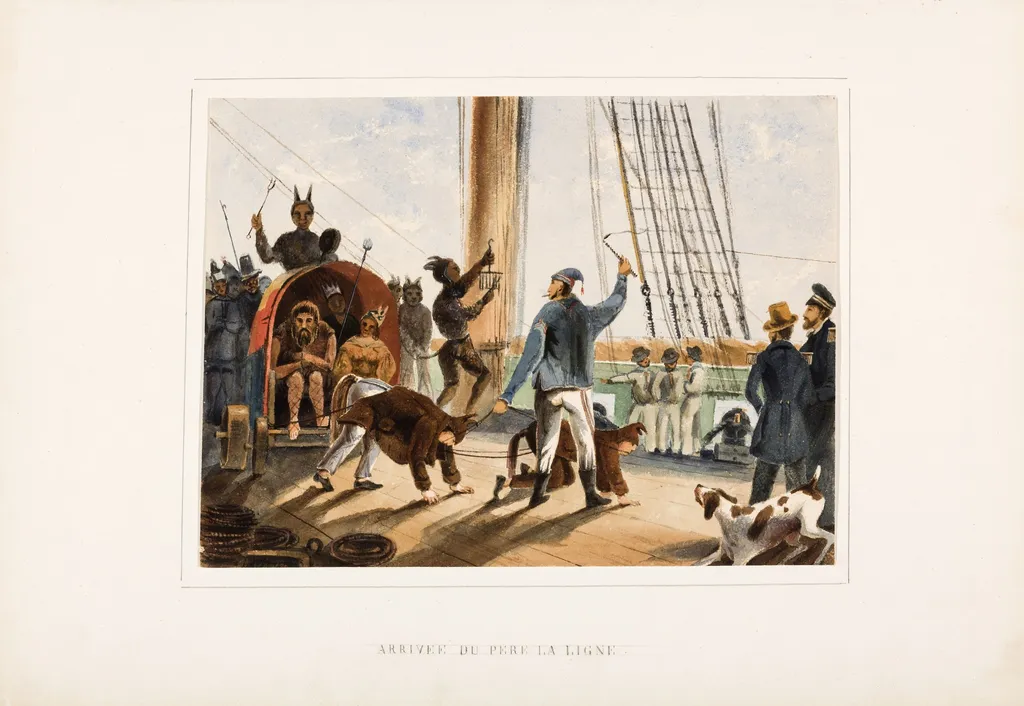
Arrivée du pere La Ligne is a graphite painting by the French Romanticist artist Jules Marie Vincent de Sinety. It dates from 1837 and is held in the collection of the Pinacoteca de São Paulo.
About this work
Overview
Created in 1837 by Jules Marie Vincent de Sinety, Arrivée du père La Ligne is a genre work executed in graphite and catalogued as a painting. The composition captures a bustling moment on a ship’s deck, where a uniformed figure commands a group of passengers and dogs. The piece is part of the collection of the Pinacoteca do Estado de São Paulo in Brazil.
Subject & Meaning
The scene portrays a travel episode, likely the arrival of a senior officer or patriarch, suggested by the title. Central to the image is a man in a blue uniform holding a long pole, directing a crowd that includes civilians, soldiers, and accompanying dogs. The arrangement conveys the orderly yet lively atmosphere of maritime embarkation in the early nineteenth century.
Technique & Style
De Sinety employs graphite to render fine detail and tonal variation, achieving a balance between warm wooden hues and cool sky blues through subtle shading. The drawing demonstrates a keen observation of light and shadow, creating depth without the use of color pigments. The energetic line work and careful modeling give the figures a sense of movement and immediacy.
History & Provenance
After its completion in 1837, the work entered the holdings of the Pinacoteca do Estado de São Paulo, where it remains on display. Documentation traces its acquisition to the museum’s early 20th‑century efforts to assemble a representative collection of Brazilian and European art, though earlier ownership details are not recorded.
Context
The piece reflects the broader 19th‑century fascination with travel and military presence in everyday life. Depicting a naval setting, it aligns with contemporary genre paintings that documented social interactions aboard ships, offering insight into the protocols and mixed company—civilians, soldiers, and animals—that characterized such voyages.
Artist & collection
Artist
Jules Marie Vincent de Sinety (1812–1898) was an artist, born in Aix-en-Provence.

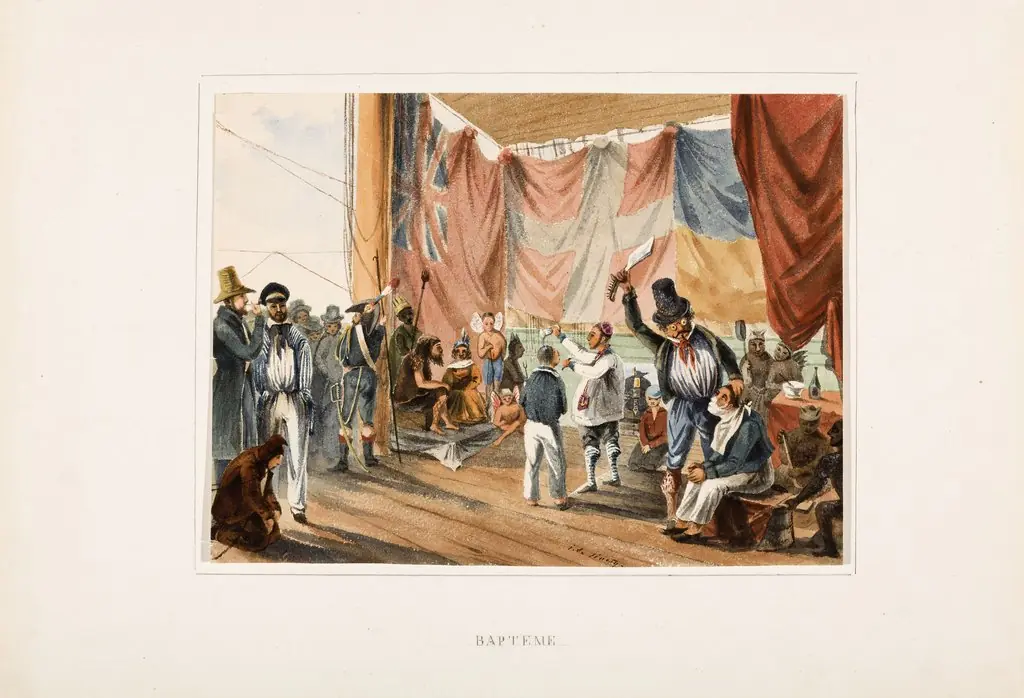 Bapteme
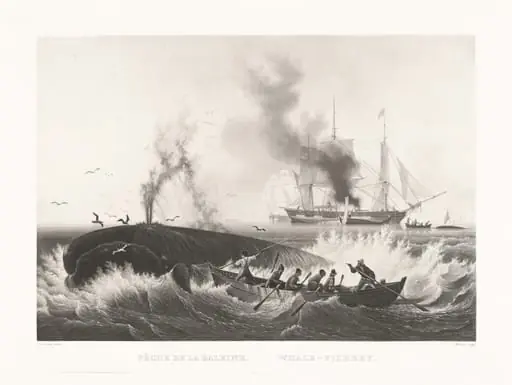 Pêche de la Baleine, Whale-Fishery
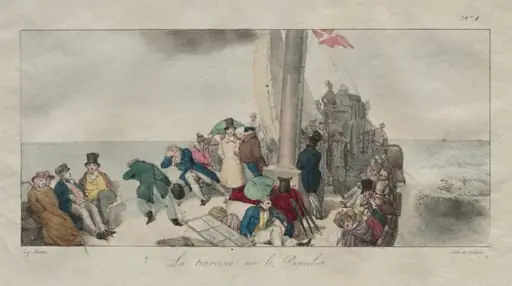 Souvenirs of London: Crossing on the Packet Boat
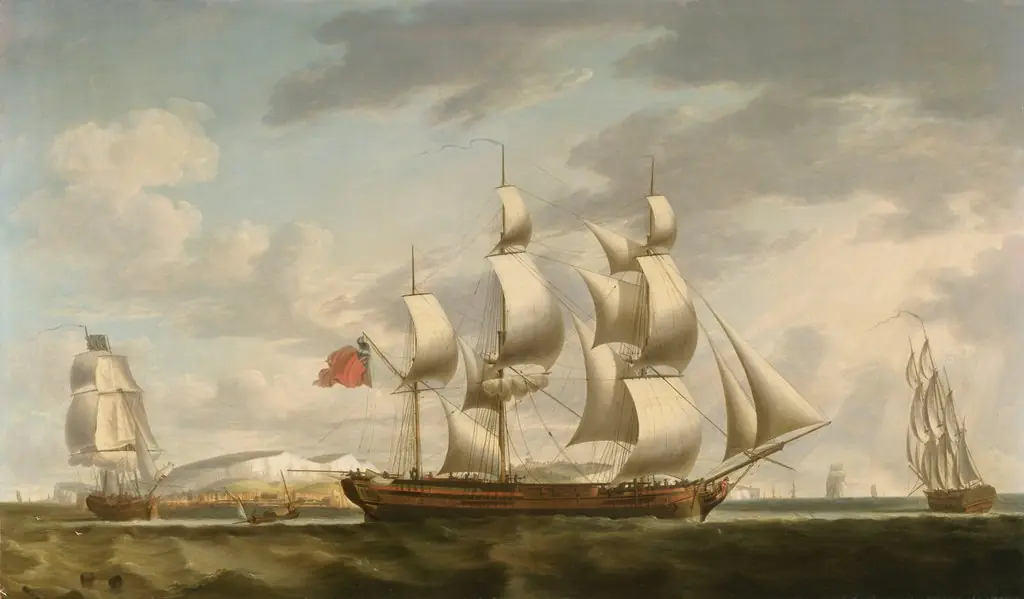 Three Views of "Amity Hall" With a View of Dover and the White Cliffs
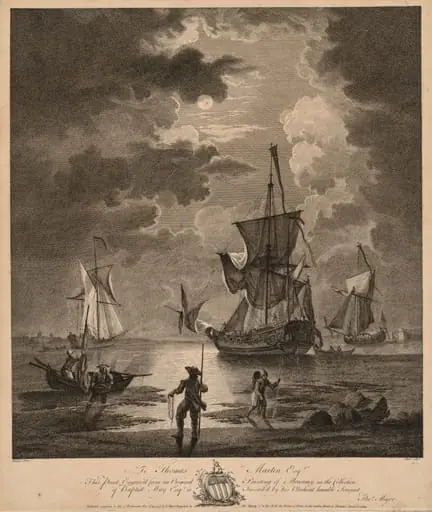 A View of the Sea by Moonlight
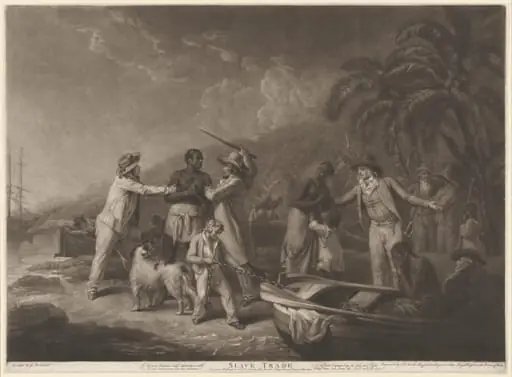 Slave Trade
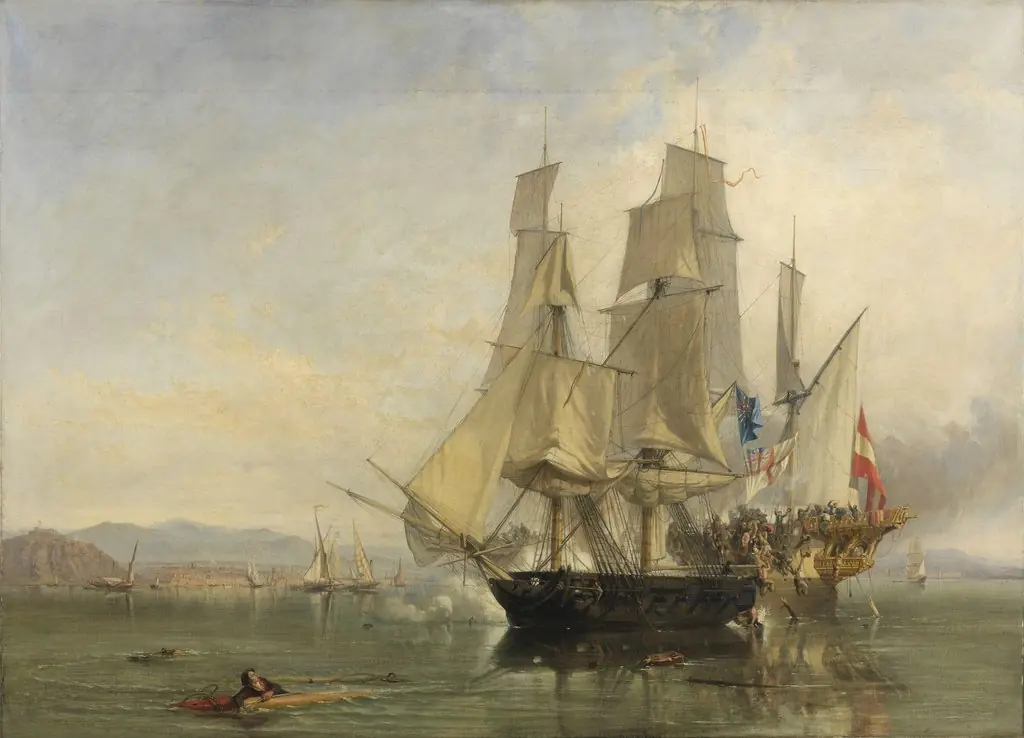 The Action and Capture of the Spanish Xebeque Frigate El Gamo
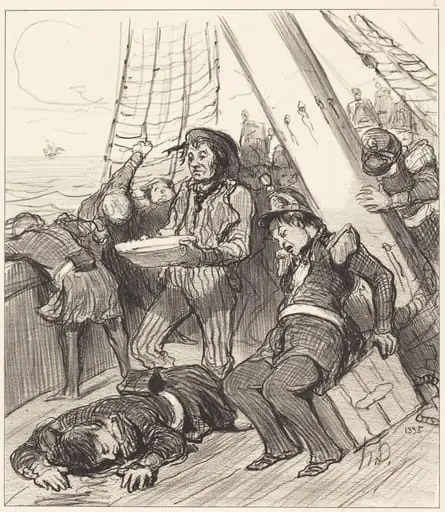 Plusieurs gardes nationaux qui n'avaient pas songé...
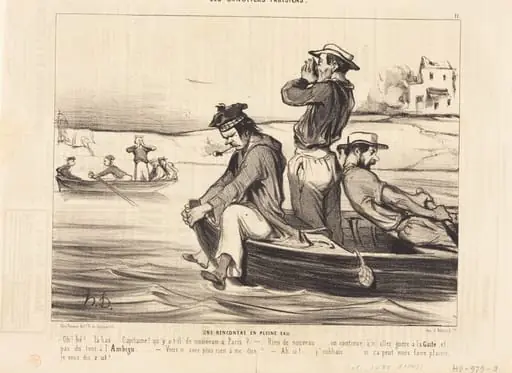 Une Rencontre en pleine eau
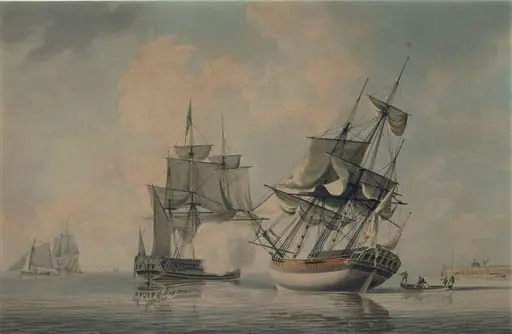 Seapiece with Shipping
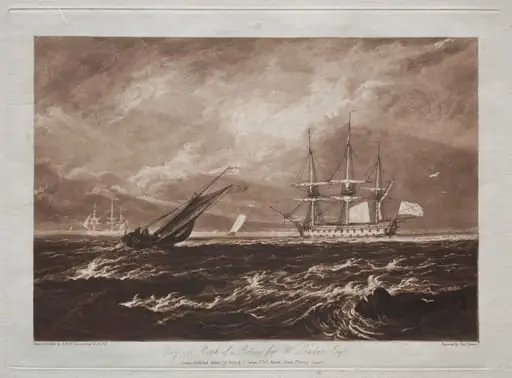 Liber Studiorum: The Leader Sea-piece