Artwork
Interior of a Church in Averbode
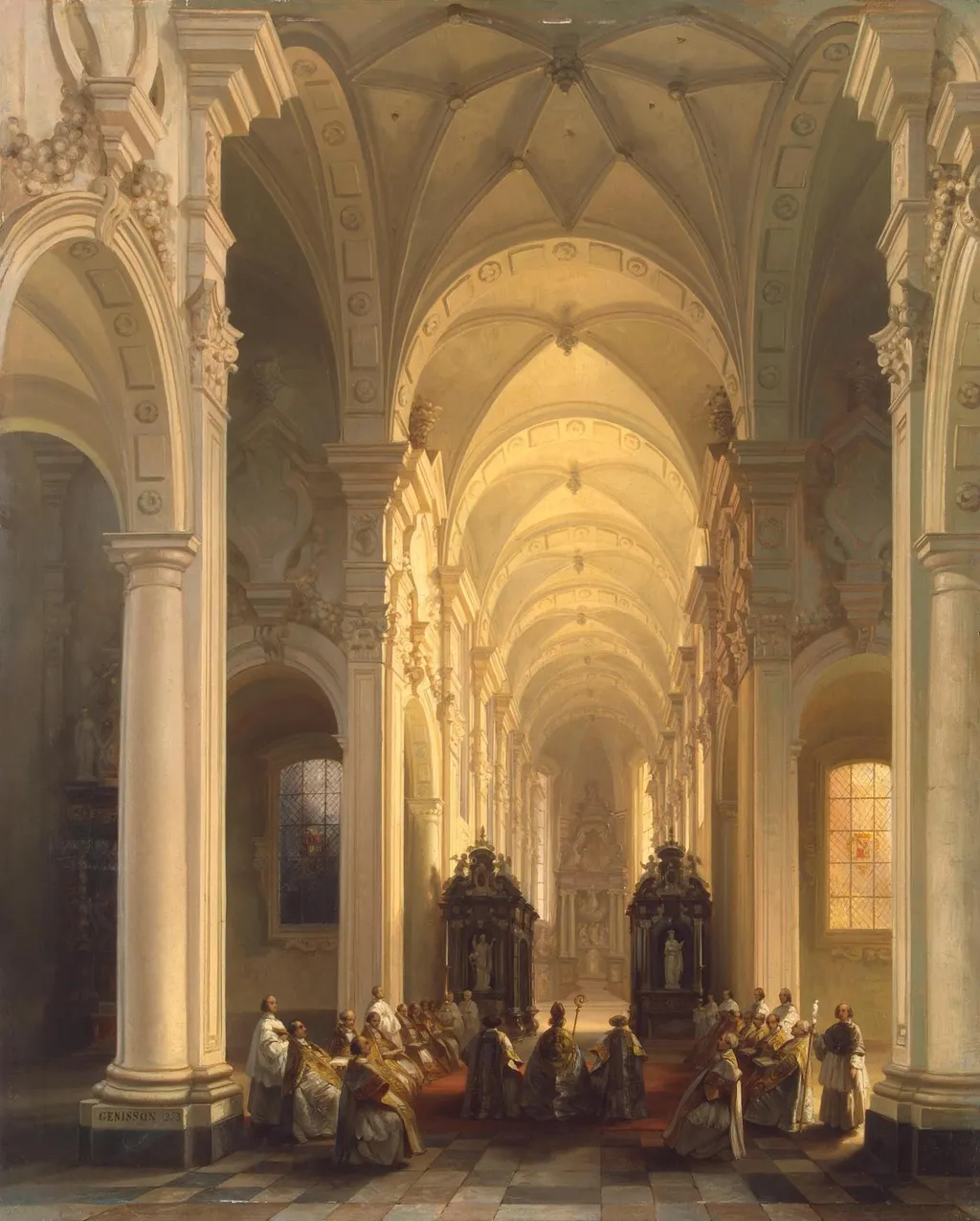
Interior of a Church in Averbode is an oil painting by Jules Victor Génisson. It dates from 1853 and is held in the collection of the Hermitage Museum.
About this work
Overview
The work resides in the State Hermitage Museum’s collection, reflecting its historical value within 19th-century European painting.
Painted in 1853 by Belgian artist Jules Victor Génisson, this oil on canvas depicts the interior of the church in Averbode, a site known for its architectural significance. Génisson, recognized for his precise renderings of sacred and civic structures, captures the spatial complexity of the nave with careful attention to proportion and detail. The work resides in the State Hermitage Museum’s collection, reflecting its historical value within 19th-century European painting.
Subject & Meaning
The scene portrays a quiet moment of worship within the church, where figures in formal dress are arranged in orderly groups, some seated, others standing. A cluster of individuals in white robes gathers near the center, suggesting a liturgical ceremony. The composition emphasizes solemnity and communal devotion, with no overt narrative drama—instead, the atmosphere conveys reverence through stillness and spatial harmony.
Technique & Style
Génisson employs chiaroscuro to model the vaulted ceiling and arched columns, creating a sense of depth and volume. Light falls selectively, illuminating central figures while leaving corners in shadow, guiding the viewer’s gaze. The architectural details—carvings, moldings, and stonework—are rendered with meticulous precision, showcasing his training in architectural draftsmanship and his interest in structural authenticity.
History & Provenance
The painting was completed in 1853 and entered the collection of the State Hermitage Museum at some point in the 19th or early 20th century. Its acquisition likely followed broader European interest in regional religious architecture during the Romantic period. No significant changes in ownership are documented, and it has remained in the museum’s care since at least the early 1900s.
Context
In mid-19th-century Belgium, interest in ecclesiastical heritage grew alongside national identity formation. Artists like Génisson documented historic churches as both cultural monuments and subjects of aesthetic study. This work aligns with a broader trend of recording sacred interiors, not as idealized visions but as observed spaces imbued with daily ritual and architectural legacy.
Legacy
Though Génisson is not widely known outside Belgium, this painting exemplifies a quiet but significant strand of 19th-century European painting: the faithful depiction of sacred architecture as a vessel of collective memory. Its preservation in the Hermitage underscores its role as a document of both artistic technique and religious space in a period of transition.
Own this work as a print
Artist & collection
Artist
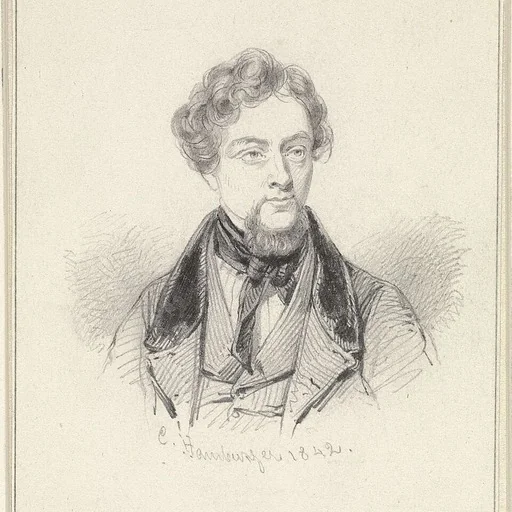
Jules Victor Génisson (French pronunciation: ; 24 February 1805 – 10 October 1860) was a Belgian painter, chiefly known for his architectural painting.

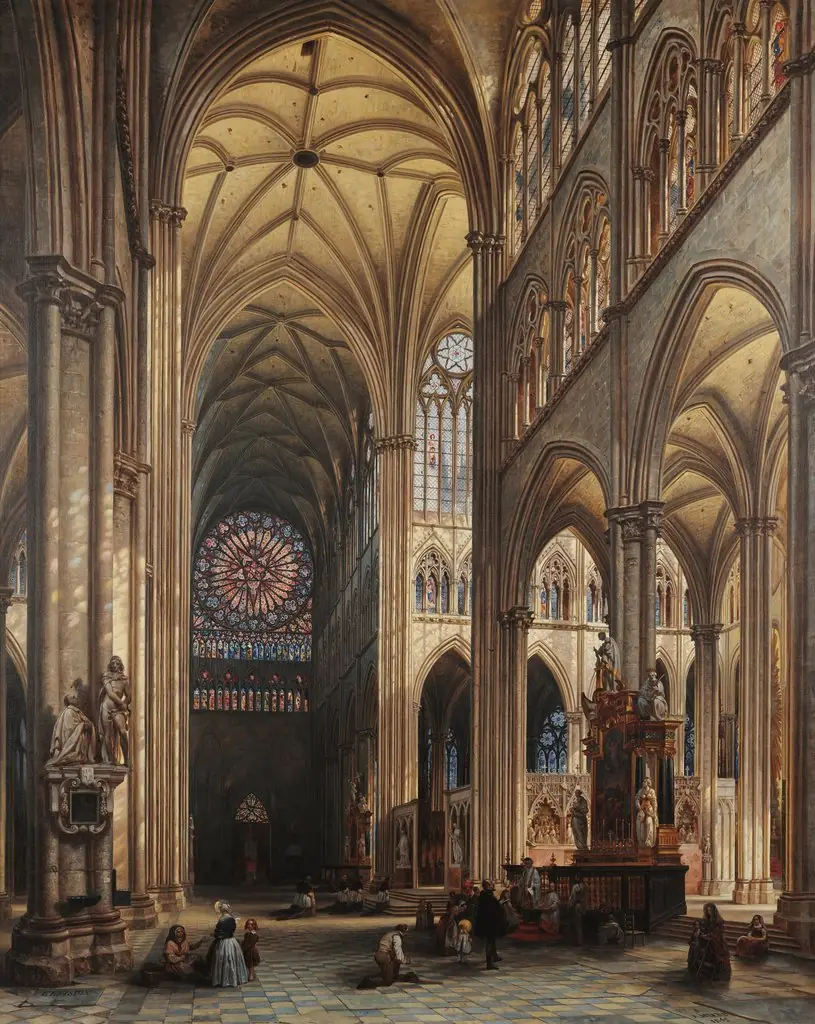
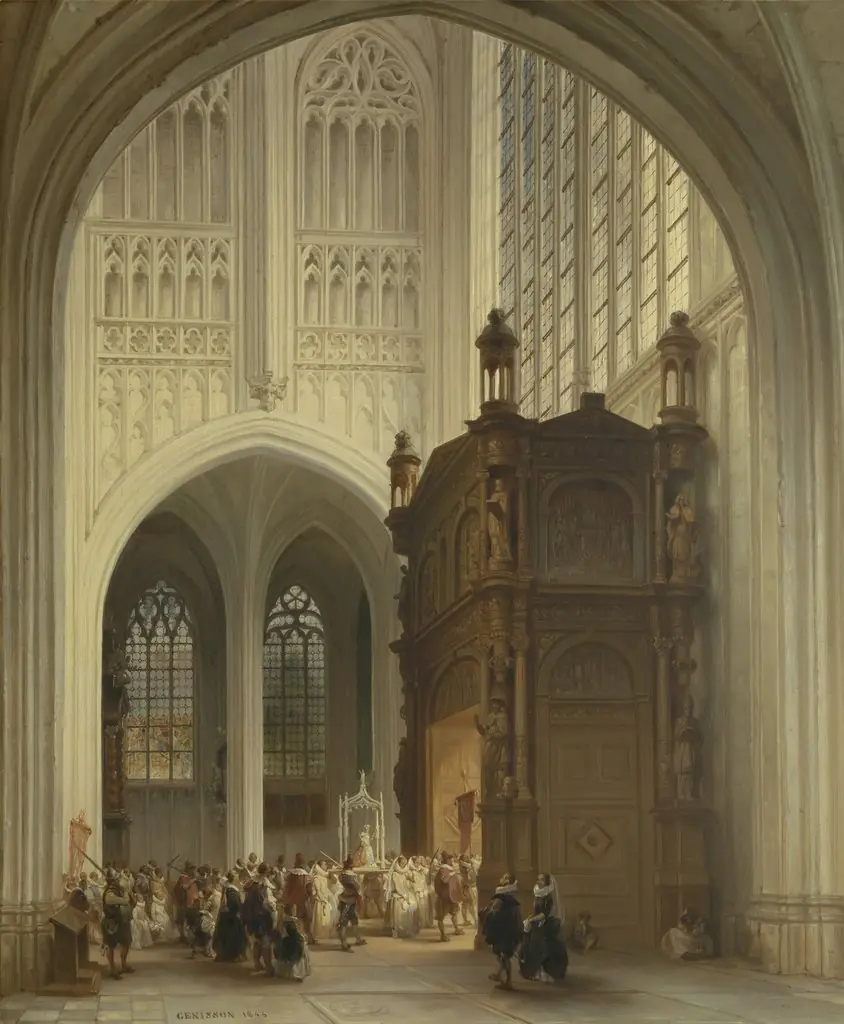
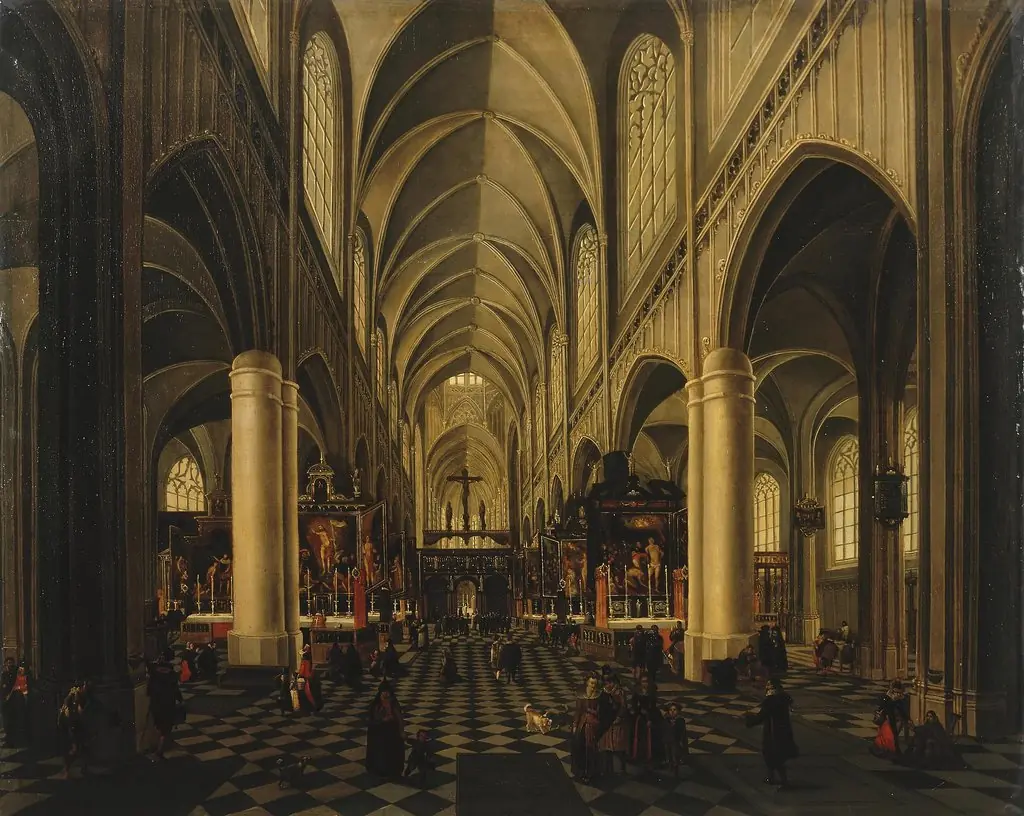 Interior of a Gothic Church
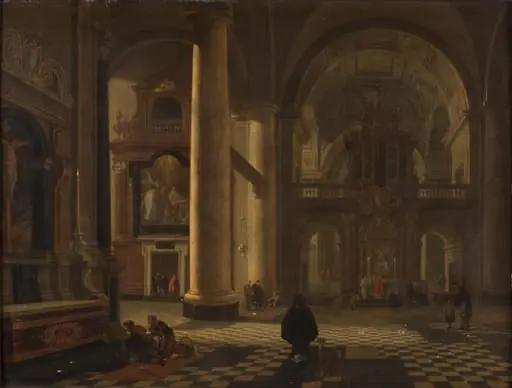 Interior of a Catholic Church
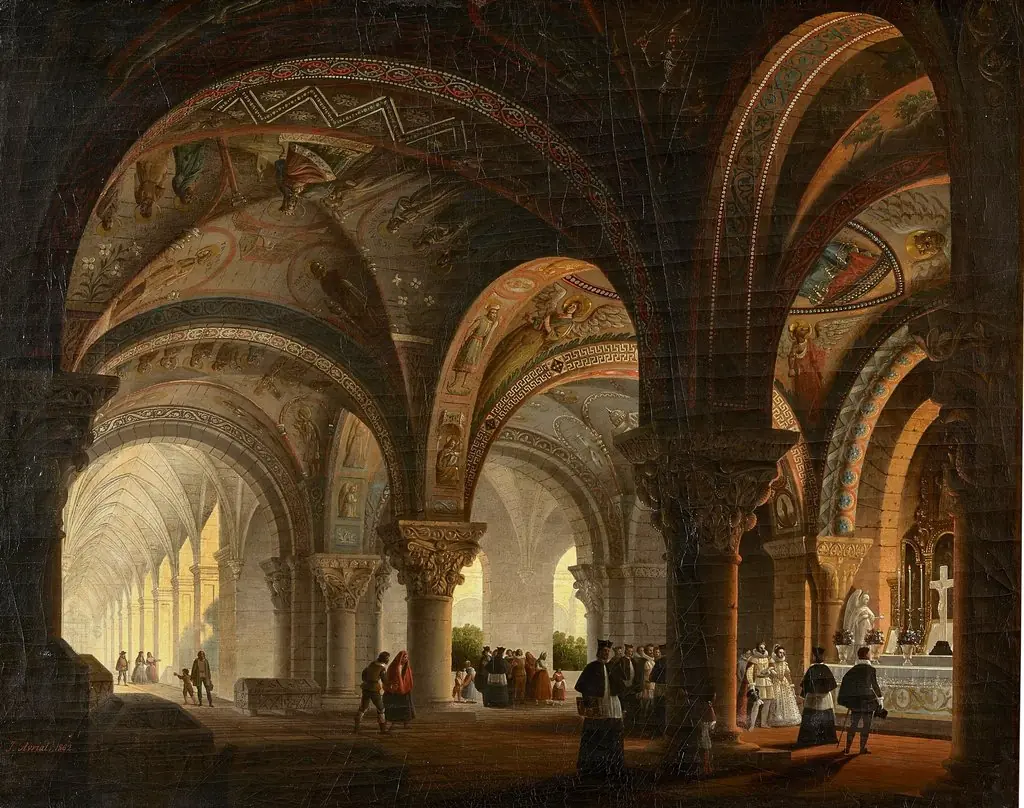 Panteón de los reyes de León
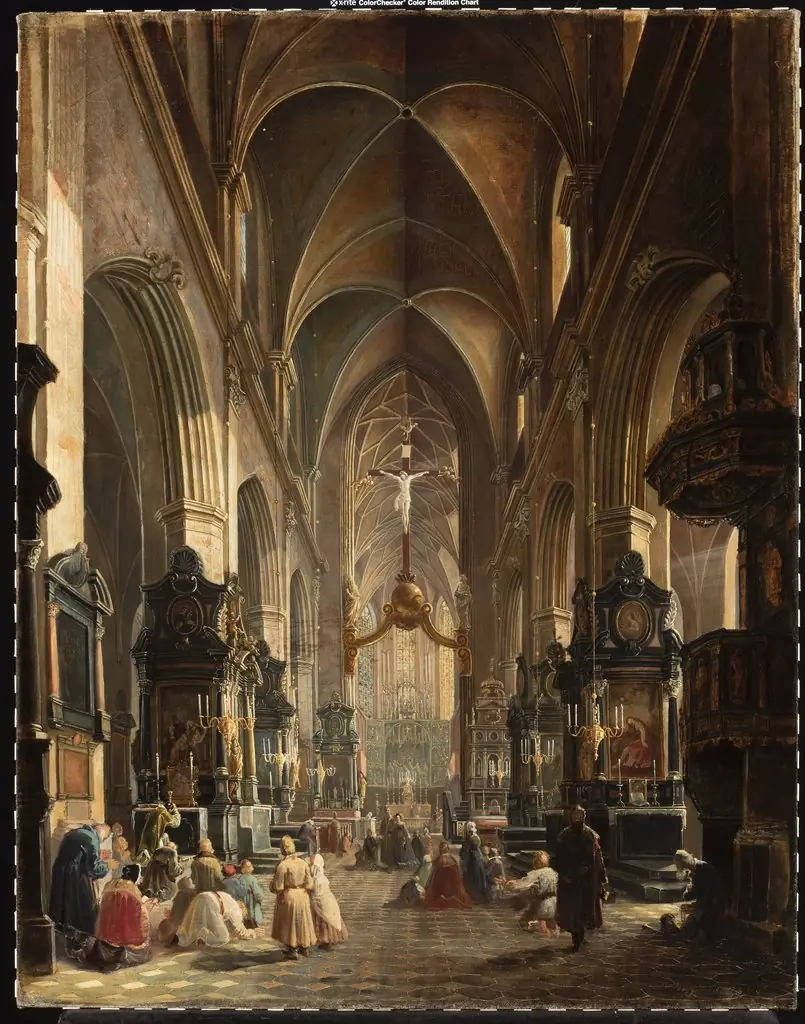 Interior of the Church of Virgin Mary in Kraków
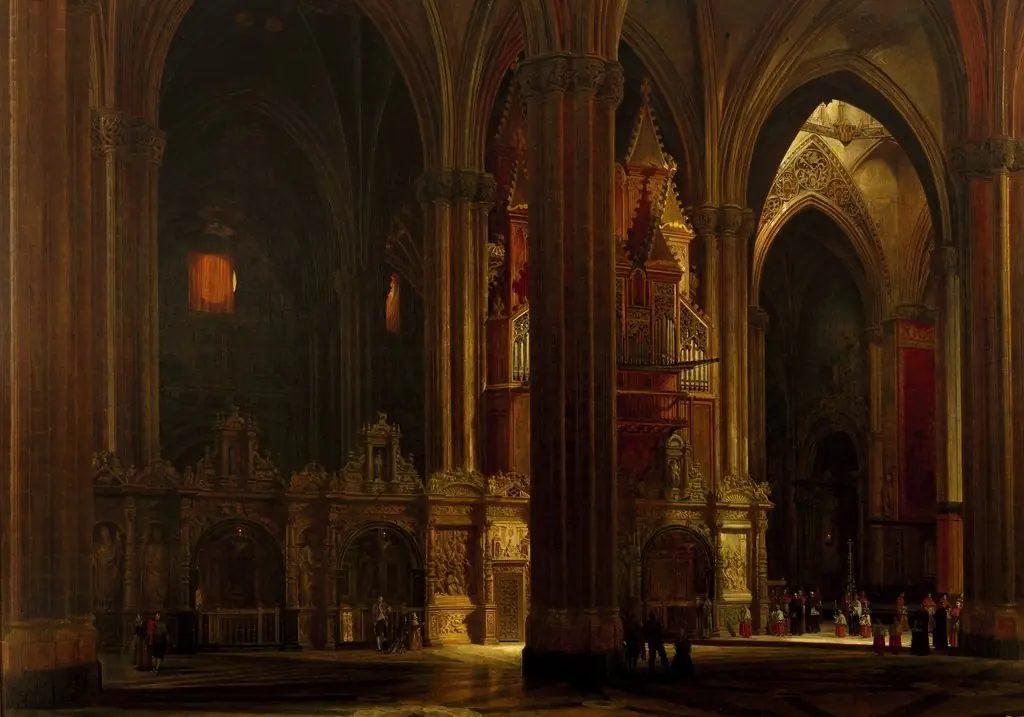 Vista del interior de la seo de Zaragoza
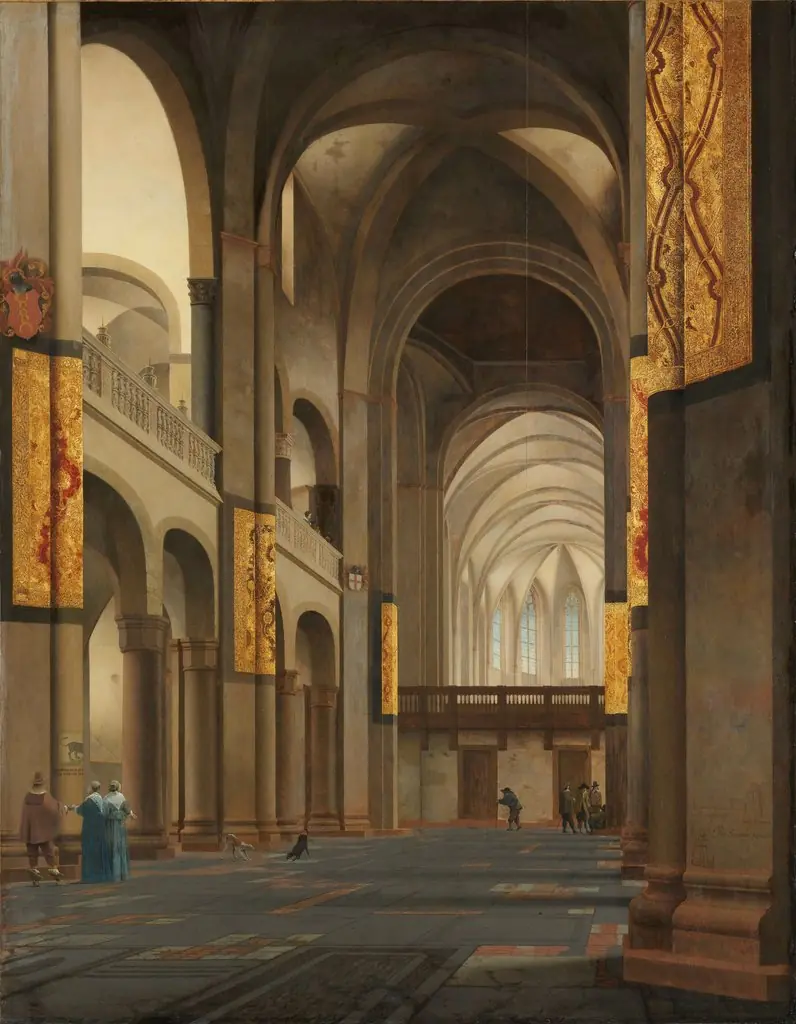 The Nave and Choir of the Mariakerk in Utrecht, seen from the West
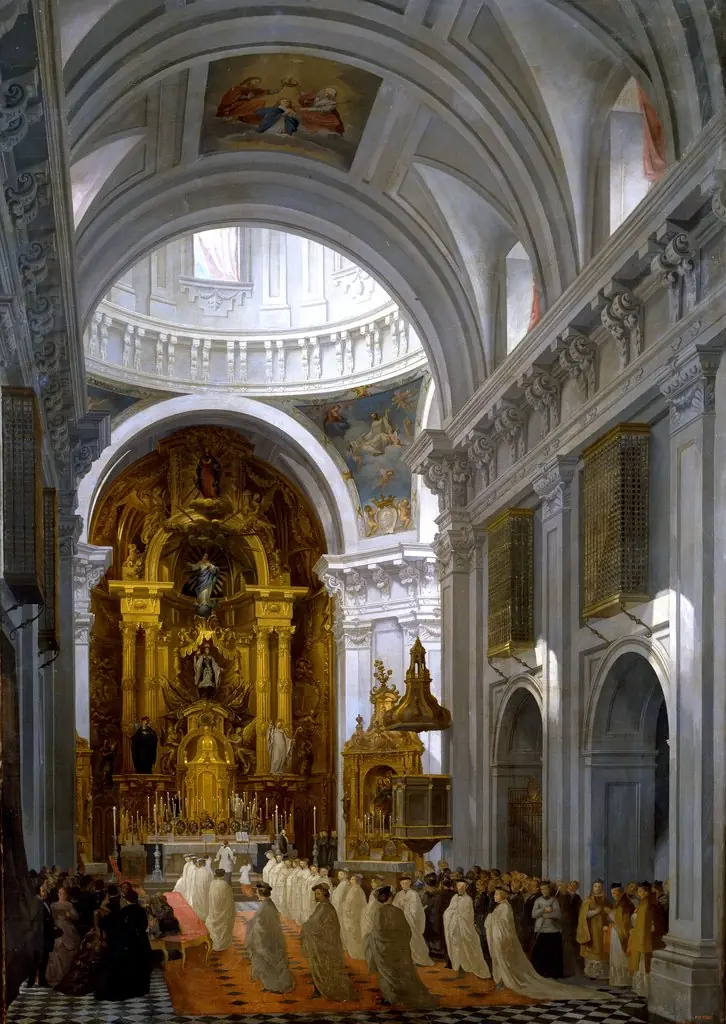 Interior de la Iglesia de las Calatravas en Madrid
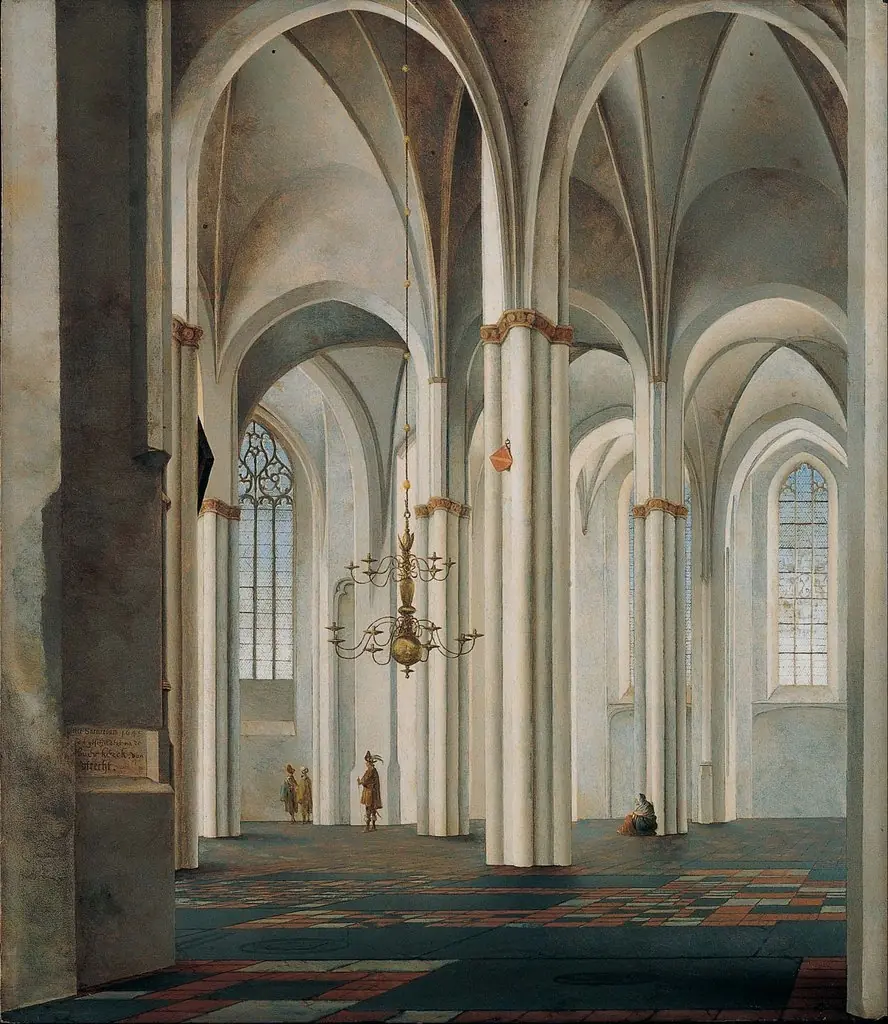 Interior of the Buurkerk, Utrecht