Artwork
Interior of the Saint Peter’s Church in Louvain
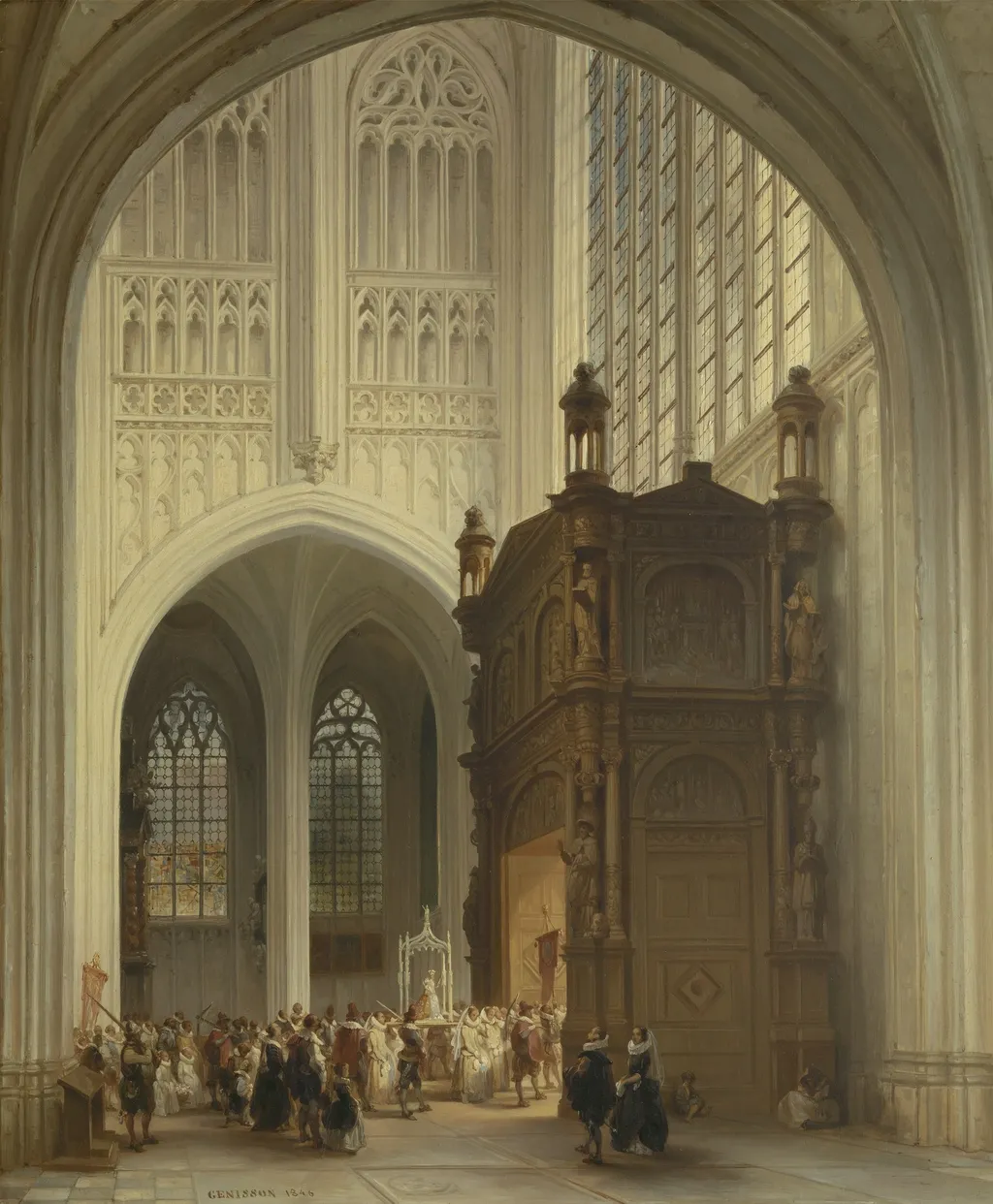
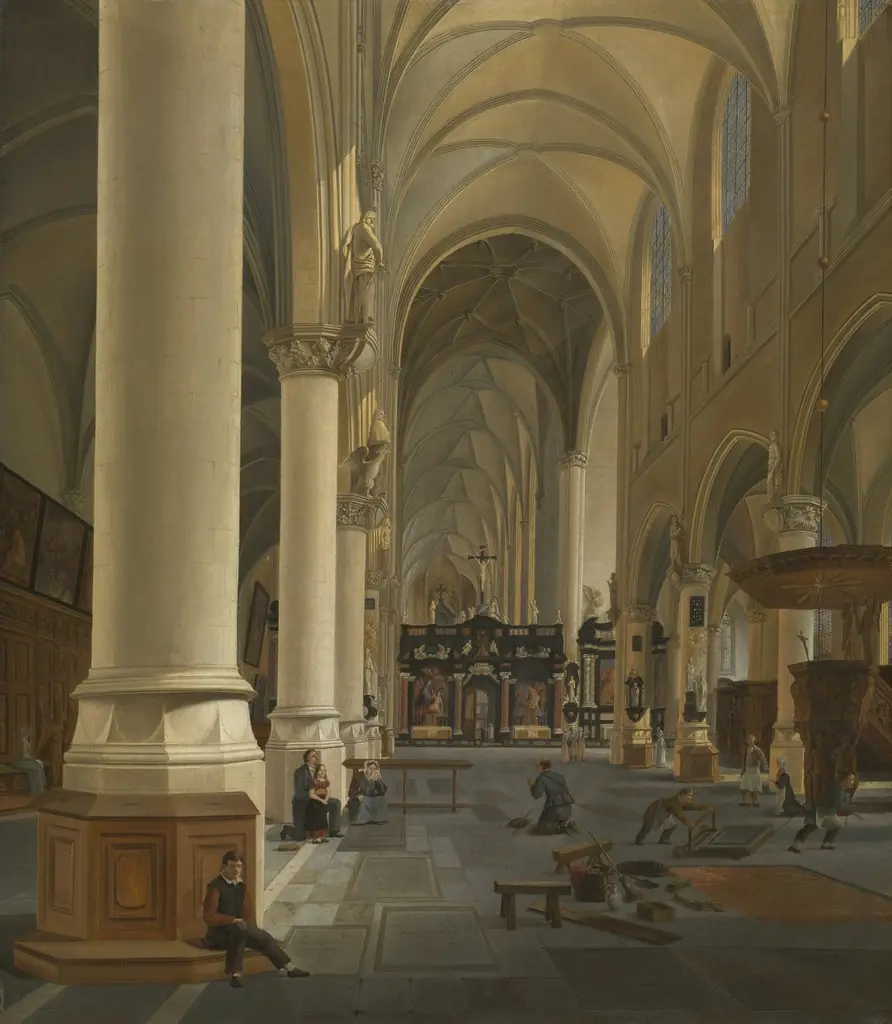
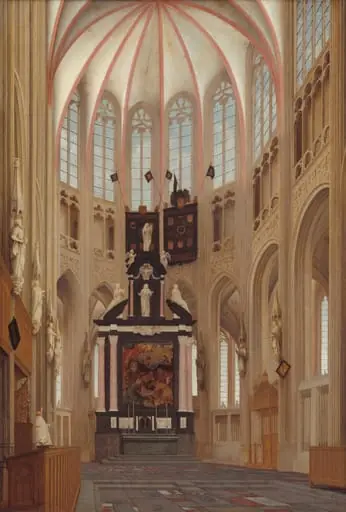
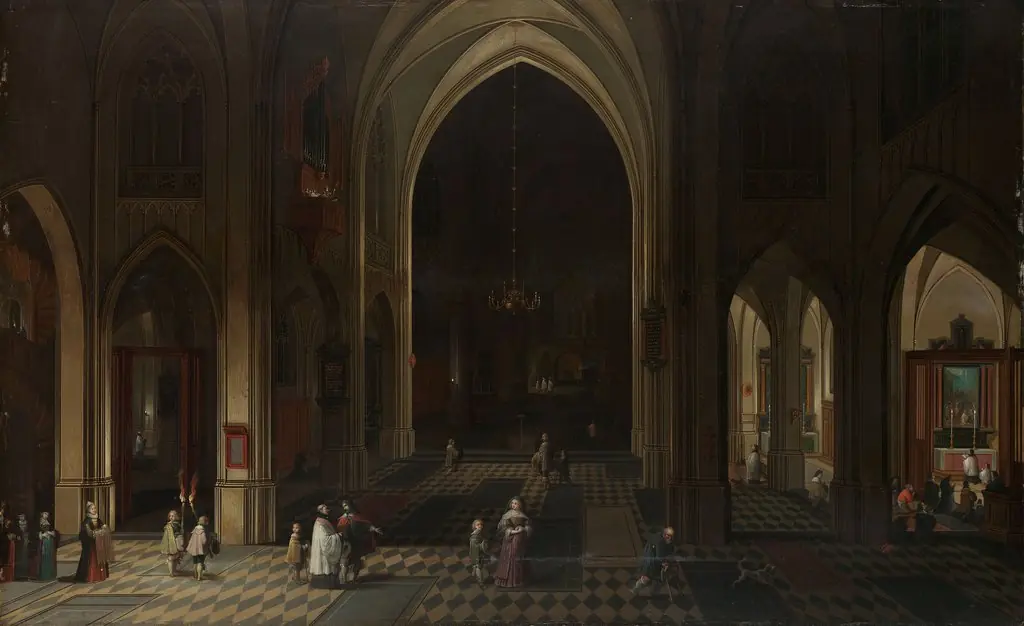
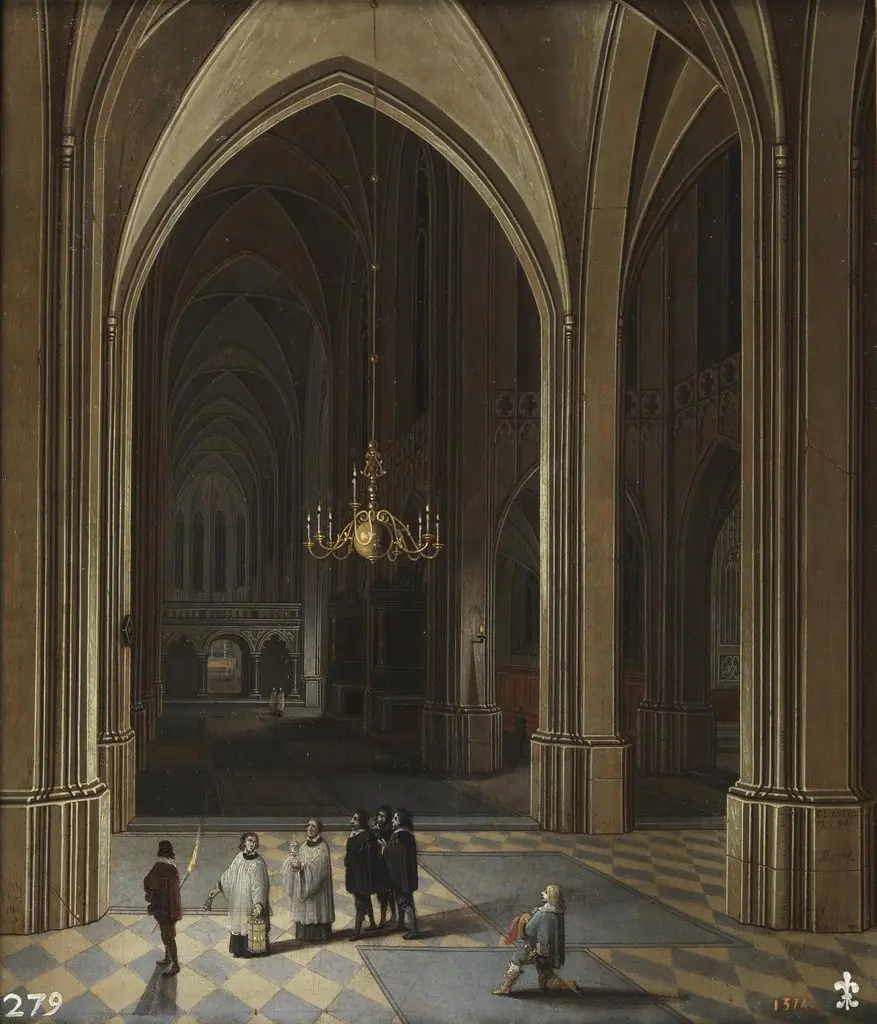
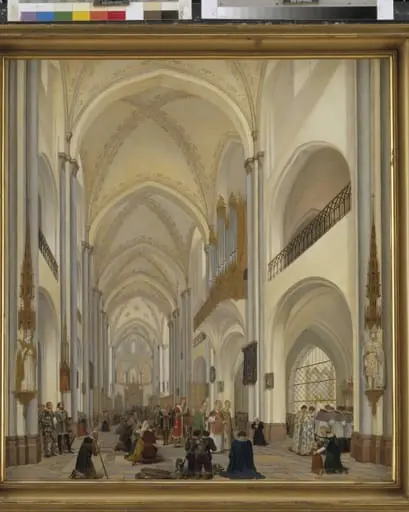
Interior of the Saint Peter’s Church in Louvain is an oil painting by Jules Victor Génisson. It dates from 1846 and is held in the collection of the Royal Museum of Fine Arts Antwerp.
About this work
Overview
The work is part of the Royal Museum of Fine Arts Antwerp’s collection, reflecting its significance in 19th-century Belgian topographical painting.
Painted in 1846 by Belgian artist Jules Victor Génisson, this oil on canvas captures the interior of Saint Peter’s Church in Louvain. Génisson, known for his precise renderings of architectural spaces, focused here on the church’s soaring nave and abundant natural light. The work is part of the Royal Museum of Fine Arts Antwerp’s collection, reflecting its significance in 19th-century Belgian topographical painting.
Subject & Meaning
The scene portrays congregants moving through the church’s vast interior, engaged in quiet, everyday rituals. The ornate pulpit and sculpted altarpiece draw attention as focal points, suggesting the spiritual center of the space. The figures, dressed in period attire, are not idealized but observed with documentary attention, emphasizing the church as a living, communal environment rather than a monument alone.
Technique & Style
Génisson employed fine brushwork to delineate architectural details—vaulted ceilings, stained glass, and carved stonework—with clarity and restraint. Light enters through high windows, casting soft gradients across stone floors and pews, enhancing spatial depth. The composition avoids dramatic contrasts, favoring a calm, even illumination that underscores the building’s scale and serenity.
History & Provenance
Created during a period of renewed interest in Belgium’s ecclesiastical heritage, the painting was likely commissioned or acquired by cultural institutions seeking to document historic sites. It entered the Royal Museum of Fine Arts Antwerp’s collection in the 19th century, where it remains as part of a broader effort to preserve visual records of religious architecture before industrialization altered the urban landscape.
Context
In mid-19th-century Belgium, artists increasingly turned to local architecture as subjects, responding to national identity formation and the preservation of medieval heritage. Génisson’s work aligns with this trend, offering a quiet counterpoint to romanticized historical scenes. His focus on authentic interiors, without theatrical embellishment, reflects a growing preference for observational realism in Belgian art.
Legacy
Génisson’s painting contributes to a body of work that documented Belgium’s ecclesiastical spaces before significant restorations or losses. While not widely exhibited today, it remains a valuable reference for architectural historians and conservators studying the state of Saint Peter’s Church in the 1840s. Its quiet precision continues to inform understandings of 19th-century Belgian visual culture.
Artist & collection
Artist
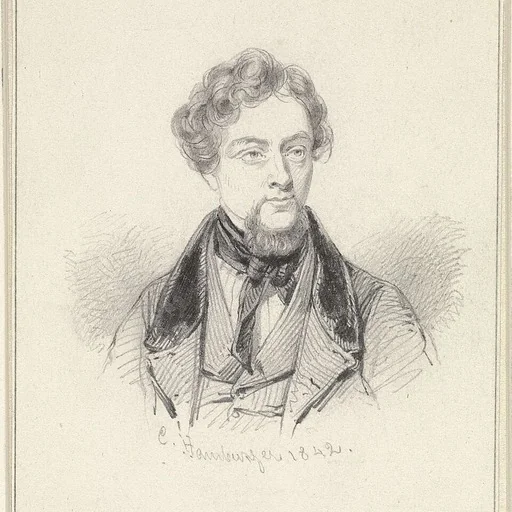
Jules Victor Génisson (French pronunciation: ; 24 February 1805 – 10 October 1860) was a Belgian painter, chiefly known for his architectural painting.