Artwork
Untitled
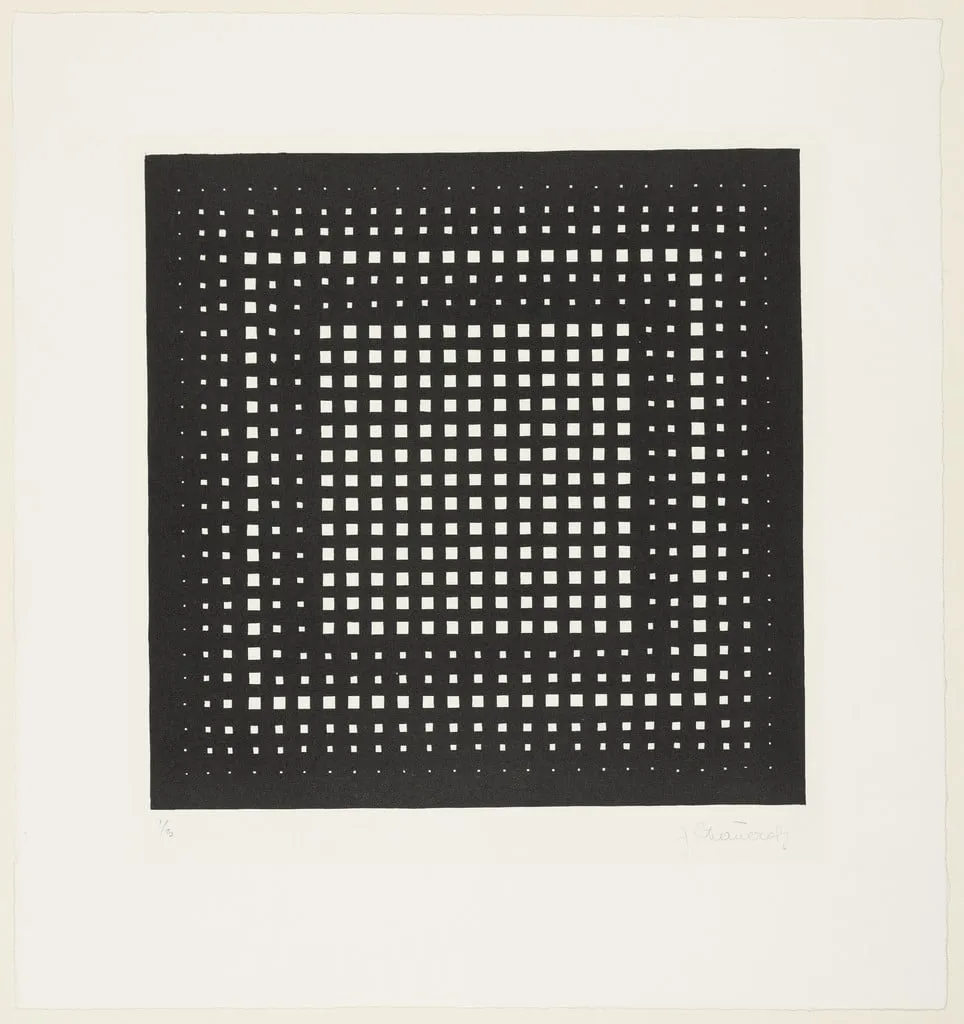
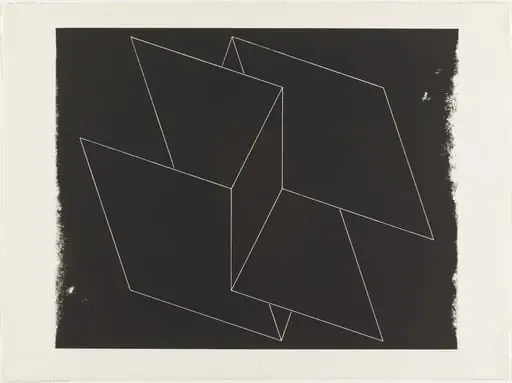
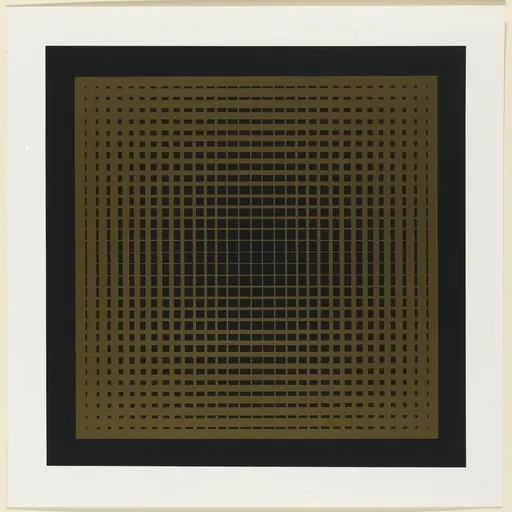
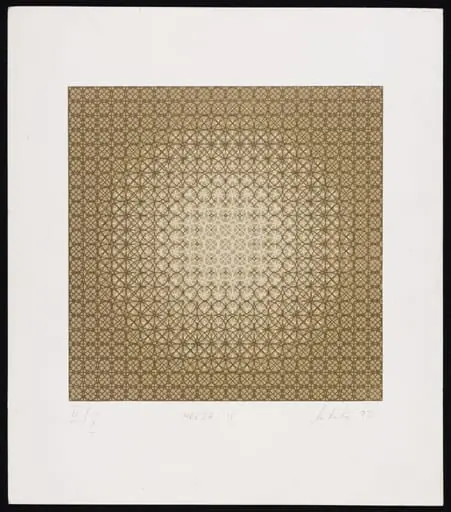
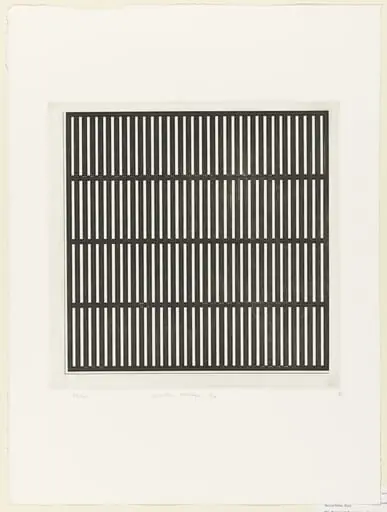
Untitled is an ink print by Julian Stanczak. It dates from 1964 and is held in the collection of the Museum of Modern Art.
About this work
Overview
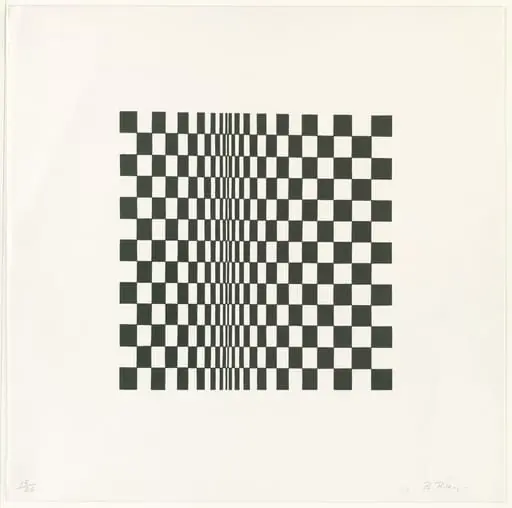
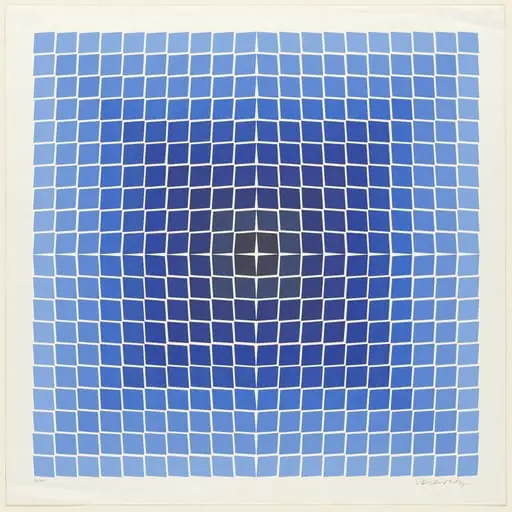
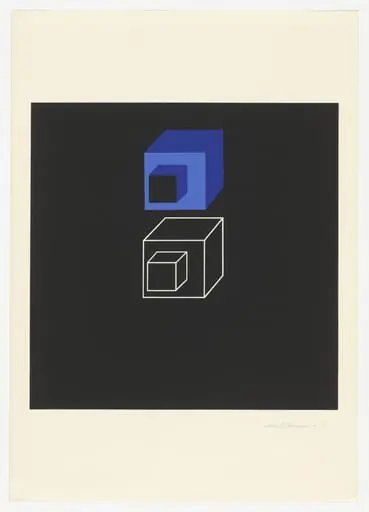
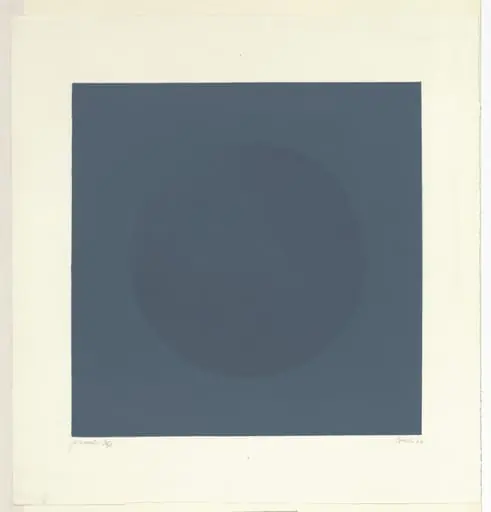
Created in 1964, this lithograph by Julian Stanczak is a minimalist abstract work composed entirely of black and white geometric elements.
Created in 1964, this lithograph by Julian Stanczak is a minimalist abstract work composed entirely of black and white geometric elements. As a print, it reflects the artist’s interest in mechanical precision and optical effects. Stanczak, who emigrated to the United States after World War II, became a key voice in the American Op art movement, using printmaking to investigate how structured patterns influence visual perception.
Subject & Meaning
The work contains no representational imagery; its subject is the interaction of form and sight. A tightly packed grid of tiny dots and squares generates a sense of vibration and depth through contrast alone. The absence of color or variation in shape directs attention to the rhythm of repetition, inviting the viewer to experience subtle shifts in perception as the eye moves across the surface.
Technique & Style
Stanczak employed lithography to achieve sharp, uniform lines and consistent tonal density. The meticulous hand-drawing on stone allowed for exact replication of the grid pattern, a hallmark of his method. The work’s austerity—limited to black ink on white paper—emphasizes control and clarity, aligning with the broader Op art pursuit of visual precision over expressive gesture.
History & Provenance
The print entered the collection of The Museum of Modern Art in New York, where it remains part of its permanent holdings. Its acquisition reflects the institution’s mid-century interest in experimental printmaking and the rise of optical abstraction in American art. No earlier ownership records are publicly documented, suggesting it was likely acquired directly from the artist or a gallery exhibition.
Context
Made during the height of Op art’s popularity, the work responds to broader cultural fascination with perception, science, and visual psychology. Artists like Bridget Riley and Victor Vasarely were exploring similar ideas, but Stanczak’s background in color theory and his focus on monochrome lent his work a distinct restraint. The piece aligns with 1960s interests in systems, order, and the mechanics of seeing.
Legacy
This lithograph exemplifies Stanczak’s contribution to expanding printmaking as a vehicle for perceptual inquiry. While Op art’s mainstream visibility waned after the 1970s, his emphasis on structure and optical effect influenced later generations working in minimalism and digital abstraction. The work endures as a quiet but rigorous study in how repetition can activate visual awareness.
Artist & collection
Artist
Julian Stanczak (Polish: Stańczak ; November 5, 1928 – March 25, 2017) was a Polish-born American painter and printmaker who is considered a central figure of the Op art movement in the U.S.