Artwork
Untitled
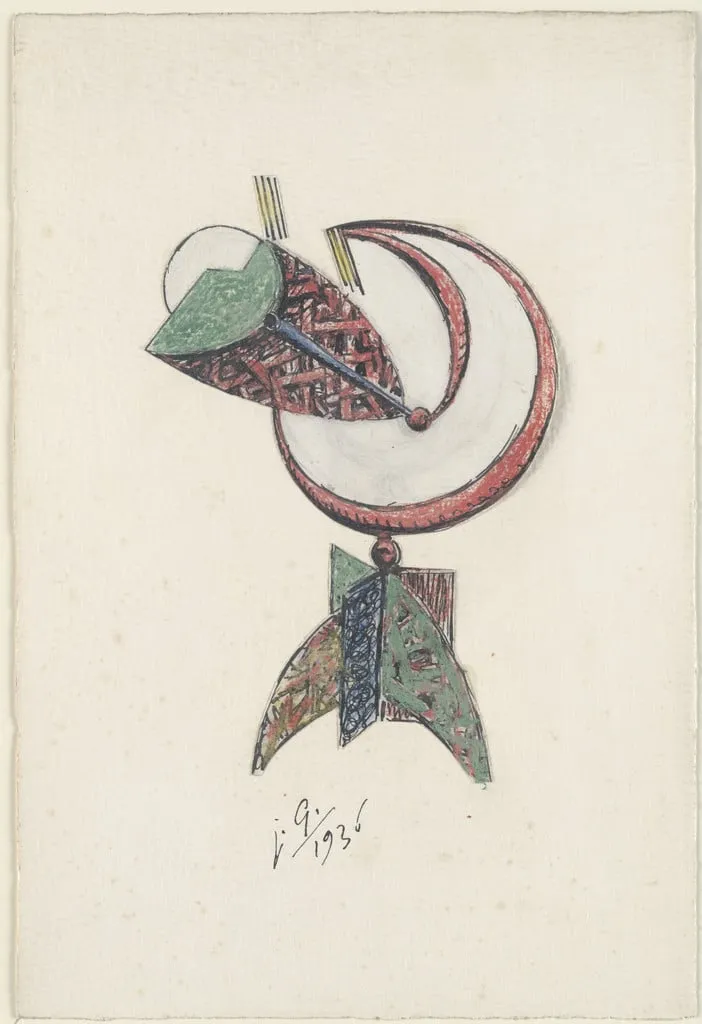
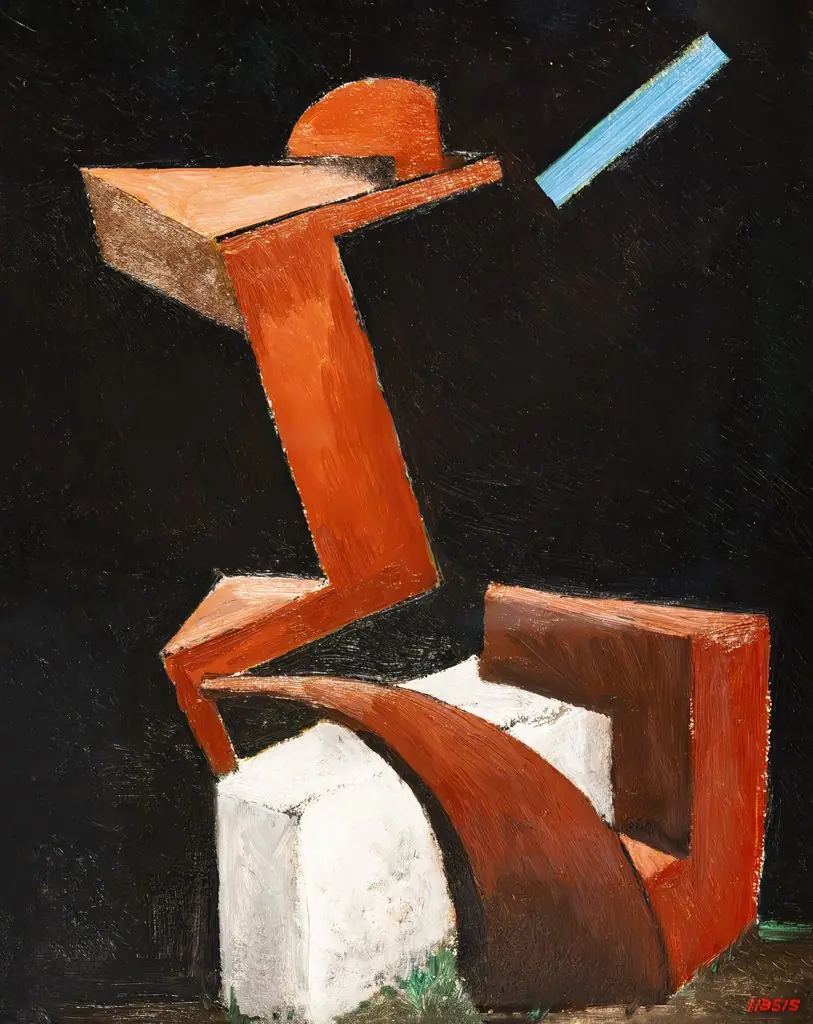
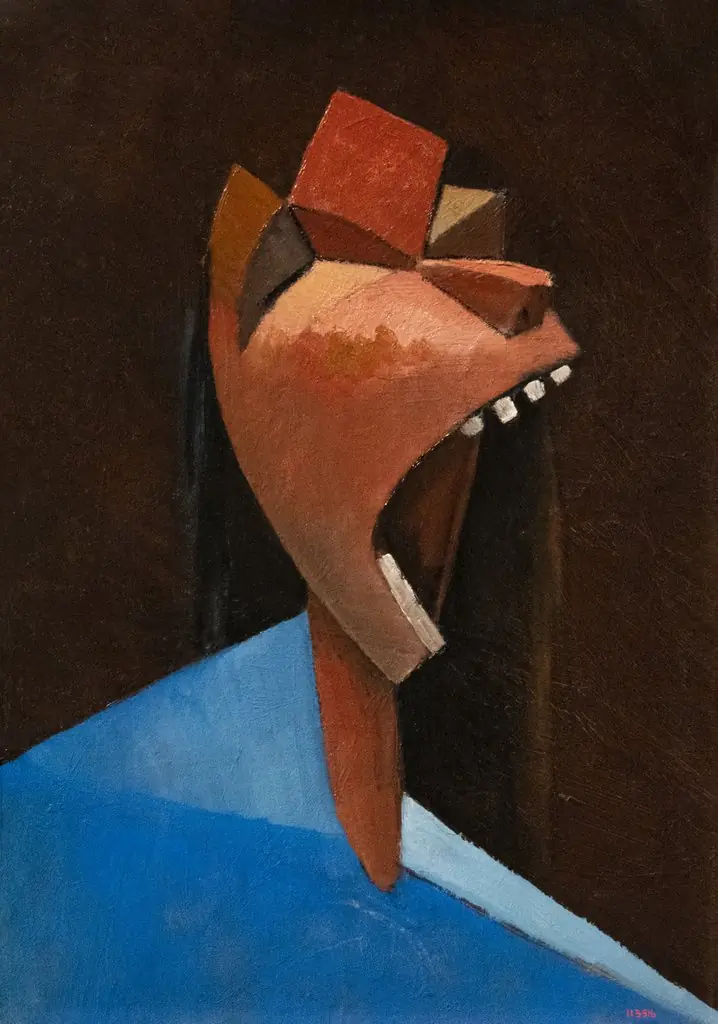
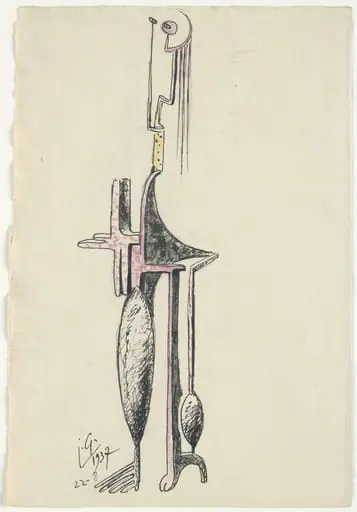
Untitled is a gouache drawing by Julio González. It dates from 1936 and is held in the collection of the Museum of Modern Art.
About this work
Overview
Created in 1936, this drawing by Julio González is composed of gouache, crayon, and ink applied to cut-and-pasted paper mounted on a larger sheet. It reflects his shift toward abstraction during the mid-1930s, when he increasingly explored material combinations beyond traditional sculpture. The work embodies his interest in layering and texture, using paper as both support and structural element.
Subject & Meaning
The composition centers on a large, undulating form in red and white, surrounded by smaller geometric shapes in green, brown, and black. No representational subject is evident; instead, the arrangement suggests rhythmic movement and spatial tension. The absence of clear symbolism aligns with González’s broader move toward non-objective expression, emphasizing form and material over narrative.
Technique & Style
González assembled the piece by cutting and repositioning paper, then overlaying it with gouache, crayon, and ink. The layered application creates a tactile surface where flat planes intersect with textured edges. The use of crayon adds gestural lines, while ink defines contours, and gouache provides opaque color fields—each medium contributing to a sense of constructed depth.
History & Provenance
This work emerged during González’s time in Paris, where he was deeply engaged with avant-garde circles, including Picasso and other Spanish expatriates. Though primarily known for iron sculpture, his drawings from this period reveal parallel explorations in two dimensions. The piece remains part of a smaller body of works that bridge his sculptural innovations with graphic experimentation.
Context
González, influenced by his metalsmithing heritage and exposure to Cubism, used abstraction to interrogate structure and material.
In 1936, Europe was on the brink of war, and many artists turned inward, focusing on formal inquiry. González, influenced by his metalsmithing heritage and exposure to Cubism, used abstraction to interrogate structure and material. His cut-paper technique echoed contemporaneous practices among Surrealists and Constructivists, though his approach remained distinct in its emphasis on physical assembly.
Legacy
Though less known than his metal sculptures, González’s drawings from this period demonstrate his consistent engagement with materiality across media. They influenced later artists exploring collage and assemblage, particularly those interested in the intersection of drawing and sculpture. His integration of industrial materials into fine art processes helped redefine the boundaries of modern drawing.
Artist & collection
Artist
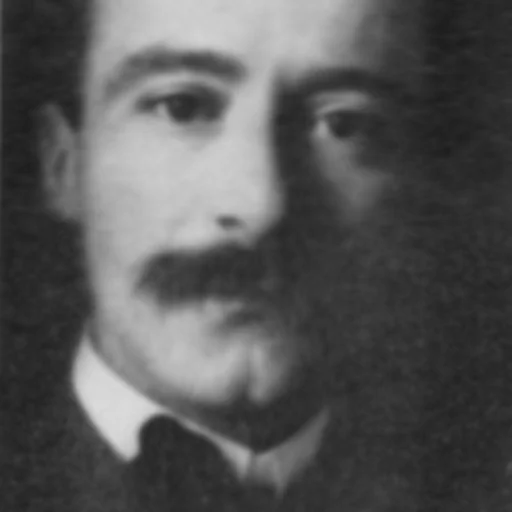
Julio González i Pellicer (21 September 1876 – 27 March 1942), born in Barcelona, was a Spanish sculptor and painter who developed the expressive use of iron as a medium for modern sculpture.