Artwork
Untitled
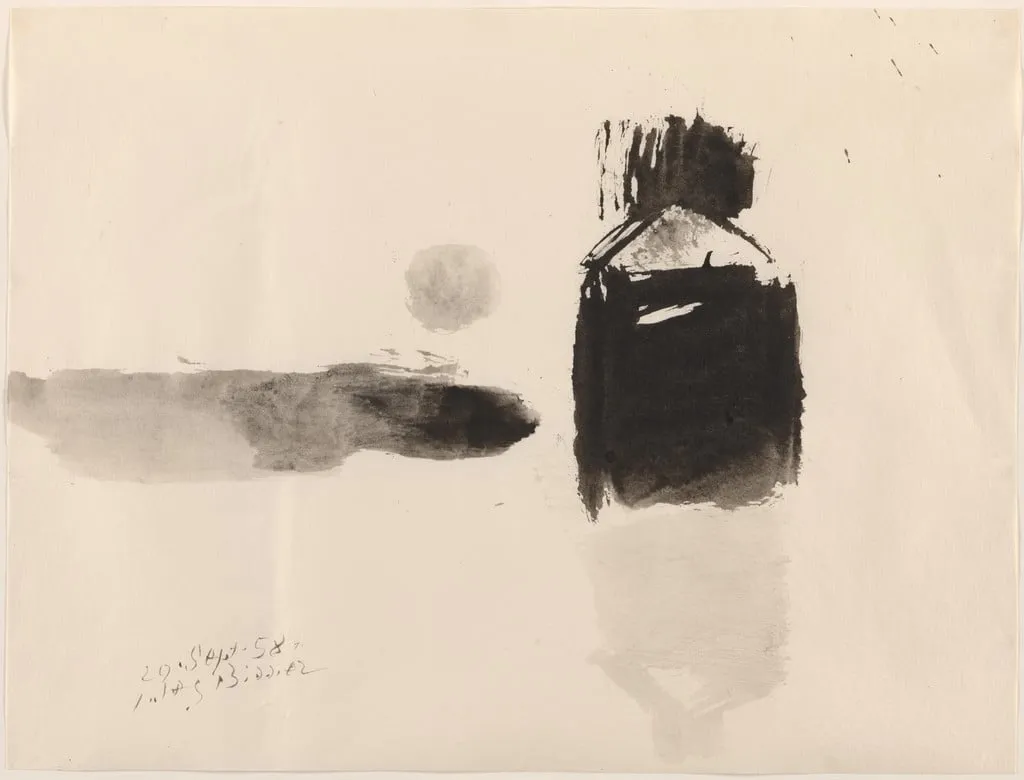
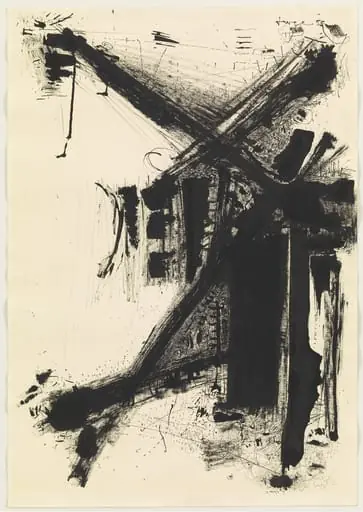
Untitled is an ink drawing by Julius Bissier. It dates from 1958 and is held in the collection of the Museum of Modern Art.
About this work
The paper is light, almost beige, and the ink is mostly black with some gray.
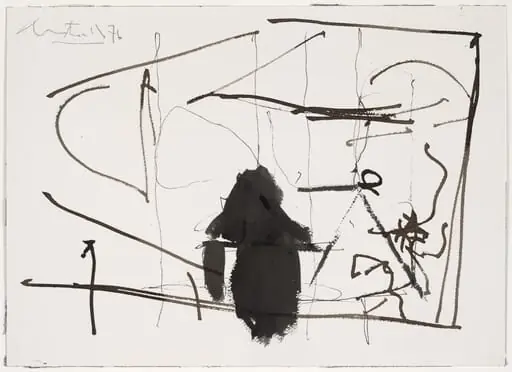
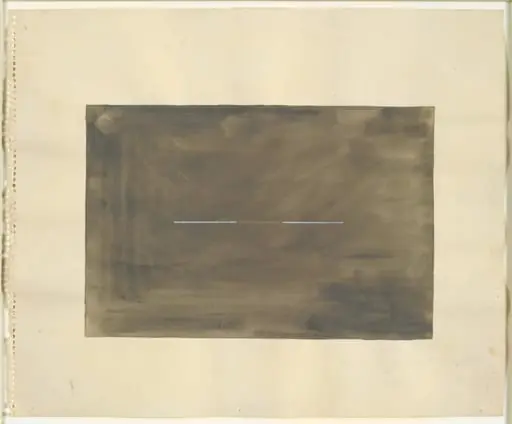
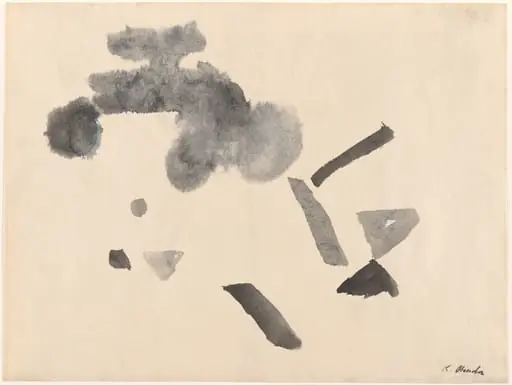
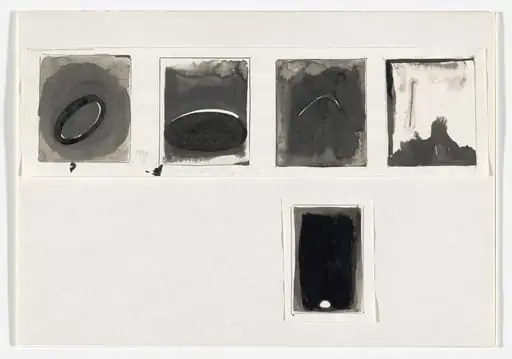
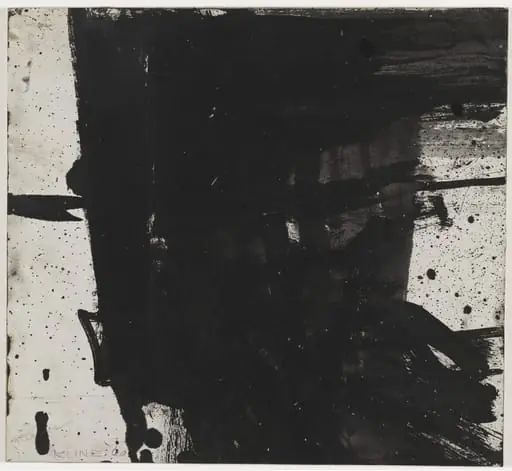
This looks like a quick sketch in ink. There’s a dark, blobby shape on the right—maybe a person or a hat. A small circle floats in the middle. The left side has a long, thin smear. The paper is light, almost beige, and the ink is mostly black with some gray.
The artist scribbled fast, leaving rough edges. The date on the paper says 1958.
Check out Julius Bissier for more of his loose, ink-based work.
Overview
Created in 1958, this ink drawing on light beige paper is attributed to Julius Bissier and resides in The Museum of Modern Art’s collection. Executed with rapid, unrefined strokes, the work captures a spontaneous gesture rather than a polished composition. The ink varies between deep black and muted gray, applied with minimal control, emphasizing immediacy over detail.
Subject & Meaning
The forms resist clear identification: a dense, irregular mass on the right may suggest a figure or head, while a small central circle evokes an eye or orb. A slender, smudged line stretches across the left, hinting at motion or absence. Bissier avoids narrative, inviting interpretation through abstraction—elements feel like fragments of perception rather than defined subjects.
Technique & Style
Bissier employed fluid ink with loose, hurried brushwork, allowing bleed and uneven texture to remain visible. The paper’s absorbency amplifies the ink’s variability, creating soft edges and granular tones. No outlines define forms; instead, weight and density suggest volume. The style aligns with postwar European abstraction, prioritizing gesture over representation.
History & Provenance
The drawing was produced in 1958 during a period when Bissier was deeply engaged with ink and watercolor on paper. It entered The Museum of Modern Art’s collection through established acquisition channels, likely as part of broader efforts to document postwar German and Swiss modernist practices. No earlier provenance is publicly documented.
Context
In the late 1950s, Bissier moved away from figurative painting toward more intuitive, calligraphic drawing. His work paralleled contemporaries like Jean Fautrier and Wols, who explored materiality and spontaneity. This piece reflects a broader shift in European art toward expressive mark-making, detached from traditional composition or symbolism.
Legacy
Though not widely exhibited, this drawing exemplifies Bissier’s contribution to postwar German abstraction. Its emphasis on process over product influenced later generations interested in non-objective drawing. The work remains a quiet but persistent example of how minimal means can convey presence without representation.
Artist & collection