Artwork
Untitled
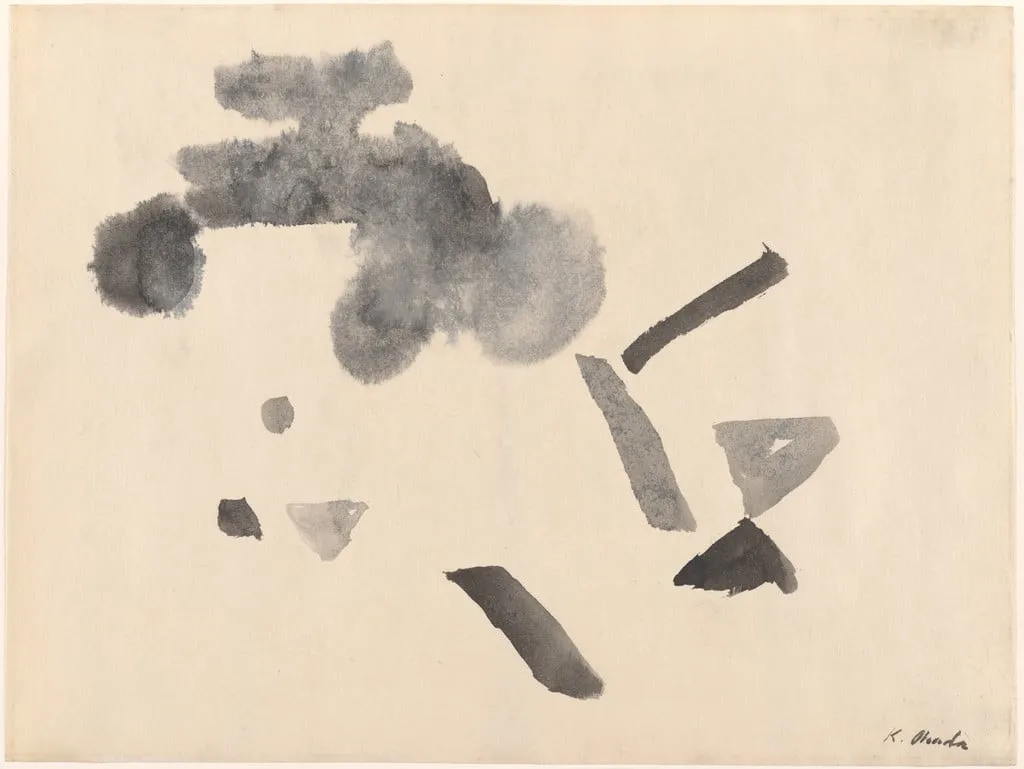
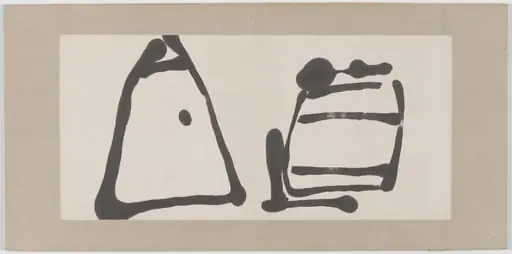
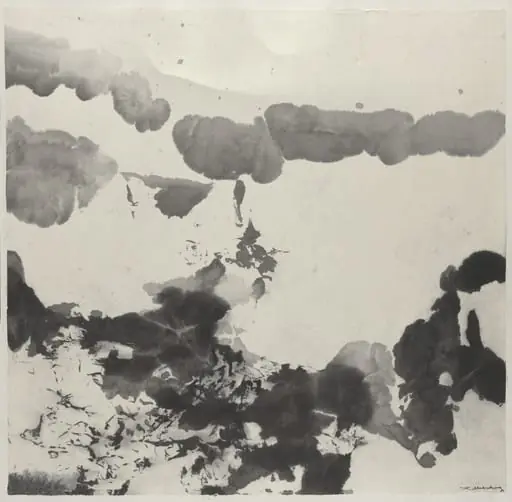
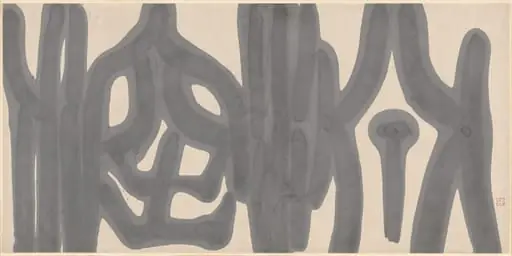
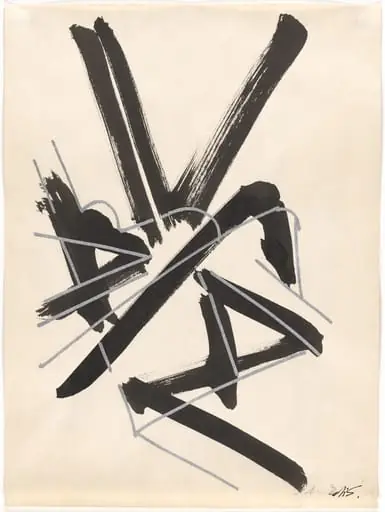
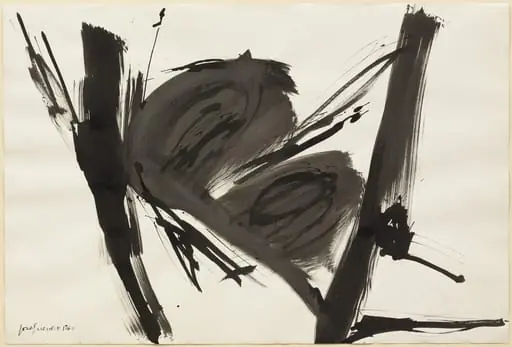
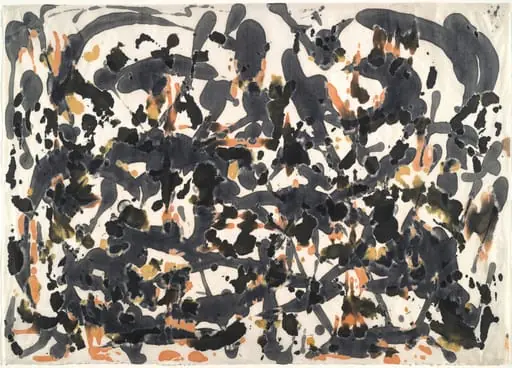
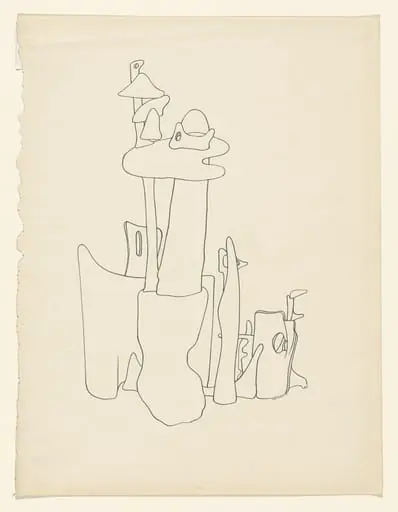
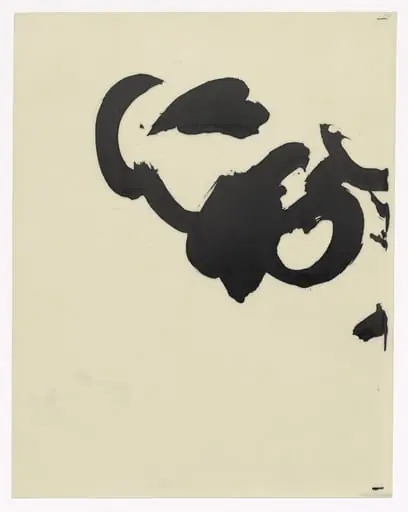
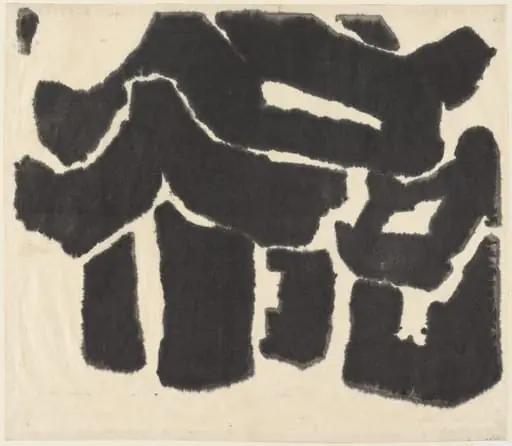
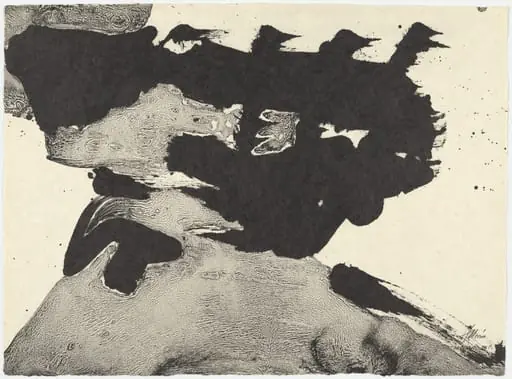
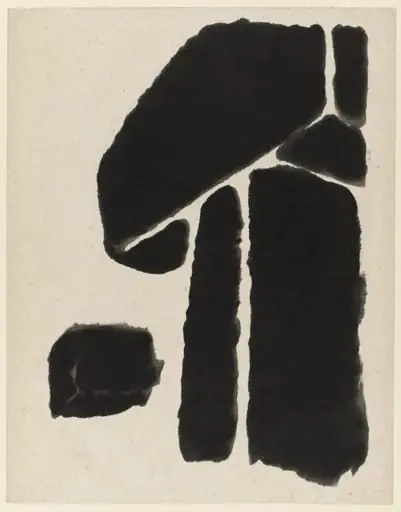
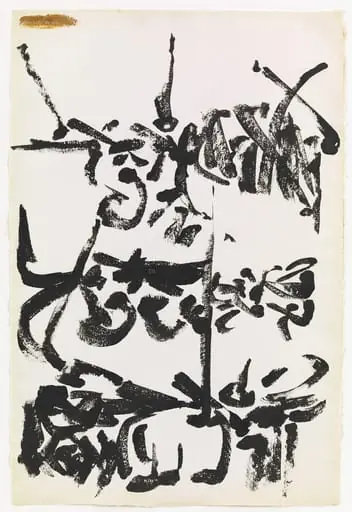
Untitled is an ink drawing by Kenzo Okada. It dates from 1957 and is held in the collection of the Museum of Modern Art.
About this work
Overview
Executed with swift, unscripted gestures, it features dark gray and black ink forms that appear spontaneous yet deliberate.
Created in 1957, this ink drawing by Kenzo Okada is a restrained yet dynamic composition on light paper. Executed with swift, unscripted gestures, it features dark gray and black ink forms that appear spontaneous yet deliberate. The work belongs to a series of abstract pieces Okada produced during his mature period, reflecting his engagement with postwar American abstraction while retaining subtle ties to East Asian aesthetic traditions.
Subject & Meaning
The drawing resists figurative interpretation, offering no identifiable subject. Instead, it presents a field of ink marks—irregular blobs and attenuated lines—that suggest movement, residue, or erosion. Okada’s intent appears to be the expression of inner states through material gesture, aligning with Abstract Expressionist concerns while avoiding overt emotionalism. The absence of narrative invites contemplation of form, rhythm, and the physicality of the medium itself.
Technique & Style
Okada applied ink with rapid, fluid motions, allowing the medium to bleed and pool naturally on absorbent paper. Thick, saturated areas contrast with faint, wispy traces, creating a sense of spatial depth without perspective. The technique emphasizes immediacy and control in equal measure—each mark is decisive yet unplanned, echoing both the spontaneity of Western action painting and the disciplined economy of ink brushwork in East Asian calligraphy.
History & Provenance
This work entered The Museum of Modern Art’s collection following Okada’s rising international profile after his 1958 Venice Biennale recognition, where he was awarded the Astorre Meyer and UNESCO prizes. As one of the first Japanese-American artists to gain prominence in the Abstract Expressionist circle, his drawings from this period were increasingly sought after by institutions. The piece remains a key example of his transition from figurative to non-objective work in the 1950s.
Context
In the late 1950s, Okada navigated a cultural crossroads: trained in Japan, based in New York, and immersed in the city’s avant-garde scene. His work responded to the energy of Abstract Expressionism but filtered it through a sensibility shaped by Japanese aesthetics—minimalism, asymmetry, and reverence for material impermanence. This drawing reflects a quiet dialogue between two artistic traditions, neither fully assimilated nor oppositional.
Legacy
Okada’s ink drawings, including this one, helped redefine the boundaries of Abstract Expressionism by introducing a contemplative, restrained mode of abstraction distinct from the dominant gestural intensity of his peers. His integration of Eastern visual principles into a Western modernist framework influenced later generations of artists exploring cross-cultural abstraction. The work endures as a quiet but significant contribution to mid-century modernism.
Artist & collection
Artist
Kenzo Okada (岡田 謙三, Okada Kenzō; born on September 28, 1902, died on July 25, 1982) was a Japanese-born American painter and the first Japanese-American artist working in the Abstract Expressionist style to receive international acclaim.