Artwork
In Virginia
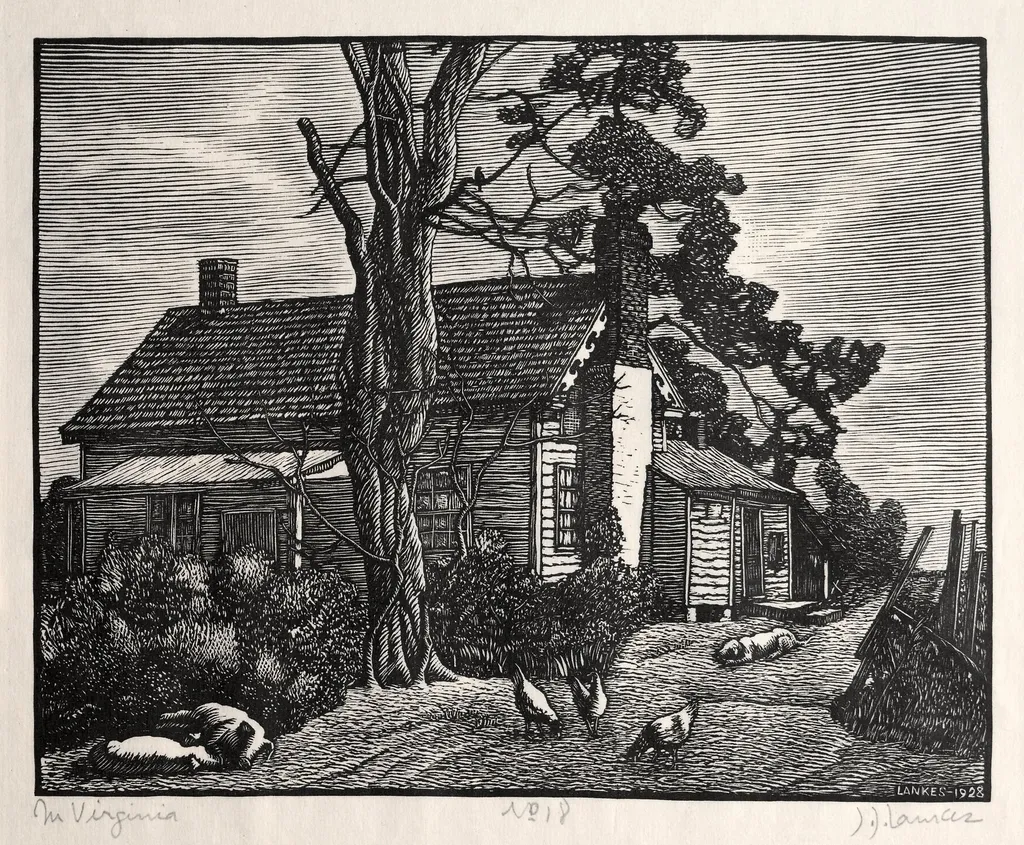
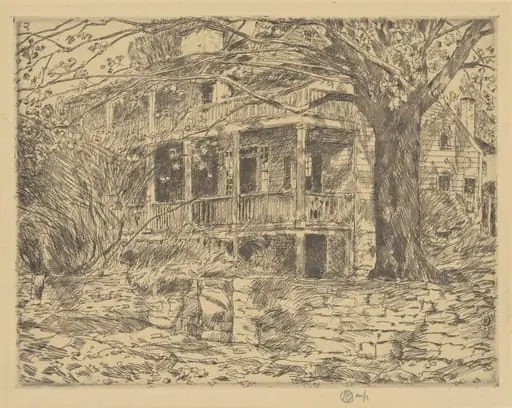
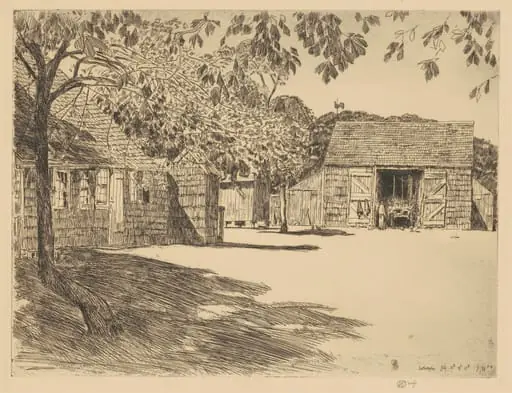
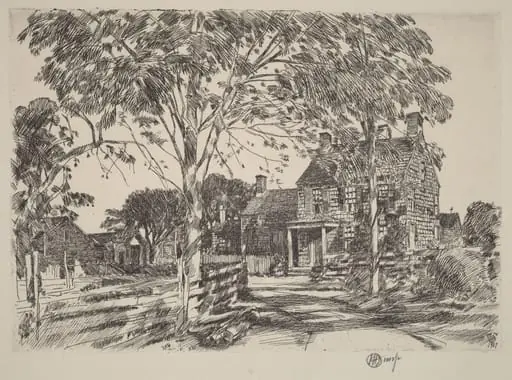
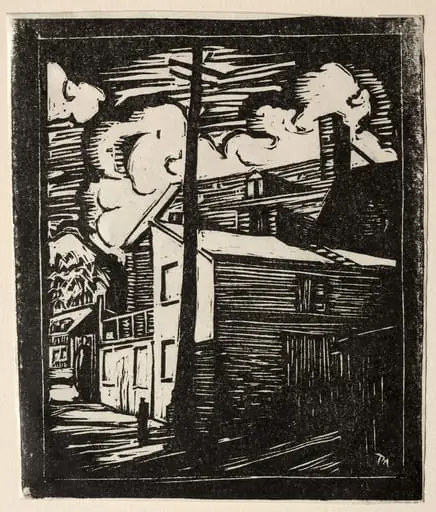
In Virginia is a print by Julius J. Lankes. It dates from 1928 and is held in the collection of the Cleveland Museum of Art.
About this work
Overview
The work captures a moment in rural Virginia with minimal detail, emphasizing light and atmosphere over precision.
Created in 1928, In Virginia is a watercolor sketch by Julius J. Lankes, currently held at The Cleveland Museum of Art. Unlike his more polished woodblock prints, this piece is a spontaneous, unfinished study. The work captures a moment in rural Virginia with minimal detail, emphasizing light and atmosphere over precision. Its provisional nature reveals the artist’s process rather than presenting a completed composition.
Subject & Meaning
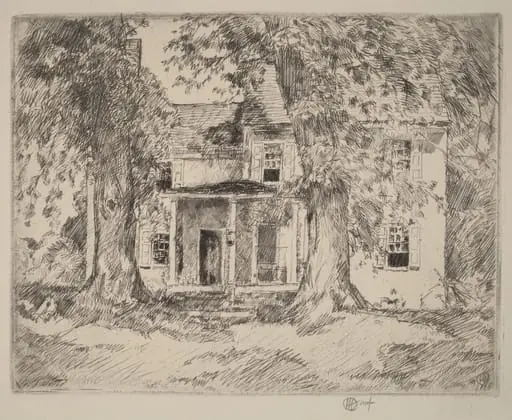
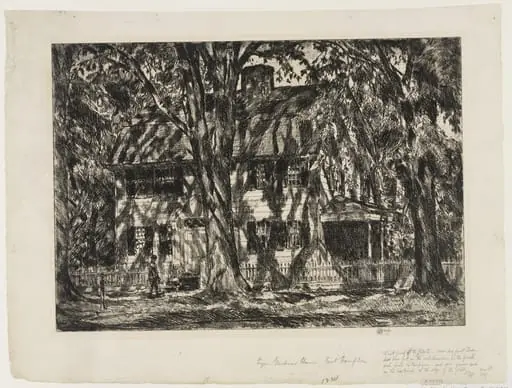
The scene depicts a modest white farmhouse under bright sunlight, with two figures near the entrance—one carrying a basket. The quiet interaction suggests daily rural life, unembellished and untheatrical. There is no narrative drama; instead, the focus lies in the stillness of the moment, the ordinary rhythm of domestic labor. The absence of overt symbolism invites contemplation of place and routine.
Technique & Style
Lankes applied watercolor with loose, transparent washes, allowing the paper’s texture and underlying pencil lines to remain visible. The brushwork is swift and economical, avoiding detail in favor of suggestive forms. This approach reflects his training in printmaking, where economy of line was essential. The technique prioritizes immediacy, capturing the quality of light rather than architectural accuracy.
History & Provenance
The work entered The Cleveland Museum of Art’s collection as part of its broader engagement with American regional art of the early 20th century. While its exact provenance prior to acquisition is not documented, its status as a sketch aligns with Lankes’s practice of using watercolor for preparatory studies. It has remained in the museum’s holdings since its acquisition, serving as a record of his observational process.
Context
Lankes worked during a period when American artists were turning toward rural subjects, often as a counterpoint to urban modernism. His watercolors, including this one, reflect a regionalist impulse—valuing quiet, unidealized landscapes. Though better known for woodcuts, these sketches reveal his sensitivity to light and form, aligning him with contemporaries who sought authenticity in everyday scenes.
Legacy
In Virginia exemplifies Lankes’s commitment to capturing transient moments with restraint. While not widely exhibited, such studies inform understanding of his artistic development and his preference for understated expression. The sketch stands as a quiet testament to his method: observation over ornament, process over polish, and the enduring value of the unembellished moment.
Artist & collection