Artwork
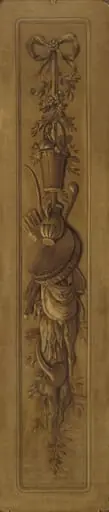
Schildering in grisaille met een aan een strik opgehangen trofee
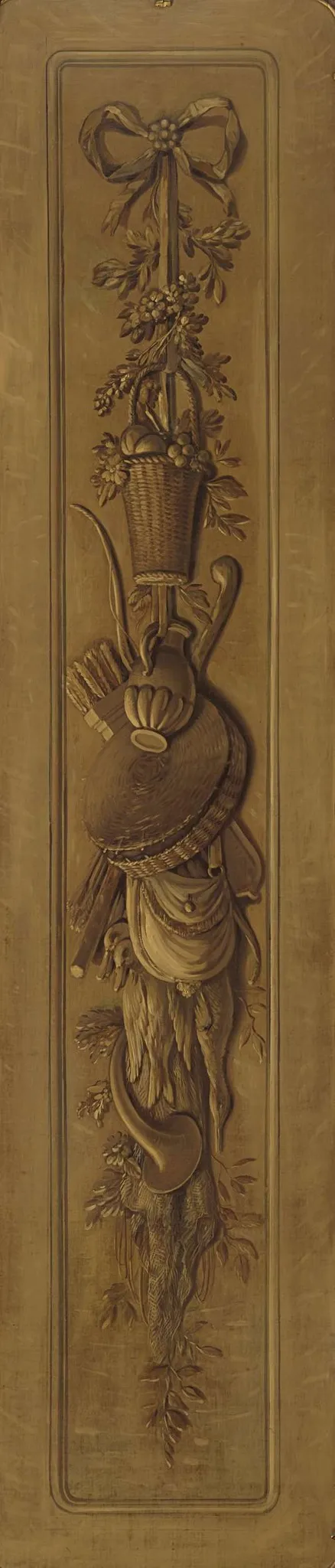
Schildering in grisaille met een aan een strik opgehangen trofee is an oil painting by the Rococo painting artist Jurriaen Andriessen. It dates from 1771 and is held in the collection of the Rijksmuseum.
About this work
Overview
Jurriaen Andriessen’s 1771 canvas, titled *Schildering in grisaille met een aan een strik opgehangen trofee*, is part of the Rijksmuseum’s collection. The work presents a slender, vertical composition that depicts a hunting trophy rendered entirely in muted browns and grays, giving the impression of a sculptural relief rather than a conventional painting.
Subject & Meaning
The central motif is a pheasant, lifeless and suspended by its feet from a ribbon tied to a wooden stick. Encircling the stick are decorative elements—a wreath of foliage and berries, together with a small basket—suggesting the ritualized display of game after a hunt and the cultural value placed on such trophies in the eighteenth‑century Dutch countryside.
Technique & Style
Andriessen employs a grisaille palette, limiting color to tonal variations of gray and earth tones. This monochrome approach, combined with careful modeling of light and shadow, creates an illusion of three‑dimensionality reminiscent of bas‑relief sculpture. The detailed rendering of the pheasant’s feathers contrasts with the overall flatness, enhancing the visual trick of depth.
History & Provenance
Executed in 1771, the painting has remained in the Netherlands and is now owned by the Rijksmuseum. Its provenance reflects the museum’s ongoing effort to preserve works that illustrate Dutch artistic practices of the late Enlightenment, particularly those that explore the intersection of painting and decorative arts.
Context
Grisaille was frequently used in the eighteenth century for decorative panels, architectural elements, and trompe‑l’œil effects. Andriessen’s choice of this technique aligns with contemporary tastes for illusionistic art that could mimic stone or metal reliefs, a practice popular among patrons who favored refined, understated ornamentation.
Legacy
While not widely reproduced, the piece exemplifies a niche of Dutch art that merges hunting iconography with sophisticated visual illusion. It offers scholars insight into the period’s aesthetic preferences and the technical skill required to achieve convincing depth through limited tonal range.
Artist & collection

 Arcadisch landschap met een reiziger
 Self-Portrait
 Arcadisch landschap met een slapende jongen onder een boom
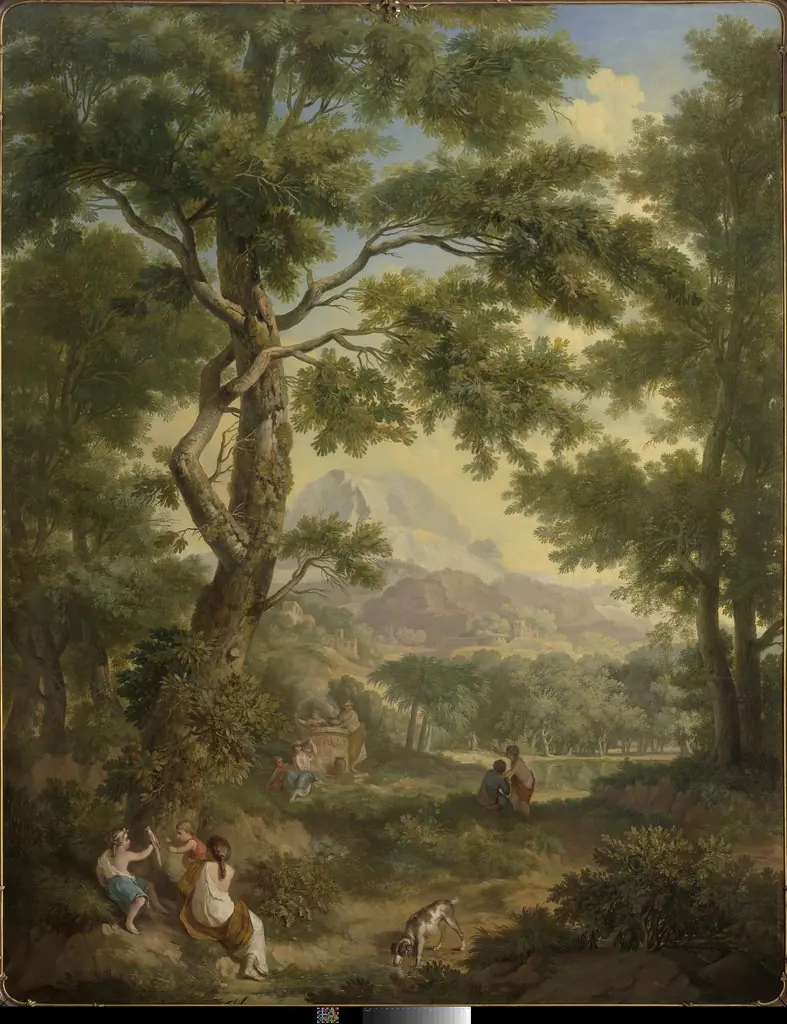 Arcadisch landschap met linksvoor kinderen met een vogel en een hond
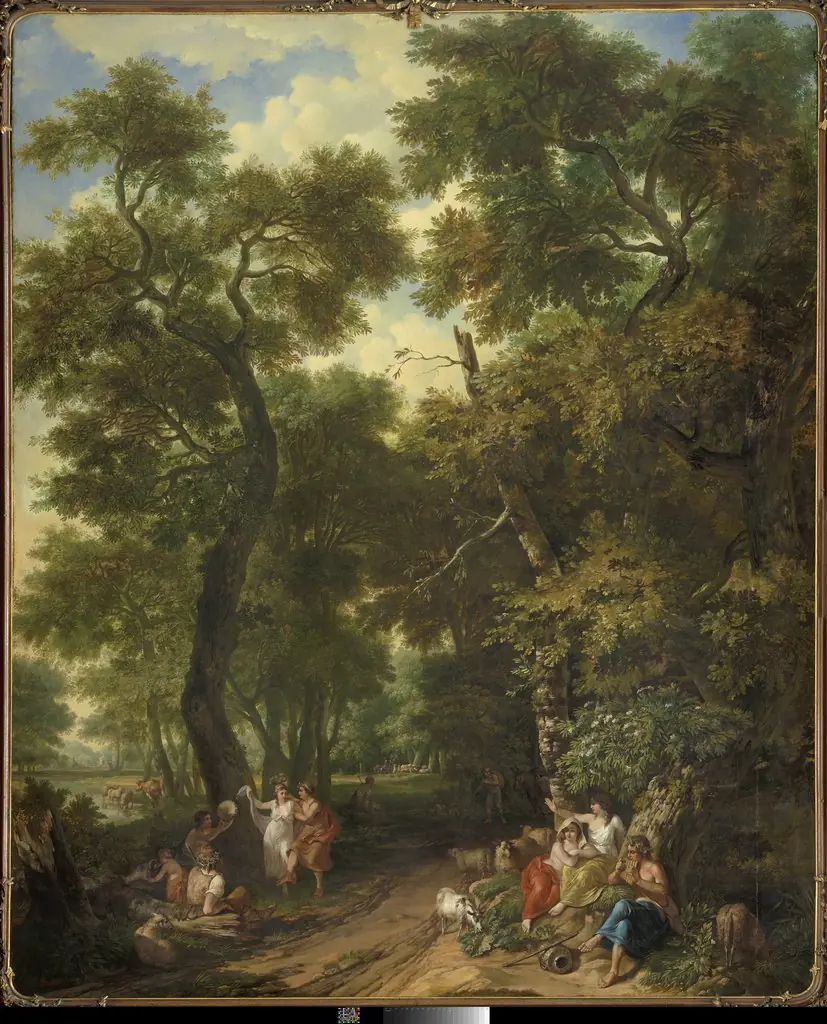 Arcadisch landschap met musicerende en dansende herders
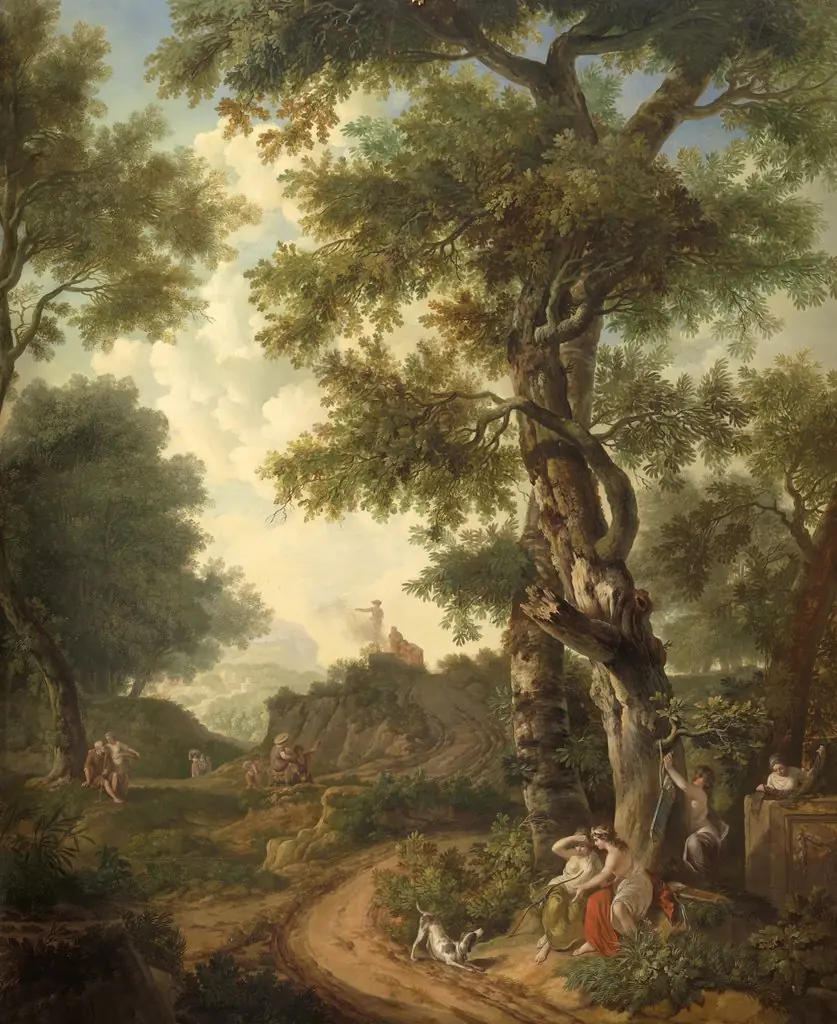 Arcadisch landschap met reizigers
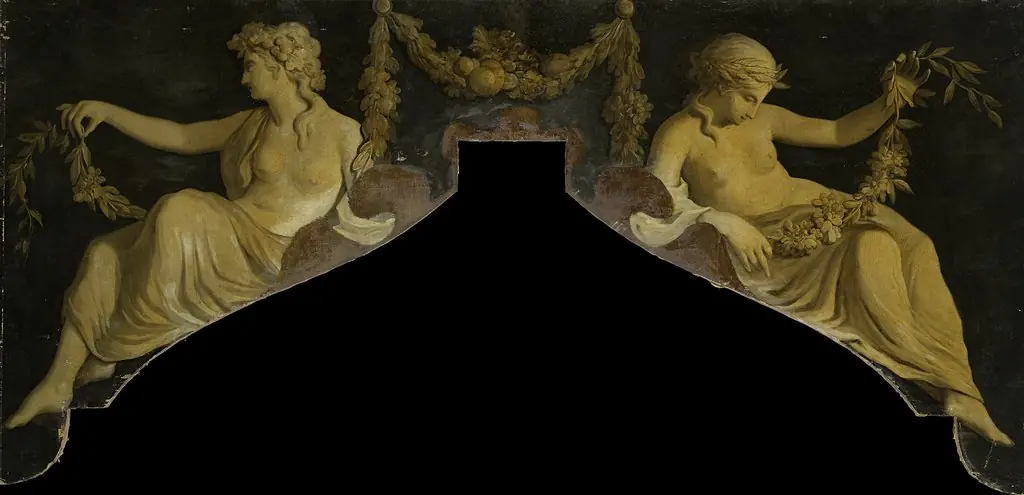 Dessus de porte with a presentation of two reclining women with garlands
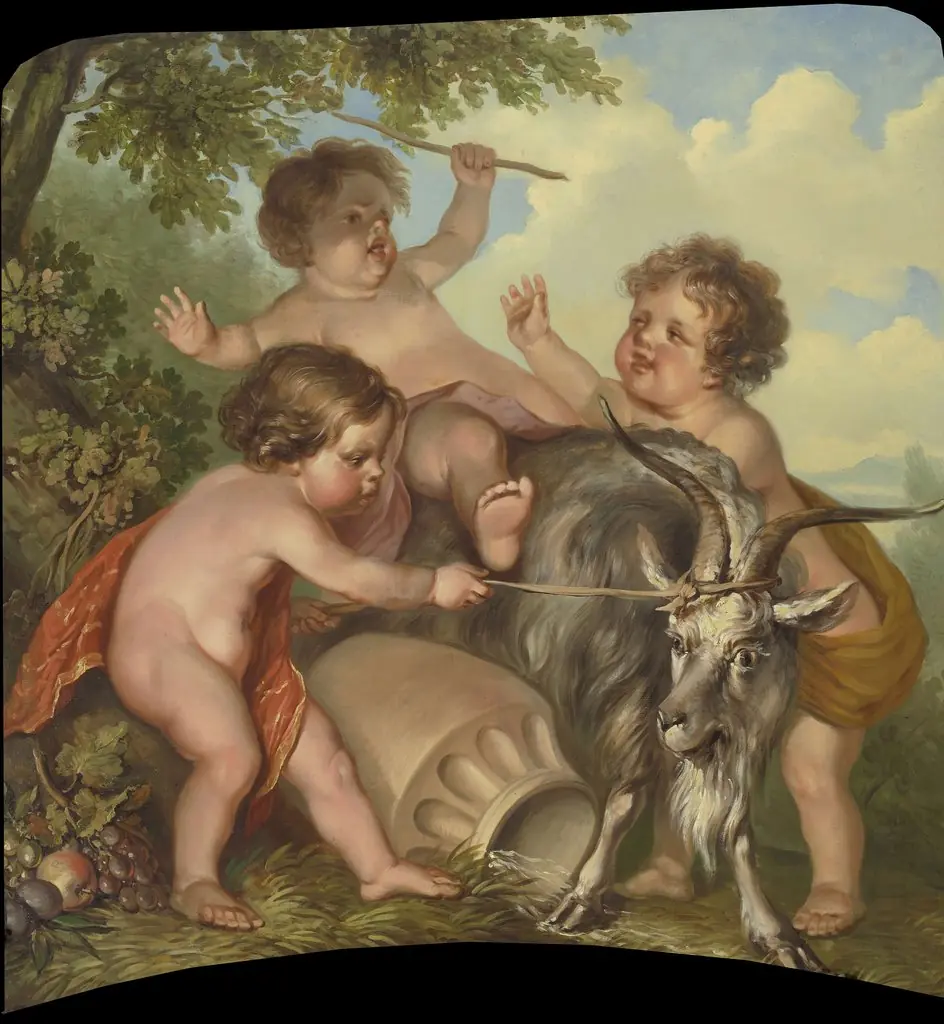 Drie kinderen spelend met een bok
 A Winged Angel in Profile
 Standing Female Figure (decorative panel)
 Angelus Ministrans
 Study for a Border Design
 The Return of Odysseus to his Hearth
 Untitled
 Statue of Ferdinand II in a niche
 Untitled
 Standing Female Figure (decorative panel)
 Nine Months with Signs of the Zodiac: May with the Sign of Gemini
 Young Girl Sitting with a Rabbit
 Untitled