Artwork
Angelus Ministrans
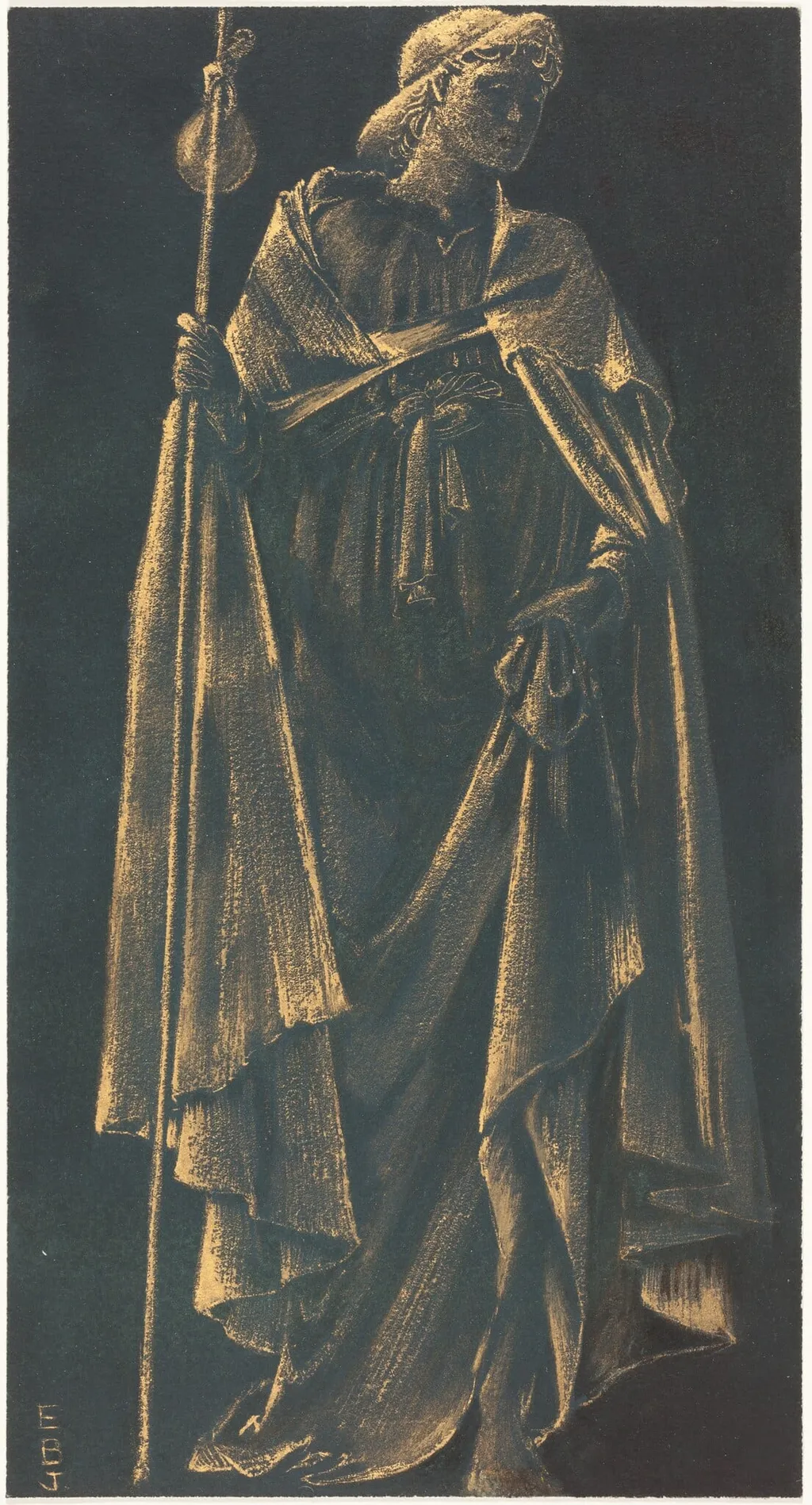
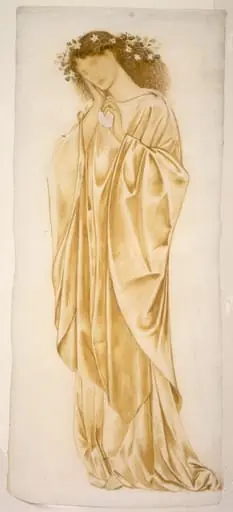
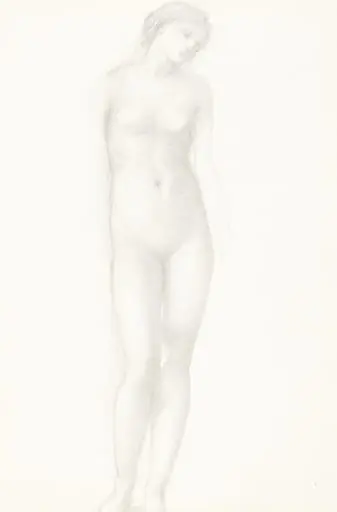
Angelus Ministrans is a paint drawing by the Impressionist artist Edward Coley, Sir Burne-Jones. It dates from 1896 and is held in the collection of the National Gallery of Art.
About this work
Overview
Angelus Ministrans is a drawing executed in brush and gold paint on wove paper that has been prepared with a black watercolor underlayer, attributed to the British artist Sir Edward Coley Burne-Jones, dating to circa 1896.
Subject & Meaning
The subject of Angelus Ministrans, which translates to 'The Ministering Angel,' is not explicitly detailed in available information, suggesting the work may focus on the symbolic or atmospheric presence of an angelic figure, characteristic of Burne-Jones's exploration of mystical and religious themes.
Technique & Style
Technically, the piece combines traditional watercolor techniques with the opulent addition of gold paint, set against a dark, unified background achieved through black watercolor on wove paper. This contrasts and highlights the subject, reflecting Burne-Jones's penchant for blending medieval influences with a Pre-Raphaelite attention to detail and symbolism.
History & Provenance
Created around 1896, during the later period of Burne-Jones's career, Angelus Ministrans represents a continuation of his lifelong exploration of religious and mythological subjects. Specific details regarding its commission, initial reception, or early ownership are not provided in the available information.
Context
Within the context of late 19th-century British art, Angelus Ministrans situates itself among the works of the Pre-Raphaelite Brotherhood, emphasizing detailed, symbolic, and often religious or literary subjects. The use of gold paint also nods to the Arts and Crafts movement's emphasis on craftsmanship and medieval revival aesthetics.
Legacy
The legacy of Angelus Ministrans is intertwined with the broader appreciation of Burne-Jones's work, which has seen fluctuations in popularity. Today, it contributes to the understanding of late Pre-Raphaelite aesthetics and the artist's consistent thematic explorations. Direct influences or notable exhibitions featuring this specific work are not detailed in the provided information.
Artist & collection