Artwork
Saint Bartholomew
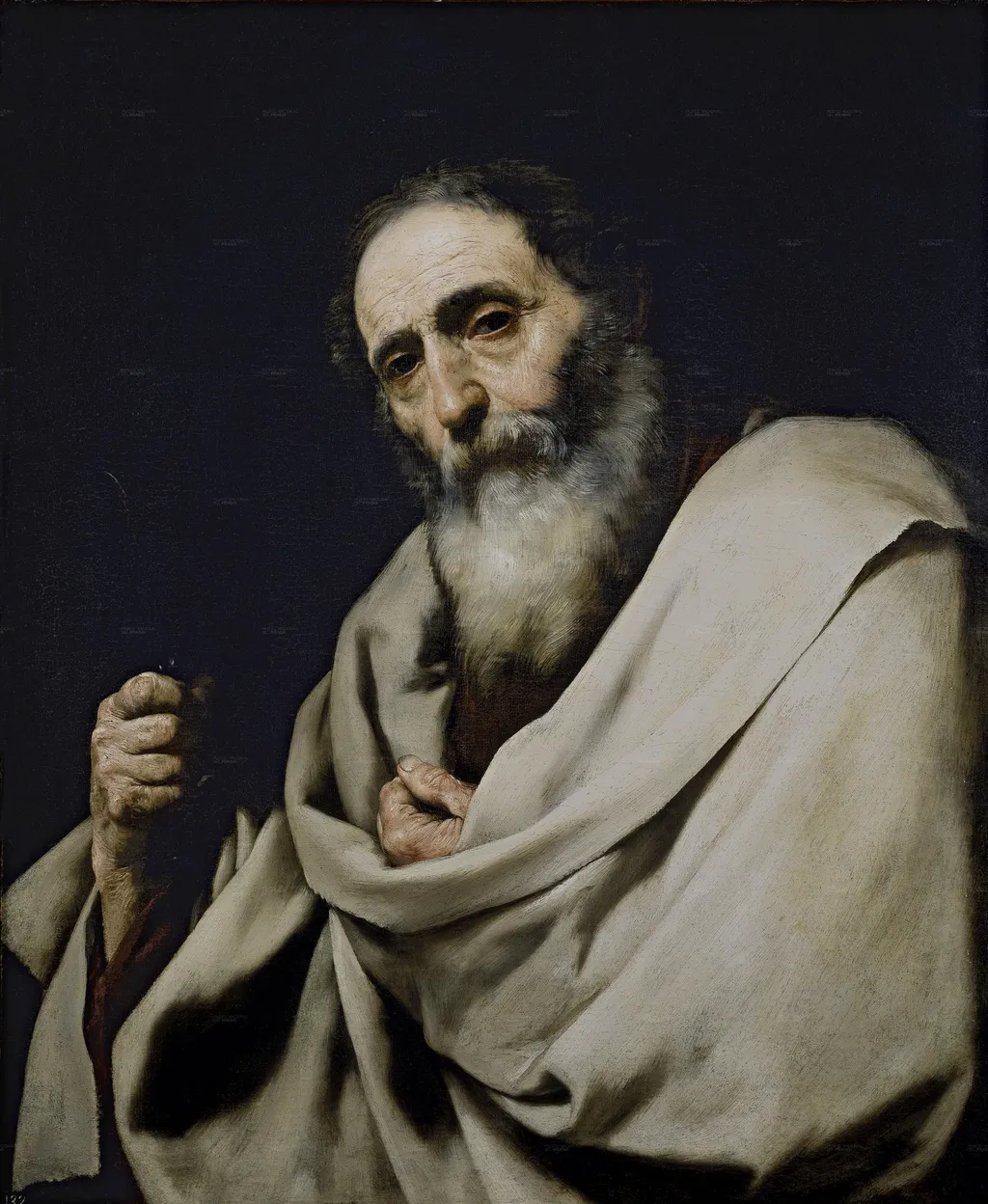
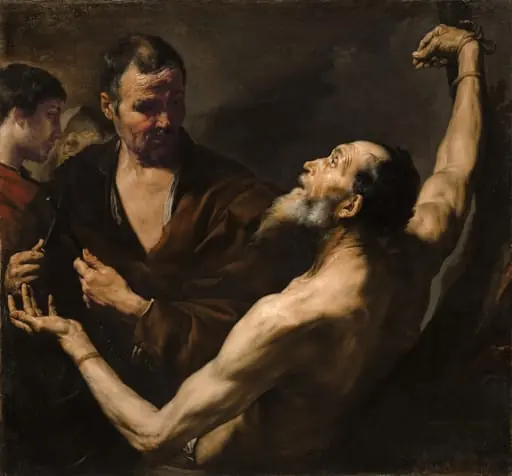
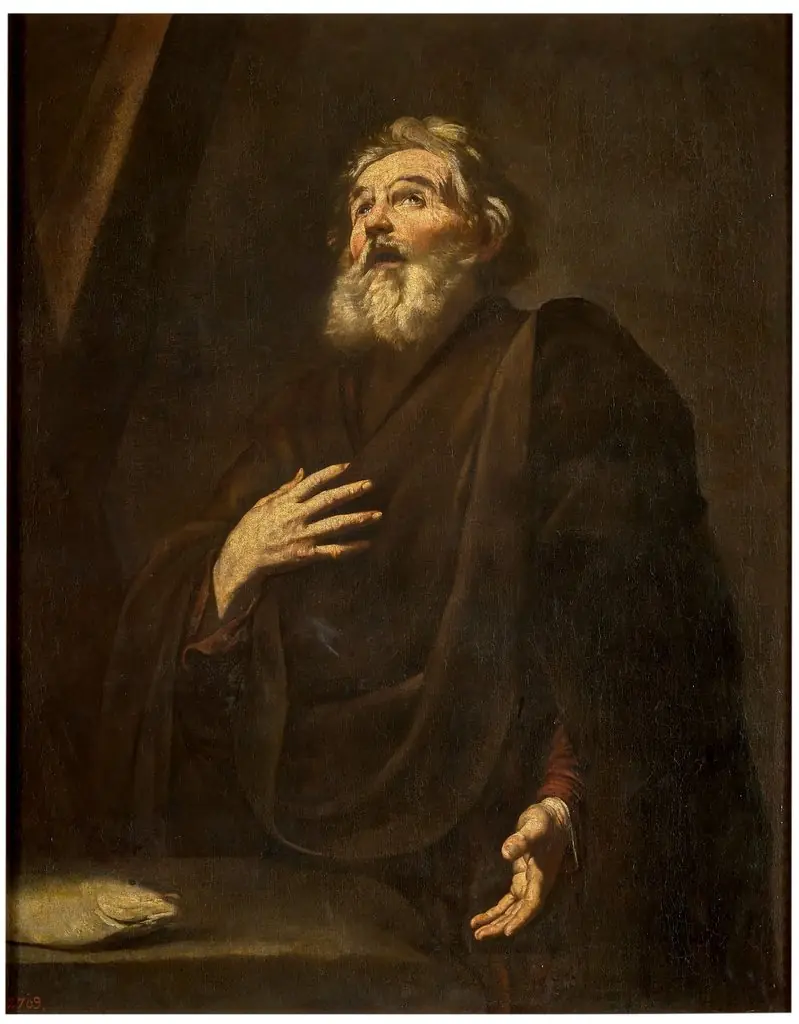
Saint Bartholomew is an oil painting by the Early Baroque Italian artist Jusepe de Ribera. It dates from 1630 and is held in the collection of the Museo del Prado.
About this work
Overview
Created circa 1630 by the Spanish Baroque painter Jusepe de Ribera, this oil painting depicts the apostle Bartholomew. Executed during Ribera’s productive period in Naples, the work exemplifies the dramatic intensity characteristic of early Italian Baroque. It is presently part of the Museo del Prado’s collection in Madrid.
Subject & Meaning
The figure is an elderly man with a white beard, his face lined with age, clothed in a loose, light‑toned robe. He holds a small knife in his left hand—a traditional symbol identifying Bartholomew, who according to legend was martyred by flaying. The right hand rests on his chest, suggesting a contemplative or devotional pose.
Technique & Style
Ribera employs a stark chiaroscuro, using a deep, dark background to isolate the illuminated face and hands. This contrast of light and shadow heightens the three‑dimensionality of the figure and creates a sense of immediacy. The brushwork is tight around the facial features, while broader strokes render the drapery, reflecting the painter’s blend of realism and theatricality.
History & Provenance
After its creation in Naples, the painting entered the Spanish royal collection and eventually was transferred to the Museo del Prado, where it remains on display. Ribera’s reputation as a leading Spanish Baroque artist places him alongside contemporaries such as Zurbarán, Murillo, and Velázquez, underscoring the work’s significance within that artistic milieu.
Own this work as a print
Artist & collection
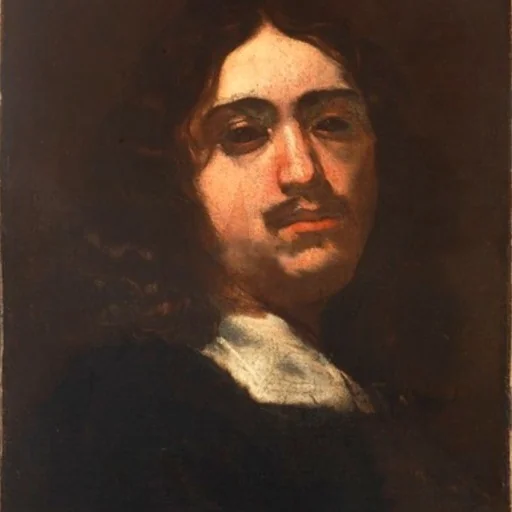
Artist
Jusepe de Ribera (Valencian: ; baptised 17 February 1591 – 3 November 1652) was a Spanish painter and printmaker.