Artwork
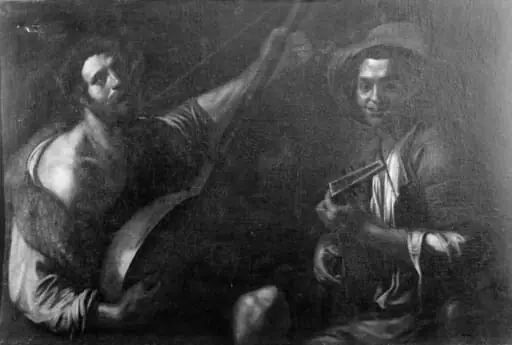
Two Tramps
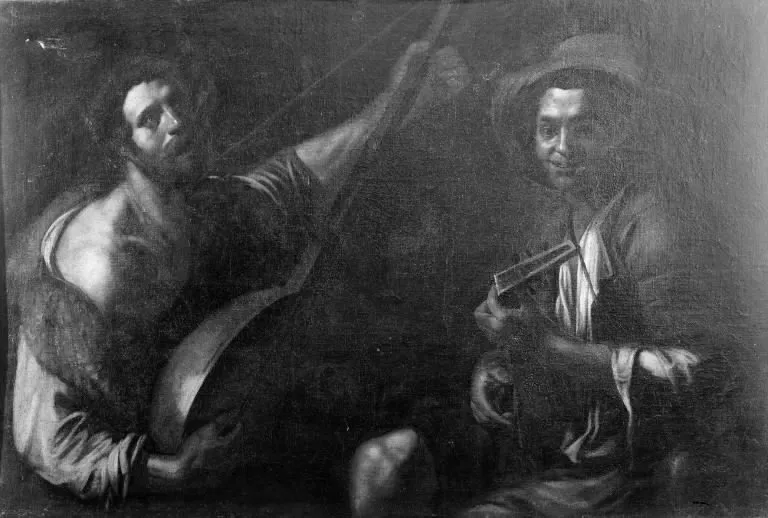
Two Tramps is an oil painting by the Rococo painting artist Jusepe de Ribera. It is held in the collection of the Statens Museum for Kunst.
About this work
Overview
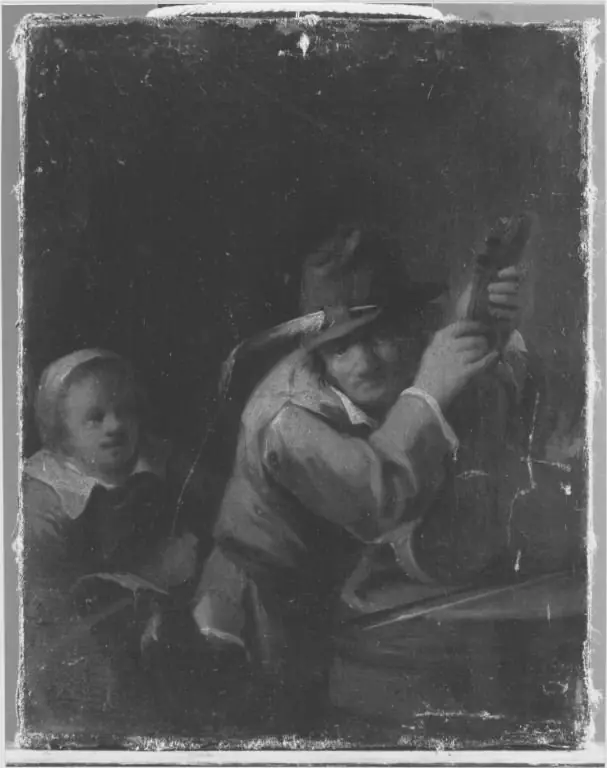
The painting captures two itinerant laborers in a dim, intimate space, rendered with raw immediacy and a tactile surface.
Painted in 1627 by Jusepe de Ribera, *Two Tramps* is an oil on canvas work currently held by Statens Museum for Kunst. Though sometimes misattributed to the Rococo era, it belongs to the early Baroque period. Ribera, a Spanish artist based in Naples, focused on marginalized figures with psychological depth. The painting captures two itinerant laborers in a dim, intimate space, rendered with raw immediacy and a tactile surface.
Subject & Meaning
The painting portrays two aging men—one younger, shirtless and gazing upward; the other older, cloaked in shadow, gripping a walking stick. Their postures suggest exhaustion and quiet resignation. Ribera avoids moralizing, instead presenting them with dignity amid poverty. The absence of narrative context invites contemplation of their lives, aligning with the artist’s interest in human endurance and social invisibility.
Technique & Style
Ribera employs chiaroscuro to model the figures with dramatic lighting, isolating their faces and garments against a near-black background. Visible brushwork adds texture to fabric and skin, enhancing physical presence. The palette is restrained—ochres, grays, and muted whites—emphasizing tone over color. This approach reflects Caravaggisti influences, prioritizing emotional weight through light and shadow rather than ornamental detail.
History & Provenance
Created during Ribera’s mature period in Naples, the painting entered the Danish national collection in the 19th century. Its early history is undocumented, but its stylistic consistency with Ribera’s other works from the 1620s supports attribution. No significant alterations or restorations are recorded, preserving the original surface and tonal balance as intended by the artist.
Context
In early 17th-century Naples, a hub of artistic innovation, Ribera joined a circle of painters drawn to Caravaggio’s naturalism. While many contemporaries favored idealized forms, Ribera turned to the urban poor, the sick, and the elderly as subjects. *Two Tramps* reflects a broader cultural shift toward observing everyday life with unflinching honesty, distinct from courtly or religious grandeur.
Legacy
The painting exemplifies Ribera’s influence on later realist traditions in European art. Its unidealized portrayal of laborers prefigures 19th-century social realism. Though not widely exhibited, it remains a key reference for studies of Baroque naturalism and the depiction of marginality. Its quiet power lies in its restraint—offering no spectacle, only presence.
Artist & collection
Artist
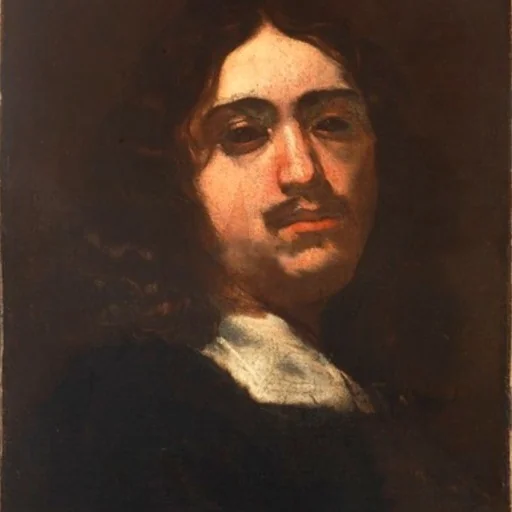
Jusepe de Ribera (Valencian: ; baptised 17 February 1591 – 3 November 1652) was a Spanish painter and printmaker.