Artwork
Allegorie auf die Mildtätigkeit
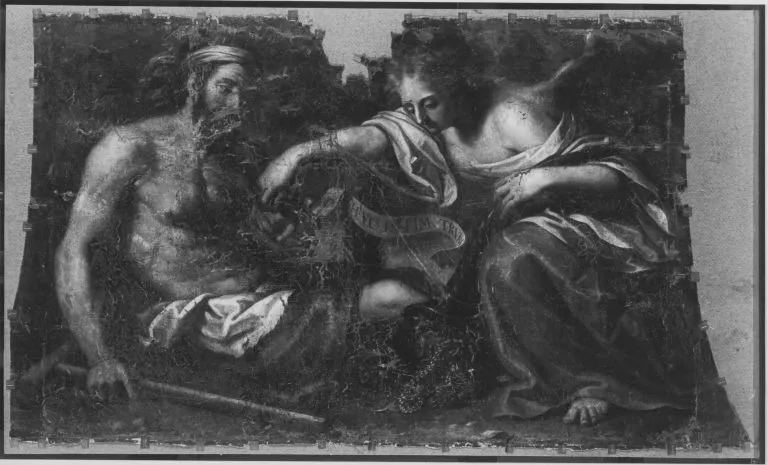
Allegorie auf die Mildtätigkeit is an unspecified painting by the Early Baroque Italian artist Antonio Triva. It dates from 1662 and is held in the collection of the Bavarian State Painting Collections.
About this work
Overview
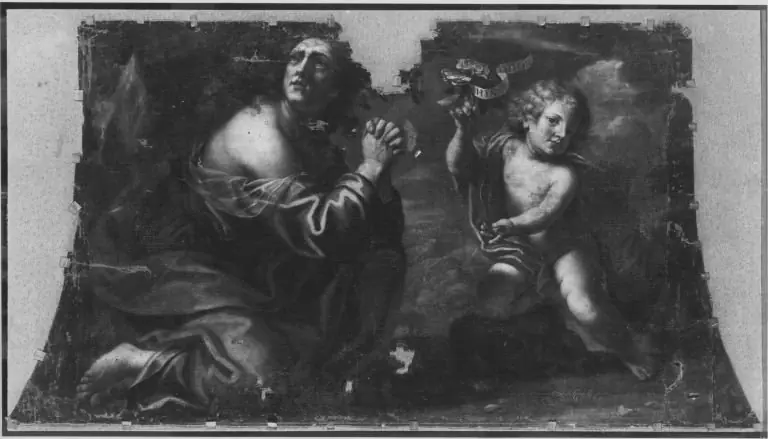
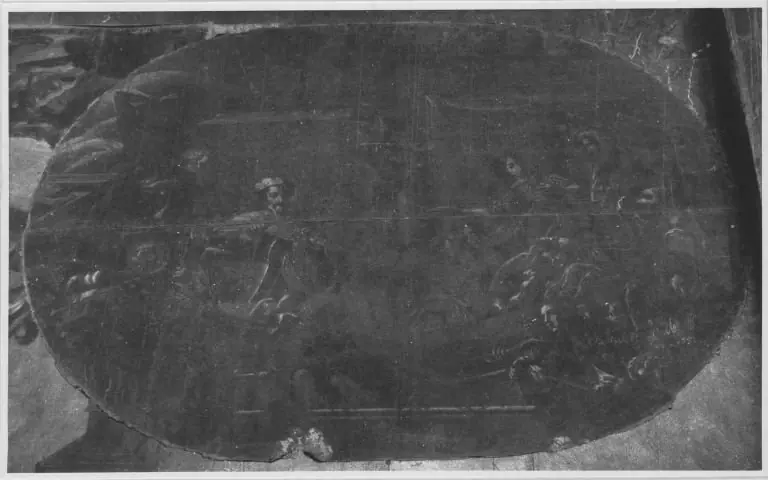
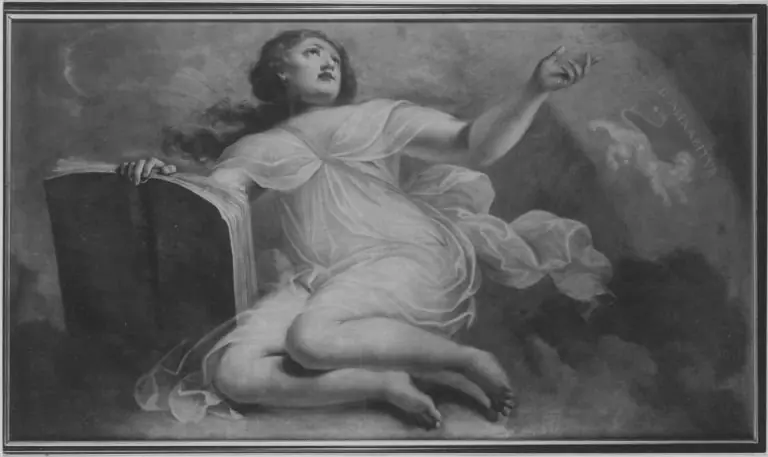
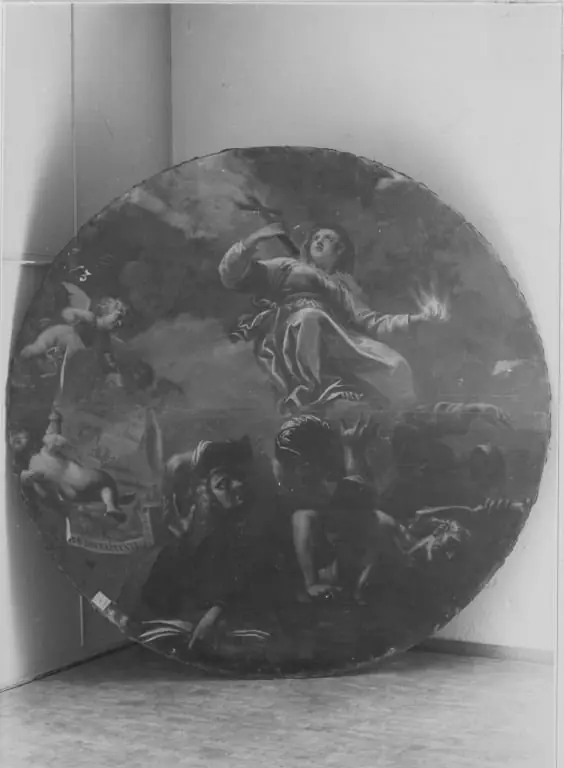
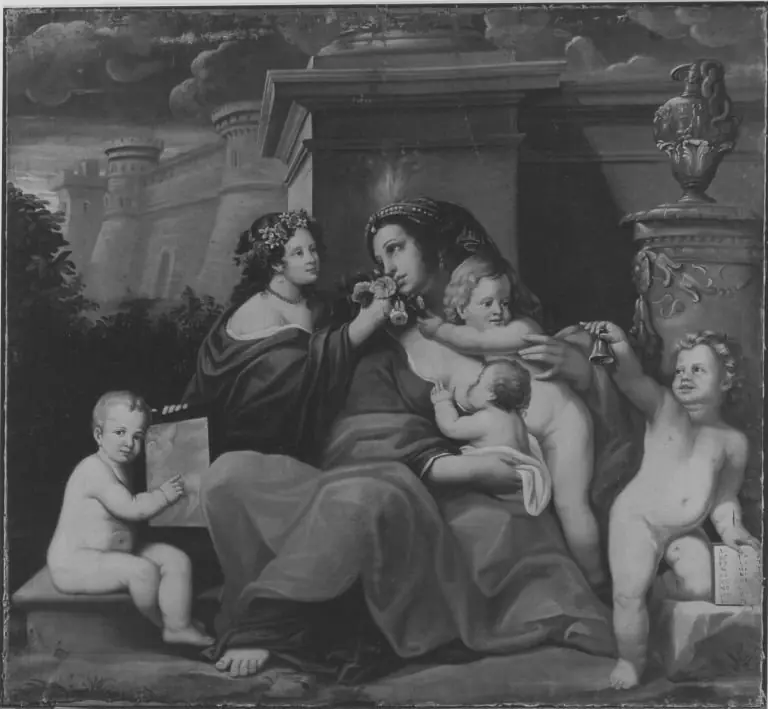
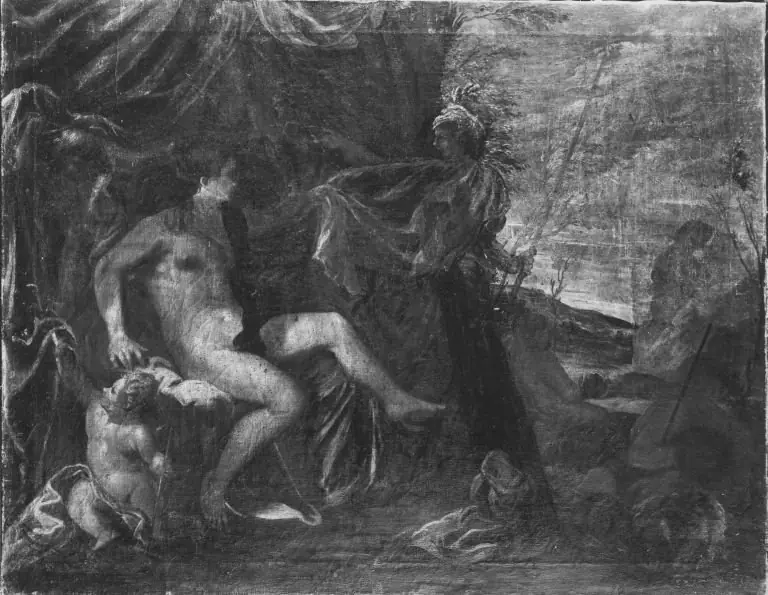
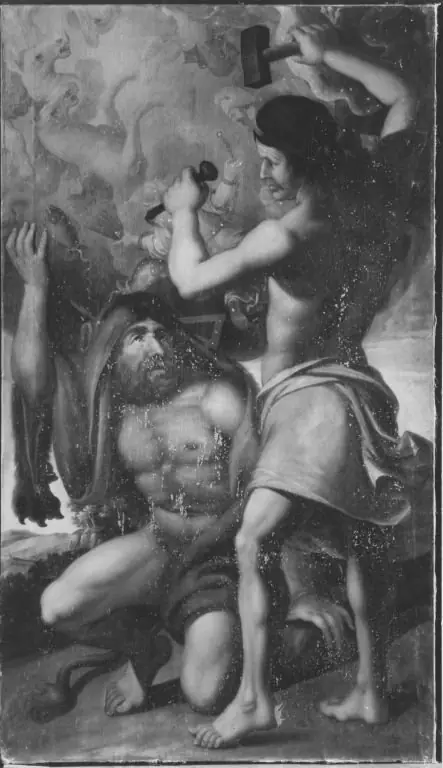
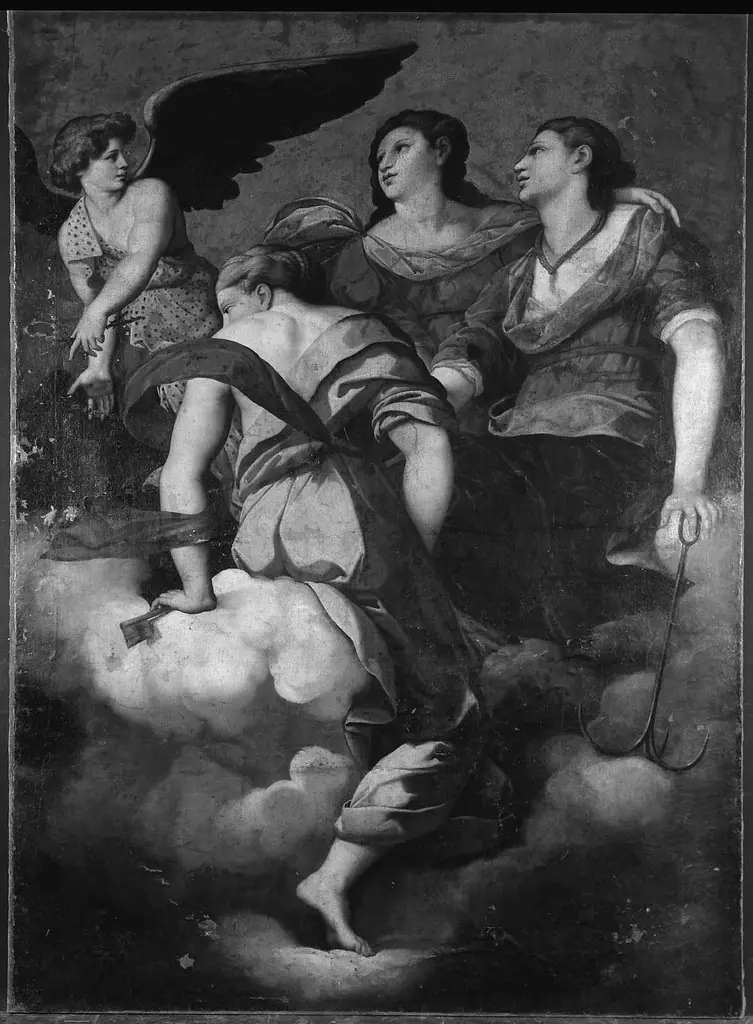
Antonio Triva’s 1662 oil painting, titled *Allegorie auf die Mildtätigkeit*, is part of the collection of the Alte Pinakothek in Munich. The work presents two solitary figures positioned within a shadowy, rocky setting, their forms rendered with a stark contrast of light and darkness that emphasizes volume and tension.
Subject & Meaning
The composition juxtaposes a partially nude male figure on the left, clutching a long staff and a cloth‑bound object, with a robed companion on the right who leans inward. While the exact narrative remains ambiguous, the title suggests an allegorical reference to charitable or benevolent action, inviting viewers to contemplate the relationship between the two characters.
Technique & Style
Triva employs a pronounced chiaroscuro, allowing narrow shafts of light to illuminate select areas of flesh and fabric while the surrounding space recedes into deep shadow. This manipulation of illumination creates a dramatic three‑dimensional effect, highlighting the tactile texture of skin and cloth and reinforcing the work’s somber mood.
History & Provenance
Created in the mid‑seventeenth century, the painting entered the Alte Pinakothek’s holdings at an unspecified date, where it has been displayed as part of the museum’s Baroque collection. Its provenance prior to acquisition by the museum is not extensively documented in public records.
Context
Triva worked within the Italian Baroque tradition, a period marked by dynamic compositions and heightened emotional expression. The use of chiaroscuro aligns the work with contemporary practices of artists such as Caravaggio, who similarly exploited light to convey narrative intensity and spiritual allegory.
Artist & collection