Artwork
Spring and Autumn Farming (Spring)
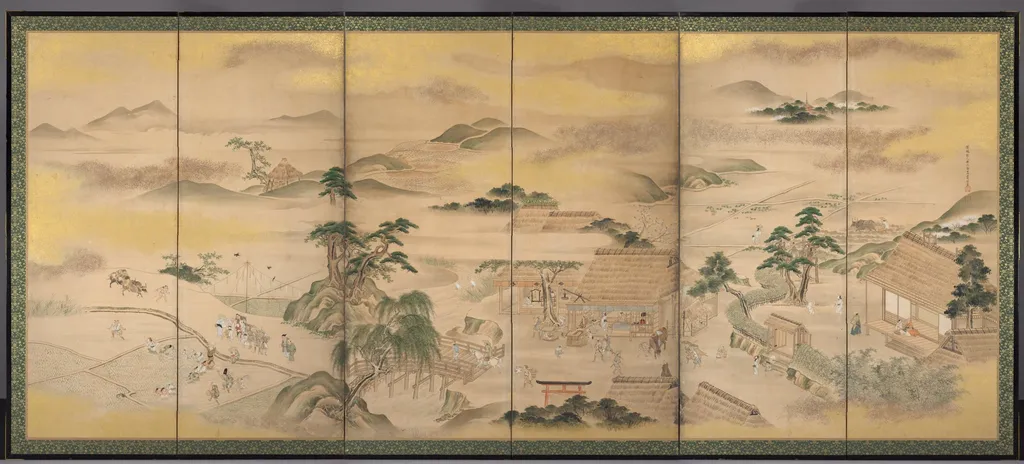
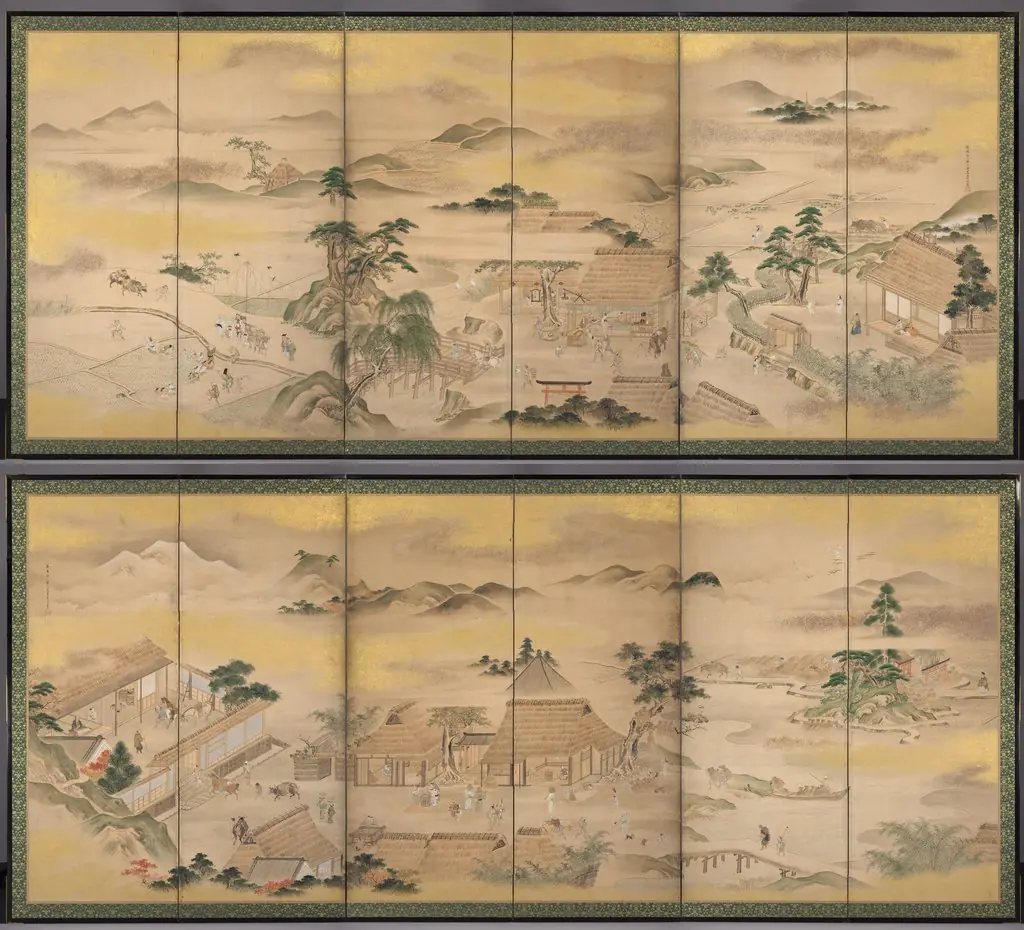
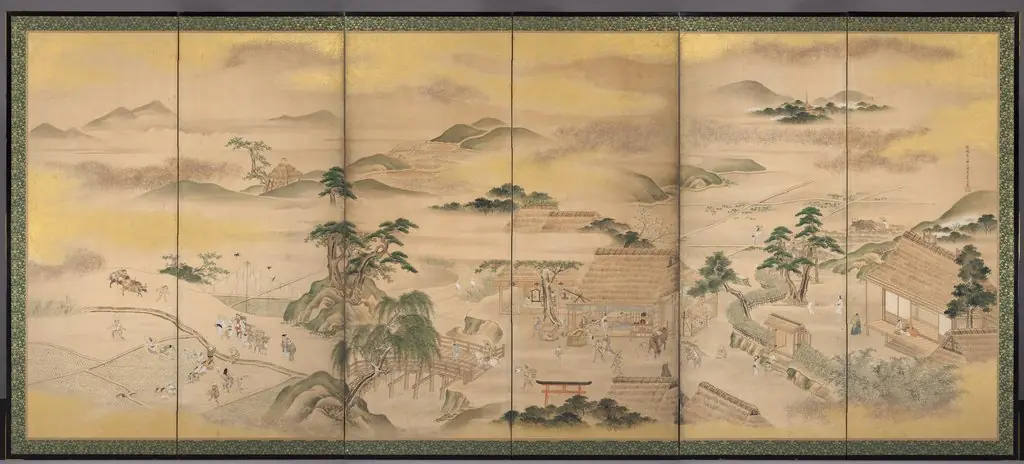
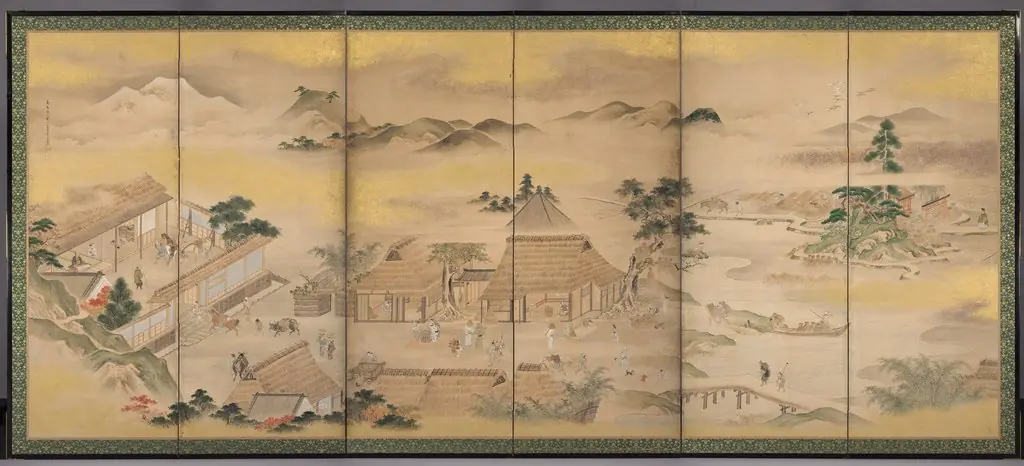
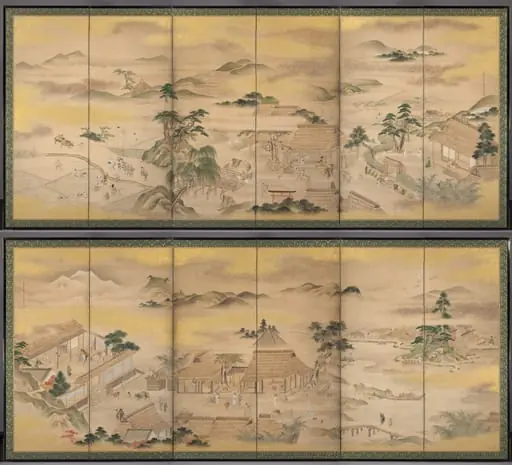
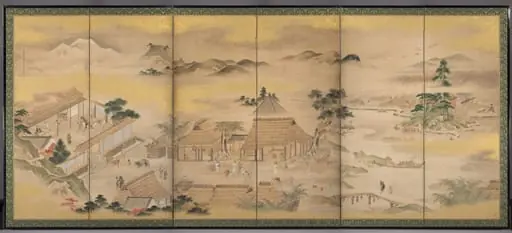
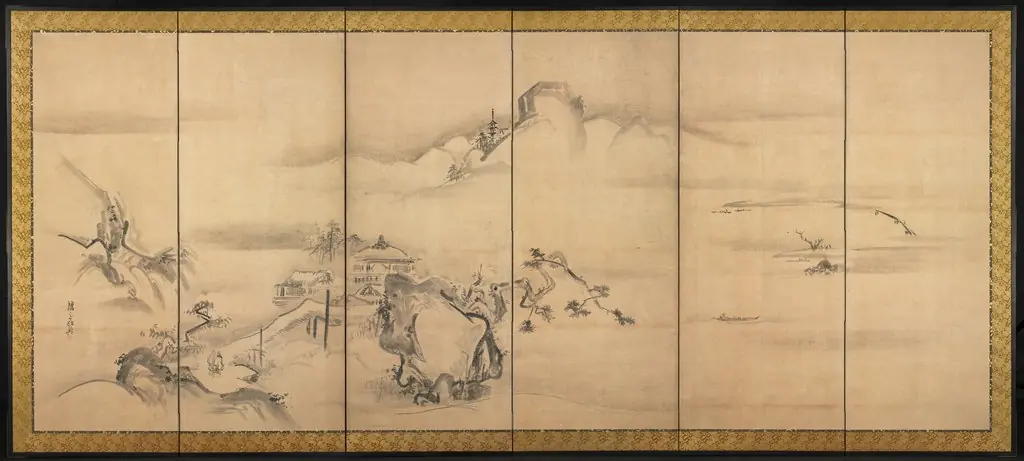
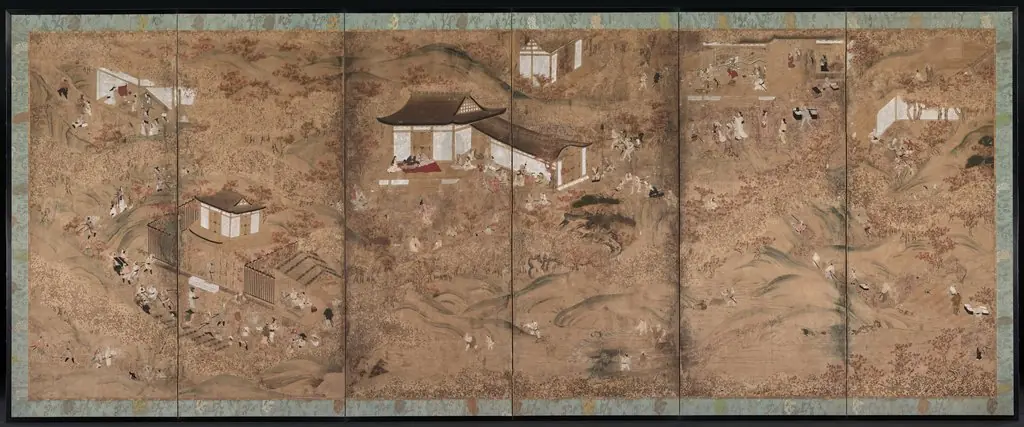
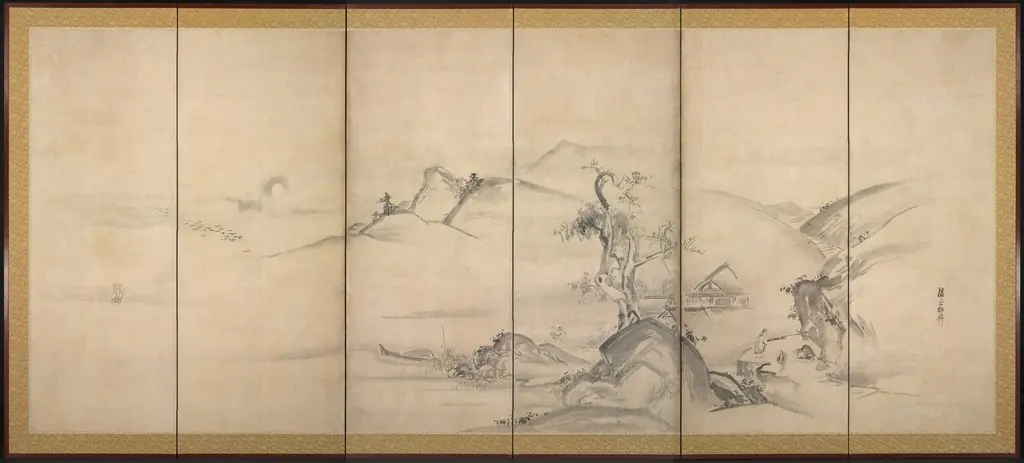
Spring and Autumn Farming (Spring) is an unspecified painting by the Romanticist artist Kō Sūkoku. It dates from 1704 and is held in the collection of the Cleveland Museum of Art. This pair of folding screens depicts the agricultural calendar, beginning with spring on the right and concluding with autumn on the left.
About this work
Overview
The scene captures rural labor alongside moments of rest, play, and communal activity, offering a layered view of seasonal life in 18th-century Japan.
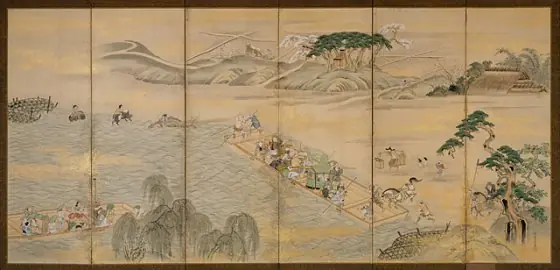
This pair of folding screens depicts the agricultural calendar, beginning with spring on the right and concluding with autumn on the left. The scene captures rural labor alongside moments of rest, play, and communal activity, offering a layered view of seasonal life in 18th-century Japan. Rather than focusing solely on toil, the composition integrates leisure as an essential rhythm of the farming year.
Subject & Meaning
The painting portrays springtime farming activities—plowing, planting, and tending young rice shoots—yet also includes children playing, families sharing meals, and individuals engaged in quiet contemplation. These interludes suggest that spiritual and social rituals were woven into the fabric of agricultural labor, reflecting a worldview in which work and leisure were not opposed but mutually sustaining.
Technique & Style
Kō Sūkoku employed a fluid, expressive brushwork that blends the observational detail of ukiyo-e with the ink-wash sensitivity of literati painting. His figures are rendered with subtle gestures and varied postures, avoiding idealization. The composition avoids rigid perspective, instead using overlapping forms and atmospheric spacing to suggest depth and movement across the screen.
History & Provenance
Kō was a pupil of Sawaki Sūshi, who himself studied under Hanabusa Itchō, a painter known for synthesizing diverse traditions. This lineage placed Kō within a circle of artists who elevated scenes of common life to the level of refined art. The screens likely originated in a private collection, possibly commissioned by a regional patron interested in documenting rural customs with artistic dignity.
Context
In 18th-century Japan, urban culture flourished, but rural life remained the economic foundation. Artists like Kō responded to growing interest in vernacular subjects, portraying farmers not as rustic types but as complex participants in a structured, meaningful world. These screens reflect a broader cultural shift toward valuing everyday experience as worthy of artistic attention.
Legacy
Kō’s work helped sustain a tradition of genre painting that emphasized authenticity over grandeur. Though less celebrated than his predecessors, his depictions of rural life influenced later artists who sought to document social reality with empathy and nuance. The screens stand as quiet records of a way of life that persisted beyond the reach of urban trends.
Artist & collection