Artwork
Panorama on a Mountain Lake
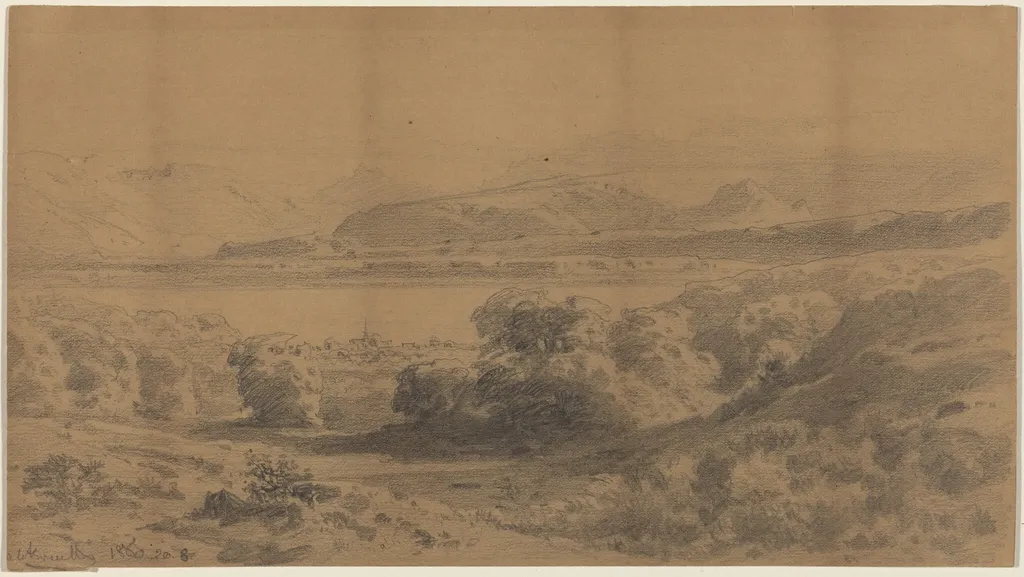
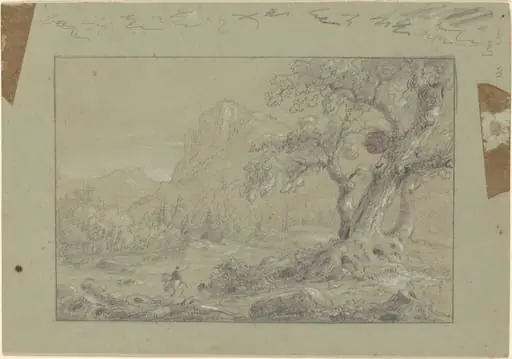
Panorama on a Mountain Lake is a graphite drawing by the Impressionist artist Stanislaus Graf von Kalckreuth. It dates from 1857 and is held in the collection of the National Gallery of Art.
About this work
Overview
Stanislaus Graf von Kalckreuth’s 1857 drawing, Panorama on a Mountain Lake, is executed in graphite on brown laid paper. The work presents a broad, atmospheric view of a mountainous landscape, rendered in a single, continuous sketch that emphasizes the fleeting qualities of light and space.
Subject & Meaning
The composition depicts a tranquil lake surrounded by hazy hills, through which a dark, sinuous river winds. In the distance, railway tracks ascend the slope, with a locomotive just beginning its climb, suggesting the encroachment of industrial progress into a natural setting.
Technique & Style
Kalckreuth employs rapid, sketchy graphite strokes that delineate forms with minimal detail, creating a sense of immediacy. The contrast between stark, defined foreground vegetation and the soft, blurred background hills conveys depth while maintaining the overall impressionistic quality characteristic of mid‑nineteenth‑century realism.
History & Provenance
Created in 1857, the drawing reflects the artist’s interest in documenting contemporary landscapes during a period of rapid railway expansion in Germany. Its provenance traces back to the Kalckreuth family collection before entering public holdings in the early twentieth century, where it has been exhibited as an example of realist field sketching.
Context
The work aligns with the realist movement’s aim to portray scenes as they appear, without idealization. By integrating a modern railway into a pastoral environment, Kalckreuth comments on the juxtaposition of technological advancement and traditional nature, a theme common among his contemporaries.
Artist & collection


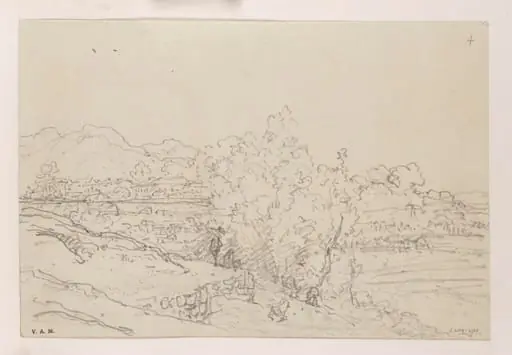 Fields and trees, with the city of Macau in the distance
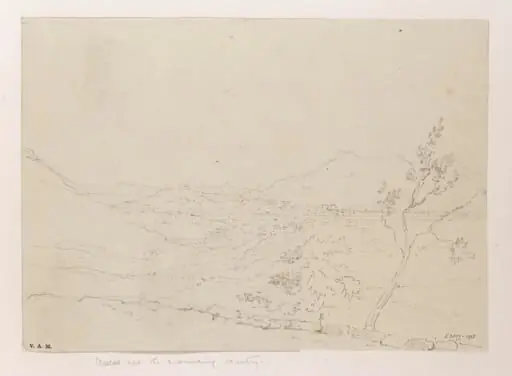 Macau, looking south-west along the peninsula
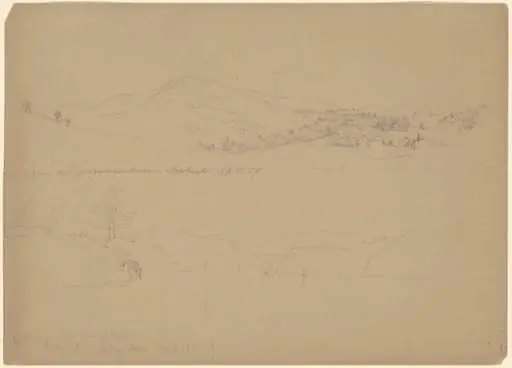 Landscapes
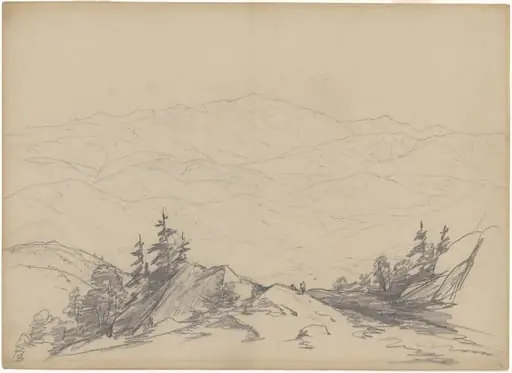 Mountain Landscape
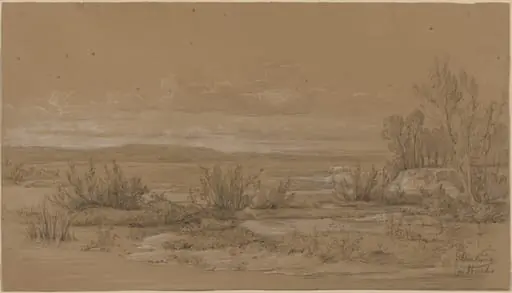 Landscape near Vourlis
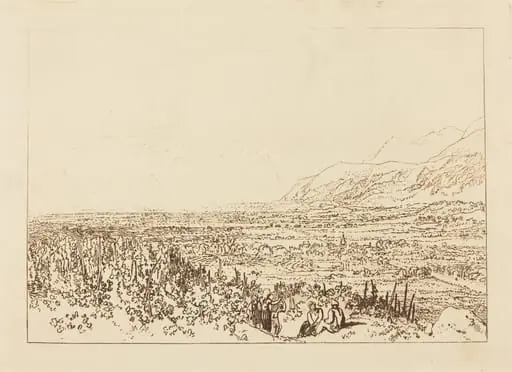 Chain of Alps from Grenoble to Chamberi
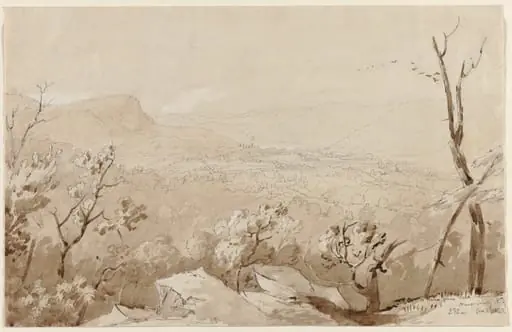 A View from Bald Mountain, Orange County, N.Y.
 Mountainous View from Antrodoco
 A River Bank with Mountains Beyond
 Untitled
 Hudson Highlands
 Study for "The Mountain Ford"