Artwork
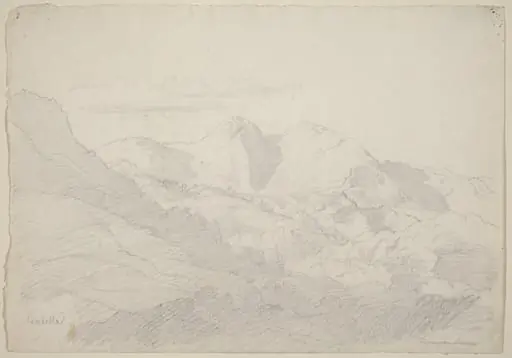
Mountainous View from Antrodoco
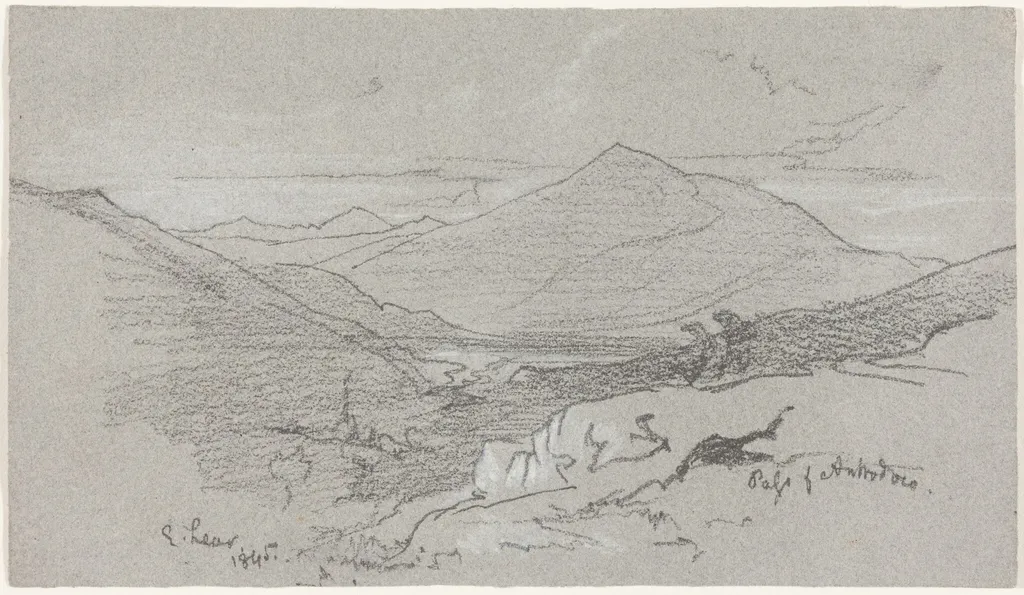
Mountainous View from Antrodoco is a chalk drawing by the Romanticist artist Edward Lear. It dates from 1845 and is held in the collection of the National Gallery of Art. Created in 1845, this drawing records a mountainous landscape observed from Antrodoco, a town in central Italy.
About this work
Lear, 1845," and the words "Paese d'Antrodoco" (a place in Italy) are scrawled near the river.
This sketch shows rolling hills and jagged peaks in soft black lines. A winding river cuts through the bottom, with a small bridge or path crossing it. The paper has a faint blue tint, and the artist added white streaks to lighten some areas.
The signature reads "E. Lear, 1845," and the words "Paese d'Antrodoco" (a place in Italy) are scrawled near the river. The loose, sketchy lines feel quick, like the artist captured the scene fast.
Next, check out the technique: gouache to see how artists use it.
Overview
Created in 1845, this drawing records a mountainous landscape observed from Antrodoco, a town in central Italy. Executed on blue-wove paper, the composition balances dark chalk outlines with selective white gouache highlights, giving a sense of depth and atmospheric light. The work measures roughly a modest sheet, its surface tinted blue, which subtly influences the overall tonal harmony.
Subject & Meaning
The scene presents a series of rolling hills that rise into craggy peaks, their contours rendered in soft black strokes. A river winds through the foreground, bisected by a narrow bridge or footpath, suggesting a traveled route through the terrain. The inclusion of the place name near the water anchors the image to a specific locale, emphasizing the artist’s intent to document a real, observed vista.
Technique & Style
Lear employed black chalk for the primary drawing, allowing swift, gestural lines that convey the rugged topography. White gouache was applied sparingly to lift portions of the hills and river, creating highlights that suggest reflected light and atmospheric perspective. The blue ground paper provides a cool undertone, while the overall handling remains loose, indicating a rapid, on‑site sketch rather than a finished studio piece.
History & Provenance
Edward Lear, better known for his literary nonsense and travel writings, produced this work during his Italian journeys in the mid‑1840s. The drawing bears his signature and date, confirming authorship. It later entered a private collection before being acquired by a museum specializing in 19th‑century travel sketches, where it serves as an example of Lear’s dual practice as illustrator and field draughtsman.
Artist & collection
Artist
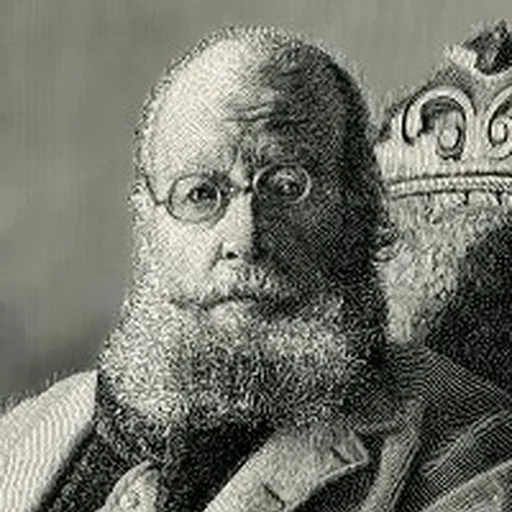
Edward Lear (12 May 1812 – 29 January 1888) was an English artist, illustrator, musician, author and poet, who is known mostly for his literary nonsense in poetry and prose and especially his limericks, a form he popularised but which term…

 The Sabine Hills and Rocca Santo Stefano Seen from Civitella
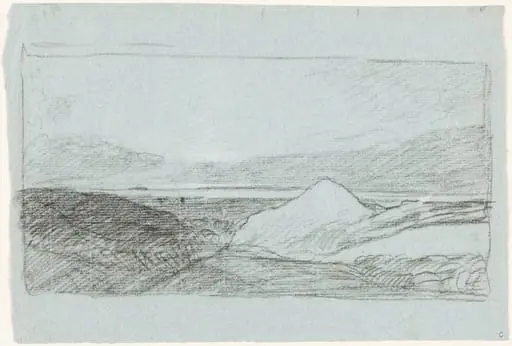 Landscape with Hills and Water
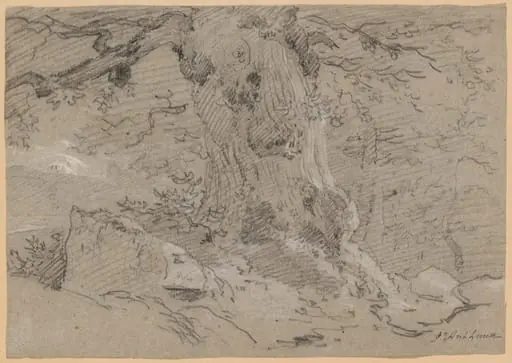 Study of Old Tree Trunk
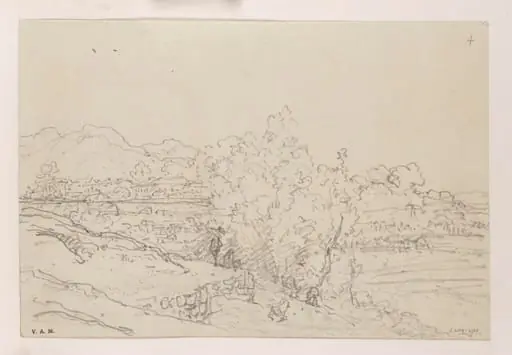 Fields and trees, with the city of Macau in the distance
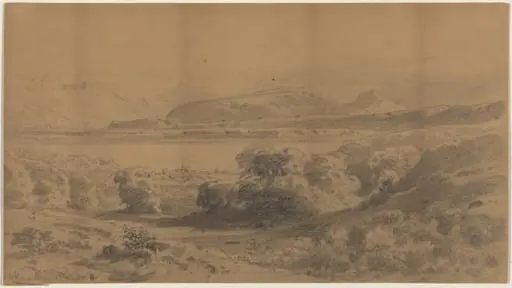 Panorama on a Mountain Lake
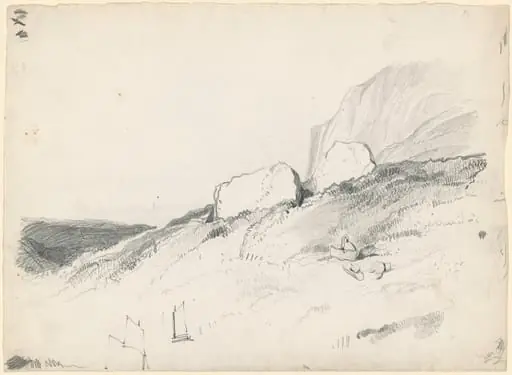 Rocky Landscape
 Untitled
 Chain of Alps from Grenoble to Chamberi
 Landscape with Ruins
 Hilly Landscape with Trees