Artwork
Study for "The Mountain Ford"
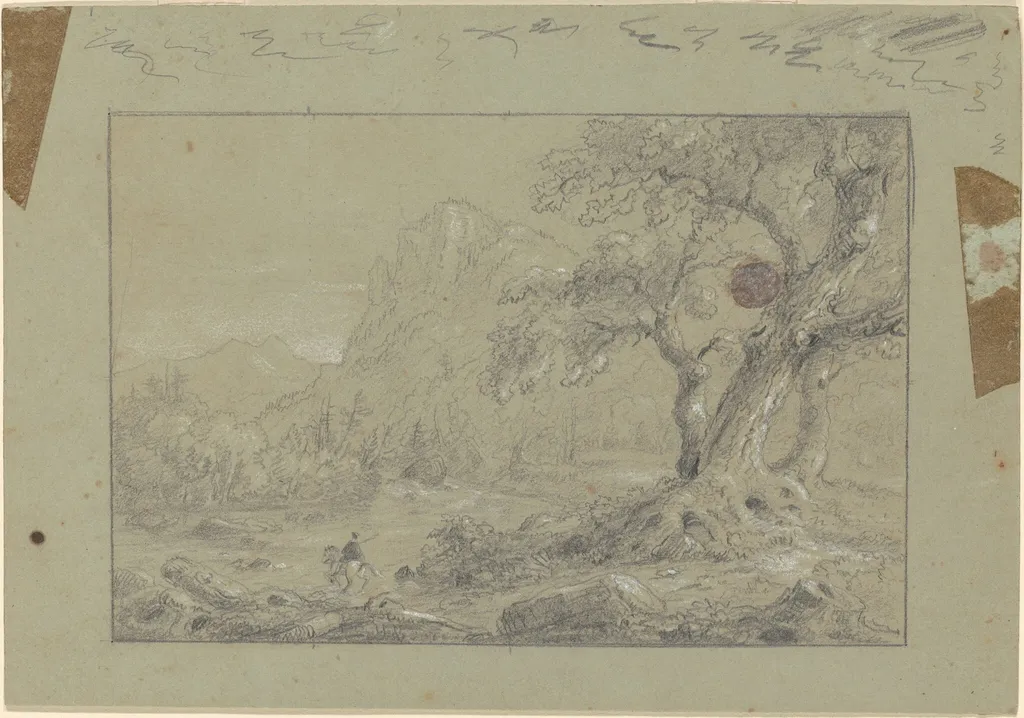
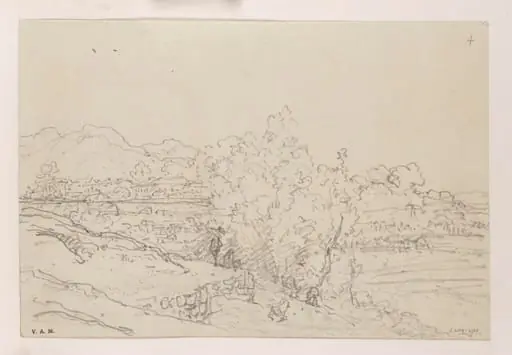
Study for "The Mountain Ford" is a graphite drawing by the Romanticist artist Thomas Cole. It dates from 1846 and is held in the collection of the National Gallery of Art.
About this work
Overview
Study for 'The Mountain Ford' is a graphite and white chalk drawing on gray wove paper, created by Thomas Cole in 1846, serving as a preparatory sketch for a larger work.
Subject & Meaning
The drawing depicts a solitary rider on horseback navigating a rugged, rocky landscape with twisted trees, steep hills, and uneven terrain, evoking a sense of solitude and interaction with the natural world.
Technique & Style
Characterized by quick, sketchy lines and varied mark intensity, the piece exhibits a rough, unfinished quality, with a faint sky subtly integrated into the gray paper's tone.
History & Provenance
Created in 1846 as a study for 'The Mountain Ford', this drawing demonstrates Cole's exploratory process, testing compositional elements and lighting effects prior to the final work.
Context
Aligned with Romanticist tendencies, the piece uses nature to convey deeper themes, though its unfinished state focuses attention on the artist's preparatory process rather than narrative depth.
Legacy
As a study, its significance lies in illuminating Cole's creative methodology and artistic decisions leading up to the completed 'Mountain Ford', offering insight into his working process.
Artist & collection
Artist
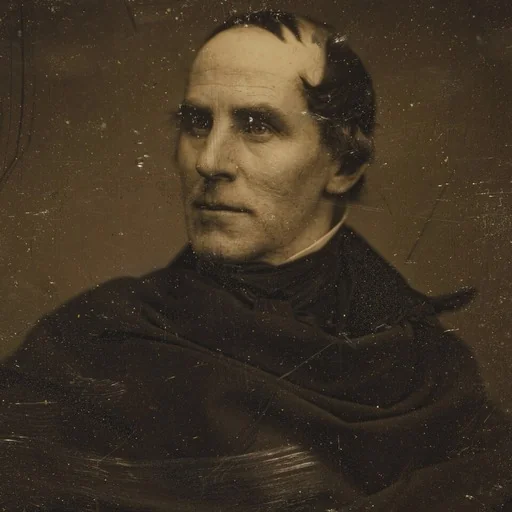
Thomas Cole (February 1, 1801 – February 11, 1848) was an Anglo-American artist who founded the Hudson River School art movement.


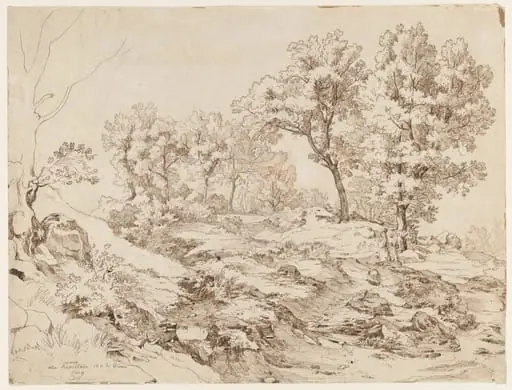 La Serpentara near Olevano
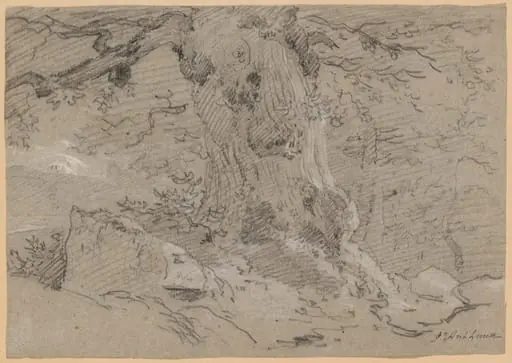 Study of Old Tree Trunk
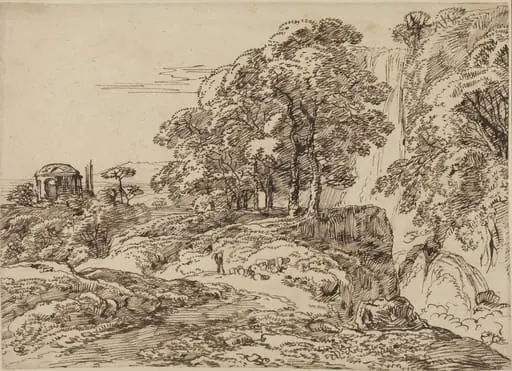 Pastoral Landscape with a Waterfall and a Temple
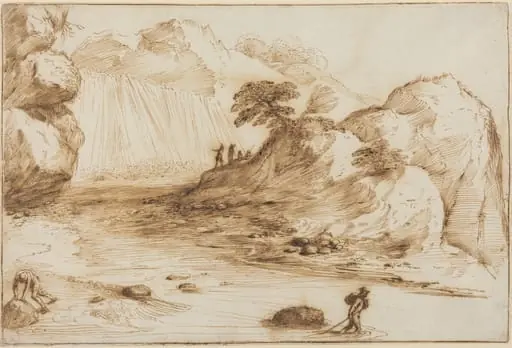 Landscape with a Waterfall
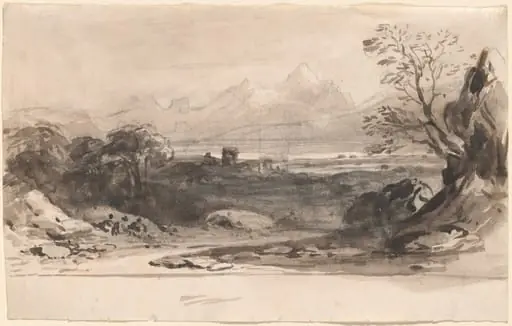 Landscape with Ruins
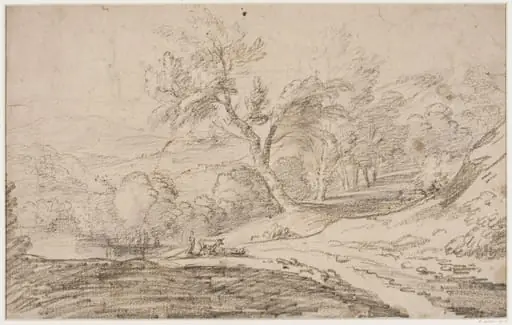 Landscape with lake
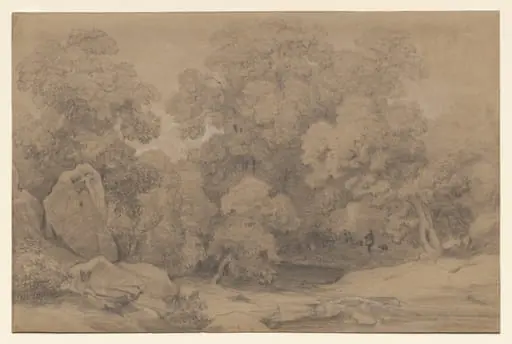 Landscape
 The Good Shepherd
 Rocky Landscape with a Rustic House
 Stream through an Ancient Forest
 A Mountainous Landscape
 Fields and trees, with the city of Macau in the distance