Artwork
Bugaku Dancers
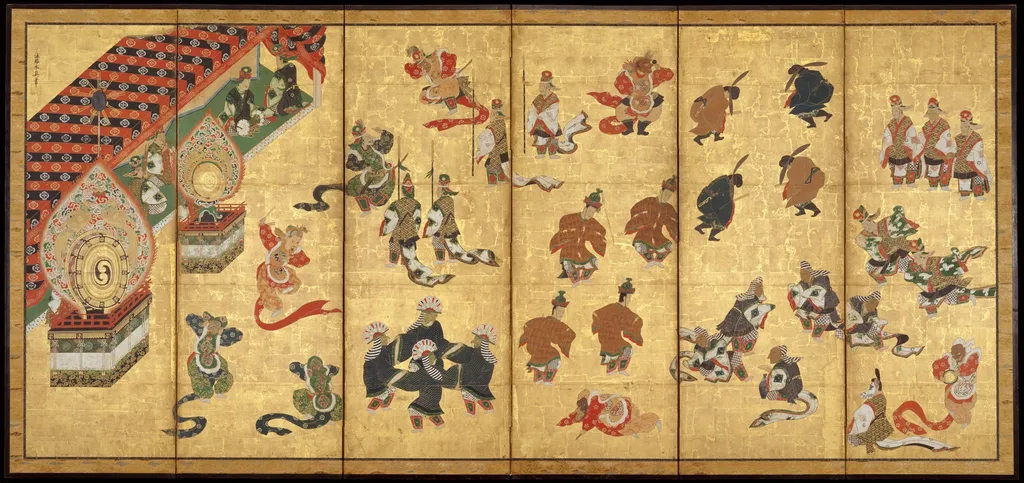
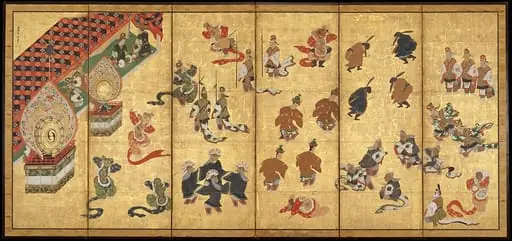
Bugaku Dancers is an unspecified painting by Kano Yasunobu. It is held in the collection of the Metropolitan Museum of Art.
About this work
Overview
Created in 1741, *Bugaku Dancers* is a hanging scroll painted by Kanō Yasunobu, a leading figure of the Kanō school during the Edo period. The work depicts a lively ensemble of court dancers arranged in a circular formation, their colorful kimonos and ornamental headpieces contrasting with a warm, golden background that suggests a festive atmosphere.
Subject & Meaning
The composition illustrates a traditional Japanese dance performance, likely drawn from the courtly bugaku repertoire that blended music, dance, and theatrical spectacle. The dancers’ gestures, fan props, and coordinated movement around a central point convey a sense of ritualized celebration, emphasizing harmony and collective energy within a ceremonial context.
Technique & Style
Executed in the Kanō school’s characteristic brushwork, the painting combines precise line with subtle washes of pigment. Yasunobu employs a restrained palette of vivid reds, blues, and gold, allowing the figures to emerge from the luminous background while maintaining the flat decorative quality typical of Edo‑period court paintings.
History & Provenance
Kanō Yasunobu, son of Kanō Takanobu and brother of the eminent Kanō Tan’yū, headed the Kyoto branch of the family workshop. *Bugaku Dancers* entered the collection of The Metropolitan Museum of Art, where it remains part of the museum’s holdings of Japanese Edo‑period paintings.
Artist & collection

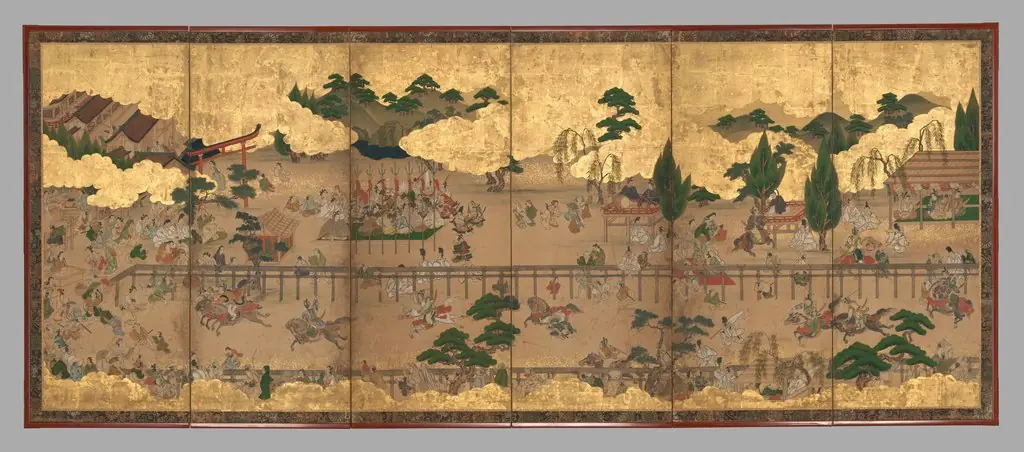 Horse Racing at Kamo Shrine
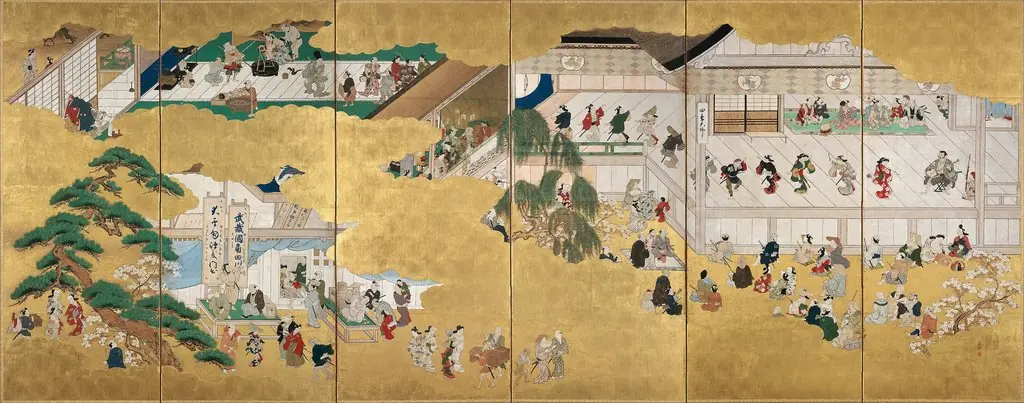 Scenes from the Nakamura Kabuki Theater
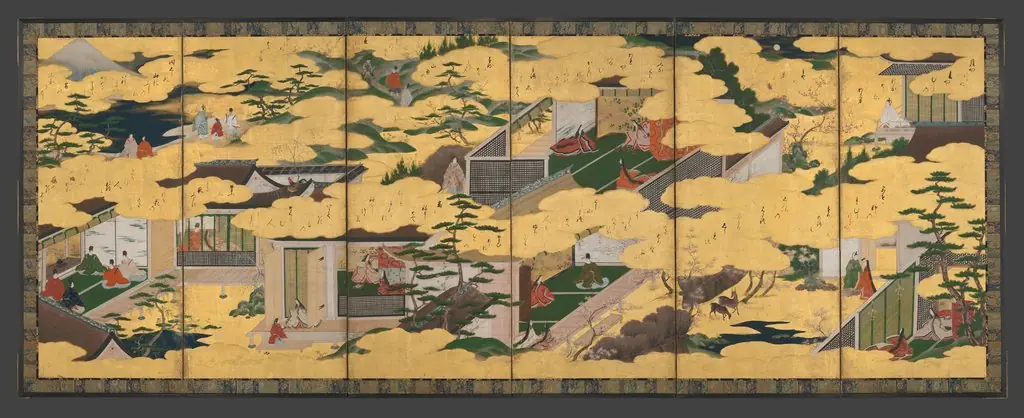 Scenes from the Tales of Ise
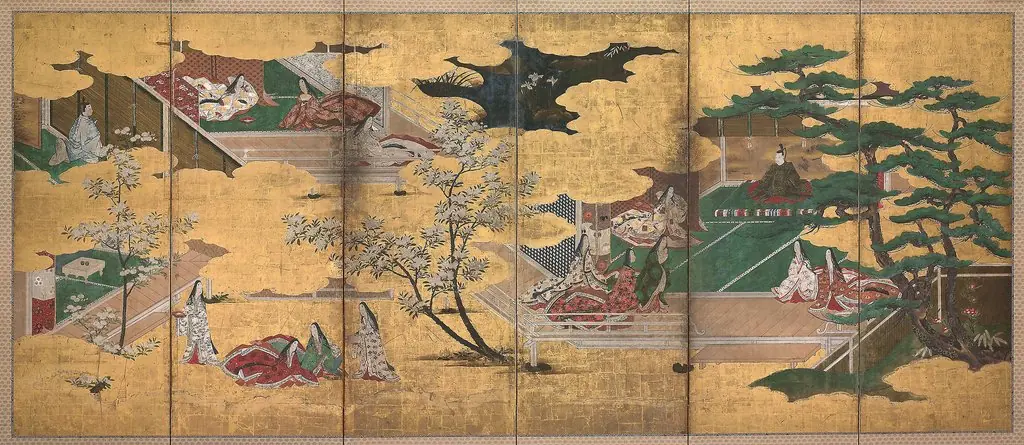 The Tale of Genji
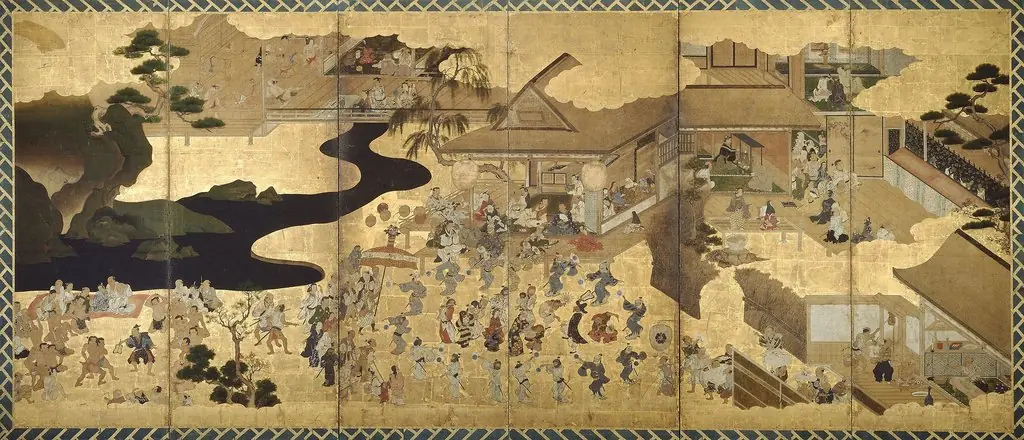 Genre Scenes (Fuzoku byobu)
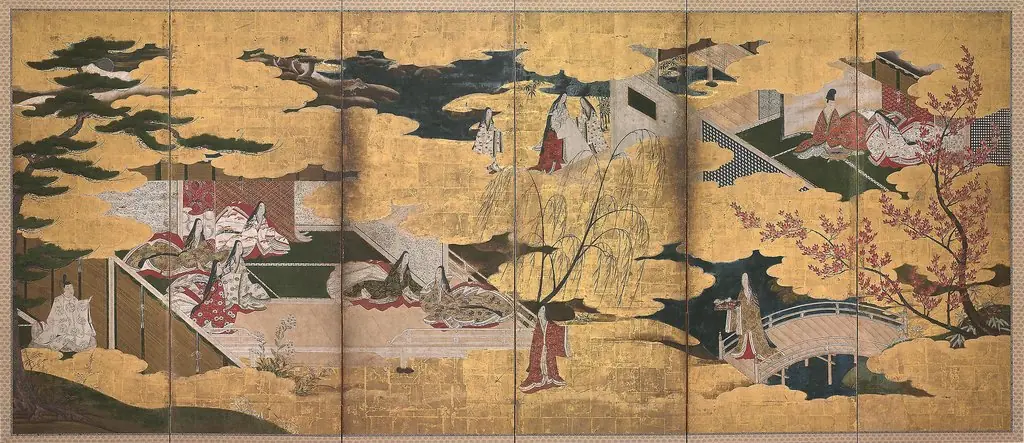 The Tale of Genji
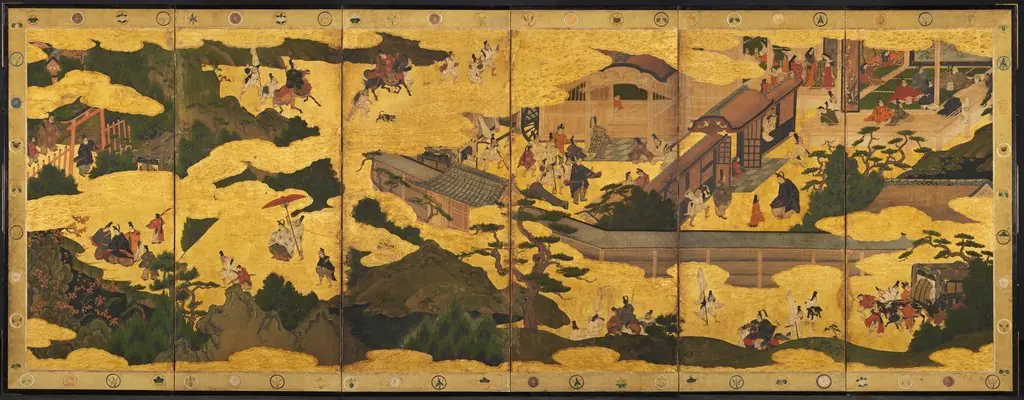 Scenes from the Tales of Ise
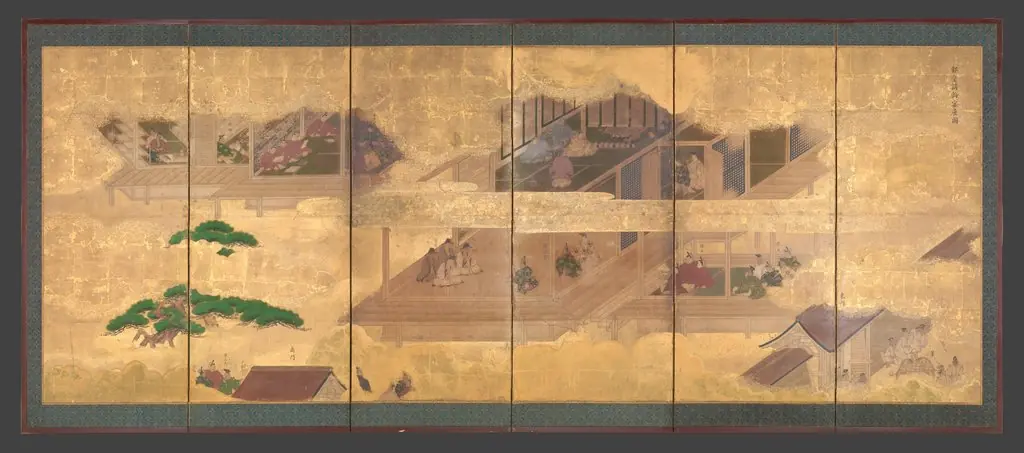 Scenes at the University with Images of the Ancient Sages; Debate and Banquet at the Administration Offices
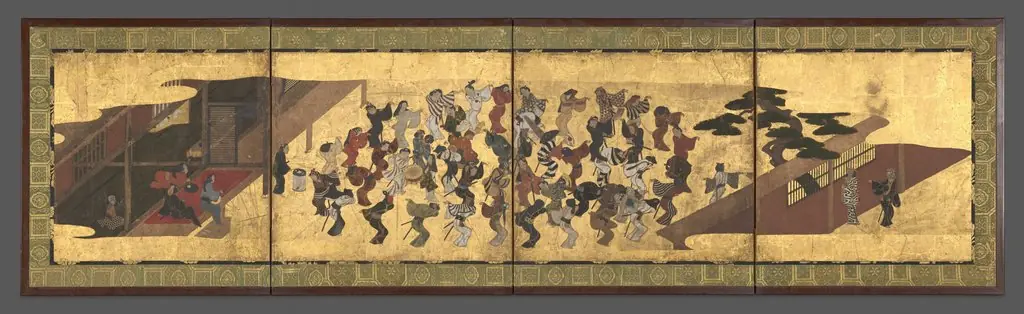 Festive Dancing at a Samurai Residence (Fūryū odori zu byōbu)
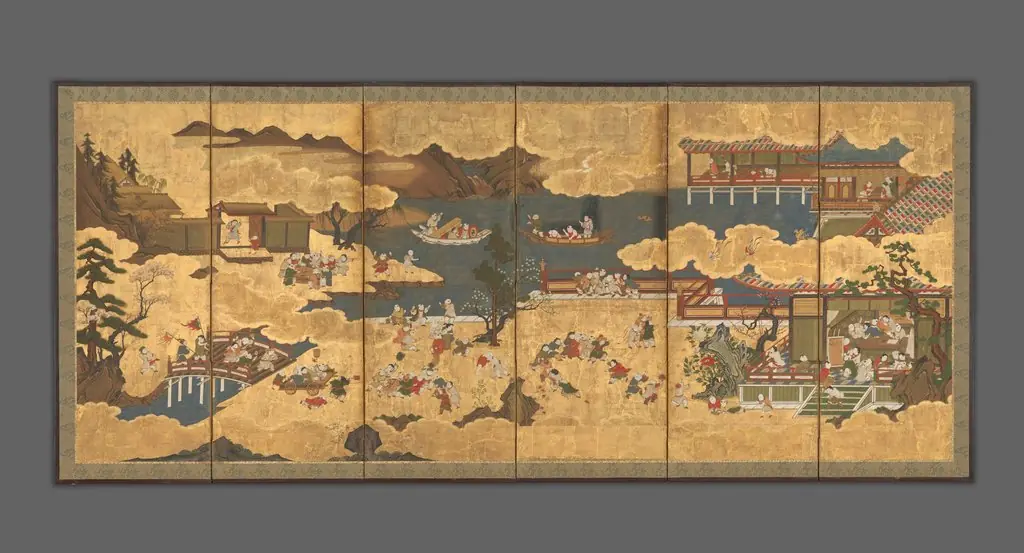 One Hundred Chinese Boys
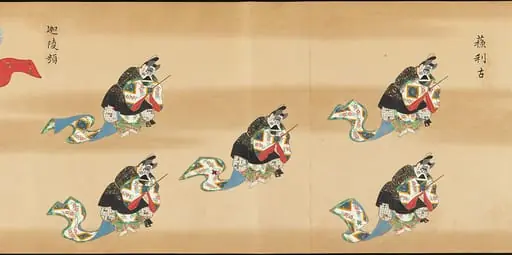 舞楽図巻|Bugaku Imperial Court Dance