Artwork
The Jolly God
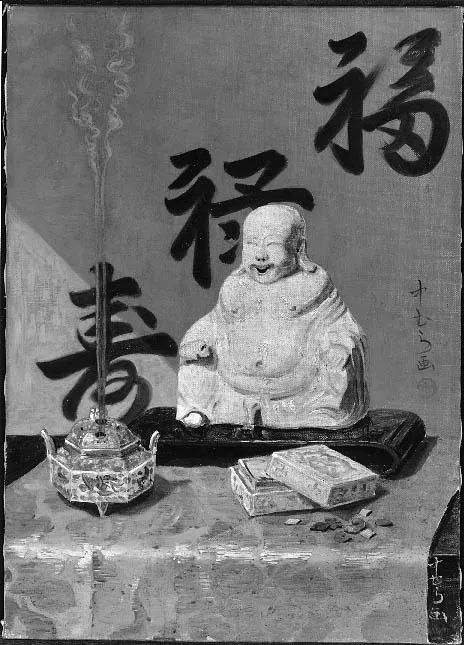
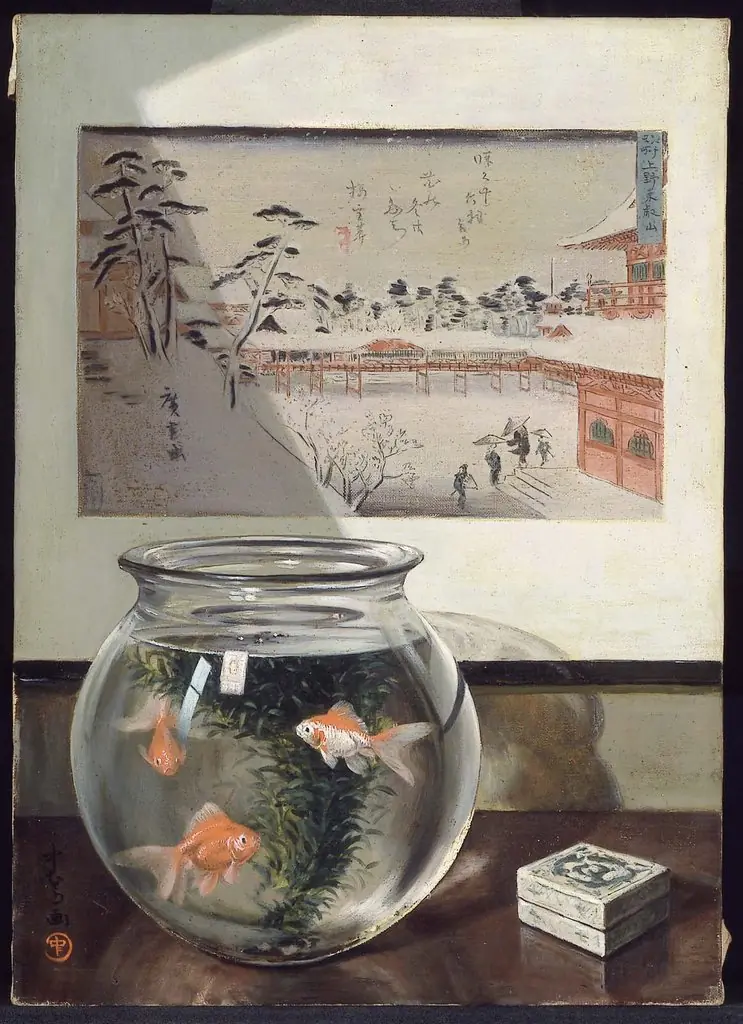
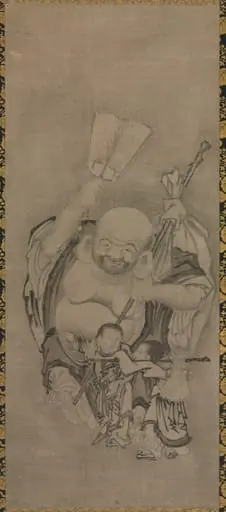
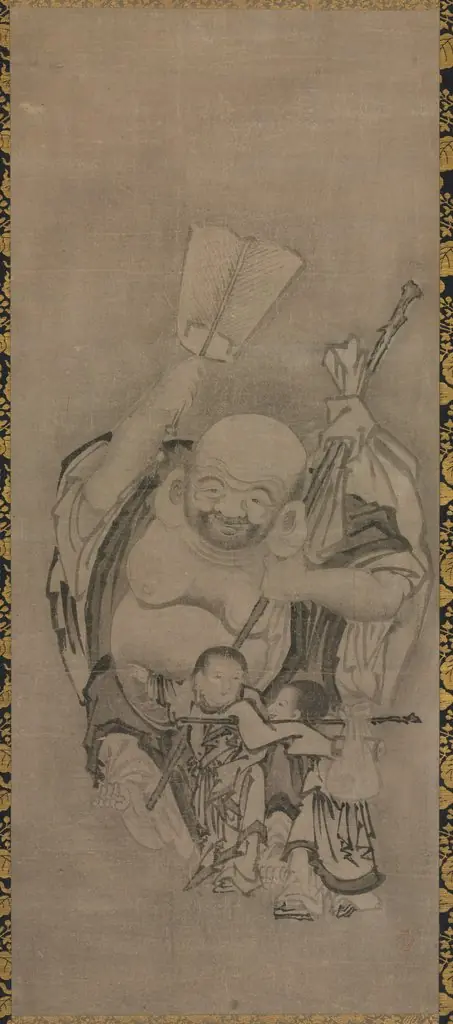
The Jolly God is an oil painting by the Nihonga artist Kanji Nakamura. It dates from 1926 and is held in the collection of the Museum of Fine Arts Boston.
About this work
Overview
Painted in 1926 by Kanji Nakamura, this oil work presents a quiet, contemplative still life centered on a statue of a benevolent deity.
Painted in 1926 by Kanji Nakamura, this oil work presents a quiet, contemplative still life centered on a statue of a benevolent deity. The composition is restrained, with minimal elements arranged to evoke stillness. It resides in the Museum of Fine Arts, Boston, where it is noted for its meditative tone and subtle cultural references, reflecting the artist’s interest in spiritual aesthetics and everyday ritual.
Subject & Meaning
The central figure is a stylized representation of a benevolent deity, likely drawn from East Asian religious iconography. Surrounding objects—an incense burner, a small box, and scattered items—suggest a domestic shrine or private devotional space. The absence of human figures emphasizes introspection, framing the deity not as a public idol but as a quiet presence in personal ritual, evoking reverence through stillness rather than grandeur.
Technique & Style
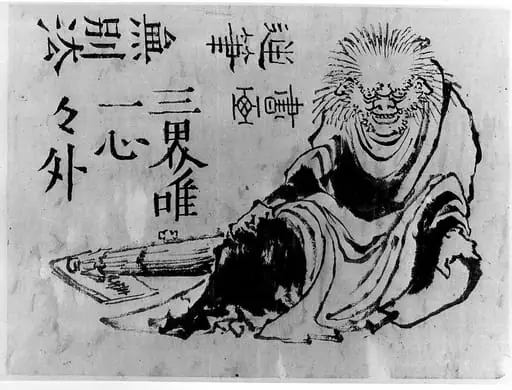
Nakamura employs oil paint with a muted palette and soft transitions, creating a hazy, atmospheric background that recedes gently behind the foreground objects. The incense smoke is rendered with delicate brushwork, suggesting movement without disruption. Chinese characters in ink, faintly visible in the background, add textual depth without narrative clarity, reinforcing the painting’s contemplative ambiguity and cultural resonance.
History & Provenance
The painting was completed in 1926 and entered the collection of the Museum of Fine Arts, Boston, where it has remained since. Its acquisition reflects early 20th-century Western institutional interest in Japanese modernist works that blended traditional motifs with contemporary sensibilities. No earlier provenance is widely documented, suggesting it may have been acquired directly from the artist or a local exhibition.
Context
Created during a period of cultural redefinition in Japan, the work aligns with artists exploring spiritual themes through modernist forms. While Western modernism emphasized abstraction, Nakamura retained symbolic objects to convey inner states. The painting quietly engages with the tension between tradition and modernity, offering a personal meditation rather than a public statement, resonating with broader trends in interwar Japanese art.
Legacy
Though not widely reproduced, the painting is recognized within scholarly circles for its restrained elegance and integration of spiritual symbolism into modern painting. It contributes to understanding how Japanese artists navigated cultural identity in the early 20th century, using quiet composition to express depth beyond overt narrative. Its presence in a major Western museum underscores its role in cross-cultural art dialogues of the era.
Artist & collection