Artwork
Hotei with Daoist Immortals: Hotei
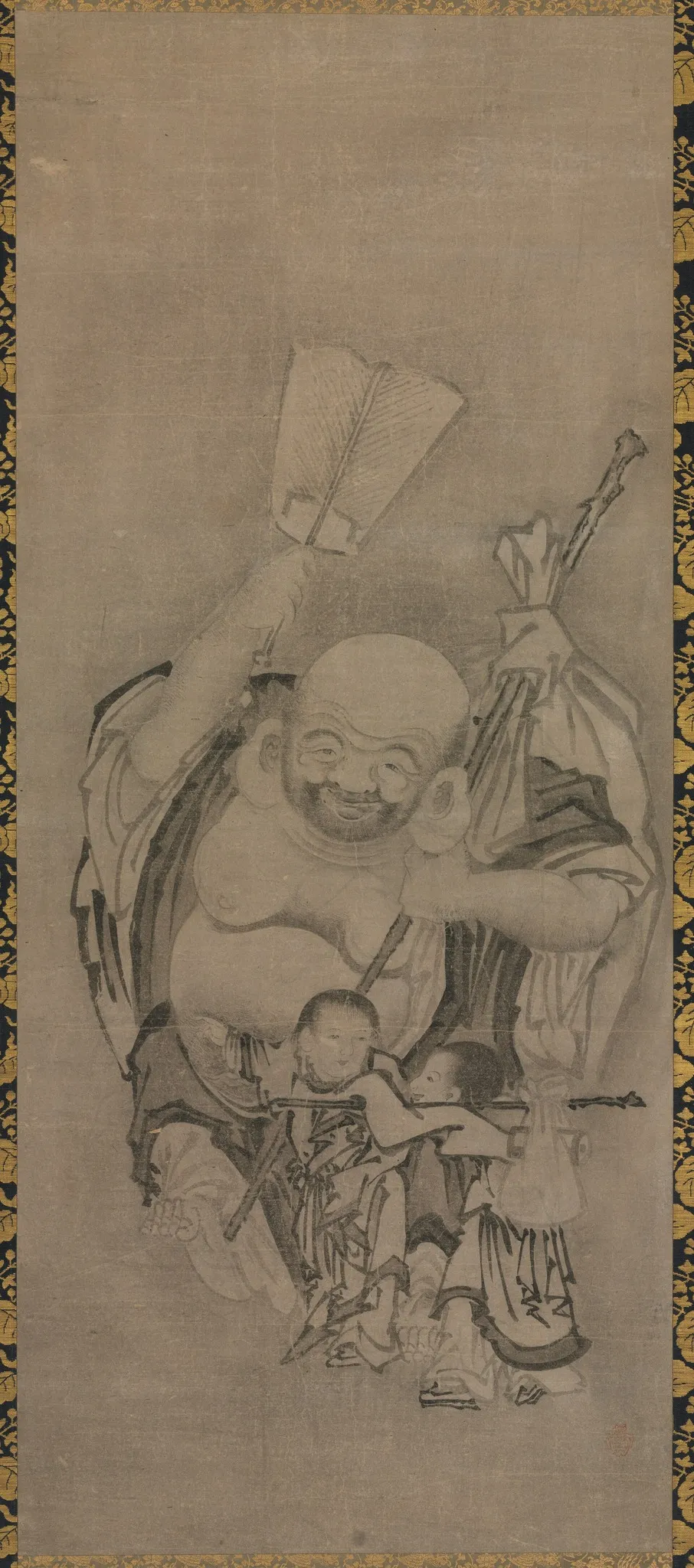
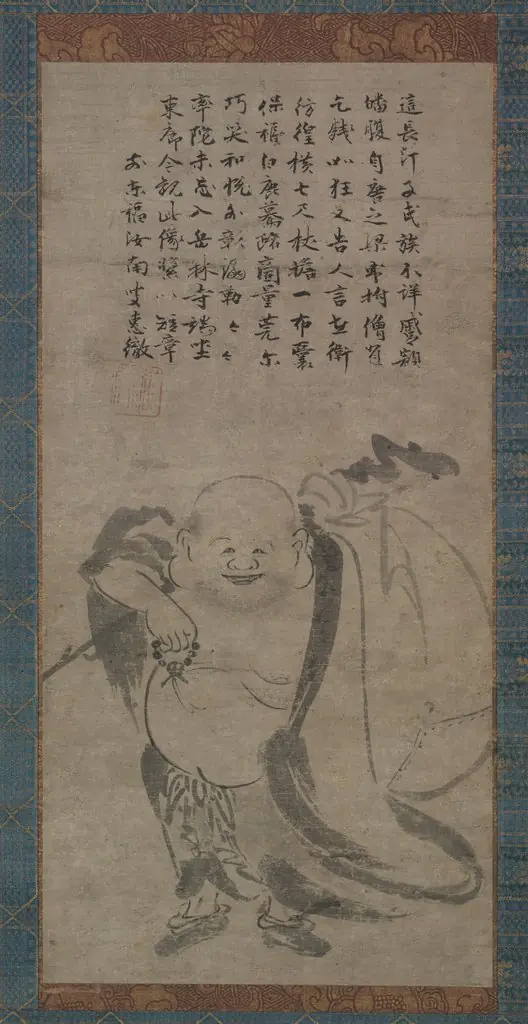
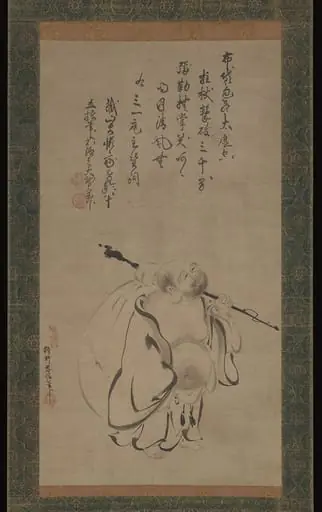
Hotei with Daoist Immortals: Hotei is an unspecified painting by Unknown. It dates from 1593 and is held in the collection of the Cleveland Museum of Art. The work is a painted composition that portrays a large, smiling, bald figure bearing two children on his back.
About this work
Overview
The work is a painted composition that portrays a large, smiling, bald figure bearing two children on his back. One child clutches a fan, the other a staff, while the adult is dressed in simple, loose garments. The background consists of a uniform light field edged with a dark border, emphasizing the central figures.
Subject & Meaning
The central figure is identified as Hotei, a jovial deity associated with abundance and good fortune in East Asian religious traditions. The presence of the two children, each holding a symbolic object, suggests themes of protection and the transmission of blessings, reflecting Hotei’s role as a benevolent guardian.
Technique & Style
Rendered in a flat, decorative manner, the painting employs bold outlines and a limited palette that accentuates the figures against the plain backdrop. The brushwork is smooth and the composition is balanced, with the central figure occupying the majority of the space, creating a clear visual hierarchy.
History & Provenance
The piece is catalogued as a painting titled “Hotei with Daoist Immortals: Hotei.” Its current location is not specified in the supplied information, and details of its creation date, artist, or collection history are absent from the record.
Context
Hotei belongs to a lineage of Daoist and Buddhist iconography that often depicts him as a wandering monk or a deity of happiness. The inclusion of attendant children aligns with traditional motifs that illustrate his capacity to bestow joy and prosperity upon followers.
Artist & collection

 Domestic Scene
 Giacomo and Cardinal Marco, investing Andrea, Abbot of San Zeno, with his Benefice
 The Nymph of Fontainebleau
 Portrait of a Woman
 Madonna and Child with Saints in the Enclosed Garden
 Venus and Minerva
 Family Group of Four on Sofa
 Wall painting from Room H of the Villa of P. Fannius Synistor at Boscoreale
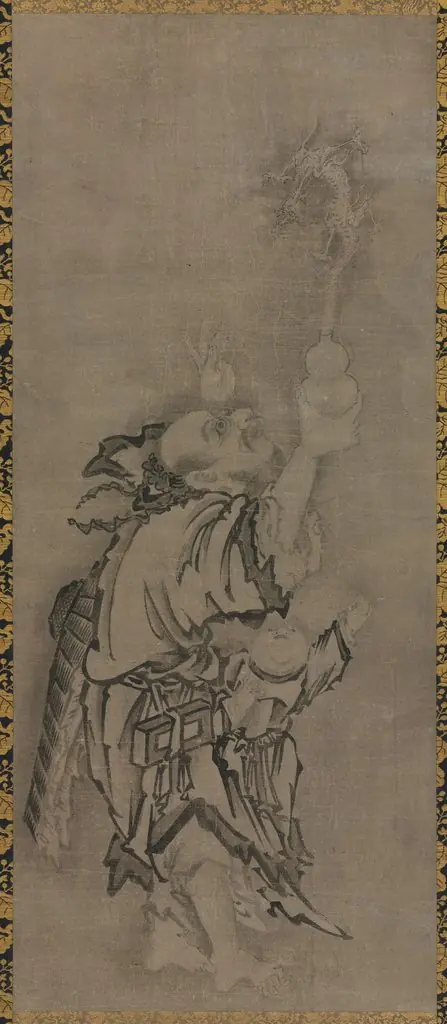 Hotei with Daoist Immortals: Immortal with Gourd and Dragon
 Hotei with Daoist Immortals: Hotei
 Hotei with Daoist Immortals: Immortal with Gourd and Dragon
 Hotei
Hotei Eight Daoist Immortals
 Hotei with Daoist Immortals
 Hotei
Hotei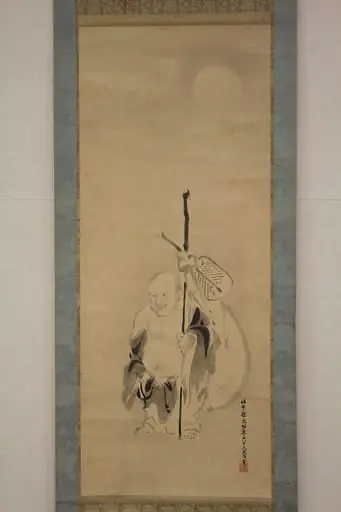 布袋図 (Hotei zu)|Hotei
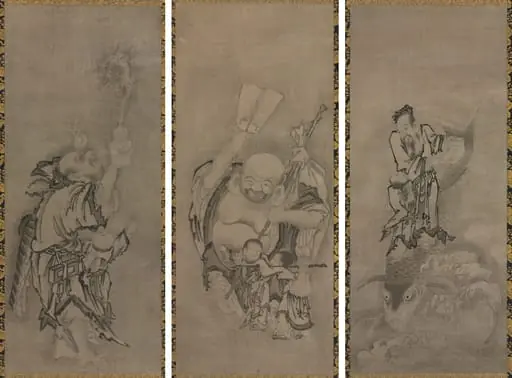 Hotei with Daoist Immortals
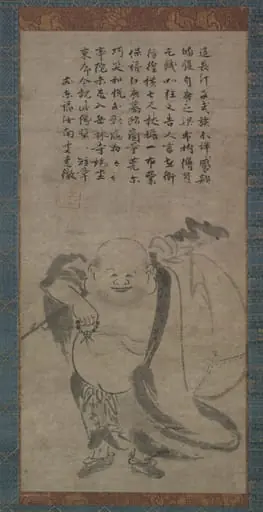 Budai
Budai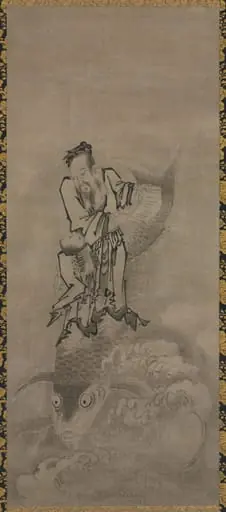 Hotei with Daoist Immortals: Immortal Riding Carp
 狩野孝信筆 布袋図「拄杖擊破三千界。彌勒撫掌笑呵呵,明月清風無。」|Hotei