Artwork
Kirchweihfest
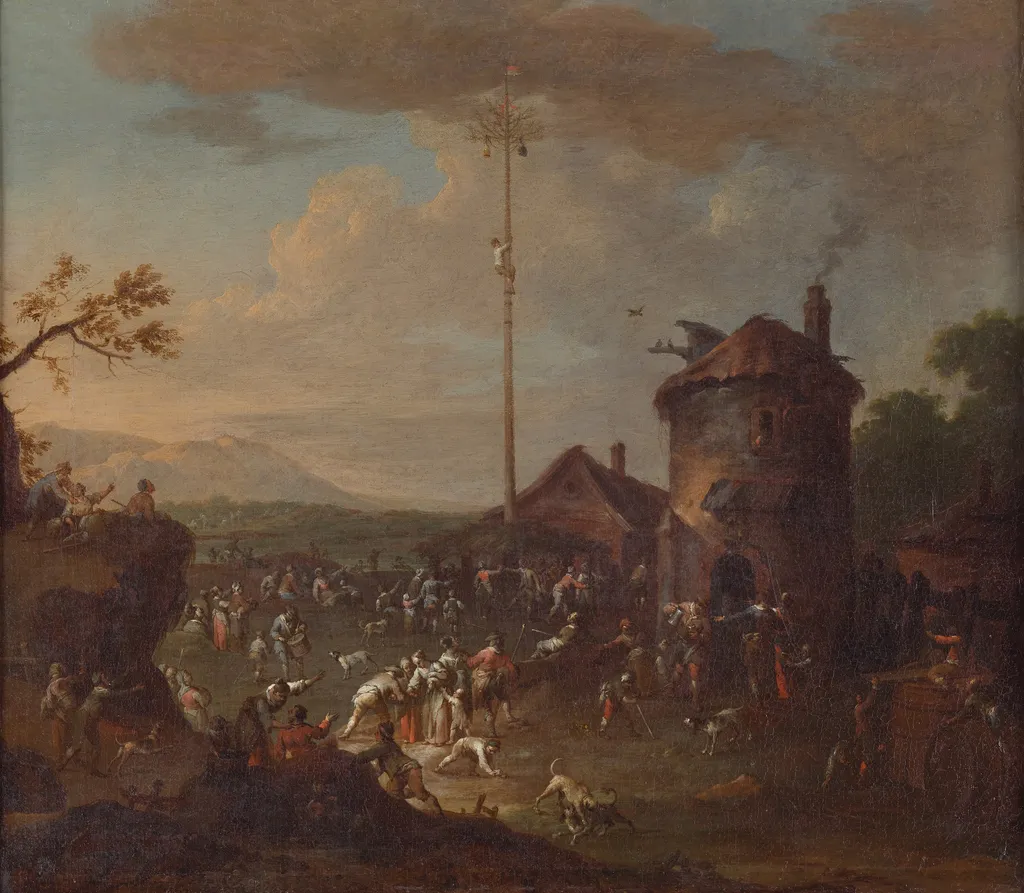
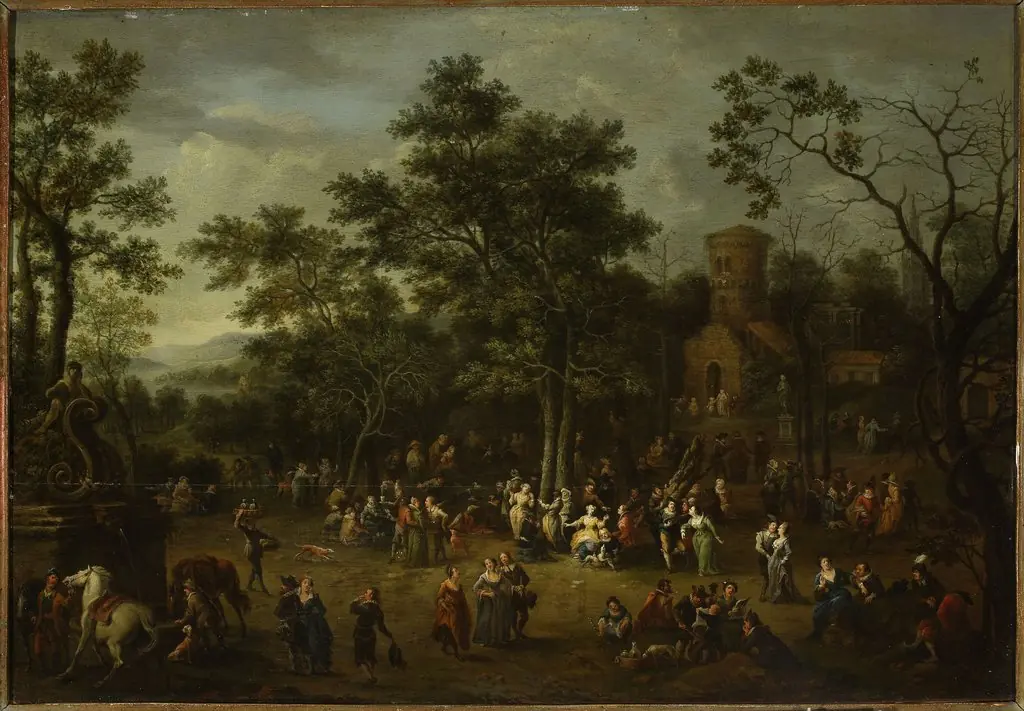
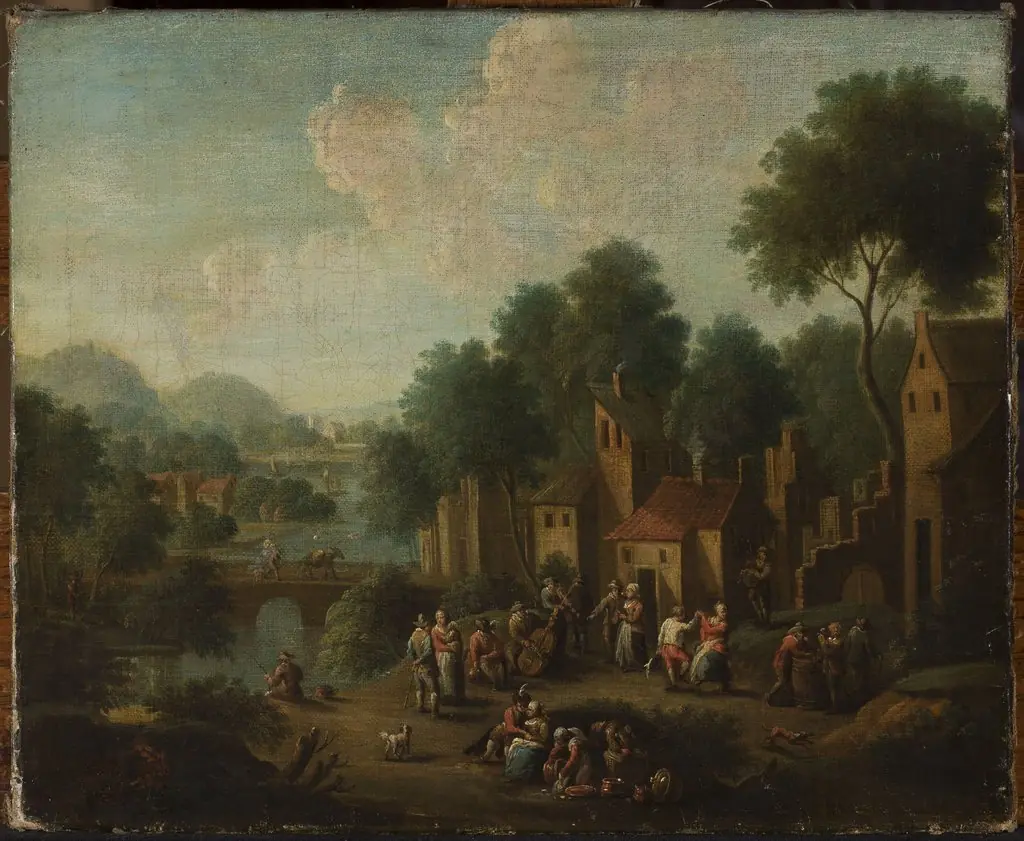
Kirchweihfest is an oil painting by Karl Aigen. It dates from 1733 and is held in the collection of the Kunsthistorisches Museum.
About this work
Overview
The medium of oil paint allows for rich texture and subtle tonal shifts, characteristic of early 18th-century Austrian genre painting.
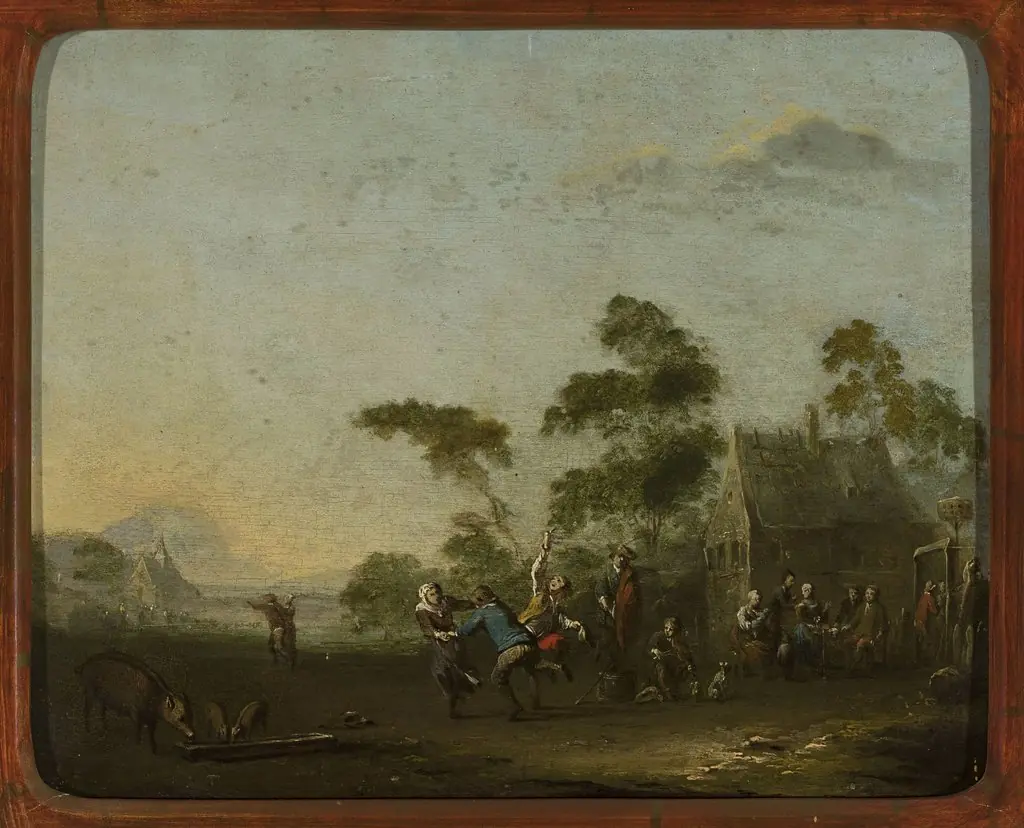
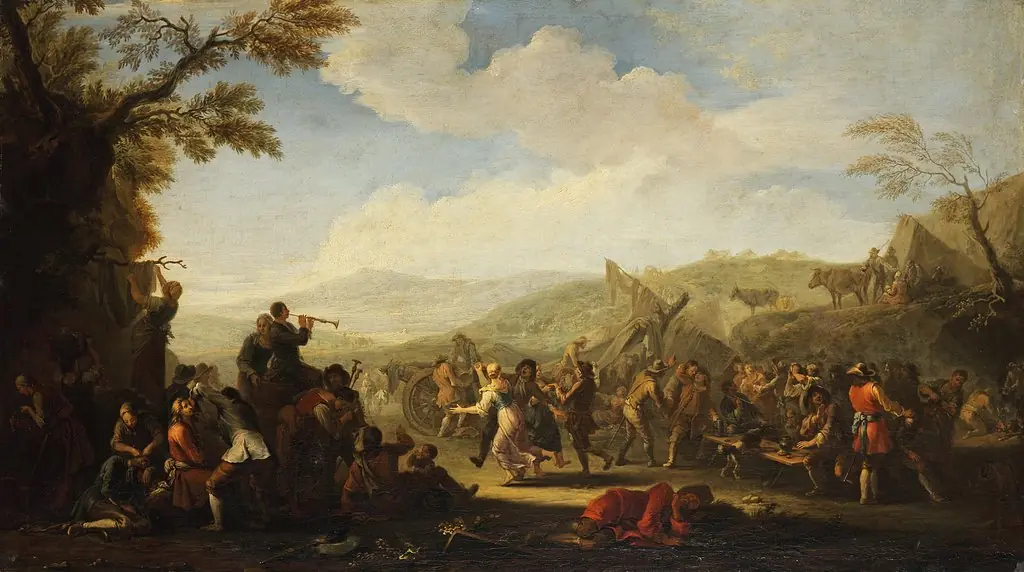
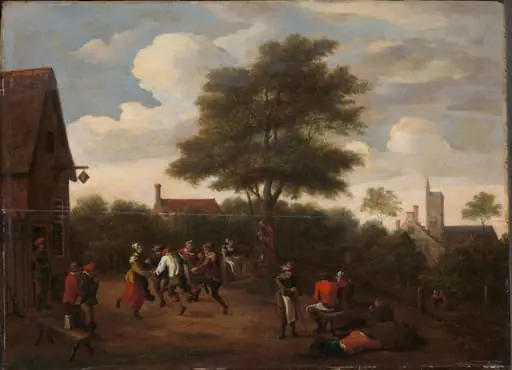
Karl Aigen’s oil painting Kirchweihfest, dated around 1733, depicts a rural festival in vivid detail. The work is part of the collection at the Kunsthistorisches Museum in Vienna. It captures a moment of communal celebration, rendered with careful attention to movement and everyday life. The medium of oil paint allows for rich texture and subtle tonal shifts, characteristic of early 18th-century Austrian genre painting.
Subject & Meaning
The scene portrays a Kirchweih, a traditional German-speaking village festival marking the consecration of a church. Figures gather around a decorated pole, while dogs roam freely among the crowd. The presence of smoke from a nearby chimney suggests domestic life continuing alongside the festivities. The painting reflects social cohesion and seasonal ritual, offering a quiet record of local customs rather than a grand historical narrative.
Technique & Style
Aigen employs oil paint to build depth through layered brushwork and restrained modeling. While not defined by dramatic chiaroscuro, the painting uses naturalistic lighting to distinguish foreground activity from the hazy background. Figures are rendered with loose, observational strokes, emphasizing motion and spontaneity. The composition avoids idealization, favoring a candid, almost documentary approach to the crowd’s interactions.
History & Provenance
The painting has remained in institutional hands since at least the 18th century, entering the Kunsthistorisches Museum’s collection through imperial or aristocratic acquisitions. Its survival without significant alteration suggests it was valued as a record of regional life. No major exhibitions or ownership changes are documented prior to its inclusion in the museum’s catalog, indicating stable provenance within Austrian collections.
Context
Created during the early Baroque period in the Habsburg territories, Kirchweihfest aligns with a growing interest in secular, everyday subjects among regional artists. While Italian and Flemish traditions influenced Viennese painting, Aigen’s work reflects a local sensibility, capturing rural customs with minimal embellishment. Such scenes were increasingly collected by patrons seeking authentic depictions of life beyond courtly or religious themes.
Legacy
Kirchweihfest contributes to the understanding of 18th-century Austrian genre painting, offering insight into vernacular traditions before industrialization transformed rural life. Though not widely reproduced, it remains a reference for scholars studying regional identity in Habsburg art. Its quiet realism distinguishes it from more theatrical contemporaries, preserving a nuanced view of community rituals in pre-modern Central Europe.
Artist & collection