Artwork
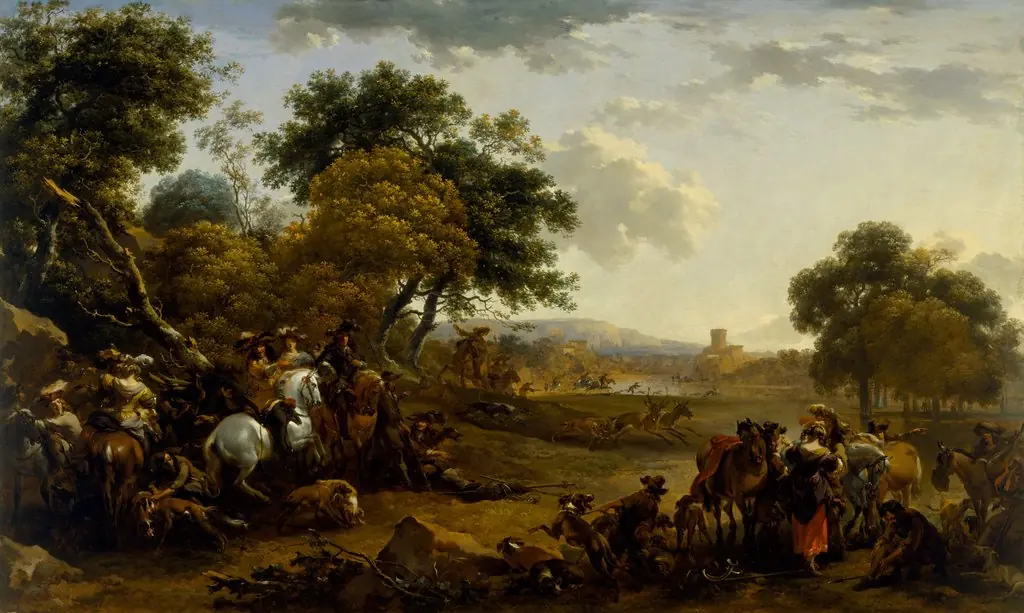
Wild boar hunt
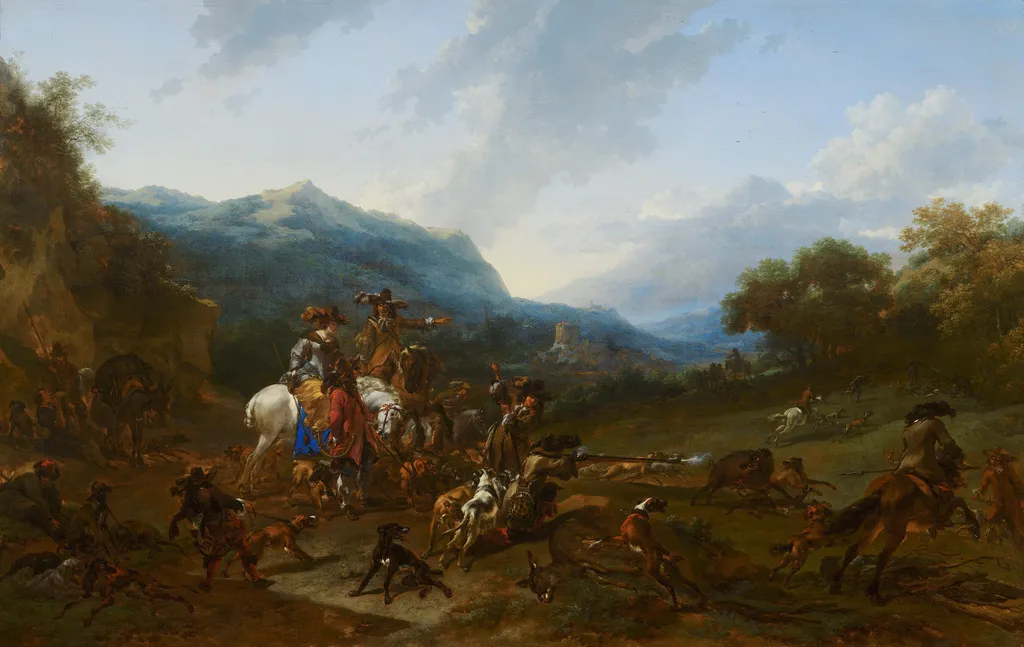
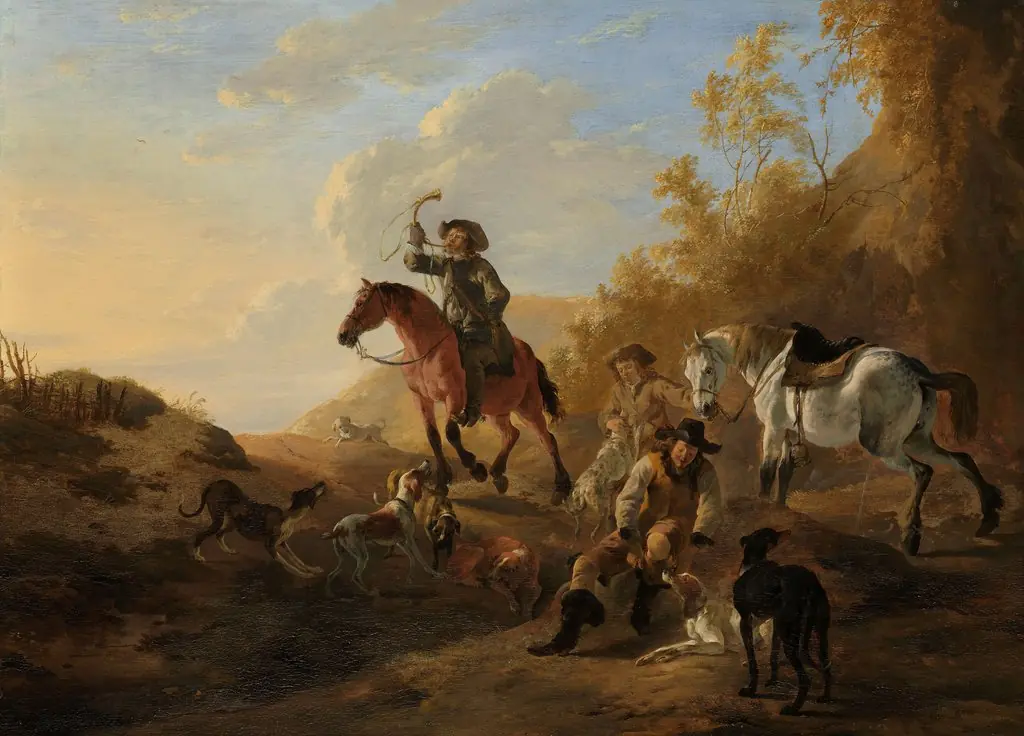
Wild boar hunt is an oil painting by the Dutch Golden Age artist Nicolaes Pieterszoon Berchem. It dates from 1659 and is held in the collection of the Mauritshuis.
About this work
Overview
Painted in 1659 by Nicolaes Pieterszoon Berchem, this oil-on-canvas work captures a dynamic hunting scene within a pastoral landscape.
Painted in 1659 by Nicolaes Pieterszoon Berchem, this oil-on-canvas work captures a dynamic hunting scene within a pastoral landscape. Berchem, a prominent figure in Dutch Golden Age painting, specialized in idealized rural vistas influenced by Italian scenery. The composition centers on a boar under pursuit, framed by riders, dogs, and rolling terrain, reflecting a tradition that blended Northern European detail with southern atmospheric light.
Subject & Meaning
The scene portrays a hunt not as violent spectacle but as a controlled, almost ceremonial pursuit. The boar, caught mid-motion, is encircled by hounds and mounted hunters in period attire, suggesting aristocratic leisure rather than survival. The calm landscape and balanced composition imply harmony between human activity and nature, aligning with classical ideals of order and pastoral serenity prevalent in 17th-century Dutch art.
Technique & Style
Berchem employed fine, visible brushwork to render textures—fur, fabric, foliage—with precision. Earthy browns and muted blues establish depth, while the hazy sky and distant hills evoke atmospheric perspective. The figures are rendered with careful anatomical detail, yet remain subordinate to the landscape, emphasizing the Italianate tradition’s preference for expansive, luminous environments over dramatic action.
History & Provenance
The painting entered the collection of the Mauritshuis in The Hague, where it remains today. It was likely acquired during the 18th or early 19th century as part of the museum’s broader effort to assemble representative works of Dutch Golden Age painting. Its attribution to Berchem has been consistently supported by stylistic analysis and archival records.
Context
Berchem’s work emerged from a trend among Dutch artists who, though rarely traveling to Italy, absorbed its visual language through prints and the writings of contemporaries. The Italianate landscape style merged Roman ruins and pastoral motifs with northern realism. This painting reflects a cultural fascination with classical antiquity and the idealized countryside, popular among urban patrons seeking refined, escapist imagery.
Legacy
Berchem’s hunting scenes helped define a subgenre within Dutch landscape painting, influencing later artists who blended narrative action with serene naturalism. While not as widely known as his contemporaries, his integration of Italianate light and composition contributed to the evolution of landscape as a vehicle for both aesthetic pleasure and cultural aspiration in the Dutch Republic.
Own this work as a print
Artist & collection
Artist
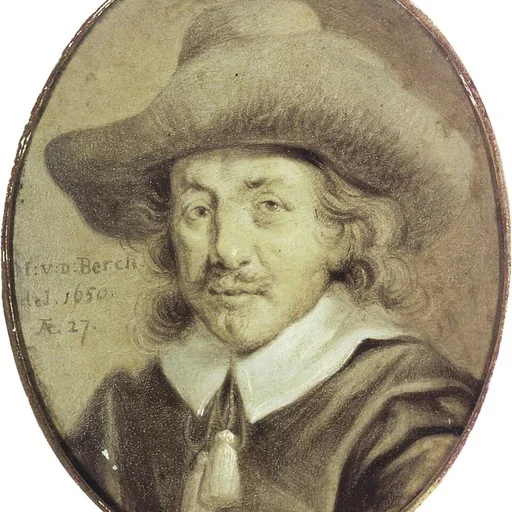
Nicolaes Pieterszoon Berchem (1 October 1620 – 18 February 1683) was a highly esteemed and prolific Dutch Golden Age painter of pastoral landscapes, populated with mythological or biblical figures, but also of a number of allegories and…