Artwork
Ichikawa Monnosuke II as a Lord Holding a Banner
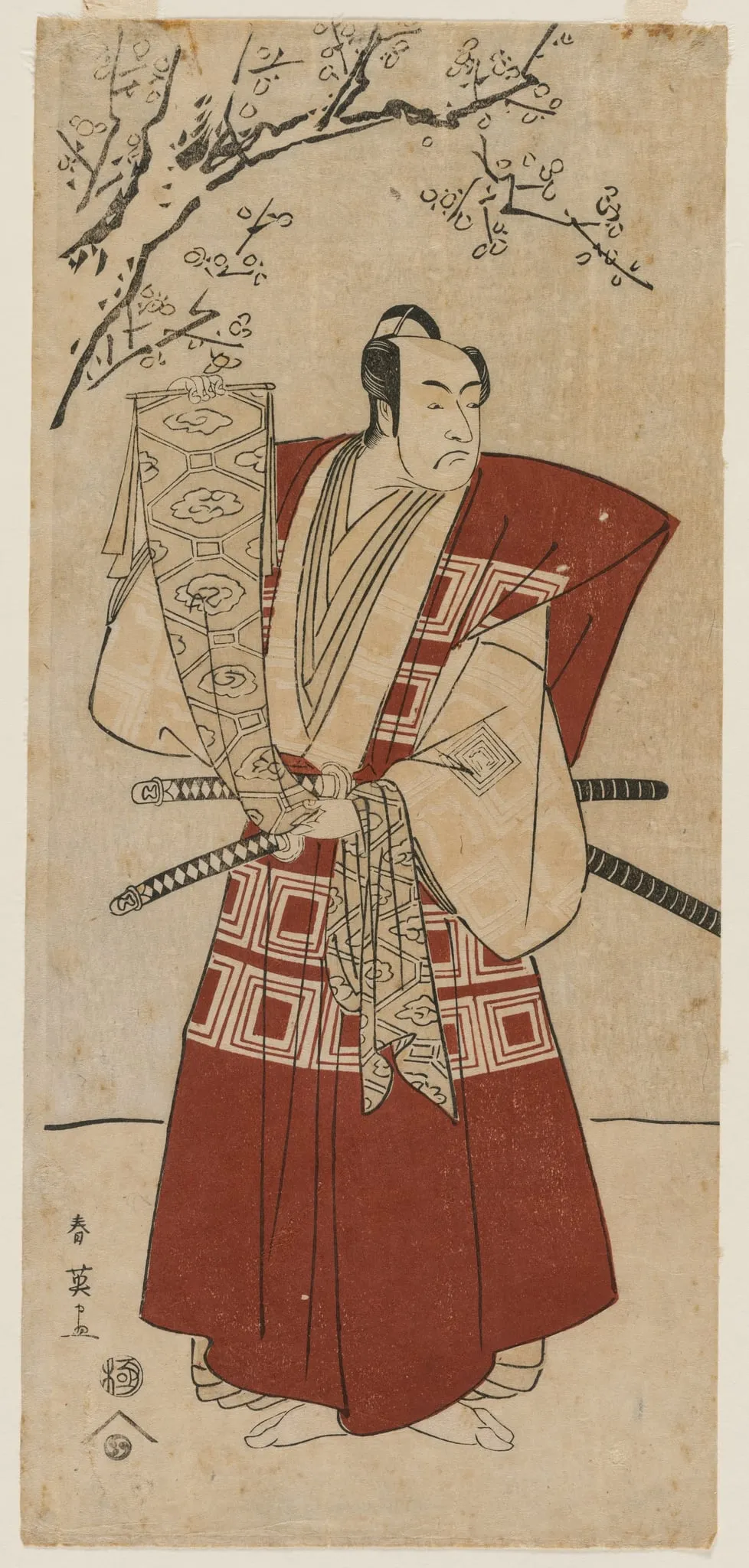
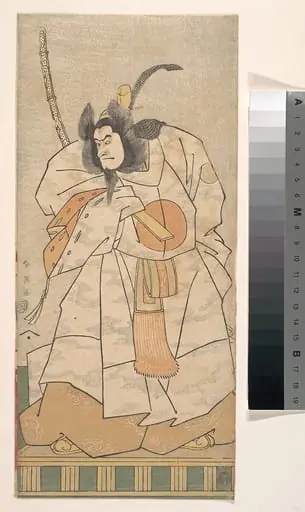
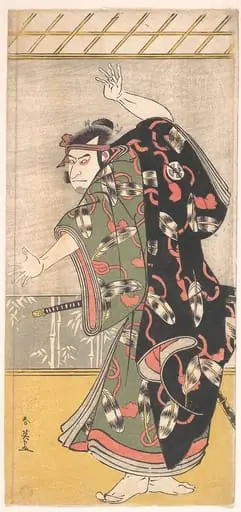
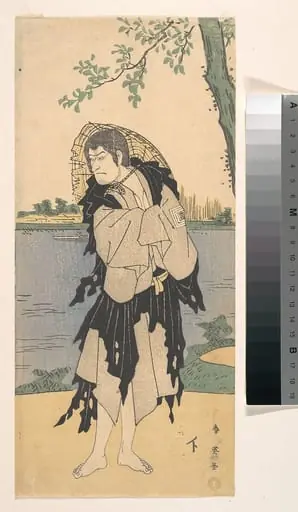
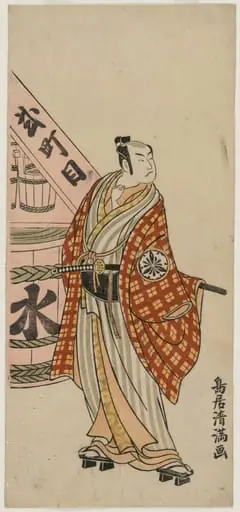
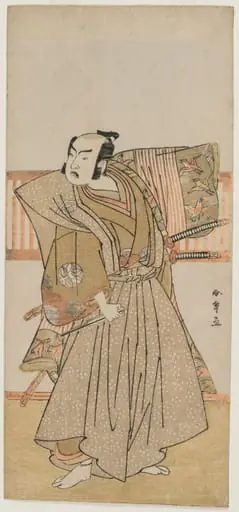
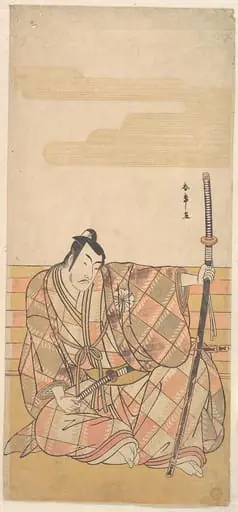
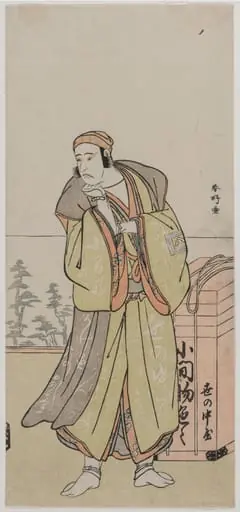
Ichikawa Monnosuke II as a Lord Holding a Banner is a print by the Romanticist artist Katsukawa Shun'ei 勝川春英. It dates from 1791 and is held in the collection of the Cleveland Museum of Art. Created in 1791 by Katsukawa Shunei, this woodblock print portrays the kabuki actor Ichikawa Monnosuke II in a dramatic role.
About this work
The background is a light color with some dark lines and shapes, possibly representing trees or branches.
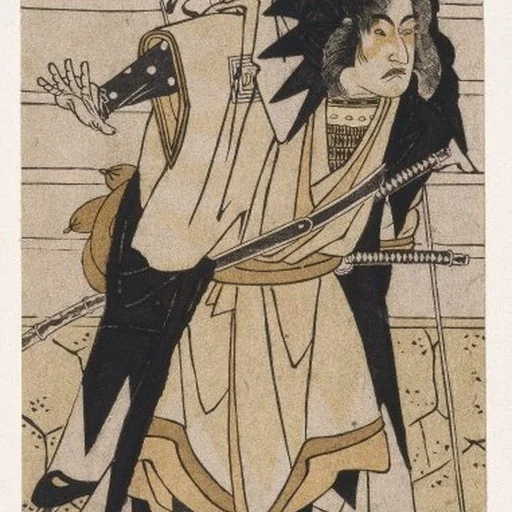
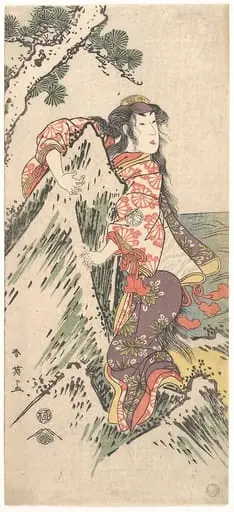
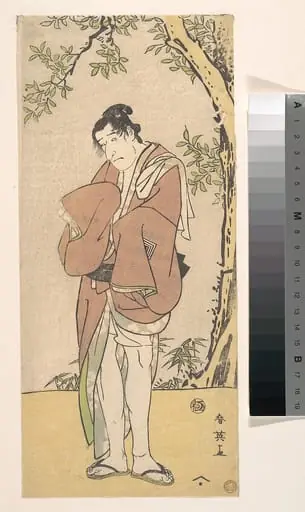
This painting shows a man dressed in a red robe, holding a banner with a geometric pattern. He has a serious expression and is wearing a headband. The background is a light color with some dark lines and shapes, possibly representing trees or branches.
The man's clothing and the style of the painting suggest that it may be from Japan in the 18th century. The use of bold colors and geometric patterns is also consistent with this period.
To learn more about this style of painting, you might want to explore the Romanticism movement.
Overview
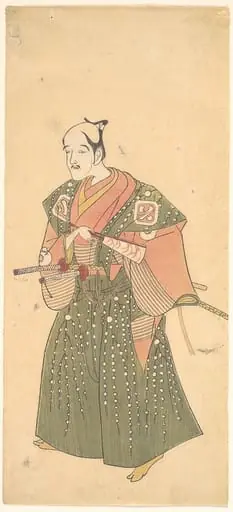
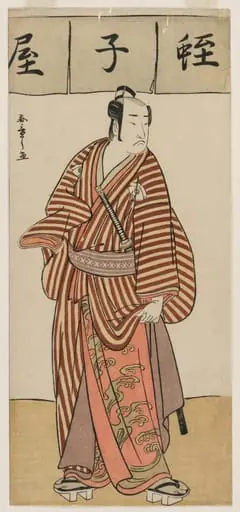
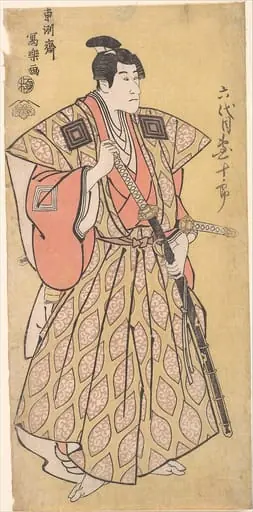
Created in 1791 by Katsukawa Shunei, this woodblock print portrays the kabuki actor Ichikawa Monnosuke II in a dramatic role. As a member of the Katsukawa school, Shunei specialized in yakusha-e—portraits of actors in character. This work captures the actor mid-performance, holding a ceremonial banner, reflecting the theatrical conventions of late 18th-century Edo-period theater. The composition emphasizes the actor’s presence through focused framing and stylized detail.
Subject & Meaning
The print depicts Ichikawa Monnosuke II as a noble figure, likely from a historical or samurai drama, holding a banner that may signify rank or a clan emblem. His serious expression and formal attire convey gravitas, aligning with the role’s narrative weight. The headband and rich red robe are standard elements of aristocratic kabuki costume, signaling status and emotional intensity. The banner’s geometric pattern may reference family crests or symbolic motifs common in theatrical storytelling.
Technique & Style
Shunei employed traditional ukiyo-e woodblock techniques, using bold outlines and flat areas of color to define form. The red robe contrasts with the muted background, drawing attention to the figure. Subtle dark lines behind the actor suggest foliage or architectural elements without detailed rendering, a hallmark of the style. Ink and pigment were applied in layers, with attention to texture in fabric and hair, reflecting the precision expected in actor portraits of the period.
History & Provenance
The print was produced during a peak period for kabuki-themed prints in Edo, when actor portraits were widely collected by theater patrons. Shunei, a pupil of Katsukawa Shunshō, continued the school’s tradition of lifelike, expressive depictions of performers. While specific ownership history is undocumented, similar prints from this era circulated in urban markets and were often displayed in homes or teahouses as cultural artifacts tied to popular performance.
Context
In late 18th-century Japan, ukiyo-e prints served as both art and ephemera, documenting the vibrant world of kabuki theater. The Katsukawa school was central to this trend, emphasizing individualized actor likenesses over idealized forms. This print reflects the public’s fascination with celebrity performers and the visual codes of theatrical roles. Unlike Western Romanticism, Japanese prints of this time prioritized immediacy and cultural specificity over emotional abstraction.
Legacy
Shunei’s work, though less widely known than that of his contemporaries, contributed to the refinement of yakusha-e portraiture. His focus on facial expression and costume detail influenced later generations of printmakers. While the print itself is not an isolated rarity, it exemplifies the broader tradition of actor portraiture that helped define ukiyo-e’s role in documenting Edo’s popular culture and its enduring visual language.
Artist & collection