Artwork
Onoe Matsusuke I as Ebisu, from The Stand-In Seven Gods of Good Fortune
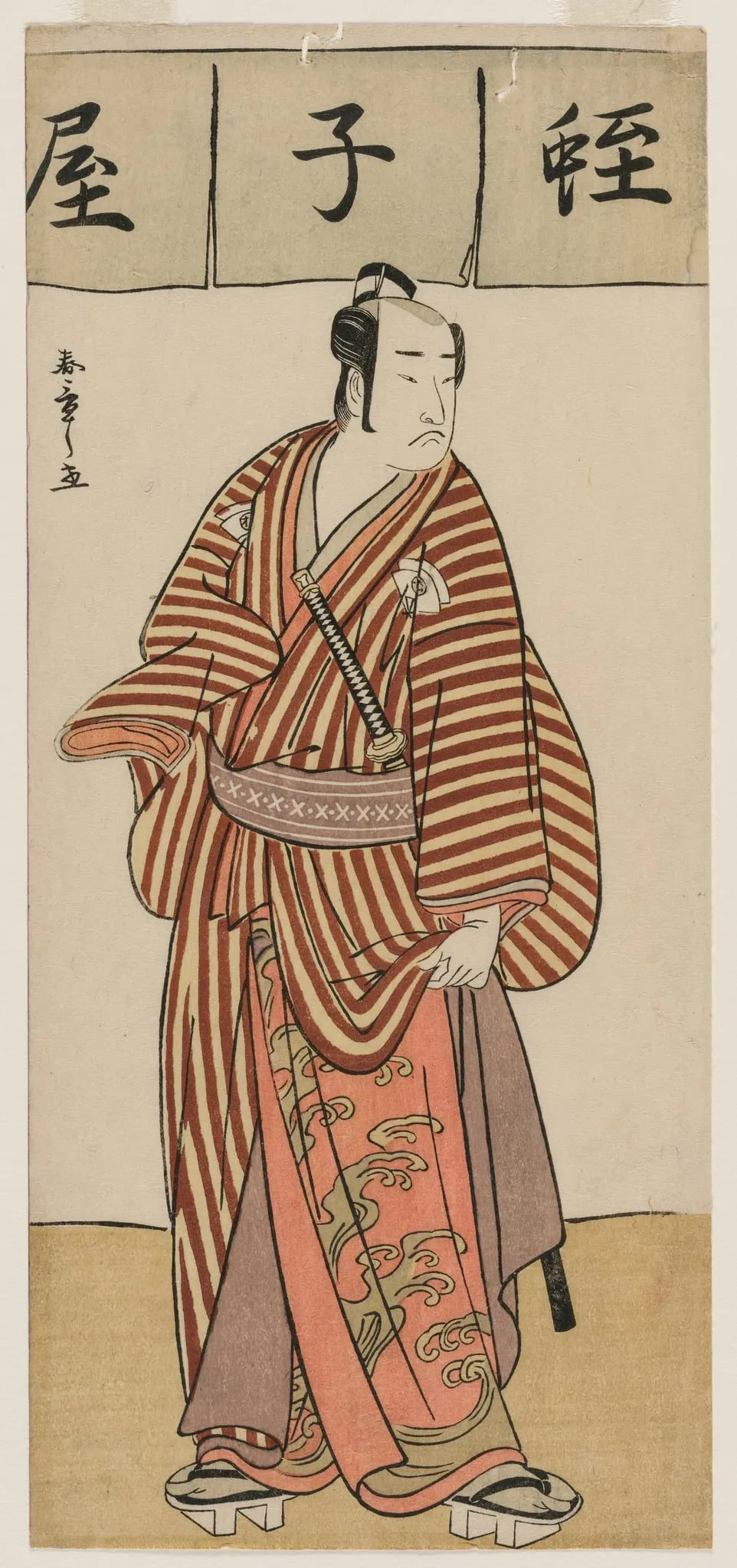
Onoe Matsusuke I as Ebisu, from The Stand-In Seven Gods of Good Fortune is a print by the Romanticist artist Katsukawa Shunshō. It dates from 1780 and is held in the collection of the Cleveland Museum of Art.
About this work
You see a Kabuki actor, Onoe Matsusuke I, dressed as Ebisu, standing beneath curtains at the entrance to a business.
The actor's inner robe has wave imagery, which is a nod to Ebisu being the god of fishermen. This print is part of a set where famous actors stand in for the Seven Gods of Good Fortune.
To learn more about this style of art, check out the subject: japan, edo period (1615–1868).
Overview
This woodblock print depicts Onoe Matsusuke I, a renowned Kabuki actor, impersonating Ebisu, the god of fishermen, as part of a series substituting famous actors for the Seven Gods of Good Fortune.
Subject & Meaning
Ebisu, here embodied by Onoe Matsusuke I, is identifiable by wave patterns on the actor's inner robe, symbolizing his domain over fishermen. The print represents a blend of theatrical and religious themes, conveying hope for prosperity in the new year, potentially created for the 1780 New Year celebration.
Technique & Style
Characteristic of Edo Period (1615-1868) Japanese woodblock printing, this piece features meticulous design, with attention to detail in the actor's attire and the ceremonial curtains above, labeled 'House of Ebisu'.
History & Provenance
Produced around the New Year of 1780, this print is one of a set where celebrated Kabuki actors personify the Seven Gods of Good Fortune, a unique intersection of popular entertainment and traditional Japanese mythology.
Context
During the Edo Period, such prints catered to a growing urban population's interest in both Kabuki theatre and traditional New Year's (Oshogatsu) customs, symbolizing the wish for good fortune.
Legacy
This print exemplifies the Edo Period's cultural synthesis, influencing later Japanese art forms by blending religious and theatrical elements, while also reflecting the era's vibrant popular culture.
Artist & collection
Artist
Katsukawa Shunshō spent his life in Edo (now Tokyo), where the city’s teahouses and theaters buzzed with energy.

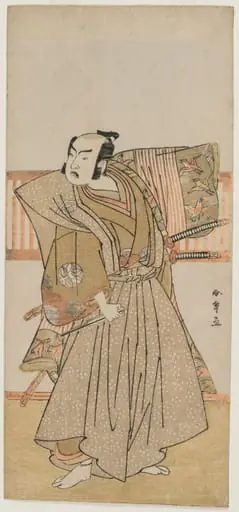 Ichimura Uzaemon IX as Soga no Juro
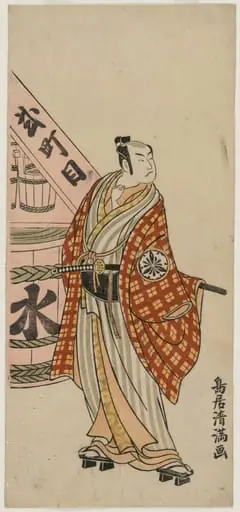 Matsumoto Koshiro IV as a Townsman Standing Beside a Water Barrel
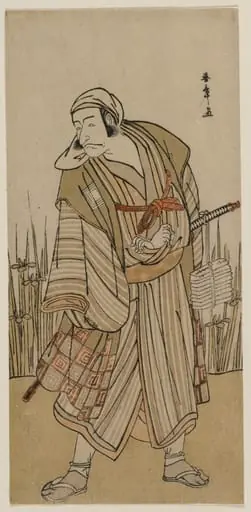 Ichikawa Danjuro V as a Traveller Beside a Clump of Iris
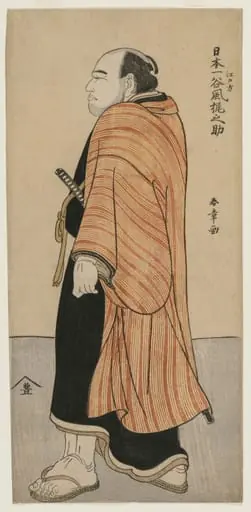 Tanikaze Kajinosuke
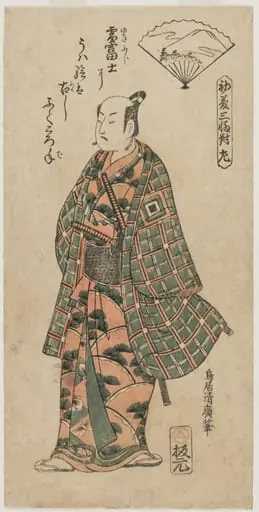 Ichikawa Danjuro II as a Young Samurai
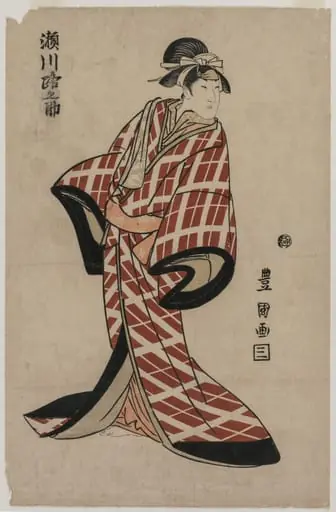 Segawa Michinosuke Wearing a Padded Plaid Robe
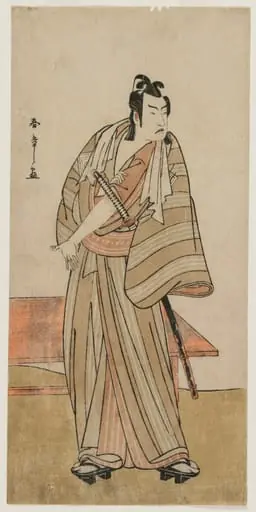 Ichikawa Yaozo II as a Otokodate Standing by a Bench
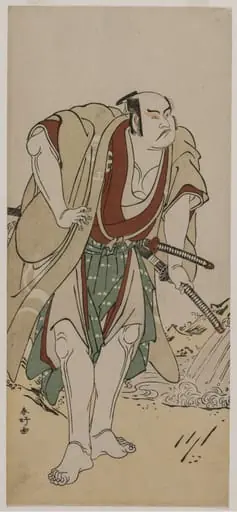 Otani Hiroji III as a Samurai Standing Beside a Stream
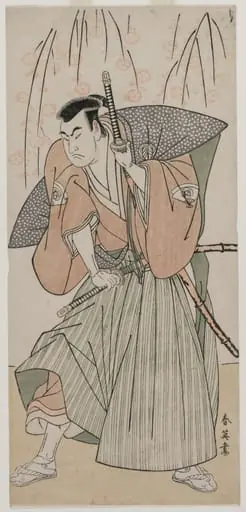 Onoe Matsusuke I as a Samurai Standing Beneath a Cherry Tree