Artwork
Untitled
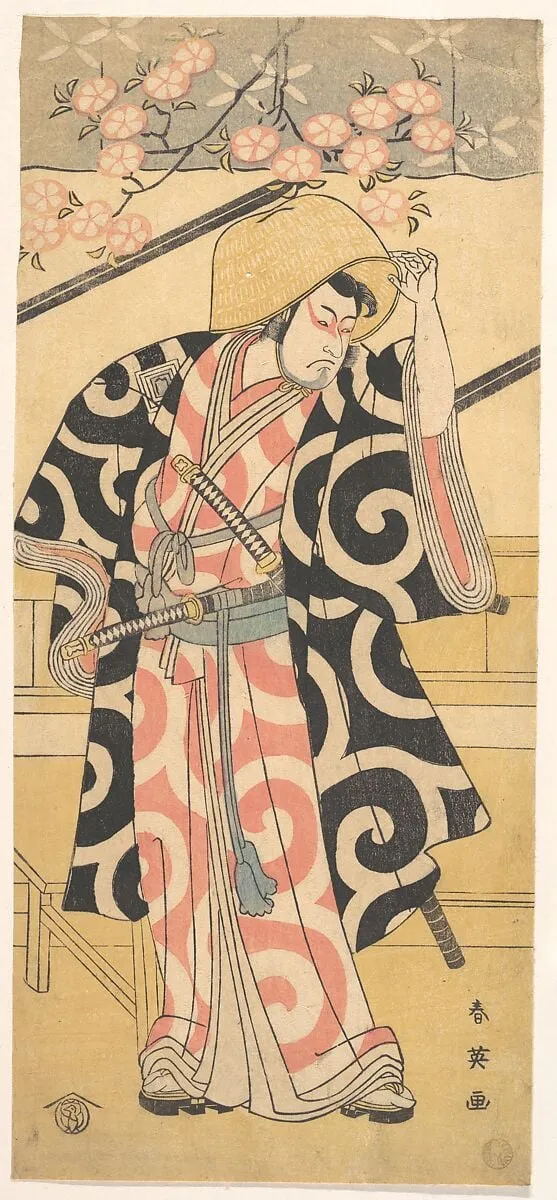
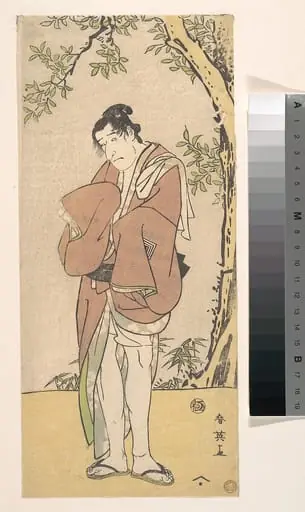
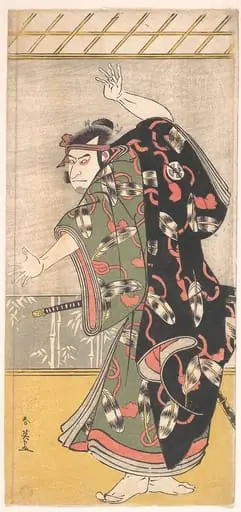
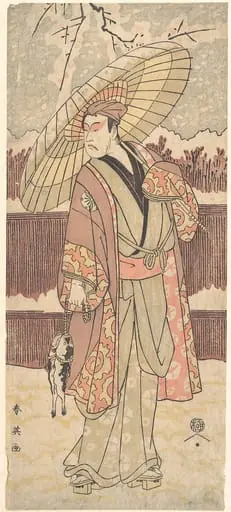
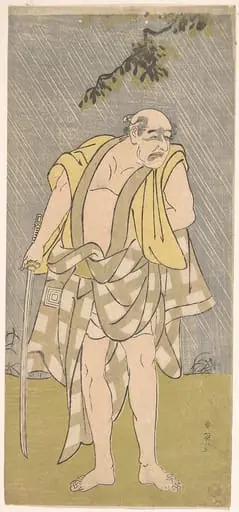
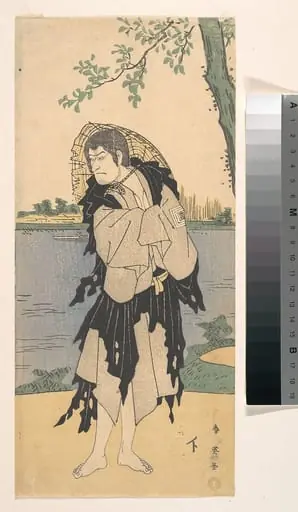
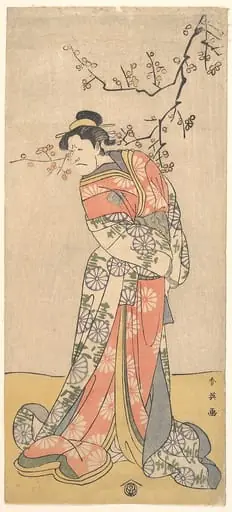
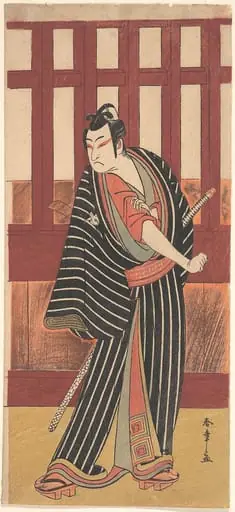
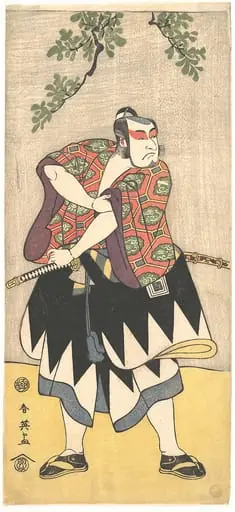
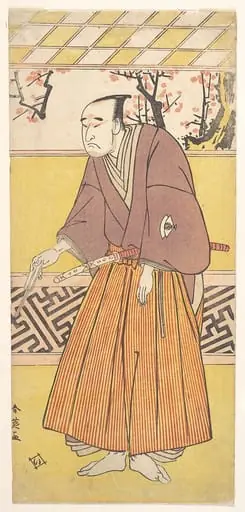
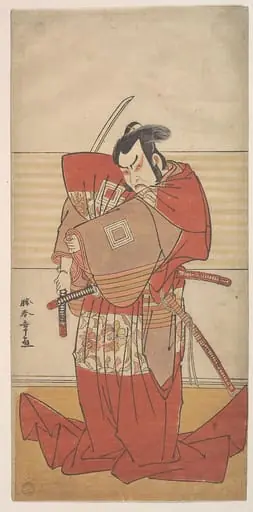
Untitled is an ink print by the Romanticist artist Katsukawa Shun'ei 勝川春英. It dates from 1794 and is held in the collection of the Metropolitan Museum of Art. This woodblock print, dated around 1794, is attributed to Katsukawa Shun'ei and is part of The Metropolitan Museum of Art's collection.
About this work
Overview
This woodblock print, dated around 1794, is attributed to Katsukawa Shun'ei and is part of The Metropolitan Museum of Art's collection.
This woodblock print, dated around 1794, is attributed to Katsukawa Shun'ei and is part of The Metropolitan Museum of Art's collection. Executed in ink and color on paper, it exemplifies the ukiyo-e tradition of late Edo-period Japan. The composition centers on a single figure, rendered with bold outlines and flat areas of color, characteristic of the genre’s graphic clarity and decorative emphasis.
Subject & Meaning
The figure is depicted wearing an elaborate, patterned robe and holding a sword, suggesting a role associated with martial or theatrical identity. The white circular highlights around the eyes are a stylistic convention used in actor portraits to emphasize expression. The presence of blooming pink flowers may imply seasonal reference or symbolic contrast, possibly evoking transience or beauty amid violence, common themes in Edo-period imagery.
Technique & Style
The print employs traditional woodblock techniques, with distinct, unmodulated color fields and strong black outlines defining form. Background elements are reduced to minimal linear suggestions, directing focus to the central figure. The use of flat planes and stylized patterns reflects the influence of theatrical portraiture, where visual immediacy and symbolic clarity outweigh naturalistic detail.
History & Provenance
Created during the height of ukiyo-e production in Edo, the print likely circulated as a commercial print, possibly as part of a series depicting actors or historical figures. It entered The Metropolitan Museum of Art’s collection through established acquisition channels, though its specific early ownership history remains undocumented. Its preservation reflects its status as a representative work of late 18th-century Japanese printmaking.
Context
Shun'ei worked within the Katsukawa school, known for its actor portraits and dynamic compositions. During the 1790s, demand for prints of popular kabuki performers was high, and artists often blended real and fictional identities. This print may represent an actor in role, or a legendary warrior, reflecting the fluid boundary between theater and history in popular visual culture of the time.
Legacy
As a work by Katsukawa Shun'ei, this print contributes to the broader understanding of ukiyo-e’s evolution in the late Edo period. While less widely known than contemporaries like Sharaku or Hokusai, Shun'ei’s output helped sustain the conventions of actor portraiture. His prints remain valuable for studying the visual language of Edo’s urban entertainment culture and its transmission through print media.
Artist & collection

 Untitled
 勝川春英画 二代目市川門之助|Kabuki Actor Ichikawa Monnosuke II
 Untitled
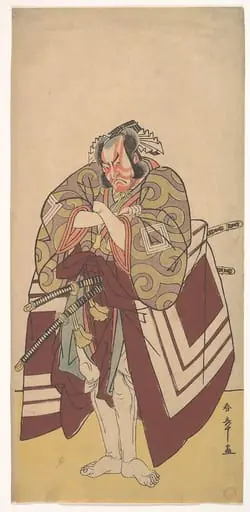 五代目市川団十郎|Kabuki Actor Ichikawa Danjūrō V in a Shibaraku (Stop Right There!) Role
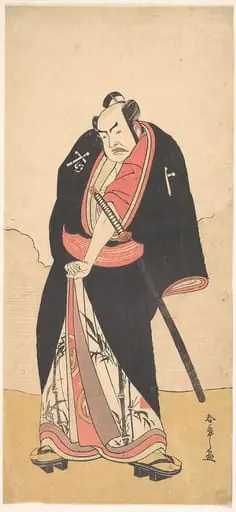 二代目中村助五郎|Kabuki Actor Nakamura Sukegorō II as Kaminari Shōkurō
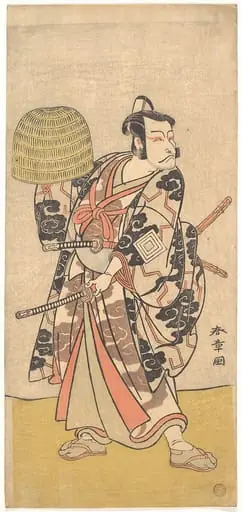 勝川春章画 五代目市川團十郎|Kabuki Actor Ichikawa Danjūrō V
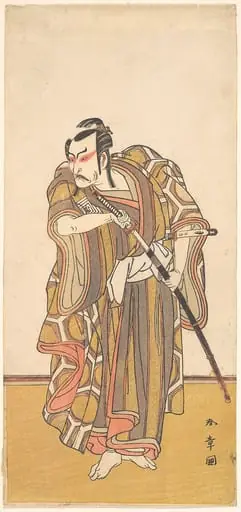 四代目市川團蔵|Kabuki Actor Ichikawa Danzō IV
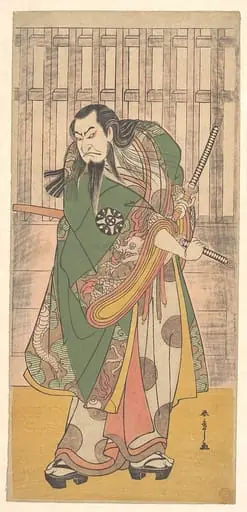 初代中村中蔵の髭の伊久|The Actor Nakamura Nakazō I as the Elderly Samurai Hige no Ikyū
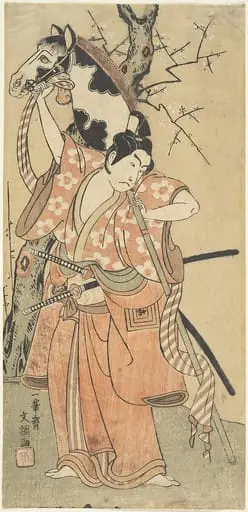 Untitled
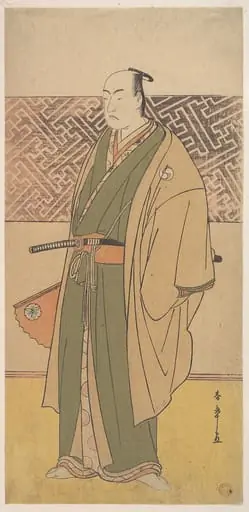 Untitled
 Untitled
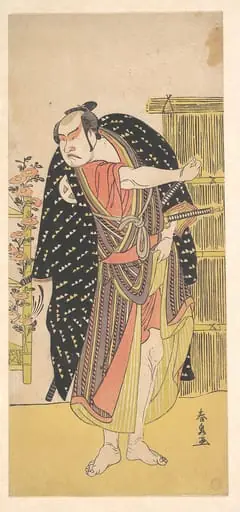 勝川春泉画 三代目大谷廣次|Kabuki Actor Ōtani Hiroji III