Artwork
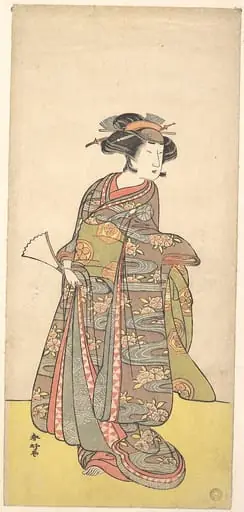
Iwai Hanshiro IV as Oiso no Tora
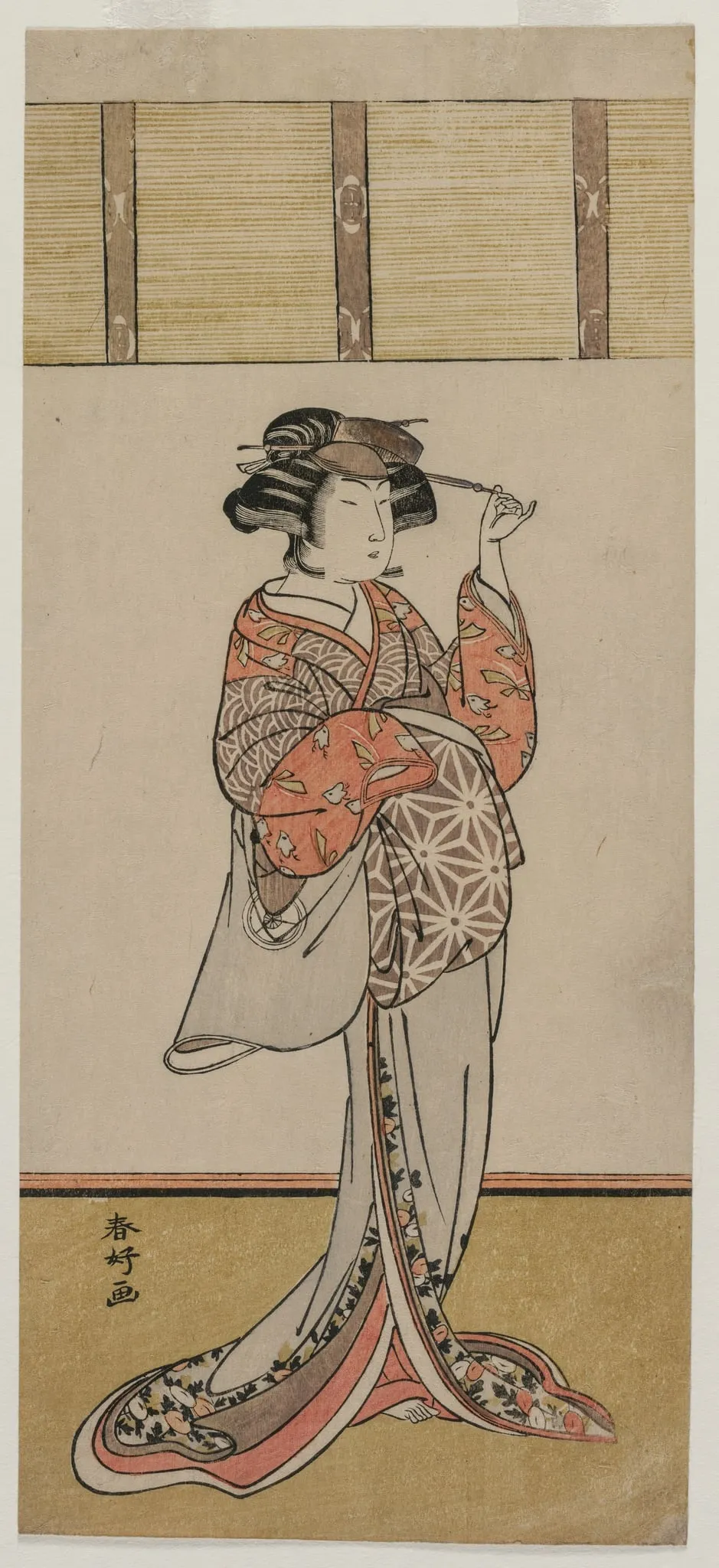
Iwai Hanshiro IV as Oiso no Tora is a print by the Romanticist artist Katsukawa Shunkō. It dates from 1774 and is held in the collection of the Cleveland Museum of Art. This ukiyo-e woodblock print, dated around 1774, depicts the kabuki actor Iwai Hanshiro IV in the role of Oiso no Tora, a female character.
About this work
Overview
The print is part of the collection at The Cleveland Museum of Art, where it is preserved as an example of late 18th-century Japanese theater imagery.
This ukiyo-e woodblock print, dated around 1774, depicts the kabuki actor Iwai Hanshiro IV in the role of Oiso no Tora, a female character. Created by Katsukawa Shunkō, it belongs to the tradition of yakusha-e, portraits of actors in dramatic roles. The print is part of the collection at The Cleveland Museum of Art, where it is preserved as an example of late 18th-century Japanese theater imagery.
Subject & Meaning
The subject is a male actor portraying a female character from kabuki drama, a common practice in Edo-period theater. Oiso no Tora is a figure of noble bearing, likely drawn from a popular play. The poised stance, fan in hand, and formal attire convey dignity and controlled emotion, reflecting the actor’s skill in embodying feminine grace within a highly stylized performance tradition.
Technique & Style
Shunkō employed fine, confident lines and layered pigments typical of ukiyo-e woodblock printing. The kimono’s floral pattern is rendered with subtle gradations, while the background remains unadorned to emphasize the figure. Color choices are restrained yet vivid, and the composition follows the vertical format common in actor portraits, enhancing the sense of presence and theatricality.
History & Provenance
The print was produced during the height of Shunkō’s career, when actor portraits were in high demand among Edo’s urban audiences. It entered the Cleveland Museum of Art’s collection in the 20th century, likely through early 20th-century acquisitions of Japanese prints by Western collectors. Its preservation reflects its status as a well-documented example of Shunkō’s output.
Context
In the 1770s, kabuki theater was a central part of Edo’s popular culture, and actor prints served as both advertising and collectible memorabilia. Shunkō, trained in the Katsukawa school, specialized in lifelike portrayals of actors, capturing their distinctive features and stage personas. This print reflects the close relationship between theater and print culture, where performance and image reinforced each other.
Legacy
Shunkō’s work contributed to the evolution of actor portraiture by emphasizing individual expression over idealized types. Though less widely known than contemporaries like Sharaku, his prints remain valued for their technical precision and psychological nuance. This print continues to inform studies of gender performance in Edo-period Japan and the material culture of theater.
Artist & collection

 Ichikawa Danjuro V as a Travelling Warrior
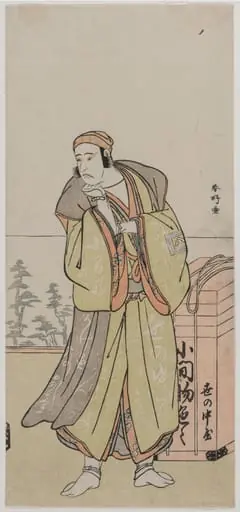 Ichikawa Yaozo II as an Itinerant Peddler
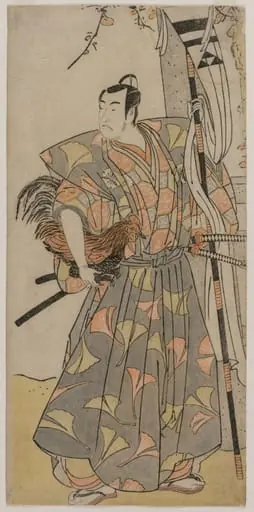 Actor Matsumoto Kōshirō IV
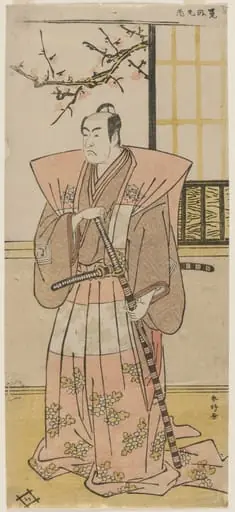 Ichikawa Monnosuke II as a Lord in Formal Dress
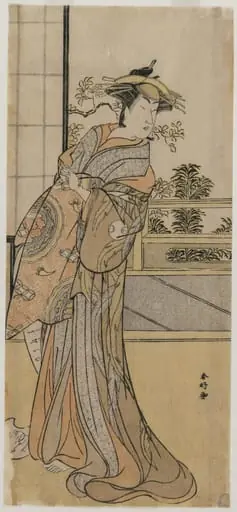 Arashi Murajiro as a Courtesan Holding a Letter
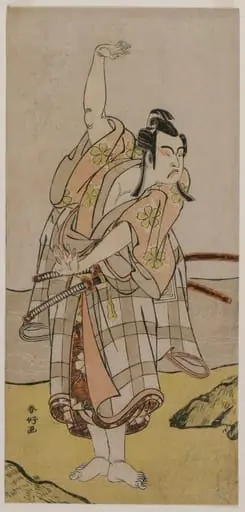 Actor Ichikawa Yaozō II as Sakuramaru
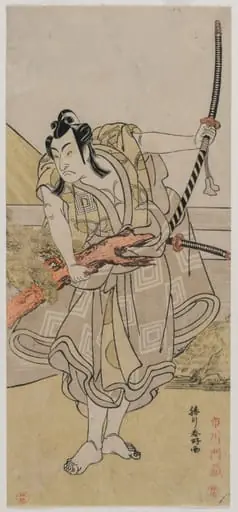 Ichikawa Monnosuke II as Soga no Gorō
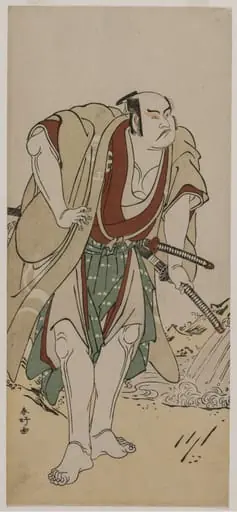 Otani Hiroji III as a Samurai Standing Beside a Stream