Artwork
Ichikawa Monnosuke II as Soga no Gorō
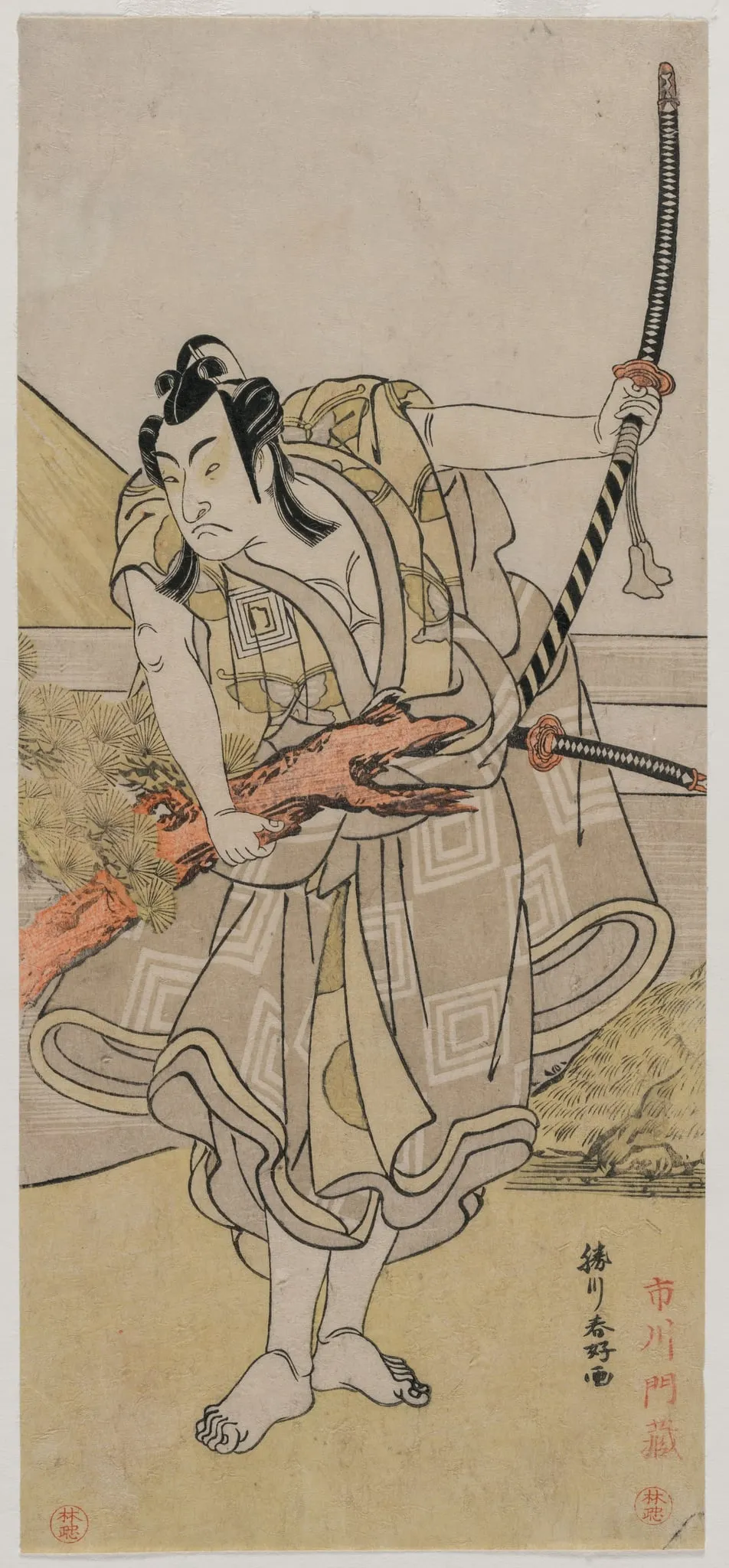
Ichikawa Monnosuke II as Soga no Gorō is a print by the Romanticist artist Katsukawa Shunkō. It dates from 1779 and is held in the collection of the Cleveland Museum of Art. This woodblock print depicts Ichikawa Monnosuke II in the role of Soga no Gorō, a figure from a famous Japanese revenge tale.
About this work
Overview
The composition suggests a larger narrative, with the other panel possibly showing his retainer, Asahina Saburō, attempting to restrain him.
This woodblock print depicts Ichikawa Monnosuke II in the role of Soga no Gorō, a figure from a famous Japanese revenge tale. Likely one half of a diptych, the image captures a moment of tension as Gorō grips a pine branch near Mount Fuji. The composition suggests a larger narrative, with the other panel possibly showing his retainer, Asahina Saburō, attempting to restrain him. The scene reflects a dramatic climax in Kabuki theater.
Subject & Meaning
The Soga brothers’ story centers on filial vengeance: Gorō and his sibling Jurō kill their father’s murderer, knowing it will cost them their lives. Gorō’s grip on the pine branch symbolizes his resolve, even as his retainer tries to hold him back. The moment captures the conflict between duty and consequence, a recurring theme in Edo-period drama. The setting near Mount Fuji adds a layer of national symbolism, grounding the personal tragedy in a recognizable landscape.
Technique & Style
The print employs traditional ukiyo-e methods, with fine linework defining the actor’s costume and the stylized pine bough. Background elements, including Mount Fuji, are rendered with minimal detail, relying on suggestion rather than realism. Color use is restrained, focusing attention on the figure’s expressive posture and the symbolic branch. The composition is balanced yet dynamic, characteristic of actor portraits from the early 19th century.
History & Provenance
The print is attributed to the early 1800s, during the peak of Kabuki-themed woodblock prints. It was likely produced by a publisher specializing in actor portraits, common in Edo’s popular culture. The Cleveland Museum of Art acquired the work as part of its broader collection of Japanese prints, preserving it as an example of theatrical representation in print form. Its survival as a single panel suggests it was once part of a paired set now separated.
Context
Kabuki theater in the Edo period frequently dramatized historical and legendary tales, especially those involving loyalty and revenge. The Soga brothers’ story was a staple, adapted into numerous plays and prints. Actor portraits like this one served both as entertainment and as collectible memorabilia for theatergoers. The inclusion of Mount Fuji reflects a broader trend of integrating national landmarks into dramatic scenes to deepen emotional resonance.
Legacy
This print contributes to the enduring visual record of Kabuki’s influence on Japanese print culture. It exemplifies how actor portrayals were immortalized in woodblock form, bridging live performance and mass-produced imagery. While the diptych’s companion piece is unlocated, this fragment remains a testament to the narrative power and aesthetic discipline of early 19th-century ukiyo-e artists and their audiences.
Artist & collection

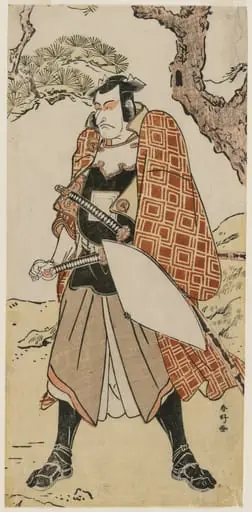 Ichikawa Danjuro V as a Travelling Warrior
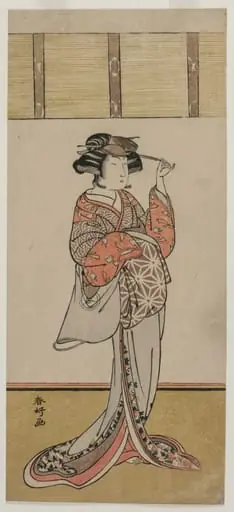 Iwai Hanshiro IV as Oiso no Tora
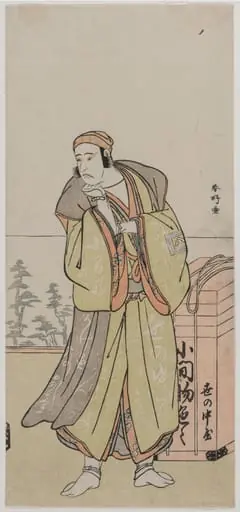 Ichikawa Yaozo II as an Itinerant Peddler
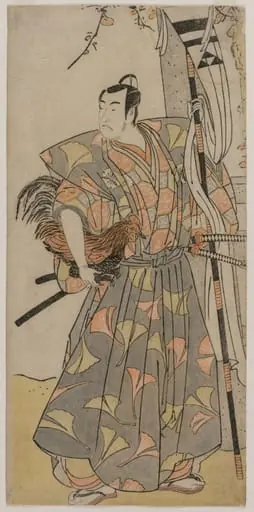 Actor Matsumoto Kōshirō IV
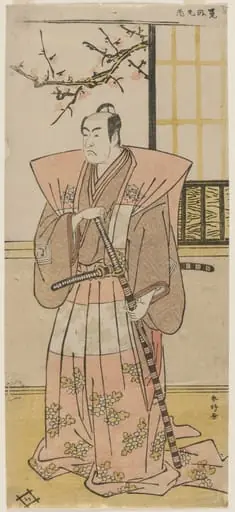 Ichikawa Monnosuke II as a Lord in Formal Dress
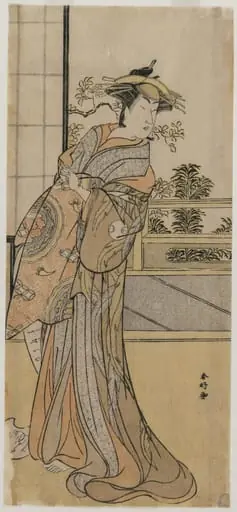 Arashi Murajiro as a Courtesan Holding a Letter
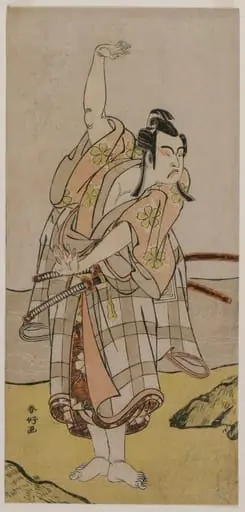 Actor Ichikawa Yaozō II as Sakuramaru
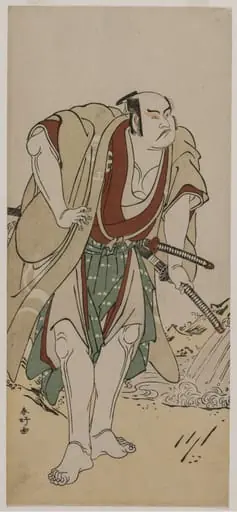 Otani Hiroji III as a Samurai Standing Beside a Stream
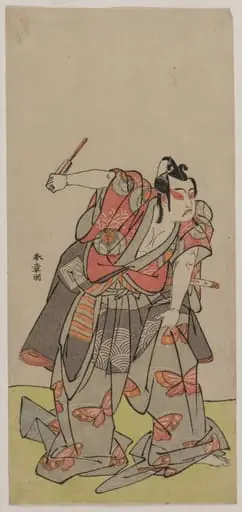 Ichikawa Yaozo II as Soga no Goro
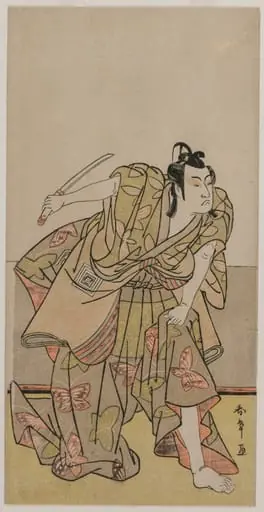 Ichikawa Monnosuke II as Soga no Goro
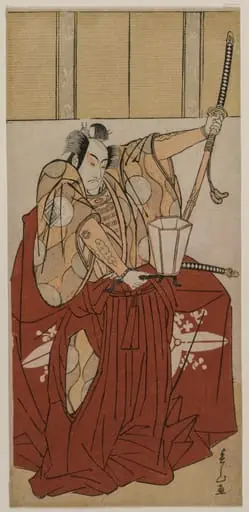 Ichikawa Monnosuke II as Urabe no Suetake
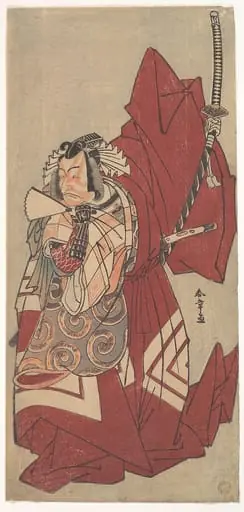 五代目市川団十郎|Kabuki Actor Ichikawa Danjūrō V in a Shibaraku (Stop Right There!) Role as Hannya no Gorō
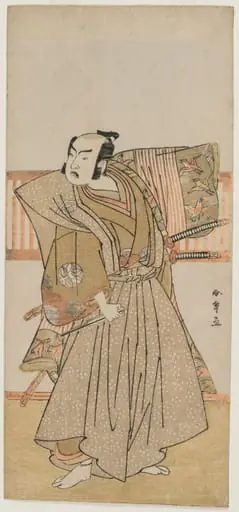 Ichimura Uzaemon IX as Soga no Juro
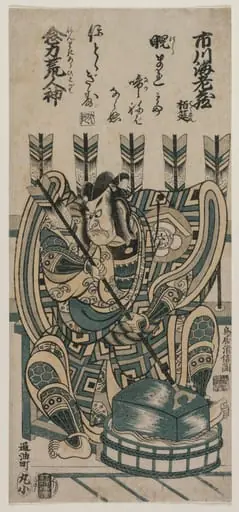 Ichikawa Ebizo III as Yanone Goro in Nenriki arahitogami
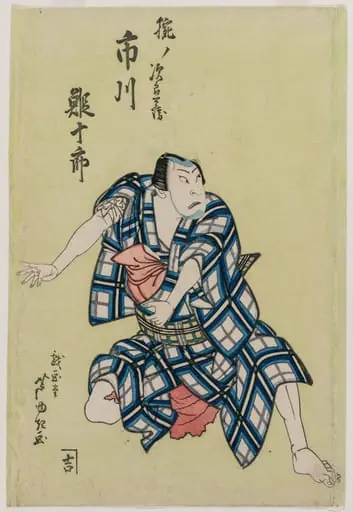 Ichikawa Ebijuro II as Ude no Jirobei
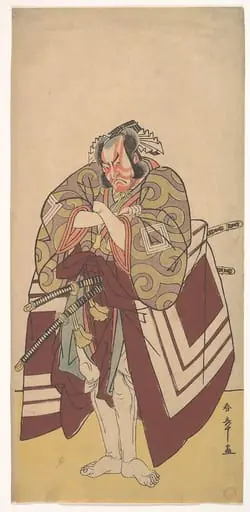 五代目市川団十郎|Kabuki Actor Ichikawa Danjūrō V in a Shibaraku (Stop Right There!) Role
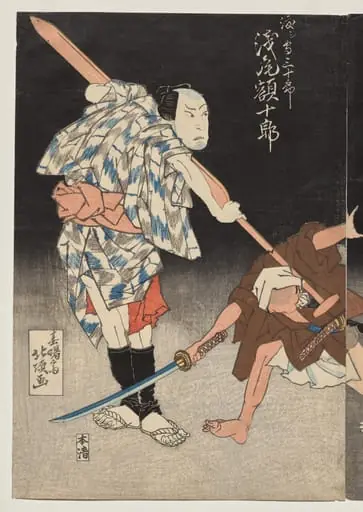 Asao Gakujurō as the Ferryman Sanjūrō from the Kabuki Play "Eight Views of the Kizu River by Boating Song"