Artwork
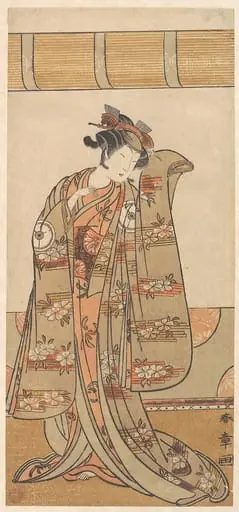
二代目中村二代目中村野塩のお軽|The Actor Nakamura Noshio II as the Courtesan Okaru
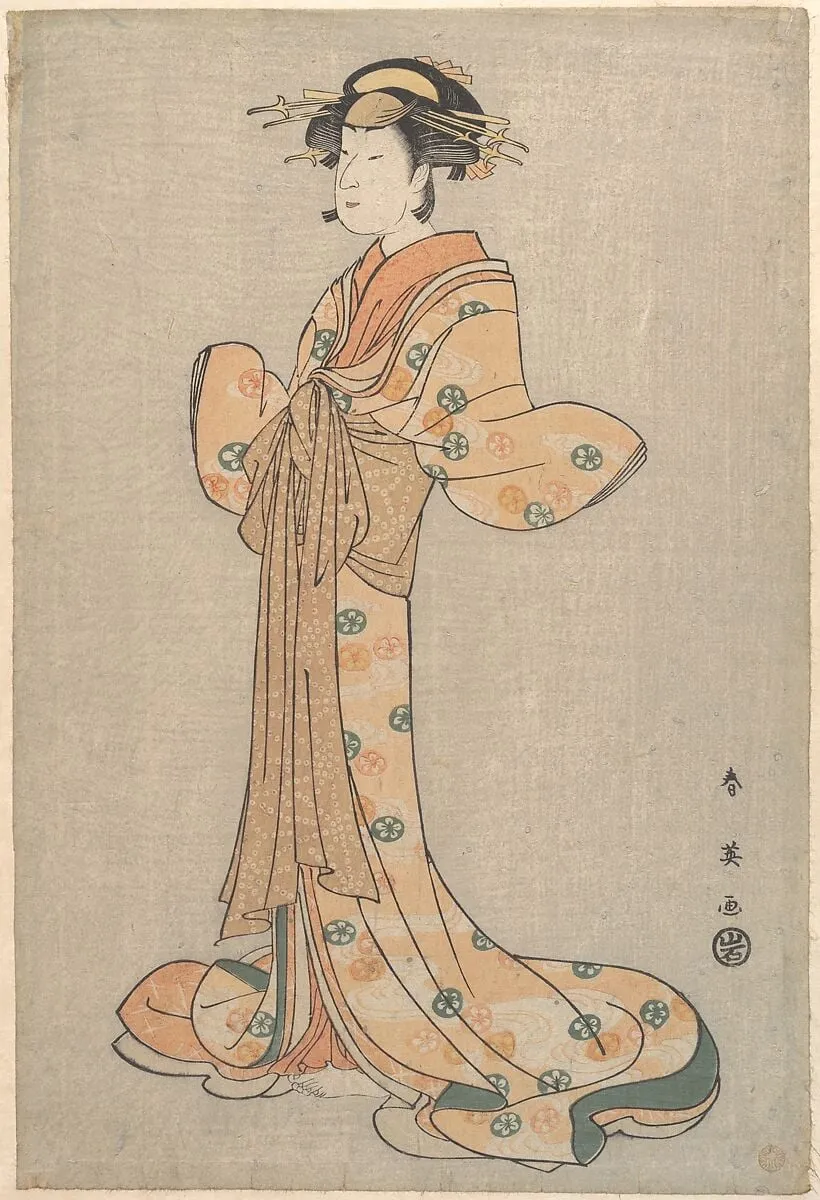
二代目中村二代目中村野塩のお軽|The Actor Nakamura Noshio II as the Courtesan Okaru is an ink print by the Romanticist artist Katsukawa Shun'ei 勝川春英. It dates from 1795 and is held in the collection of the Metropolitan Museum of Art.
About this work
Overview
This 1795 woodblock print, held by The Metropolitan Museum of Art, depicts a serene female figure in traditional Japanese attire, identified as the courtesan Okaru, portrayed by the actor Nakamura Noshio II.
Subject & Meaning
The subject, Okaru, is shown with eyes closed, conveying a sense of introspection or calm. Her portrayal by a male actor (onnagata) reflects the tradition of male performers in female roles in Japanese theater.
Technique & Style
Executed in nishiki-e, a multi-color woodblock print technique, the work features intricate details: a peach kimono with green and orange floral patterns, a tied obi with a prominent bow, and an elaborately styled updo adorned with chopsticks and a comb.
History & Provenance
Created in 1795 by Katsukawa Shun'ei, the print is part of The Metropolitan Museum of Art's collection, though specific acquisition details are not provided here.
Context
While the print's aesthetic might evoke comparisons to various art movements, its roots are firmly in late 18th-century Japanese ukiyo-e, specifically in the portrayal of theatrical figures and beauties.
Artist & collection

 青楼美人合|The Courtesans, from the Series, "Seiro Bijin Awase Carver End Shigoro" (sic.)
 Untitled
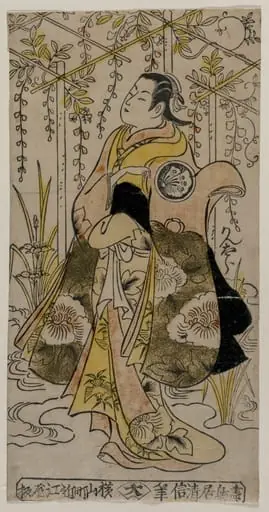 Sanjo Kantaro as a Young Woman Standing in a Wisteria Arbor
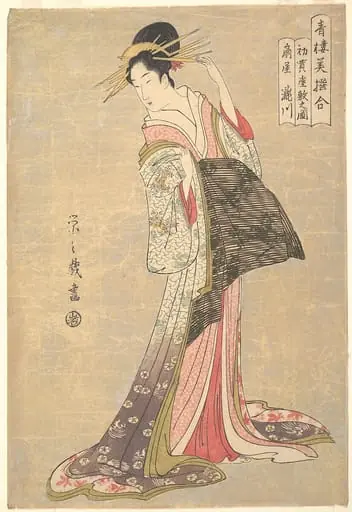 鳥文斎栄之画 「青楼美撰合 初売座敷之図 扇屋滝川」|Takigawa of the Ōgiya Brothel: The First Reception Room Appointment of the New Year (Hatsu-uri zashiki no zu: Ōgiya Takigawa), from the series A Comparison of Selected Beauties of the Pleasure Quarters (Seirō bisen awase)
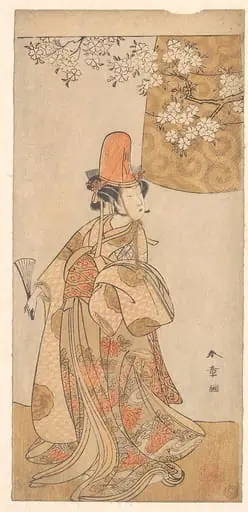 花形見風折烏帽子瀬川富三郎の娘道成寺|Segawa Tomisaburo in the Role of Musume Dojoji in "Hanagatami Kazaori Eboshi"
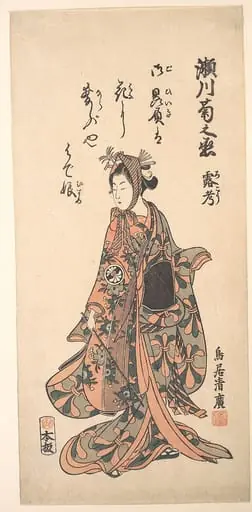 Untitled
 Sanpuku Tsui|Moon in Musashi Province
 Untitled