Artwork
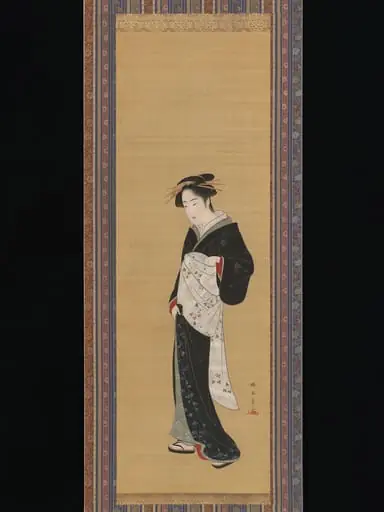
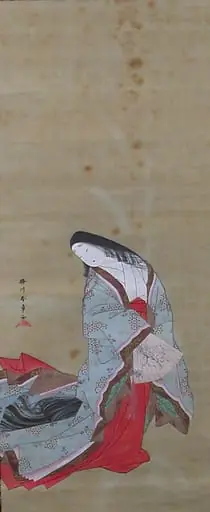
Courtesan of Eguchi (Eguchi no kimi)
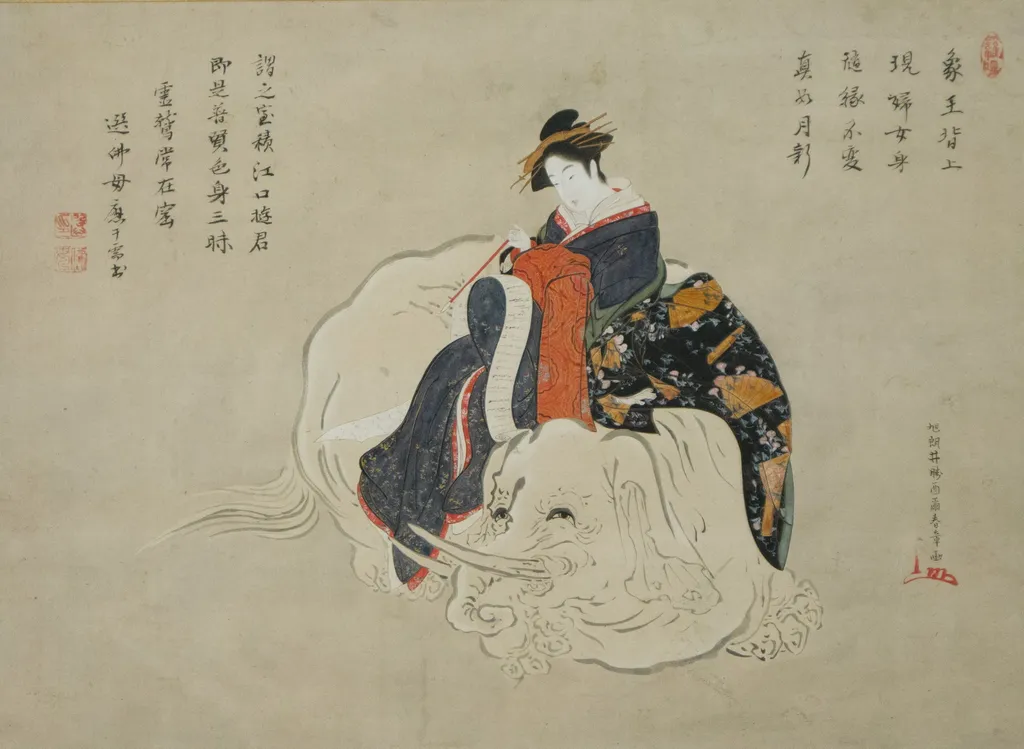
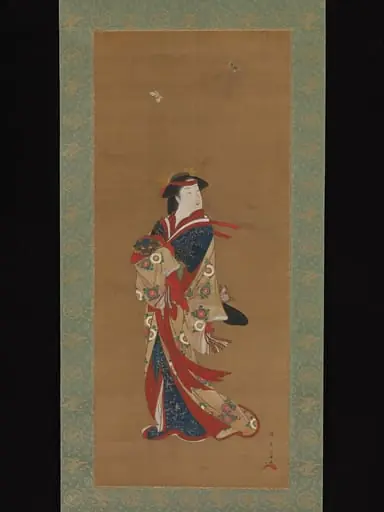
Courtesan of Eguchi (Eguchi no kimi) is an unspecified painting by the Ukiyo-e artist Katsukawa Shunshō. It is held in the collection of the Metropolitan Museum of Art.
About this work
Overview
Created in 1804 by the Edo‑period artist Katsukawa Shunshō, this hanging‑scroll painting—titled Courtesan of Egiriya—belongs to the collection of the Metropolitan Museum of Art. The work presents a solitary female figure rendered in vivid, patterned kimono, positioned atop a stylised cloud that suggests weightlessness.
Subject & Meaning
The central figure is a courtesan, identifiable by her elaborate dress, feathered black eboshi, and a fan held in her hands. A Japanese poem encircles the image, linking the visual scene to a literary narrative and reinforcing the theme of graceful poise amid an imagined, ethereal space.
Technique & Style
Executed in the ukiyo‑e tradition, the painting employs bold colour blocks of gold, red and blue, outlined with fine brushwork. The cloud beneath her is rendered with soft, billowing strokes, while the kimono’s floral motifs are delineated with intricate detail, characteristic of Shunshō’s precise, decorative approach.
History & Provenance
The piece entered the Metropolitan Museum’s holdings as part of its early‑20th‑century acquisitions of Japanese prints. Its documented provenance traces back to private Japanese collections before crossing to the United States, where it has been displayed as an example of late‑Edo portraiture.
Context
During the early 1800s, courtesans were frequent subjects in ukiyo‑e, reflecting both popular culture and the aesthetic ideals of the pleasure quarters. Shunshō, a leading figure of the Katsukawa school, specialized in such portraits, emphasizing elegance and the fleeting nature of beauty within a rapidly urbanising society.
Own this work as a print
Artist & collection
Artist
Katsukawa Shunshō spent his life in Edo (now Tokyo), where the city’s teahouses and theaters buzzed with energy.