Artwork
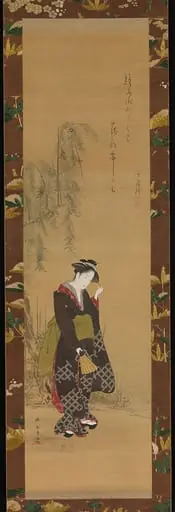
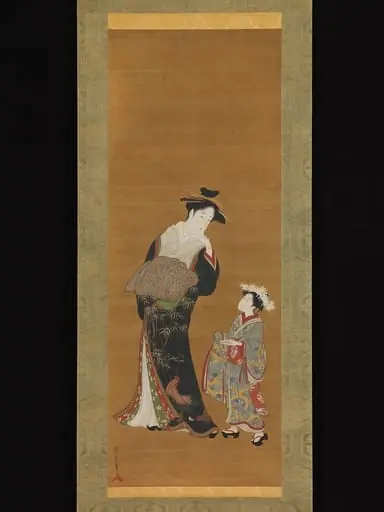
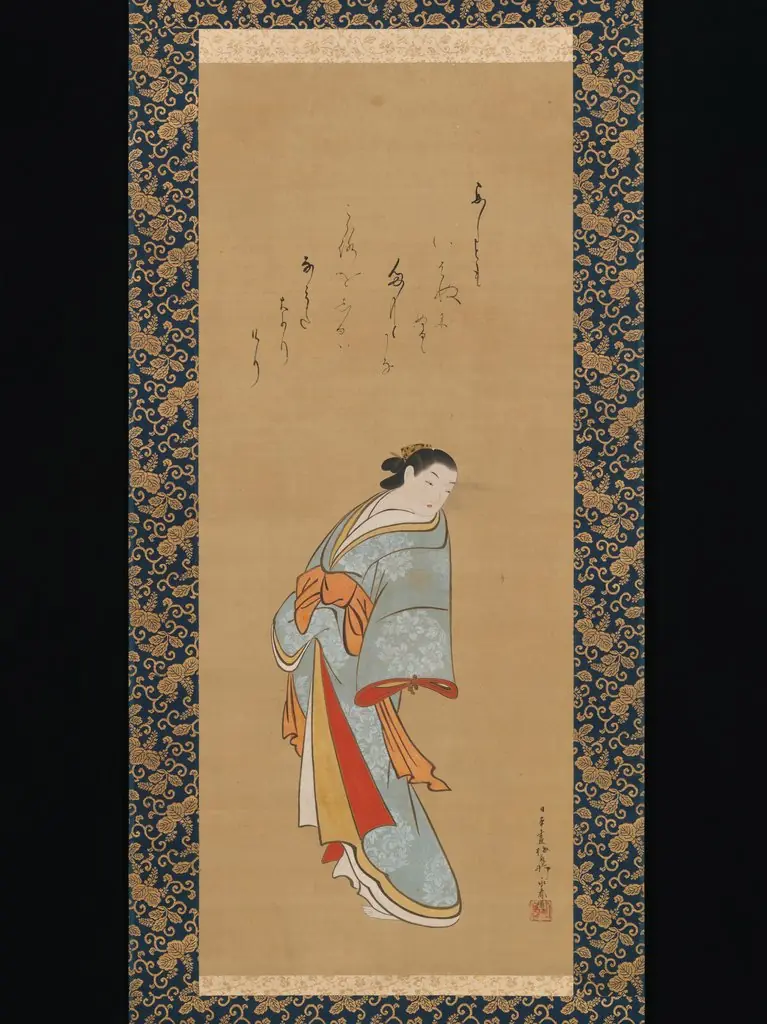
勝川春章筆 立姿美人図|Woman in a Black Kimono
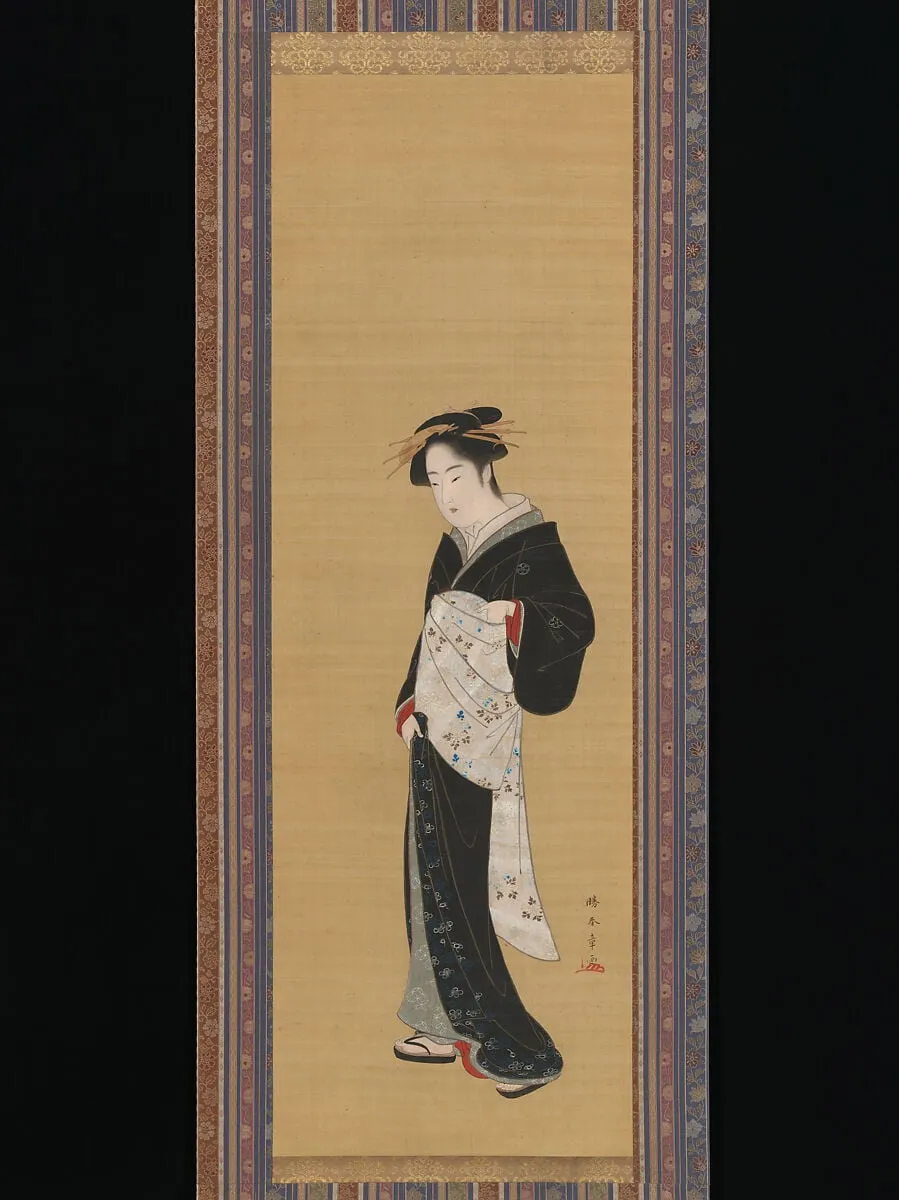
勝川春章筆 立姿美人図|Woman in a Black Kimono is an ink painting by the Baroque artist Katsukawa Shunshō. It dates from 1786 and is held in the collection of the Metropolitan Museum of Art.
About this work
Overview
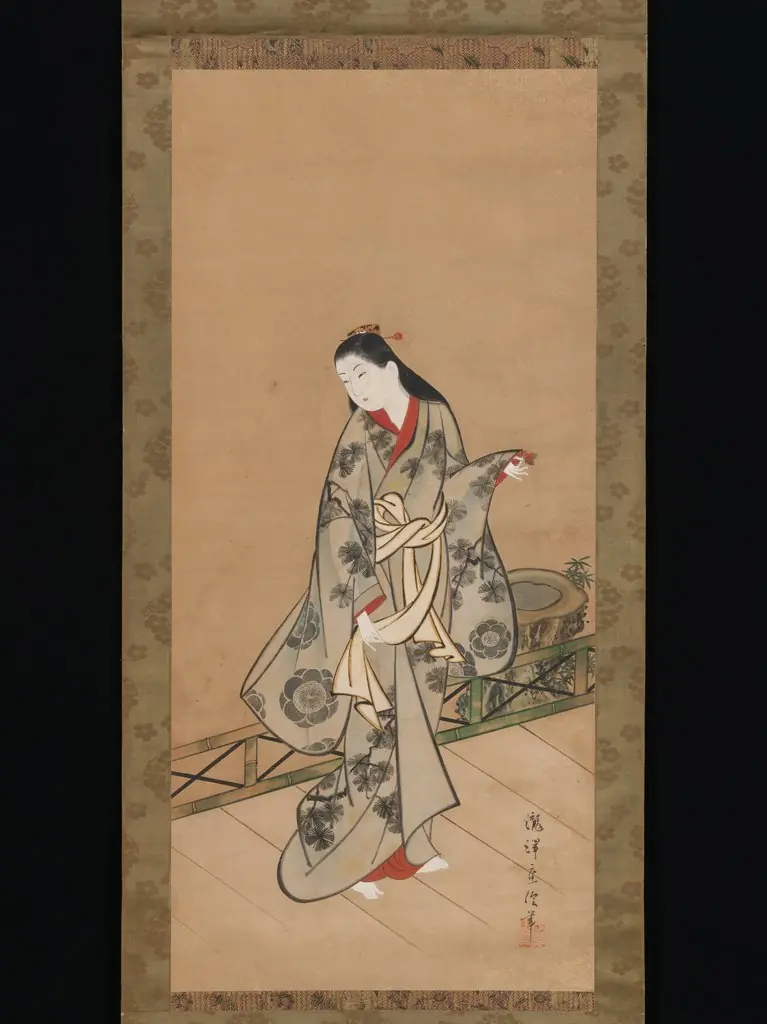
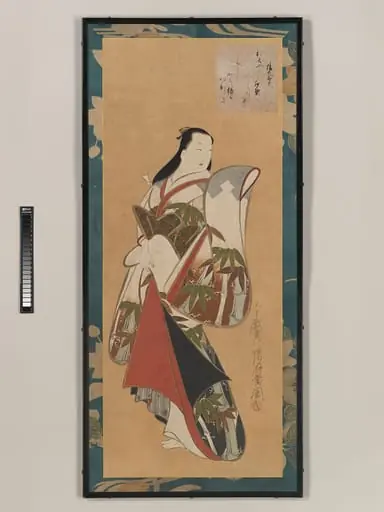
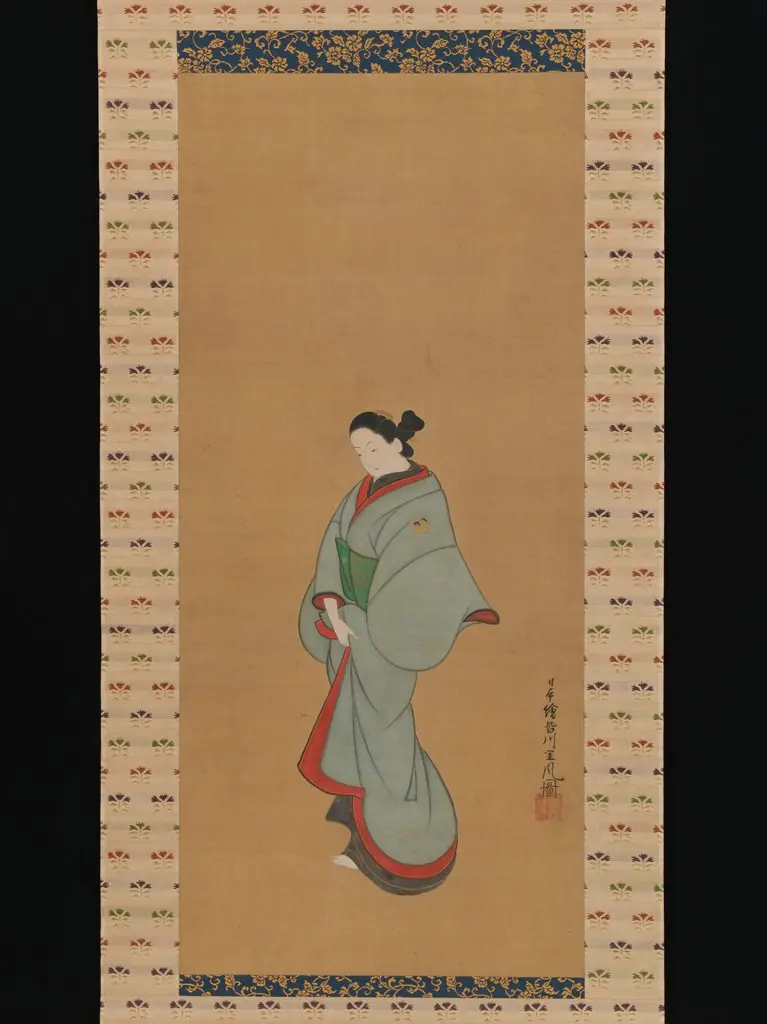
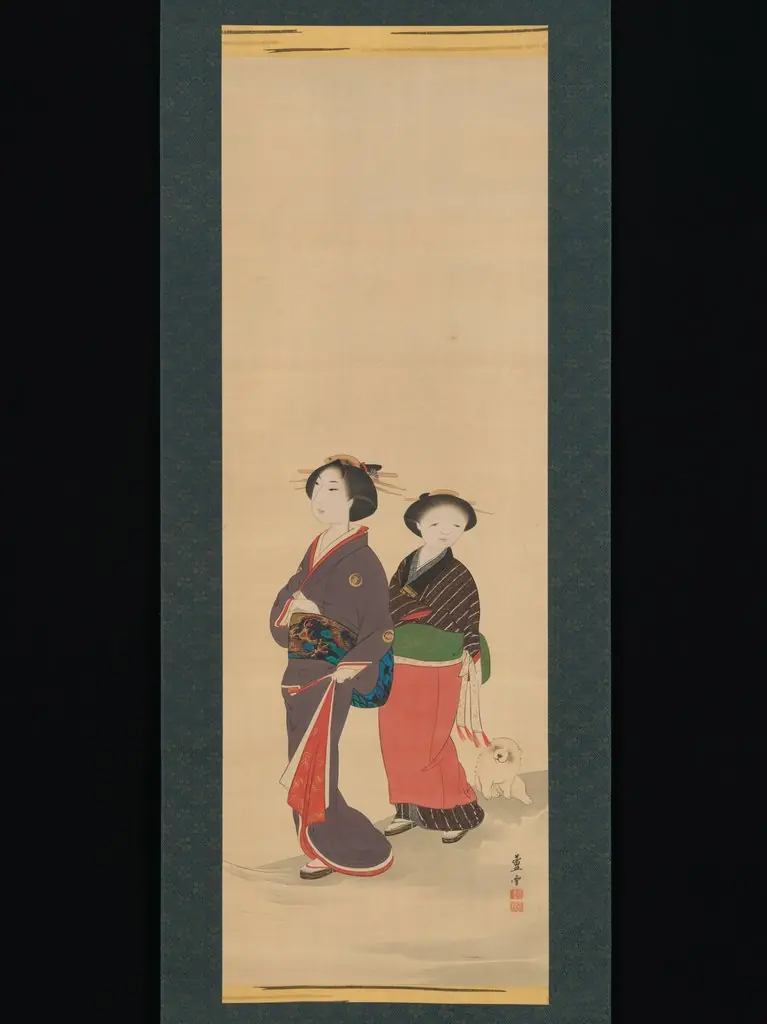
Created in 1786, this hanging scroll by Katsukawa Shunshō presents a solitary woman dressed in a black kimono. Rendered on silk with ink, color, and gold, the work measures the typical dimensions of a decorative scroll intended for domestic display.
Subject & Meaning
The figure stands upright, her hands concealed within the long sleeves of the kimono, while a serene, almost expressionless face looks outward. The garment is adorned with a subtle pattern of tiny white cranes, suggesting an understated elegance rather than a narrative scene.
Technique & Style
Shunshō employs delicate ink lines for the facial features and folds of the kimono, while the gold background provides a soft, luminous field reminiscent of early‑morning light. The restrained palette and careful brushwork reflect the artist’s skill in portraying everyday subjects with refined simplicity.
History & Provenance
Although Shunshō is best known for portraits of actors and courtesans, this piece depicts an anonymous woman, indicating a shift toward representing ordinary life. The scroll’s format and materials suggest it was intended for hanging in a private residence rather than a theatrical setting.
Context
The work belongs to the late Edo period, a time when ukiyo‑e artists increasingly explored scenes from daily urban life. The modest subject and muted composition align with contemporary tastes for personal, contemplative artworks within the home.
Artist & collection
Artist
Katsukawa Shunshō spent his life in Edo (now Tokyo), where the city’s teahouses and theaters buzzed with energy.