Artwork
Fujiwara Sanekata no Ason
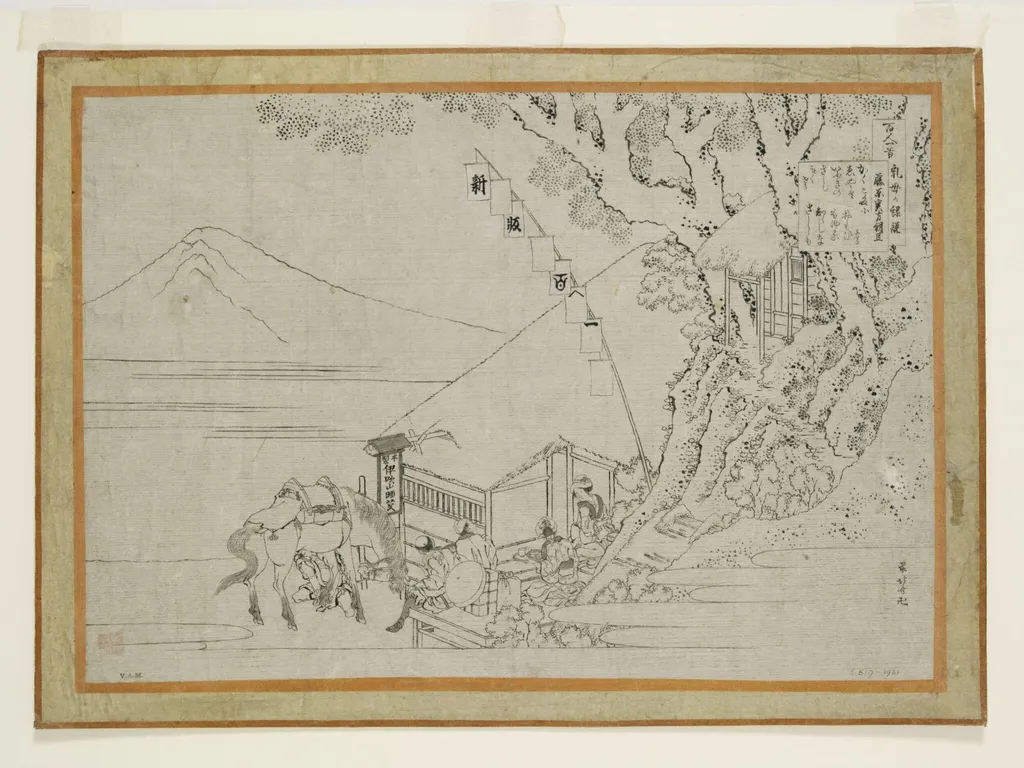
Fujiwara Sanekata no Ason is a drawing by the Japonisme artist Katsushika Hokusai. It dates from 1837 and is held in the collection of the Victoria and Albert Museum.
About this work
Overview
This ink drawing by Katsushika Hokusai serves as a preparatory sketch for a woodblock print, part of a late-series project comprising over 80 sheets.
This ink drawing by Katsushika Hokusai serves as a preparatory sketch for a woodblock print, part of a late-series project comprising over 80 sheets. While only 27 finished prints and one proof are known to survive, the majority of the series exists solely as these detailed hanshita-e. The work exemplifies Hokusai’s refined draftsmanship in his final decades, capturing a figure with precision and economy of line.
Subject & Meaning
The figure depicted is Fujiwara Sanekata no Ason, a Heian-period courtier and poet. He is shown standing on a patterned mat, one hand raised near his face, suggesting contemplation or recitation. The pose and attire reflect aristocratic refinement, aligning with the series’ focus on historical literary figures. No overt narrative is given, but the image evokes quiet dignity and scholarly poise.
Technique & Style
Executed in fine, unerring ink lines, the drawing shows no corrections or erasures, indicating confident, deliberate execution. Hokusai’s brushwork is controlled yet fluid, with subtle variations in stroke weight defining form and texture. The absence of shading or tone emphasizes line as the primary vehicle of expression, characteristic of his late preparatory drawings for ukiyo-e prints.
History & Provenance
The drawing belongs to a series Hokusai produced in his seventies and eighties, among his most ambitious late projects. It was created as a template for woodblock carvers, not as a standalone artwork. Most of the original drawings were lost or discarded after printing, making surviving examples rare. This sheet is one of over sixty known preparatory sketches for the series.
Context
Hokusai’s late work often revisited classical Japanese literature and historical figures, reflecting a cultural revival among Edo elites. This series, though never fully published, aligns with his broader interest in documenting Japan’s literary heritage. The project coincided with his increasing focus on personal artistic legacy, as he sought to preserve traditional aesthetics amid rapid societal change.
Legacy
These preparatory drawings are now valued as direct windows into Hokusai’s creative process. They reveal how he translated composition and gesture into printed form, offering insight into the collaborative nature of ukiyo-e production. Though intended as functional tools, their artistic quality has secured their place in collections as significant records of his late style.
Artist & collection

Artist
Katsushika Hokusai spent his life in Edo, now Tokyo, where he drew and carved prints for a living.

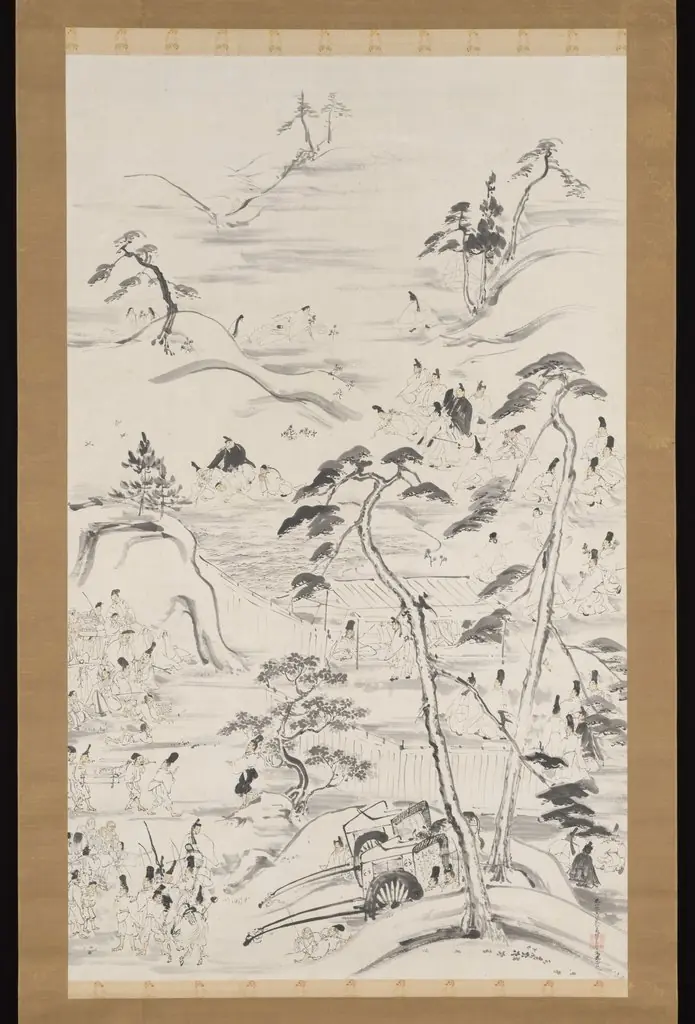 Emperor Enyū’s Outing to Funaokayama on the First Day of the Rat in the New Year
 Chinese Landscape
 明/清 佚名 舊傳 元張可觀 月映松臺圖 冊頁|Moonlit terrace
 Chinese Landscape
 Landscape
 Landscapes and Figures: Landscape
 Landscape Album in Various Styles: Landscape after Wu Zhen
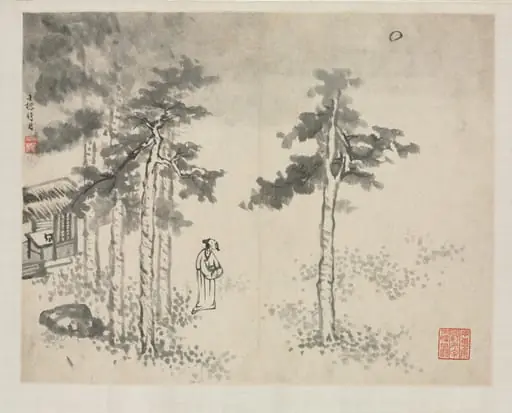 Landscape Album in Various Styles: Shibiao Waiting for the Moon
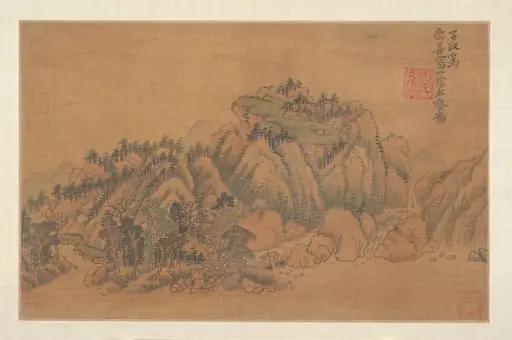 Untitled
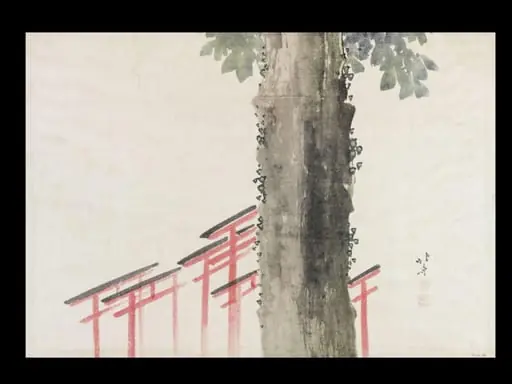 Giant Tree and Torii Gates