Artwork
Emperor Enyū’s Outing to Funaokayama on the First Day of the Rat in the New Year
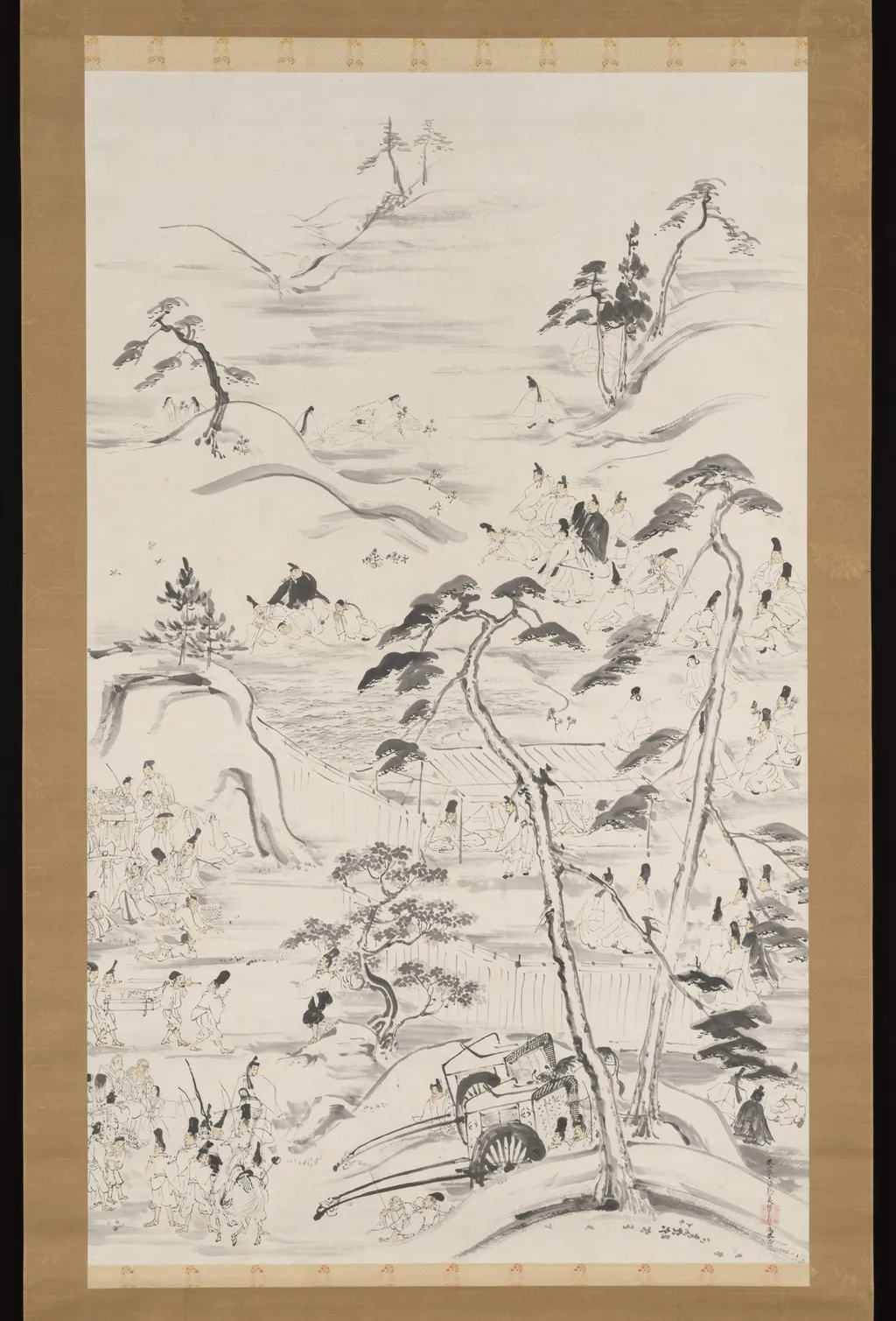
Emperor Enyū’s Outing to Funaokayama on the First Day of the Rat in the New Year is an unspecified painting by Reizei Tamechika. It dates from 1834 and is held in the collection of the Metropolitan Museum of Art.
About this work
Overview
Emperor Enyū’s Outing to Funaokayama on the First Day of the Rat in the New Year is a painting created by Reizei Tamechika in 1834. It exemplifies the Yamato-e style, a traditional Japanese painting technique.
Subject & Meaning
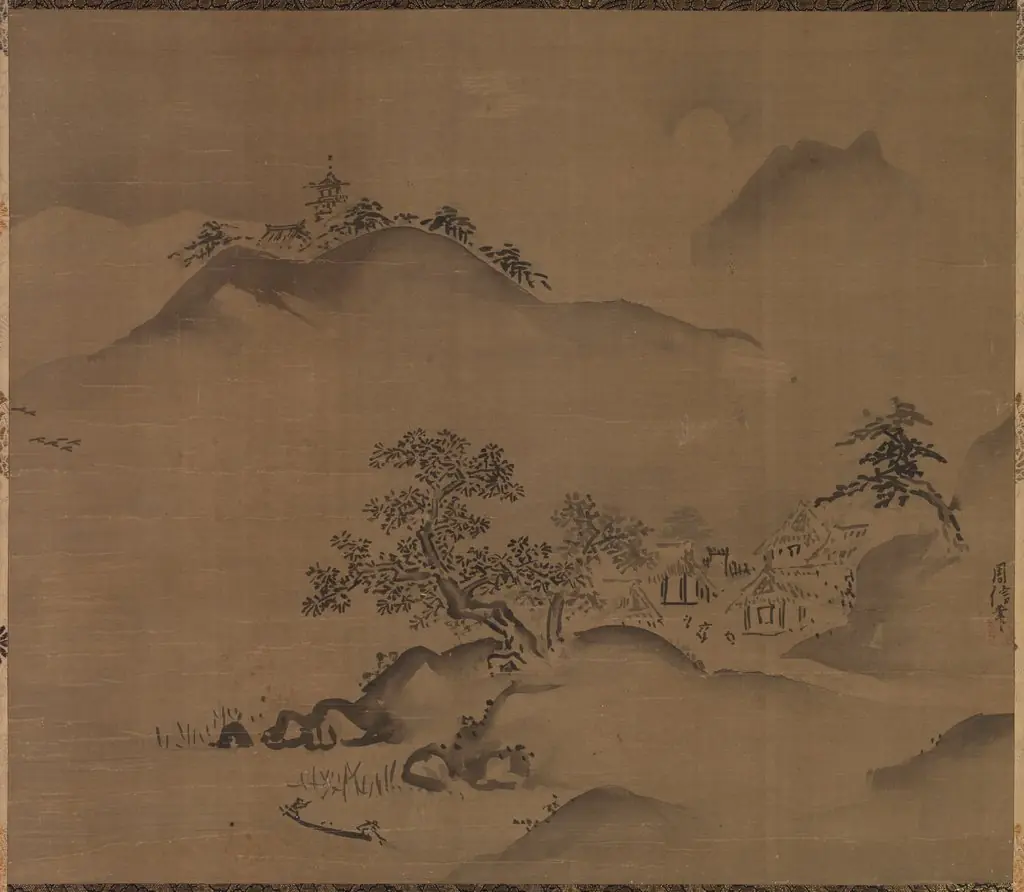
The painting depicts a historical scene featuring Emperor Enyū on an outing, likely a ceremonial or celebratory event. The scene is populated by numerous figures engaged in various activities, suggesting a significant cultural or ritual occasion.
Technique & Style
Tamechika's work is characterized by soft, muted colors and expressive brushstrokes. The use of quick, sketchy lines conveys a sense of movement and vitality in the natural setting, which includes trees, paths, and a river.
History & Provenance
Reizei Tamechika was active during the late Edo period, a time when traditional Japanese art was being revisited. His revival of the classical Yamato-e style is evident in this painting.
Artist & collection
Artist
Reizei Tamechika (Japanese: 冷泉為恭; 20 October 1823 – 8 June 1864), also known as Okada Tamechika (岡田為恭), was a Japanese artist from the later Edo Period who was instrumental in reviving the classical style known as Yamato-e.