Artwork
The Brocade Bridge in Suo Province (from the series Curious Views of Famous Bridges in the Provinces)
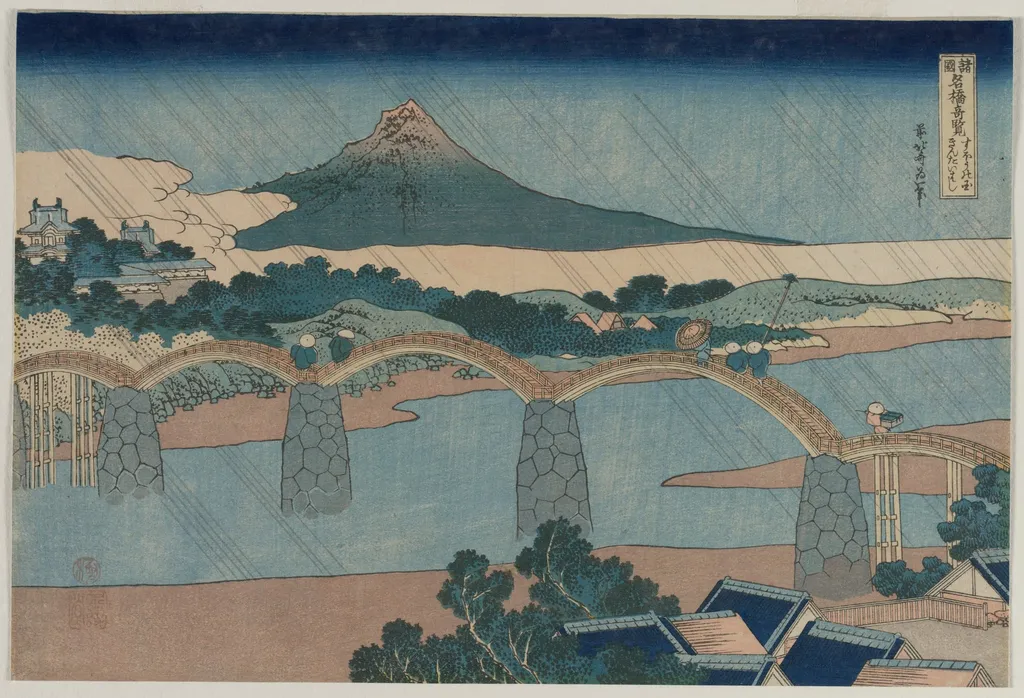
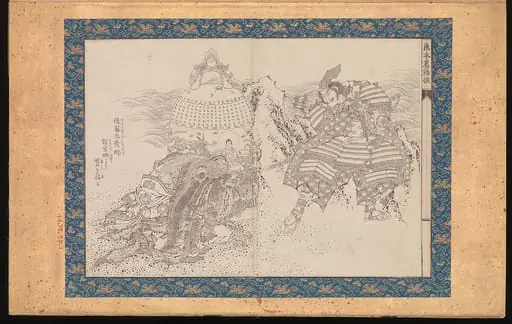
The Brocade Bridge in Suo Province (from the series Curious Views of Famous Bridges in the Provinces) is a print by the Romanticist artist Katsushika Hokusai. It dates from 1834 and is held in the collection of the Cleveland Museum of Art. Created around 1834, this woodblock print is part of Hokusai’s series depicting notable bridges across Japan’s provinces.
About this work
Overview
The print belongs to the collection of The Cleveland Museum of Art, where it is preserved as an example of early 19th-century Japanese printmaking.
Created around 1834, this woodblock print is part of Hokusai’s series depicting notable bridges across Japan’s provinces. It portrays the Brocade Bridge in Suo Province, rendered with careful attention to architectural detail and spatial depth. The composition centers on the bridge’s three stone arches, framed by a quiet river and distant landscape. The print belongs to the collection of The Cleveland Museum of Art, where it is preserved as an example of early 19th-century Japanese printmaking.
Subject & Meaning
The Brocade Bridge serves as both a literal crossing and a symbolic threshold between the human world and the natural environment. Figures in simple blue and white garments traverse the structure, suggesting daily life and movement. The mountain behind the bridge evokes permanence and scale, contrasting with the transient presence of pedestrians. The title implies a regional landmark of cultural significance, though the bridge’s exact historical role remains undocumented.
Technique & Style
Hokusai employed traditional ukiyo-e woodblock techniques, using precise linework to define the bridge’s stonework and subtle gradations of blue and brown ink to suggest atmosphere. The flat planes of color and layered perspective reflect the conventions of Japanese landscape prints, while the delicate rendering of figures adds narrative texture. No single hue dominates; instead, muted tones unify the scene, emphasizing quiet observation over dramatic effect.
History & Provenance
The print was produced during Hokusai’s later years, when he was deeply engaged in landscape series that moved beyond earlier depictions of actors and courtesans. It was likely published by a Tokyo-based printer, as was common for ukiyo-e prints of the period. The work entered the Cleveland Museum of Art’s collection in the 20th century, acquired as part of a broader effort to document Japanese print traditions.
Context
This print emerged during a time when travel within Japan was expanding due to improved roads and increased public interest in regional sites. Series like this one catered to a growing middle-class audience seeking visual guides to distant places. Hokusai’s focus on bridges—structures connecting geography and community—reflects a broader cultural fascination with movement, place, and the relationship between human construction and nature.
Legacy
Though less widely known than Hokusai’s Great Wave, this print exemplifies his sustained interest in everyday landscapes and architectural forms. It contributed to the documentation of provincial sites during a period of national consolidation. Today, it stands as a quiet testament to the precision and restraint of late Edo-period printmaking, offering insight into how ordinary places were rendered with dignity and attention.
Artist & collection

Artist
Katsushika Hokusai spent his life in Edo, now Tokyo, where he drew and carved prints for a living.

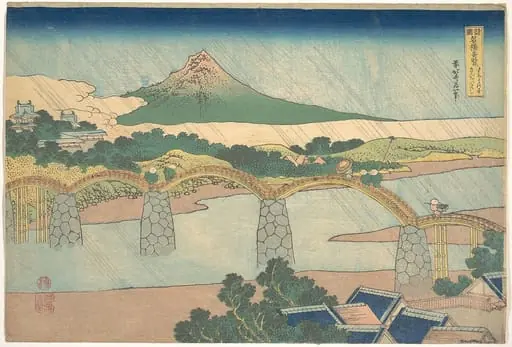 諸國名橋奇覧 すほうの国きんたいはし|Kintai Bridge in Suō Province (Suō no kuni Kintaibashi), from the series Remarkable Views of Bridges in Various Provinces (Shokoku meikyō kiran)
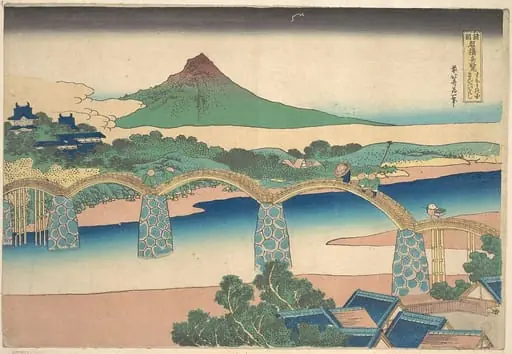 諸國名橋奇覧 すほうの国きんたいはし|Kintai Bridge in Suō Province (Suō no kuni Kintaibashi), from the series Remarkable Views of Bridges in Various Provinces (Shokoku meikyō kiran)
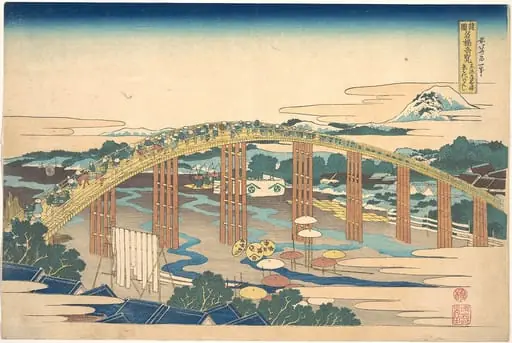 諸國名橋奇覧 東海道岡崎矢はぎのはし|Yahagi Bridge at Okazaki on the Tōkaidō (Tōkaidō Okazaki Yahagi no hashi), from the series Remarkable Views of Bridges in Various Provinces (Shokoku meikyō kiran)
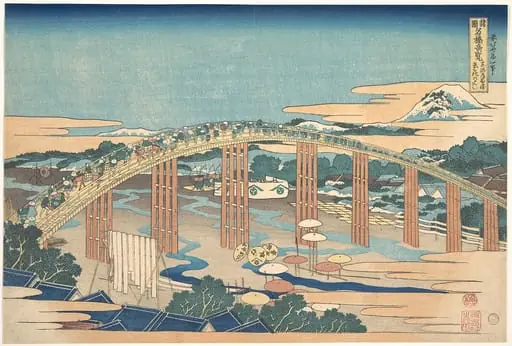 諸國名橋奇覧 東海道岡崎矢はぎのはし|Yahagi Bridge at Okazaki on the Tōkaidō (Tōkaidō Okazaki Yahagi no hashi), from the series Remarkable Views of Bridges in Various Provinces (Shokoku meikyō kiran)
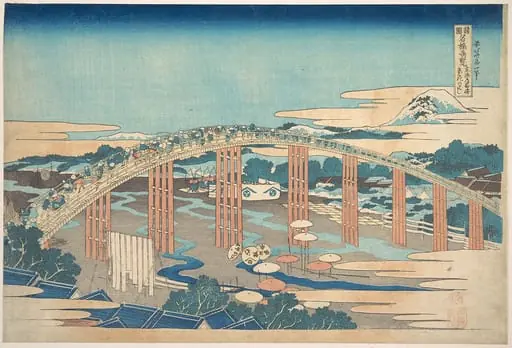 「諸國名橋寄覧 東海道岡崎 矢はぎのはし」|Yahagi Bridge at Okazaki on the Tōkaidō (Tōkaidō Okazaki Yahagi no hashi), from the series Remarkable Views of Bridges in Various Provinces (Shokoku meikyō kiran)
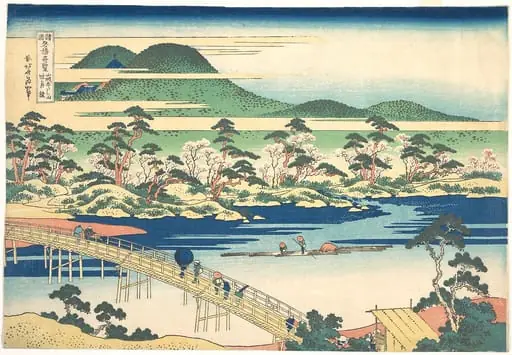 諸國名橋奇覧 山城あらし山吐月橋 |Togetsu Bridge at Arashiyama in Yamashiro, from the series Remarkable Views of Bridges in Various Provinces (Shokoku meikyō kiran)
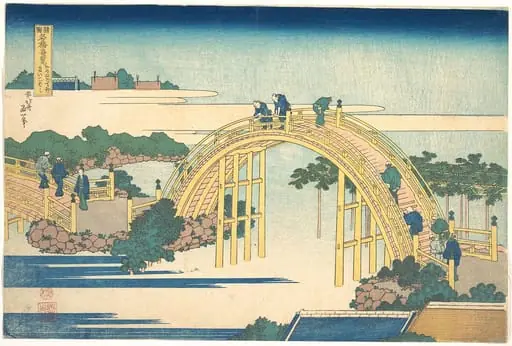 諸國名橋奇覧 かめゐど天神たいこはし|The Arched Bridge at Kameido Tenjin Shrine (Kameido Tenjin Taikobashi), from the series Remarkable Views of Bridges in Various Provinces (Shokoku meikyō kiran)
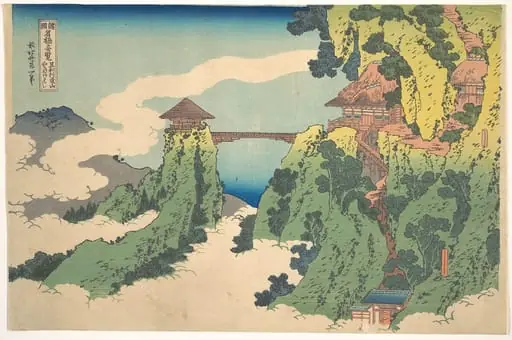 諸國名橋奇覧 足利行道山くものかけはし|The Hanging-cloud Bridge at Mount Gyōdō near Ashikaga (Ashikaga Gyōdōzan kumo no kakehashi), from the series Remarkable Views of Bridges in Various Provinces (Shokoku meikyō kiran)
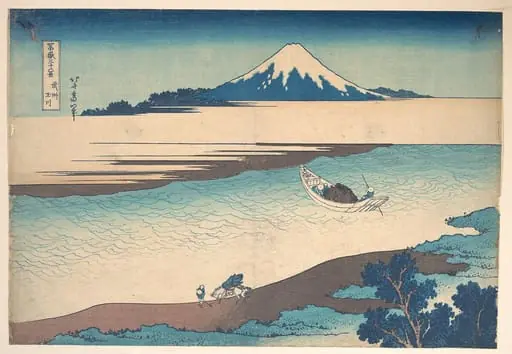 冨嶽三十六景 武州玉川|Fuji—The Tama River, Musashi Province, from the series Thirty-six Views of Mount Fuji (Fugaku sanjūrokkei)
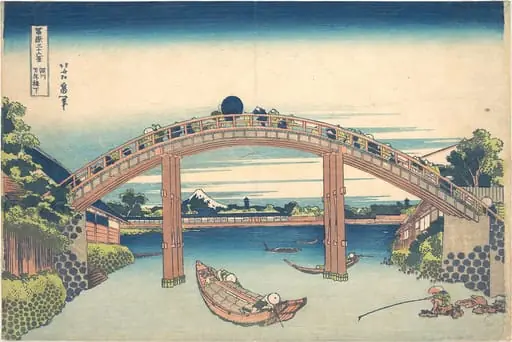 葛飾北斎画 冨嶽三十六景 深川万年橋下|Under the Mannen Bridge at Fukagawa (Fukagawa Mannenbashi shita), from the series Thirty-six Views of Mount Fuji (Fugaku sanjūrokkei)