Artwork
諸國名橋奇覧 山城あらし山吐月橋 |Togetsu Bridge at Arashiyama in Yamashiro, from the series Remarkable Views of Bridges in Various Provinces (Shokoku meikyō kiran)
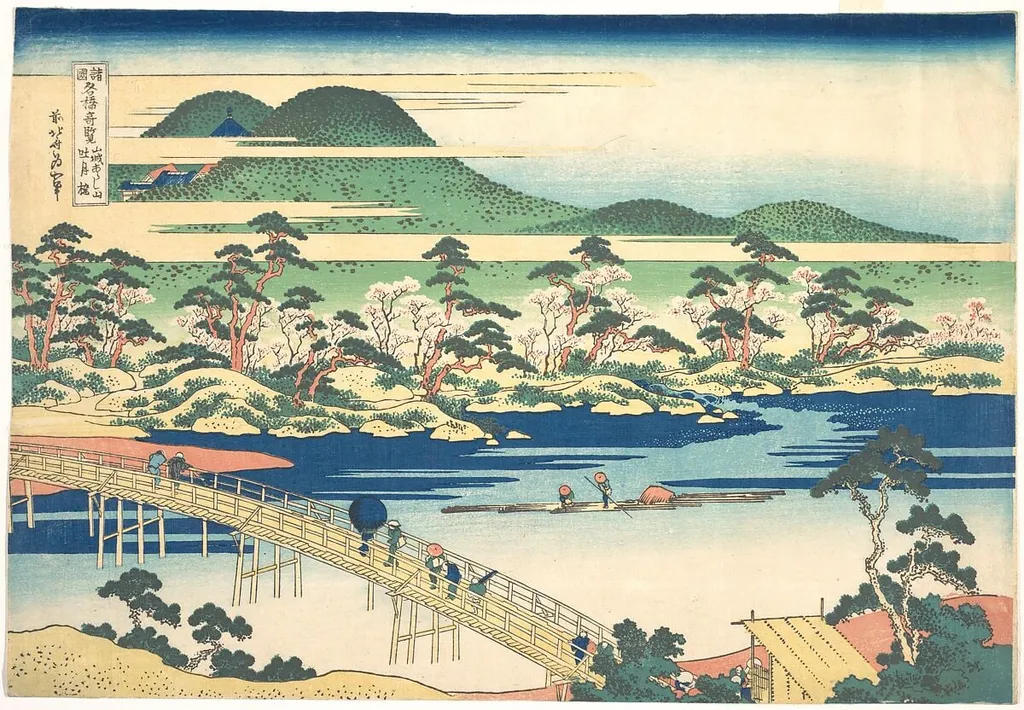
諸國名橋奇覧 山城あらし山吐月橋 |Togetsu Bridge at Arashiyama in Yamashiro, from the series Remarkable Views of Bridges in Various Provinces (Shokoku meikyō kiran) is an ink print by the Japonisme artist Katsushika Hokusai. It dates from 1830 and is held in the collection of the Metropolitan Museum of Art.
About this work
Overview
Created around 1830, this woodblock print by Katsushika Hokusai forms part of the series *Shokoku meikyō kiran* (Remarkable Views of Bridges in Various Provinces). It depicts the Togetsu Bridge spanning the river at Arashiyama in the former Yamashiro Province. The work is part of the collection of the Metropolitan Museum of Art in New York.
Subject & Meaning
The image presents the iconic wooden bridge extending across tranquil blue water, flanked by a line of trees rendered in muted greens and pinks. Small figures walk along the bridge and row boats near the shore, while distant hills rise beneath a pale sky and a modest temple crowns a hilltop, suggesting a serene travel scene.
Technique & Style
Hokusai employed traditional ukiyo‑e woodblock methods, layering ink and color to model atmospheric depth. Transparent washes create the sense of water and sky, while successive color blocks define the foliage and architecture. The composition balances linear perspective of the bridge with atmospheric perspective in the background hills.
History & Provenance
The print was produced in the late Edo period, a time when bridge views were popular subjects for travel‑related prints. It entered the Metropolitan Museum of Art’s collection through a 20th‑century acquisition, where it remains catalogued as an example of Hokusai’s bridge series.
Context
Arashiyama’s Togetsu Bridge was celebrated for its moonlit scenery, a motif frequently illustrated in Edo‑period travel literature. Hokusai’s daytime rendering offers an alternative view, emphasizing seasonal color and the everyday movement of travelers, reflecting the broader interest in documenting Japan’s regional landmarks.
Artist & collection

Artist
Katsushika Hokusai spent his life in Edo, now Tokyo, where he drew and carved prints for a living.

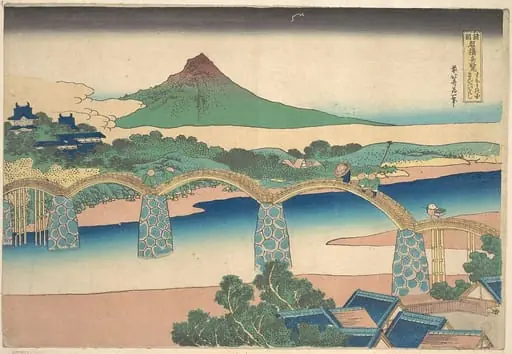 諸國名橋奇覧 すほうの国きんたいはし|Kintai Bridge in Suō Province (Suō no kuni Kintaibashi), from the series Remarkable Views of Bridges in Various Provinces (Shokoku meikyō kiran)
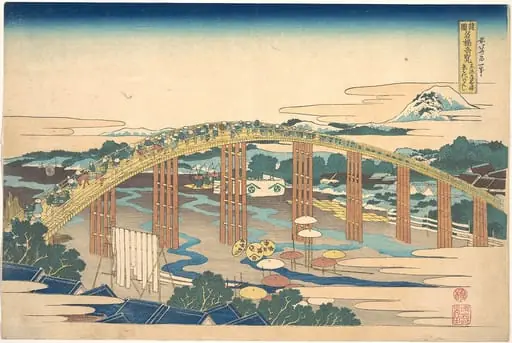 諸國名橋奇覧 東海道岡崎矢はぎのはし|Yahagi Bridge at Okazaki on the Tōkaidō (Tōkaidō Okazaki Yahagi no hashi), from the series Remarkable Views of Bridges in Various Provinces (Shokoku meikyō kiran)
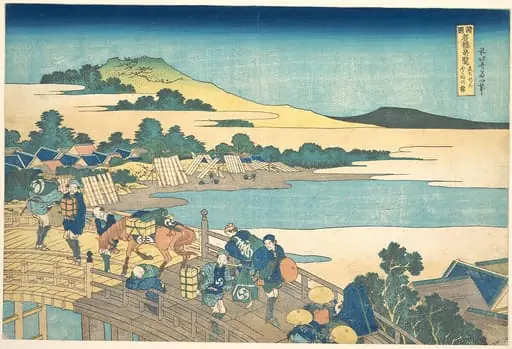 諸國名橋奇覧 ゑちぜんふくゐの橋|Fukui Bridge in Echizen Province (Echizen Fukui no hashi), from the series Remarkable Views of Bridges in Various Provinces (Shokoku meikyō kiran)
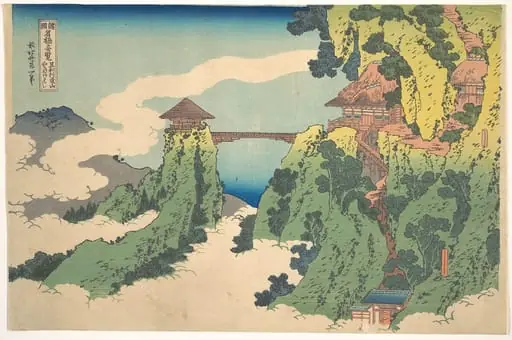 諸國名橋奇覧 足利行道山くものかけはし|The Hanging-cloud Bridge at Mount Gyōdō near Ashikaga (Ashikaga Gyōdōzan kumo no kakehashi), from the series Remarkable Views of Bridges in Various Provinces (Shokoku meikyō kiran)
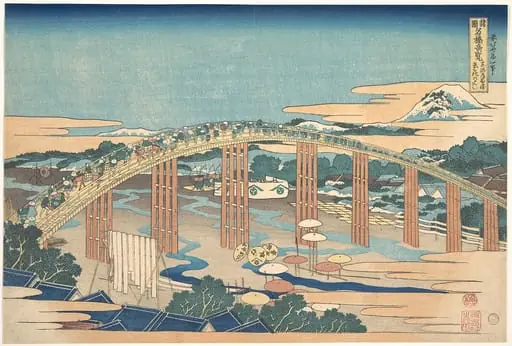 諸國名橋奇覧 東海道岡崎矢はぎのはし|Yahagi Bridge at Okazaki on the Tōkaidō (Tōkaidō Okazaki Yahagi no hashi), from the series Remarkable Views of Bridges in Various Provinces (Shokoku meikyō kiran)
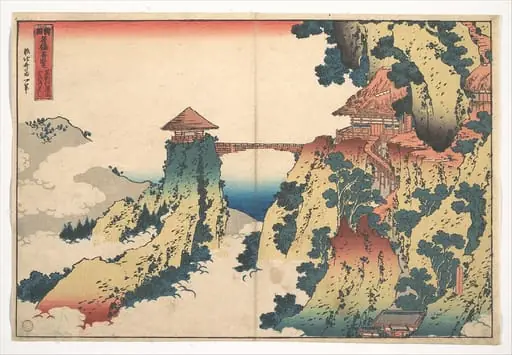 諸國名橋奇覧 足利行道山くものかけはし|The Hanging-cloud Bridge at Mount Gyōdō near Ashikaga (Ashikaga Gyōdōzan kumo no kakehashi), from the series Remarkable Views of Bridges in Various Provinces (Shokoku meikyō kiran)
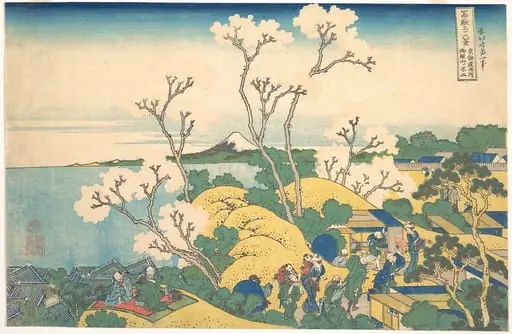 冨嶽三十六景 東海道品川御殿山の不二|Fuji from Gotenyama at Shinagawa on the Tōkaidō (Tōkaidō Shinagawa Gotenyama no Fuji), from the series Thirty-six Views of Mount Fuji (Fugaku sanjūrokkei)
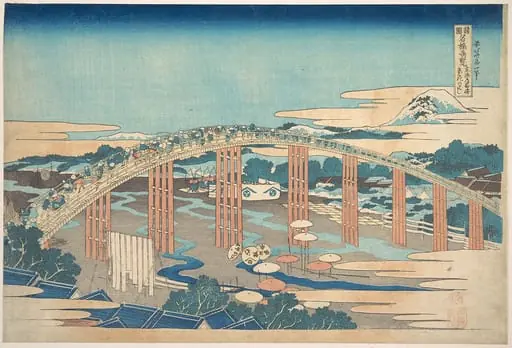 「諸國名橋寄覧 東海道岡崎 矢はぎのはし」|Yahagi Bridge at Okazaki on the Tōkaidō (Tōkaidō Okazaki Yahagi no hashi), from the series Remarkable Views of Bridges in Various Provinces (Shokoku meikyō kiran)
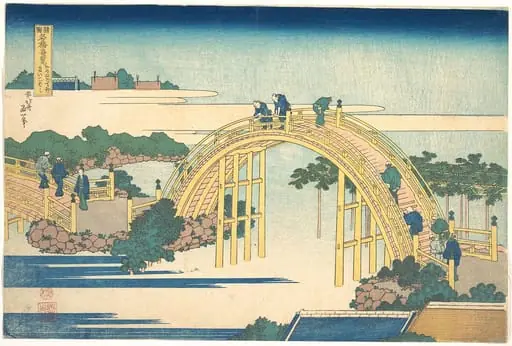 諸國名橋奇覧 かめゐど天神たいこはし|The Arched Bridge at Kameido Tenjin Shrine (Kameido Tenjin Taikobashi), from the series Remarkable Views of Bridges in Various Provinces (Shokoku meikyō kiran)
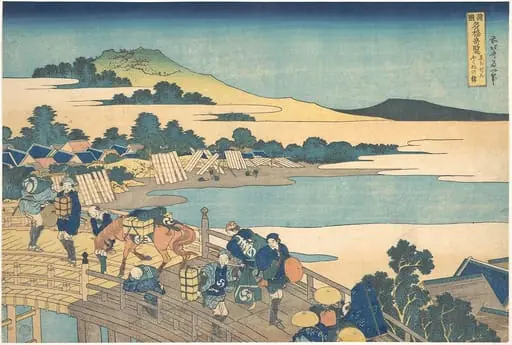 諸國名橋奇覧 ゑちぜんふくゐの橋|Fukui Bridge in Echizen Province (Echizen Fukui no hashi), from the series Remarkable Views of Bridges in Various Provinces (Shokoku meikyō kiran)