Artwork
諸國名橋奇覧 東海道岡崎矢はぎのはし|Yahagi Bridge at Okazaki on the Tōkaidō (Tōkaidō Okazaki Yahagi no hashi), from the series Remarkable Views of Bridges in Various Provinces (Shokoku meikyō kiran)
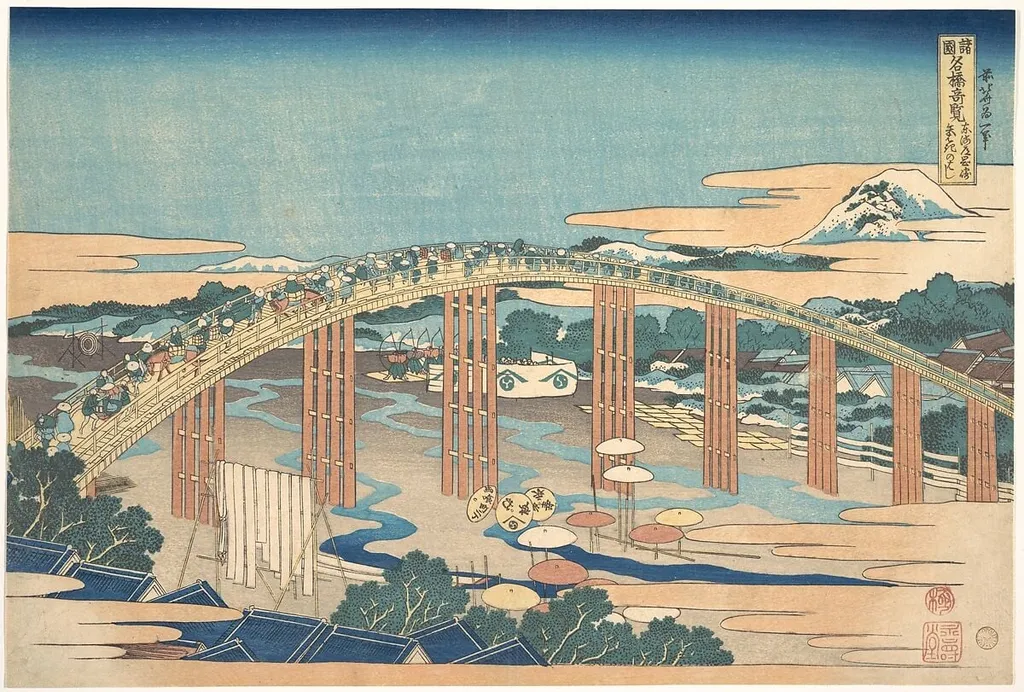
諸國名橋奇覧 東海道岡崎矢はぎのはし|Yahagi Bridge at Okazaki on the Tōkaidō (Tōkaidō Okazaki Yahagi no hashi), from the series Remarkable Views of Bridges in Various Provinces (Shokoku meikyō kiran) is an ink print by the Japonisme artist Katsushika Hokusai. It dates from 1828 and is held in the collection of the Metropolitan Museum of Art.
About this work
Overview
The composition emphasizes the bridge’s elongated form against a quiet riverscape, with subtle atmospheric effects suggesting morning mist.
This woodblock print is part of Katsushika Hokusai’s 1828 series depicting notable bridges across Japan’s provinces. Rendered in ink and color on paper, it captures Yahagi Bridge along the Tōkaidō road near Okazaki. The composition emphasizes the bridge’s elongated form against a quiet riverscape, with subtle atmospheric effects suggesting morning mist. Its restrained palette and delicate line work reflect the aesthetic priorities of ukiyo-e landscape prints of the period.
Subject & Meaning
The print portrays a functional wooden bridge serving travelers on the Tōkaidō, one of Japan’s most important transportation routes. Rather than celebrating architectural grandeur, it highlights the bridge’s integration into the natural landscape. The small figures crossing it underscore human scale against the enduring structure, suggesting themes of transit, continuity, and quiet daily life rather than spectacle or monumentality.
Technique & Style
Hokusai employed fine, controlled lines to define the bridge’s timber framework and the river’s currents. Soft washes of pale blue and gray suggest haze and distance, while cross-hatching models shadows beneath the bridge’s supports. The absence of ornamental detail reinforces structural clarity. The composition uses perspective to draw the eye along the bridge’s curve, enhancing its sense of length and stability without dramatic foreshortening.
History & Provenance
Created in 1828 as part of Hokusai’s series on provincial bridges, the print was produced during his mature period, after his famous Thirty-Six Views of Mount Fuji. It was likely published by a Tokyo-based firm for the growing market in landscape prints. The Metropolitan Museum of Art acquired the print in the 20th century as part of its broader collection of Edo-period ukiyo-e.
Context
During the 1820s, travel literature and illustrated guides to Japan’s roads and landmarks became popular among urban audiences. Hokusai’s series responded to this interest by documenting lesser-known infrastructure with topographical accuracy. Unlike theatrical scenes of kabuki or courtesans, these prints focused on the quiet utility of everyday structures, reflecting a broader cultural fascination with geography and regional identity.
Legacy
Though less celebrated than Hokusai’s mountain views, this print exemplifies his ability to transform ordinary subjects into compositions of quiet harmony. Its influence can be seen in later landscape artists who prioritized atmospheric tone and structural clarity over narrative drama. The work remains a reference for understanding how Edo-period printmakers documented Japan’s infrastructure with both precision and poetic restraint.
Artist & collection

Artist
Katsushika Hokusai spent his life in Edo, now Tokyo, where he drew and carved prints for a living.

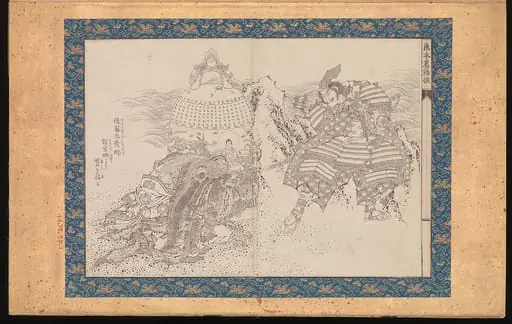
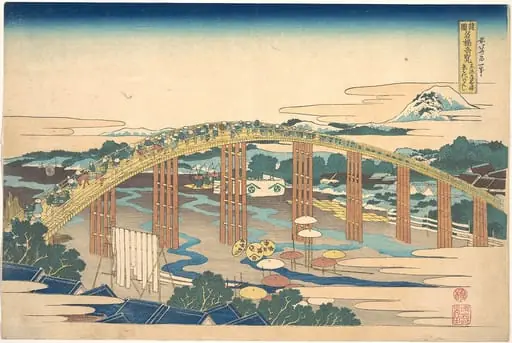 諸國名橋奇覧 東海道岡崎矢はぎのはし|Yahagi Bridge at Okazaki on the Tōkaidō (Tōkaidō Okazaki Yahagi no hashi), from the series Remarkable Views of Bridges in Various Provinces (Shokoku meikyō kiran)
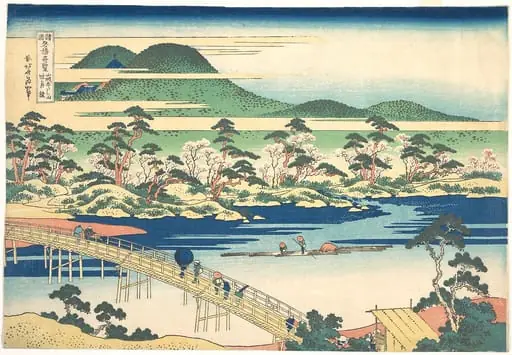 諸國名橋奇覧 山城あらし山吐月橋 |Togetsu Bridge at Arashiyama in Yamashiro, from the series Remarkable Views of Bridges in Various Provinces (Shokoku meikyō kiran)
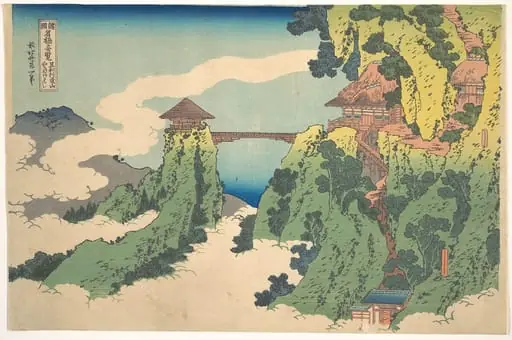 諸國名橋奇覧 足利行道山くものかけはし|The Hanging-cloud Bridge at Mount Gyōdō near Ashikaga (Ashikaga Gyōdōzan kumo no kakehashi), from the series Remarkable Views of Bridges in Various Provinces (Shokoku meikyō kiran)
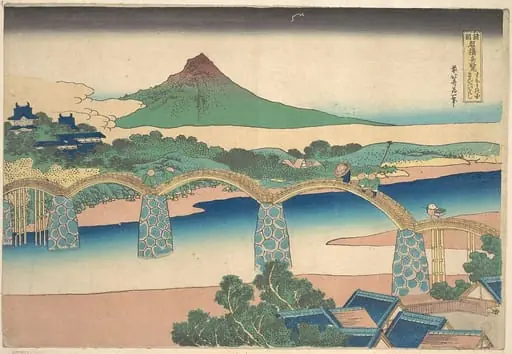 諸國名橋奇覧 すほうの国きんたいはし|Kintai Bridge in Suō Province (Suō no kuni Kintaibashi), from the series Remarkable Views of Bridges in Various Provinces (Shokoku meikyō kiran)
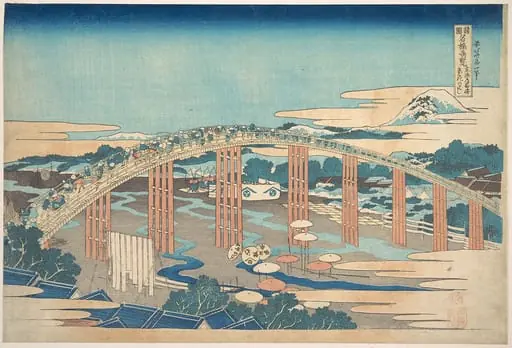 「諸國名橋寄覧 東海道岡崎 矢はぎのはし」|Yahagi Bridge at Okazaki on the Tōkaidō (Tōkaidō Okazaki Yahagi no hashi), from the series Remarkable Views of Bridges in Various Provinces (Shokoku meikyō kiran)
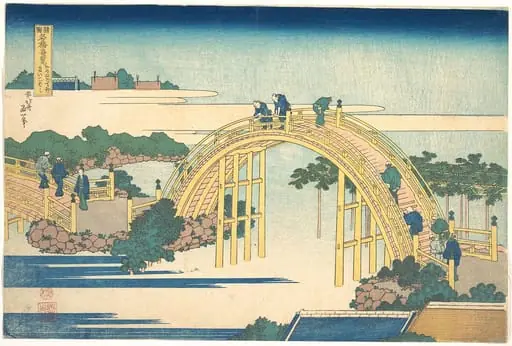 諸國名橋奇覧 かめゐど天神たいこはし|The Arched Bridge at Kameido Tenjin Shrine (Kameido Tenjin Taikobashi), from the series Remarkable Views of Bridges in Various Provinces (Shokoku meikyō kiran)
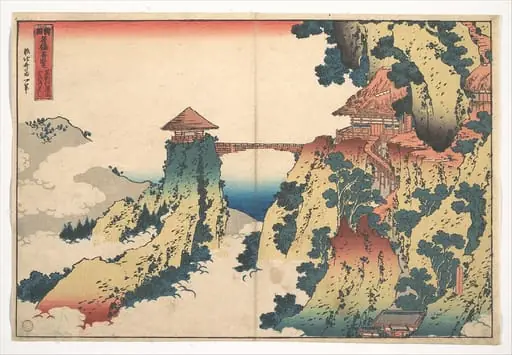 諸國名橋奇覧 足利行道山くものかけはし|The Hanging-cloud Bridge at Mount Gyōdō near Ashikaga (Ashikaga Gyōdōzan kumo no kakehashi), from the series Remarkable Views of Bridges in Various Provinces (Shokoku meikyō kiran)
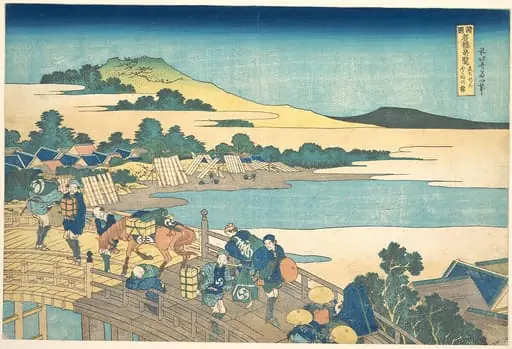 諸國名橋奇覧 ゑちぜんふくゐの橋|Fukui Bridge in Echizen Province (Echizen Fukui no hashi), from the series Remarkable Views of Bridges in Various Provinces (Shokoku meikyō kiran)
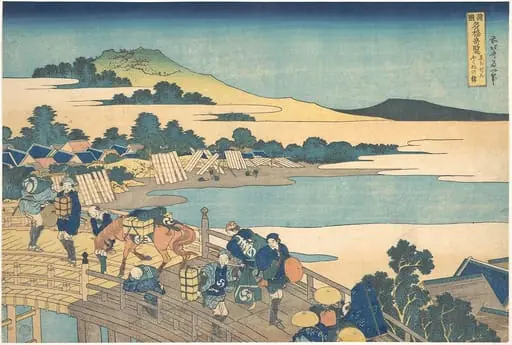 諸國名橋奇覧 ゑちぜんふくゐの橋|Fukui Bridge in Echizen Province (Echizen Fukui no hashi), from the series Remarkable Views of Bridges in Various Provinces (Shokoku meikyō kiran)
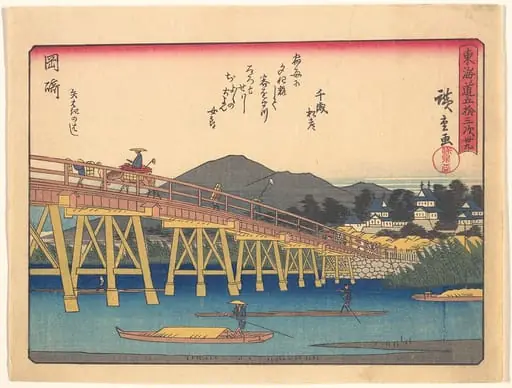 東海道五十三次 岡崎|Okazaki, from the series The Fifty-three Stations of the Tōkaidō Road
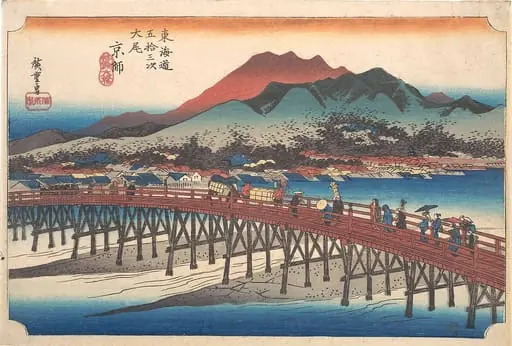 歌川広重画 「東海道五十三次 大尾 京師 三条大橋」|Kyoto: The Great Bridge at Sanjō (Taibi, Keishi, Sanjō Ōhashi), from the series Fifty-Three Stations of the Tōkaidō (Tōkaidō gojūsan tsugi)