Artwork
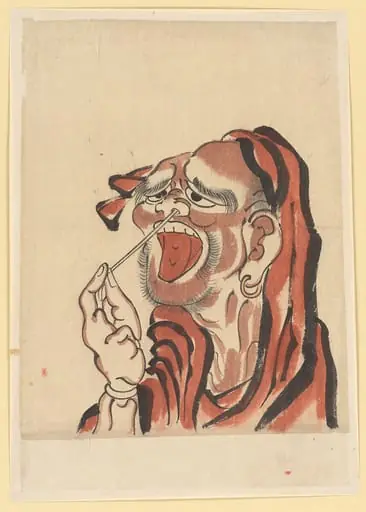
百人一首 乳母か絵とき 参議篁|Poem by Sangi no Takamura (Ono no Takamura), from the series One Hundred Poems Explained by the Nurse (Hyakunin isshu uba ga etoki)
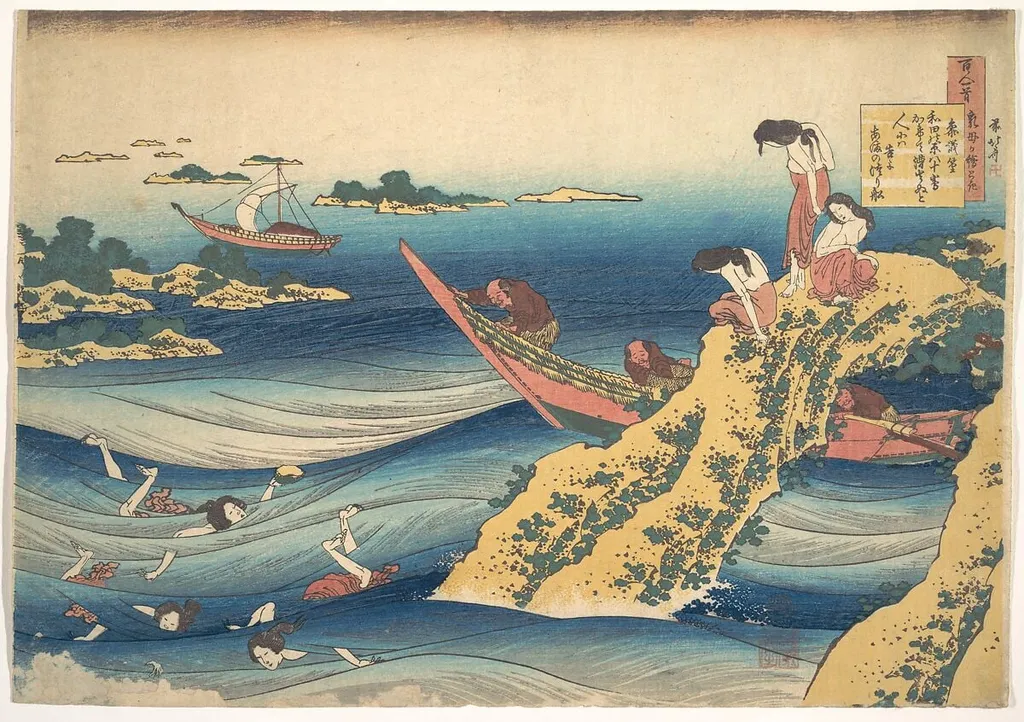
百人一首 乳母か絵とき 参議篁|Poem by Sangi no Takamura (Ono no Takamura), from the series One Hundred Poems Explained by the Nurse (Hyakunin isshu uba ga etoki) is an ink print by the Japonisme artist Katsushika Hokusai. It dates from 1835 and is held in the collection of the Metropolitan Museum of Art.
About this work
Overview
This early nineteenth‑century woodblock print, executed by Katsushika Hokusai around 1835, illustrates a poem by the courtier Ono no Takamura, known as Sangi no Takamura, from the instructional series One Hundred Poems Explained by the Nurse. The work belongs to the museum’s print collection and is catalogued as part of Hokusai’s later output.
Subject & Meaning
The image depicts a tumultuous seascape in which swimmers, divers, and passengers cling to vessels amid churning waves. On the shore a woman in a red garment cradles a child, while other figures scramble over a rocky beach. The scene visualises the poem’s reference to a nurse’s storytelling, evoking the chaos of daily life and the protective role of the caregiver.
Technique & Style
Hokusai employs the traditional ukiyo‑e woodblock method, combining line work with ink and subtle color washes. Fine cross‑hatching renders the texture of water and fabric, while a restrained palette of muted yet bright hues conveys atmospheric distance. The composition balances dense detail with clear spatial organization, a hallmark of Hokusai’s mature style.
History & Provenance
Created in the late Edo period, the print was part of a series that paired classic poems with illustrative scenes for educational purposes. It entered the collection of the Metropolitan Museum of Art through acquisition in the twentieth century, where it remains on view as an example of Hokusai’s narrative prints.
Context
The series reflects a broader Edo‑era interest in poetry recitation and visual commentary, often used by teachers and caretakers to instruct children. Hokusai’s involvement links the literary tradition with the flourishing print market, illustrating how poetry and popular art intersected in urban Japan.
Artist & collection

Artist
Katsushika Hokusai spent his life in Edo, now Tokyo, where he drew and carved prints for a living.

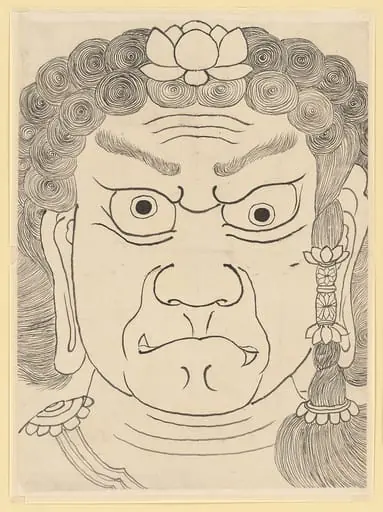
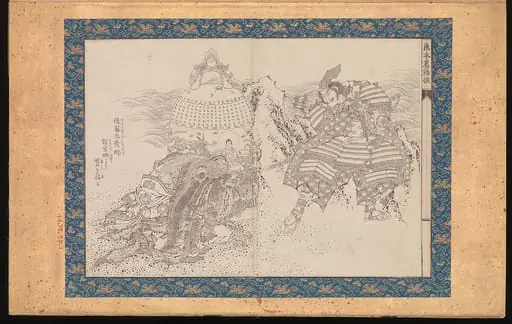
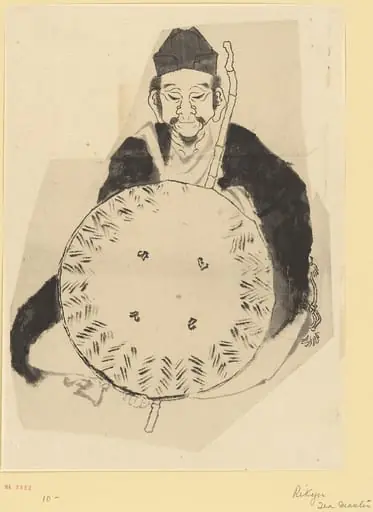
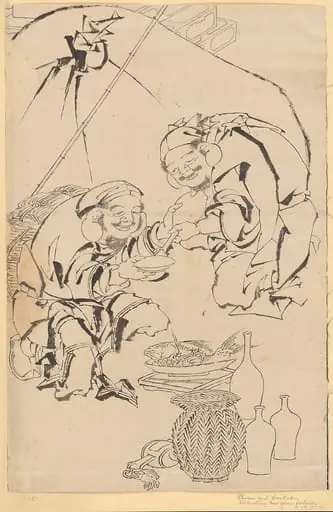
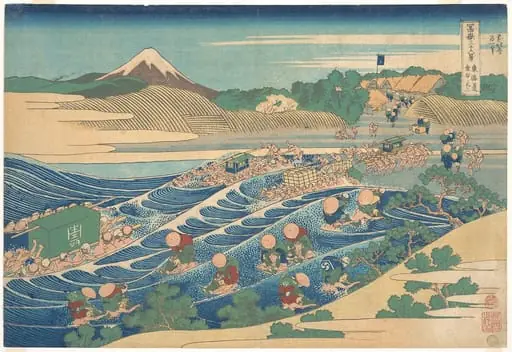 冨嶽三十六景 東海道金谷の不二|Fuji Seen from Kanaya on the Tōkaidō (Tōkaidō Kanaya no Fuji), from the series Thirty-six Views of Mount Fuji (Fugaku sanjūrokkei)
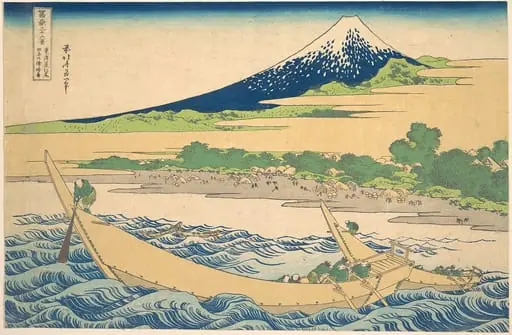 冨嶽三十六景 東海道江尻田子の浦略図|Tago Bay near Ejiri on the Tōkaidō (Tōkaidō Ejiri Tago no ura ryaku zu), from the series Thirty-six Views of Mount Fuji (Fugaku sanjūrokkei)
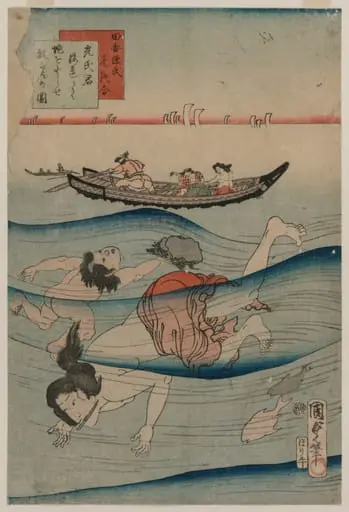 Rustic Genji's Poetry Contest: Mitsuuji's Excursion to the Seaside to See Abalone Diving (Inaka Genji shikishi awase, Mitsuuji umibe ni te awabi o torase yūran no zu)
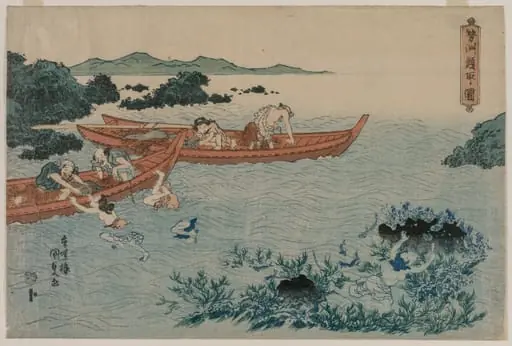 Abalone Divers off the Coast of Ise, from an Untitled Landscape Series
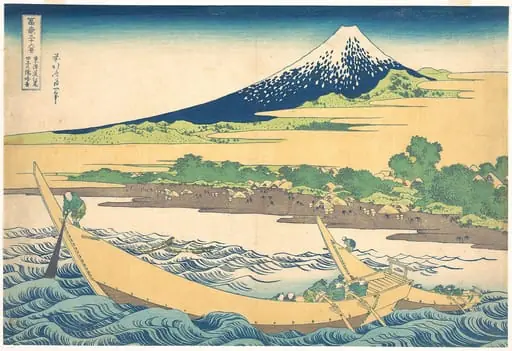 冨嶽三十六景 東海道江尻田子の浦略図|Tago Bay near Ejiri on the Tōkaidō (Tōkaidō Ejiri Tago no ura ryaku zu), from the series Thirty-six Views of Mount Fuji (Fugaku sanjūrokkei)
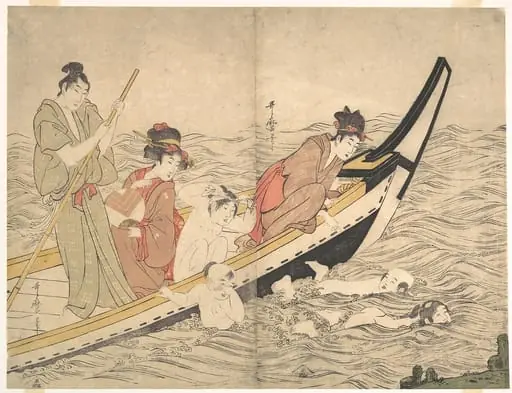 Untitled