Artwork
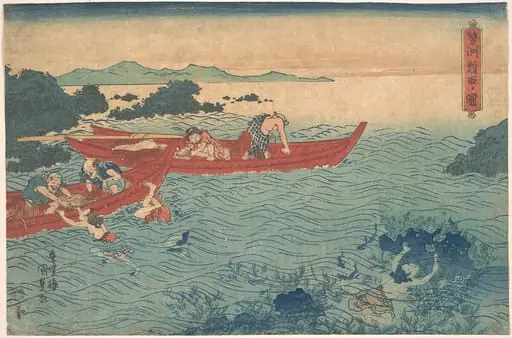
Abalone Divers off the Coast of Ise, from an Untitled Landscape Series
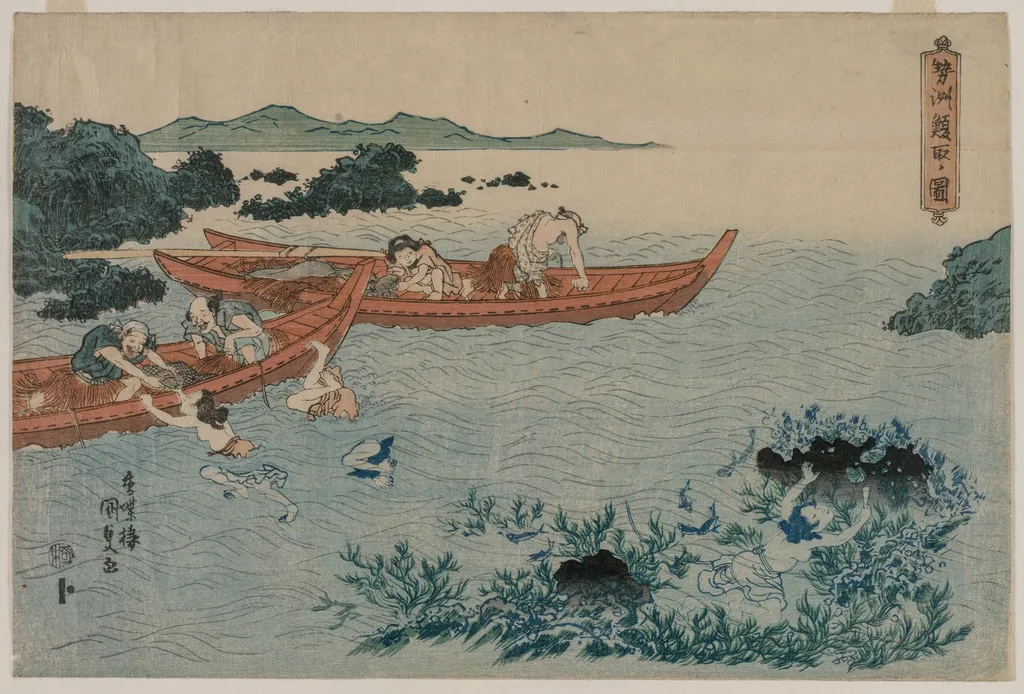
Abalone Divers off the Coast of Ise, from an Untitled Landscape Series is a print by the Romanticist artist Utagawa Kunisada. It dates from 1834 and is held in the collection of the Cleveland Museum of Art.
About this work
They free-dived without oxygen, harvesting abalone for food and its shimmering shell.
Three women dive in dark blue waves, their bodies half-hidden under the water. One holds a knife, another clutches a shell, while the third surfaces with a gasp.
These divers, called *ama*, worked in Ise for centuries. They free-dived without oxygen, harvesting abalone for food and its shimmering shell. The print shows the job’s rhythm—dive, cut, rise—all in one quiet scene.
Look up *japan, edo period (1615–1868)* to see more prints of daily work like this.
Overview
Utagawa Kunisada’s woodblock print captures a moment of traditional abalone harvesting off Ise’s coast during the early Tenpō period (1830–44). The composition follows three female divers—ama—as they move through the sea: one descends, another extracts a shell with a knife, and a third surfaces, presenting her catch to waiting fishermen.
Subject & Meaning
The image records the labor of ama, women who free‑dive without breathing apparatus to collect shellfish. Their work supplied both edible abalone and the lustrous mother‑of‑pearl from the shells, linking the scene to regional food supply and craft material production. The sequential actions suggest a rhythmic cycle of dive, cut, and return.
Technique & Style
Executed in the ukiyo‑e woodblock tradition, Kunisada employs a limited palette of deep blues and muted earth tones to evoke the sea’s depth. The figures are rendered with fluid lines that convey movement beneath the surface, while the contrast between the dark water and the lighter sky emphasizes the divers’ emergence.
History & Provenance
Created as part of an untitled series of landscape prints, this work reflects Kunisada’s prolific output in the Tenpō era, a time of increased interest in everyday occupations. The print has been documented in several Japanese collections and remains a representative example of mid‑19th‑century commercial publishing.
Context
Ise, a coastal city on Honshū, hosted a long‑standing ama community whose techniques predate the Edo period. The print aligns with a broader ukiyo‑e trend of depicting labor scenes, offering contemporary viewers insight into the socioeconomic fabric of coastal towns during the late Edo era.
Artist & collection
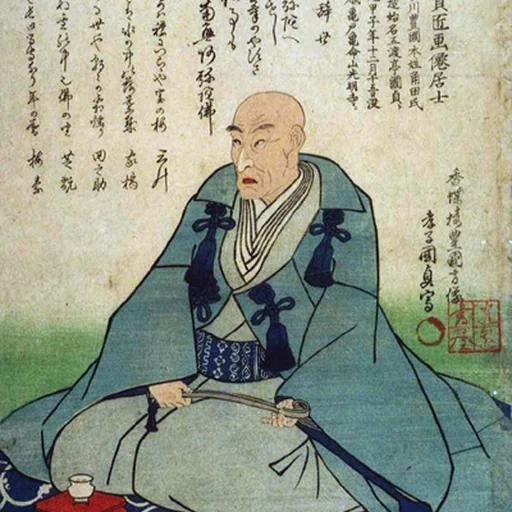

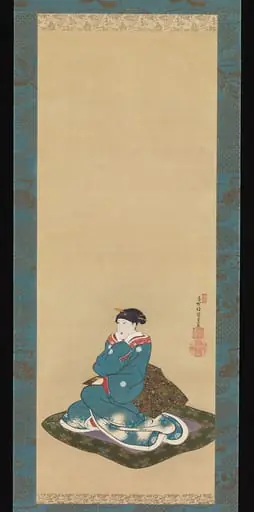 二代目岩井粂三郎の肖像|Portrait of Iwai Kumesaburō II
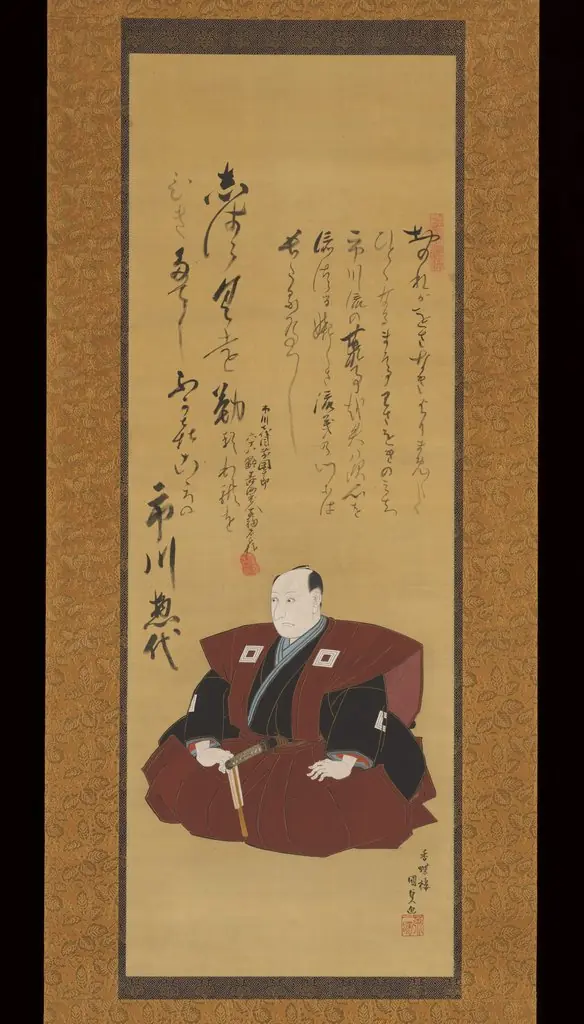 Memorial Portrait of the Actor Ichikawa Ōmezō I
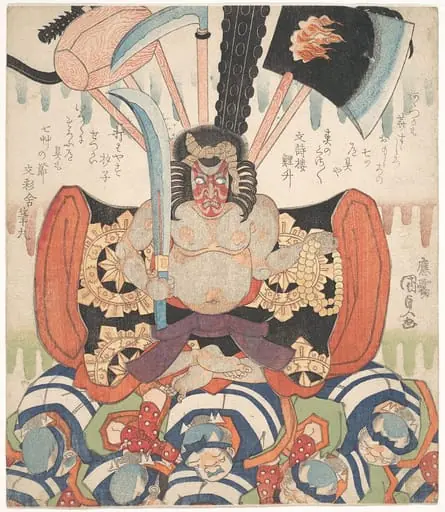 Untitled
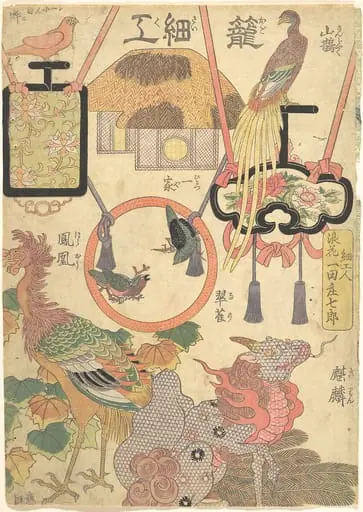 「籠細工 浪花細工人一田庄七郎」|Basketry Work: By the Craftsman Ichida Shōshichirō of Naniwa (Kagosaiku Naniwa saikujin Ichida Shōshichirō)
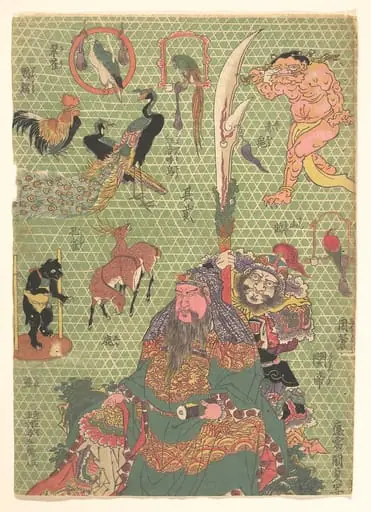 歌川国貞画 「籠細工 浪花細工人 一田庄七郎」|Basketry Work: By the Craftsman Ichida Shōshichirō of Naniwa (Kagozaiku Naniwa saikunin Ichida Shōshichirō)
 Untitled
 Untitled
 Futami-ga-ura akebono-no kuni|Futami-ga-ura Rocks at Ise, Land of Dawn
 Untitled
 百人一首 乳母か絵とき 参議篁|Poem by Sangi no Takamura (Ono no Takamura), from the series One Hundred Poems Explained by the Nurse (Hyakunin isshu uba ga etoki)
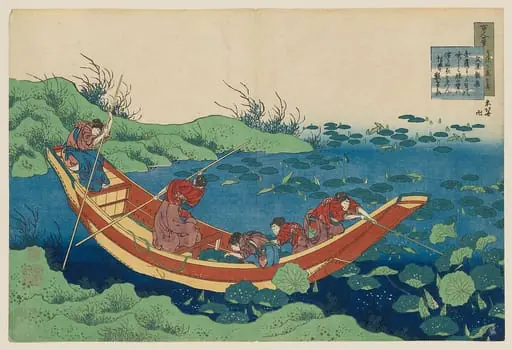 百人一首 うはかゑとき 文屋朝康|Poem by Funya no Asayasu, from the series One Hundred Poems Explained by a Nurse (Hyakunin isshu ubaga etoki)
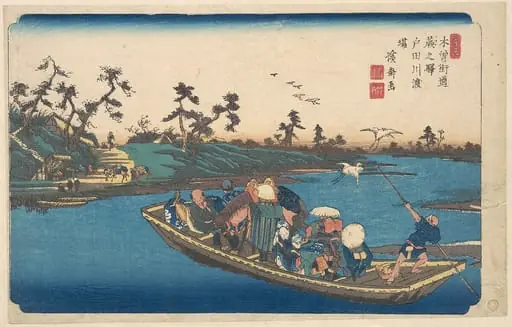 Untitled
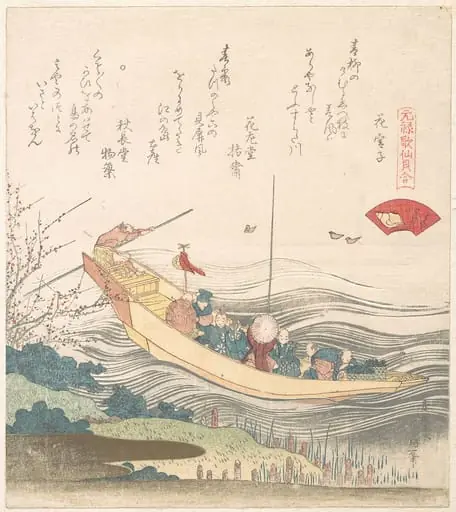 Miyako-gai|元禄歌仙貝合|Miyako Shell
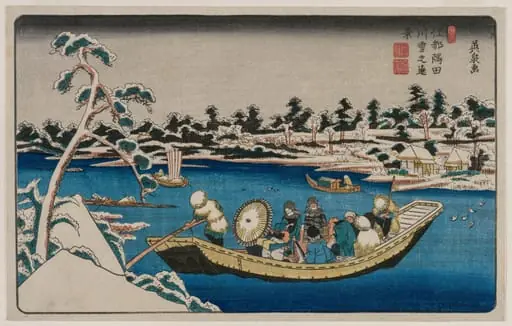 A Distant View of Snow on the Sumida River in Edo
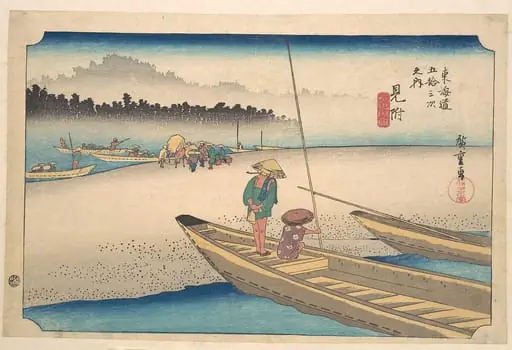 東海道五十三次 見附 天竜川|Mitsukei Tenryugawa
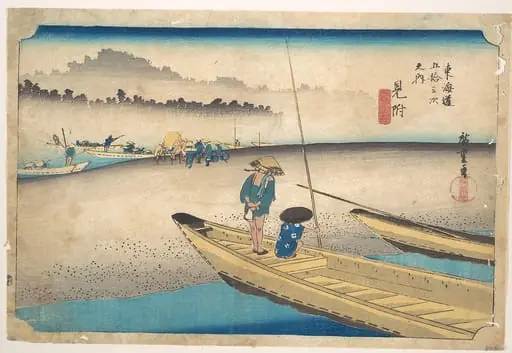 東海道五十三次 見附 天竜川図|Mitsuke; Tenryugawa Ferry, Station No. 29