Artwork
冨嶽三十六景 東海道吉田|Yoshida on the Tōkaidō (Tōkaidō Yoshida), from the series Thirty-six Views of Mount Fuji (Fugaku sanjūrokkei)
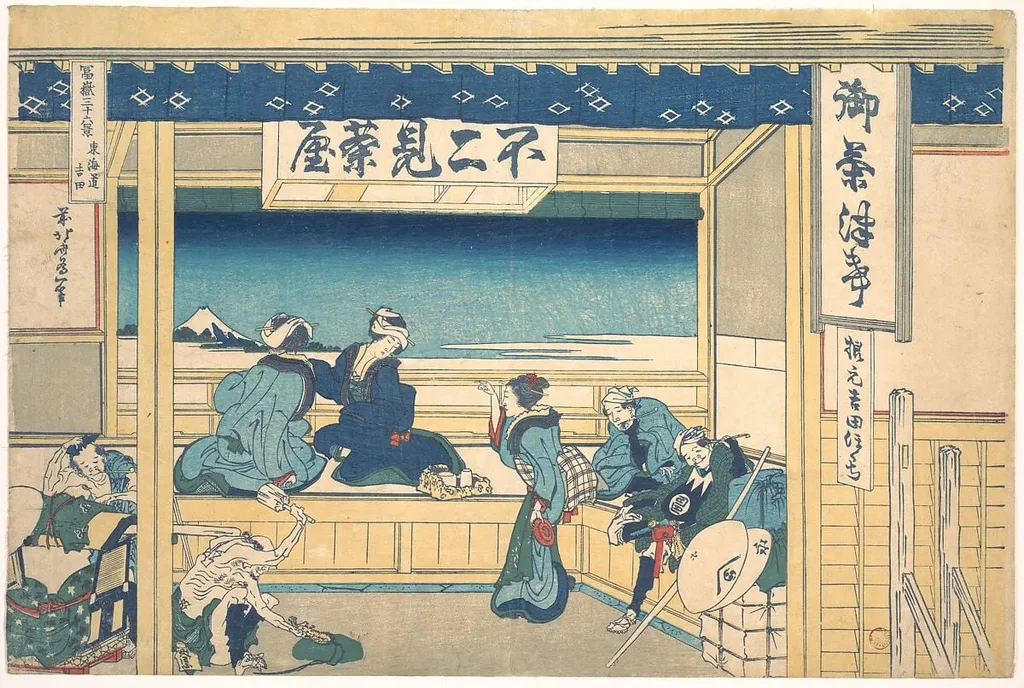
冨嶽三十六景 東海道吉田|Yoshida on the Tōkaidō (Tōkaidō Yoshida), from the series Thirty-six Views of Mount Fuji (Fugaku sanjūrokkei) is an ink print by the Japonisme artist Katsushika Hokusai. It dates from 1831 and is held in the collection of the Metropolitan Museum of Art.
About this work
Overview
Yoshida on the Tōkaidō is a woodblock print from Katsushika Hokusai's series Thirty-six Views of Mount Fuji, created around 1831. The work is part of The Metropolitan Museum of Art's collection.
Subject & Meaning
The print depicts a serene riverside scene in Yoshida, with a group of people on a wooden porch, a woman in vibrant attire nearby, and Mount Fuji looming in the distance. A sign with Japanese characters is prominently displayed above the group.
Technique & Style
Executed in ink and color on paper, the print features Hokusai's characteristic use of blues, greens, and earthy tones. Notable details include a blue roof with white patterns and the subtle portrayal of everyday life through figures such as a man with a fan and another leaning on a stick.
History & Provenance
Created circa 1831, the print is one of thirty-six in the Fugaku sanjūrokkei series. It is currently held in the collection of The Metropolitan Museum of Art.
Context
Part of a broader series focusing on Mount Fuji's presence in various Japanese landscapes, Yoshida on the Tōkaidō reflects Hokusai's interest in capturing the mountain's influence on daily life and environments across the country.
Artist & collection

Artist
Katsushika Hokusai spent his life in Edo, now Tokyo, where he drew and carved prints for a living.

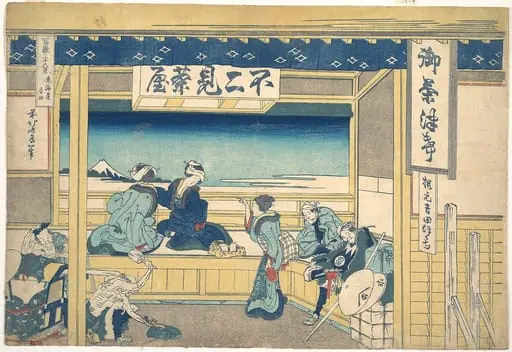 冨嶽三十六景 東海道吉田|Yoshida on the Tōkaidō (Tōkaidō Yoshida), from the series Thirty-six Views of Mount Fuji (Fugaku sanjūrokkei)
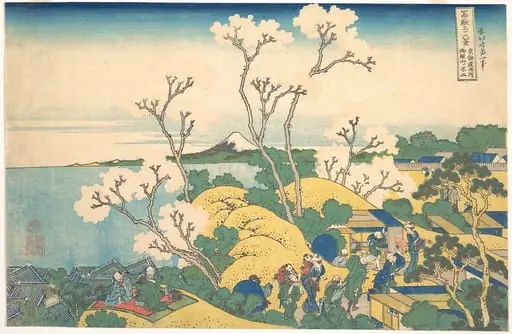 冨嶽三十六景 東海道品川御殿山の不二|Fuji from Gotenyama at Shinagawa on the Tōkaidō (Tōkaidō Shinagawa Gotenyama no Fuji), from the series Thirty-six Views of Mount Fuji (Fugaku sanjūrokkei)
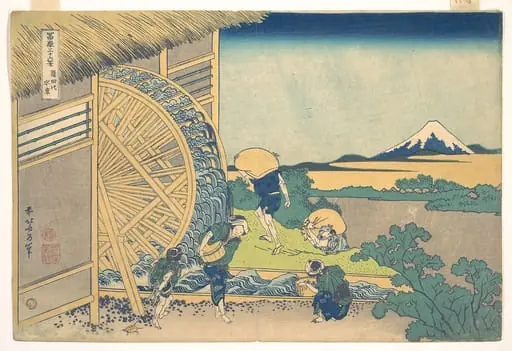 冨嶽三十六景 隠田の水車|The Waterwheel at Onden (Onden no suisha), from the series Thirty-six Views of Mount Fuji (Fugaku sanjūrokkei)
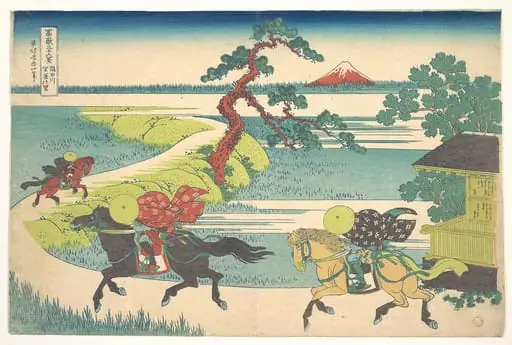 冨嶽三十六景 隅田川関屋の里|Sekiya Village on the Sumida River (Sumidagawa Sekiya no sato), from the series Thirty-six Views of Mount Fuji (Fugaku sanjūrokkei)