Artwork
Johann Winckelmann
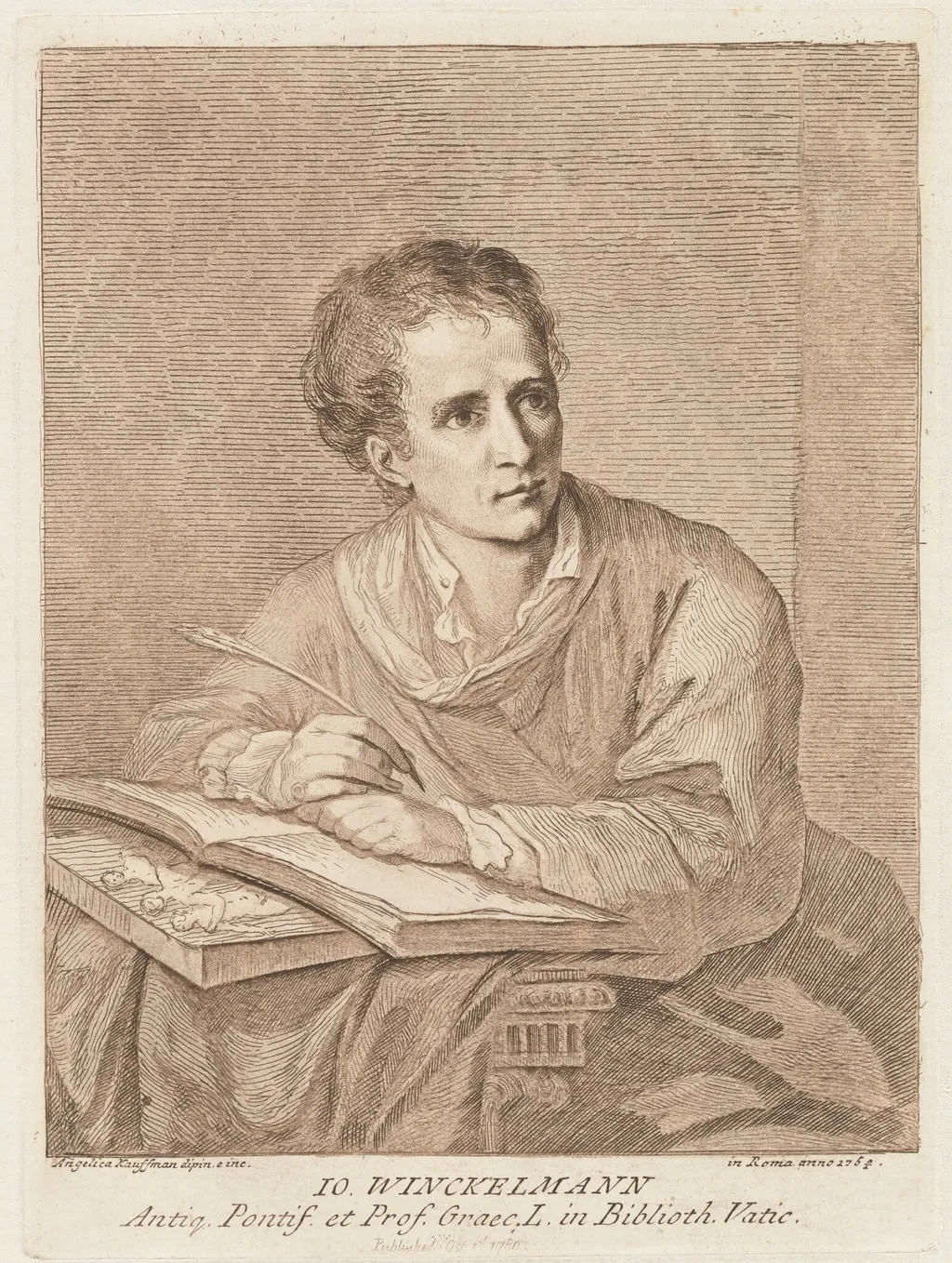
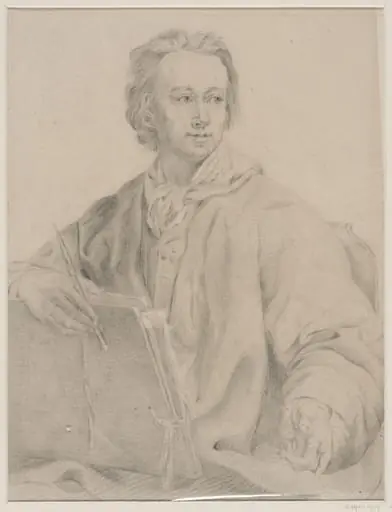
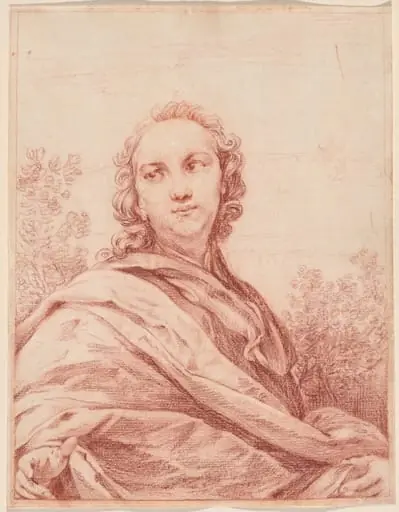
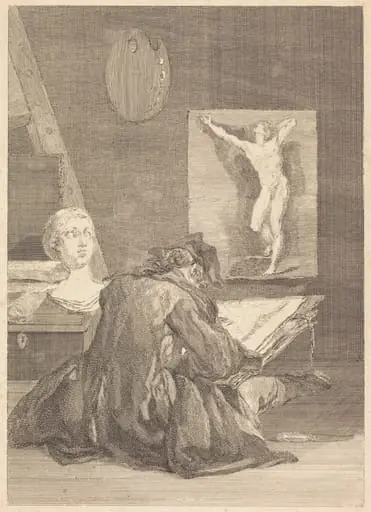
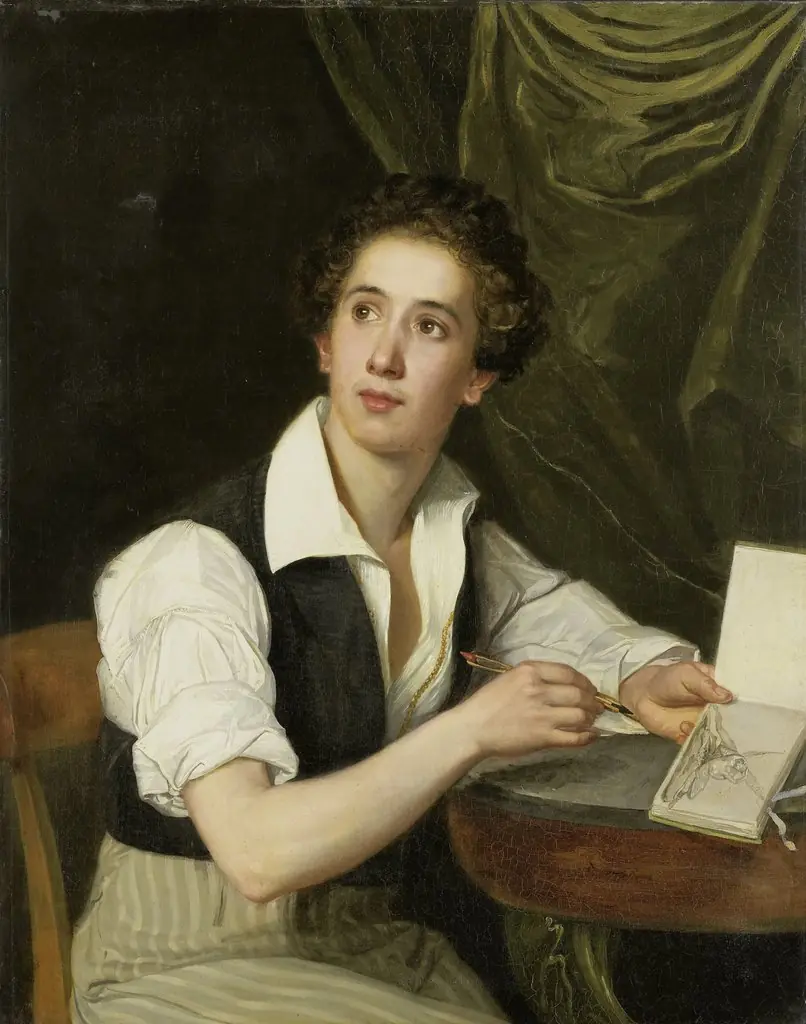
Johann Winckelmann is an ink print by the Romanticist artist Angelica Kauffmann. It dates from 1764 and is held in the collection of the National Gallery of Art.
About this work
Overview
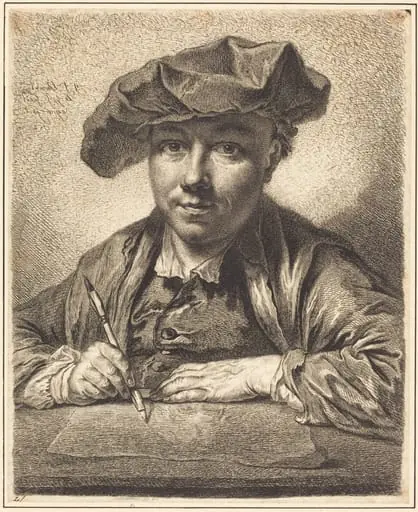
This 1764 print by Angelica Kauffmann portrays the German art historian Johann Winckelmann in a quiet moment of intellectual reflection. Executed in etching and engraving on laid paper with brown ink, the work captures him at his desk, engaged in scholarly activity. The composition emphasizes stillness and concentration, avoiding theatricality in favor of intimate realism.
Subject & Meaning
The open manuscript and poised quill suggest ongoing work, reinforcing his identity as a scholar immersed in the analysis of ancient art.
Winckelmann, a foundational figure in classical archaeology, is depicted not as a public intellectual but as a solitary thinker. His direct gaze invites the viewer into his private world of study. The open manuscript and poised quill suggest ongoing work, reinforcing his identity as a scholar immersed in the analysis of ancient art. The portrait conveys dignity through restraint, aligning with Enlightenment ideals of reason and quiet diligence.
Technique & Style
Kauffmann employed fine linear etching and delicate engraving to render texture and form. Subtle tonal gradations model the folds of his cloak and the curve of his face, while the rough grain of the paper ground enhances the tactile quality of the scene. The background remains unadorned, focusing attention on the figure and his immediate surroundings, a hallmark of her restrained, neoclassical aesthetic.
History & Provenance
Created in Rome during Kauffmann’s early years there, the print was likely made as a personal tribute or for circulation among intellectual circles. Winckelmann, a central figure in the city’s artistic community, was known to her circle. The work’s survival in private and institutional collections suggests it was valued as both a likeness and a cultural artifact of its time.
Context
In mid-18th-century Rome, Winckelmann’s writings redefined the study of ancient art, influencing artists and thinkers across Europe. Kauffmann, herself a painter committed to classical themes, would have shared his intellectual priorities. This portrait reflects a broader trend among artists to depict scholars not as distant authorities but as active, contemplative individuals engaged in the pursuit of knowledge.
Legacy
The print endures as one of the few contemporary visual records of Winckelmann, offering insight into how he was perceived by peers. Its quiet composition contrasts with later, more monumental depictions of historical figures, preserving a sense of the scholar’s human presence. Kauffmann’s approach influenced how intellectual life was visually represented in the neoclassical era.
Artist & collection

Artist
Maria Anna Angelika Kauffmann, usually known in English as Angelica Kauffman, was a Swiss painter who had a successful career in London and Rome.

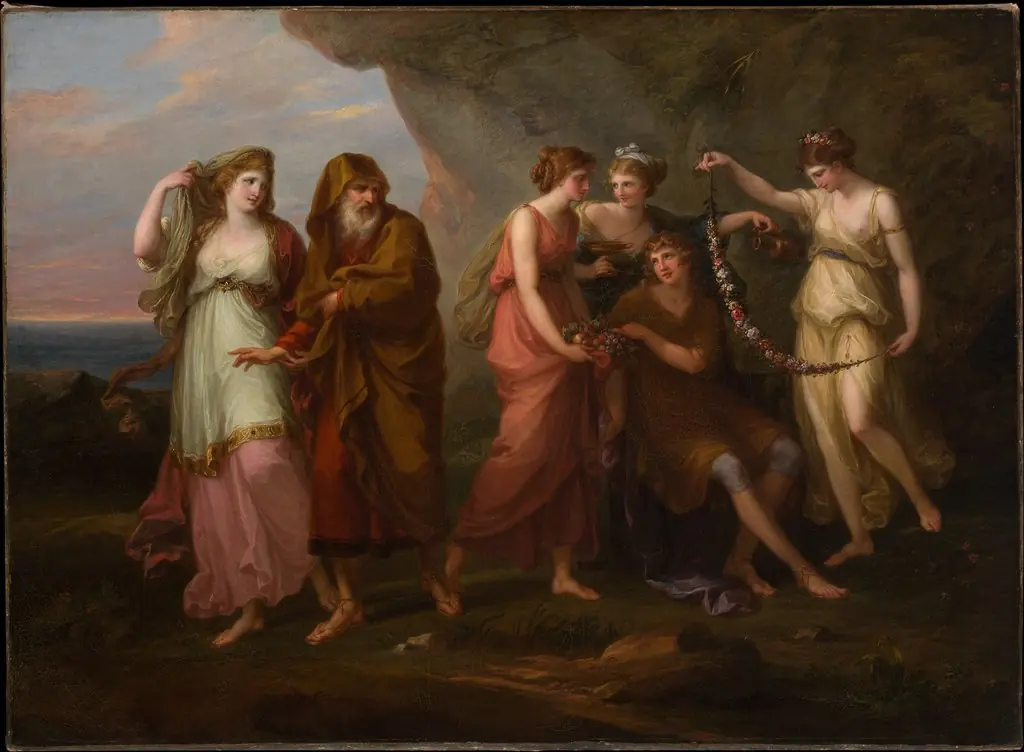 Telemachus and the Nymphs of Calypso
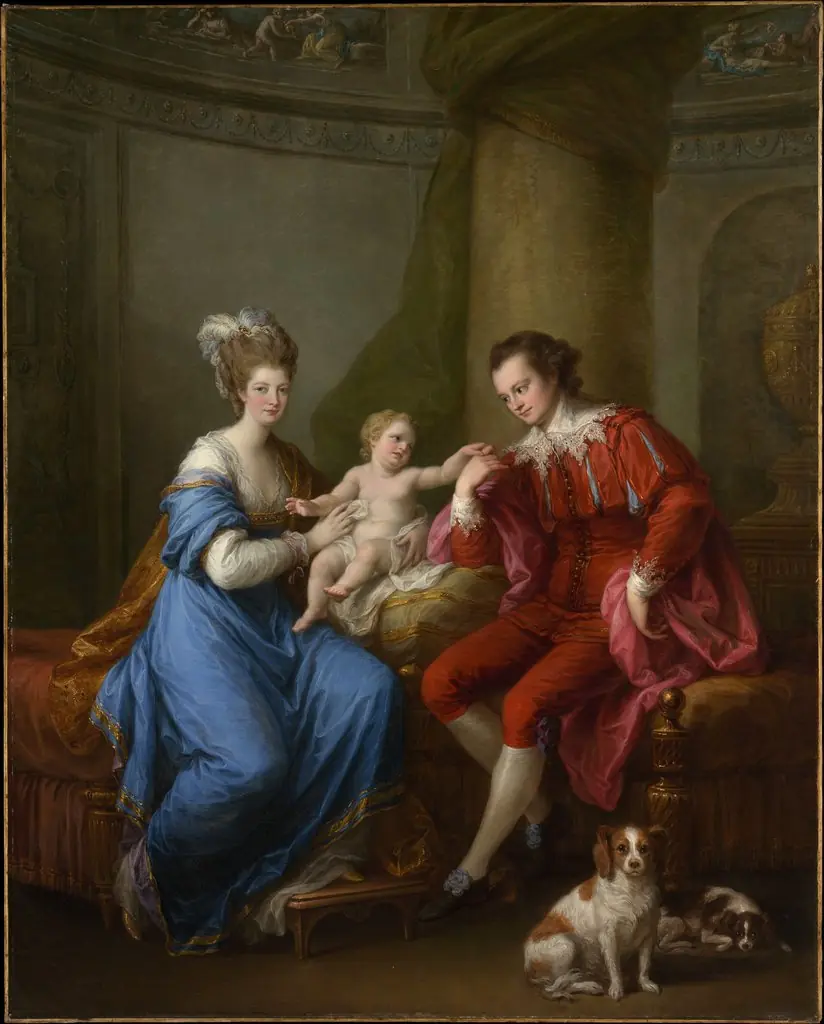 Edward Smith Stanley (1752–1834), Twelfth Earl of Derby, with His First Wife (Lady Elizabeth Hamilton, 1753–1797) and Their Son (Edward Smith Stanley, 1775–1851)
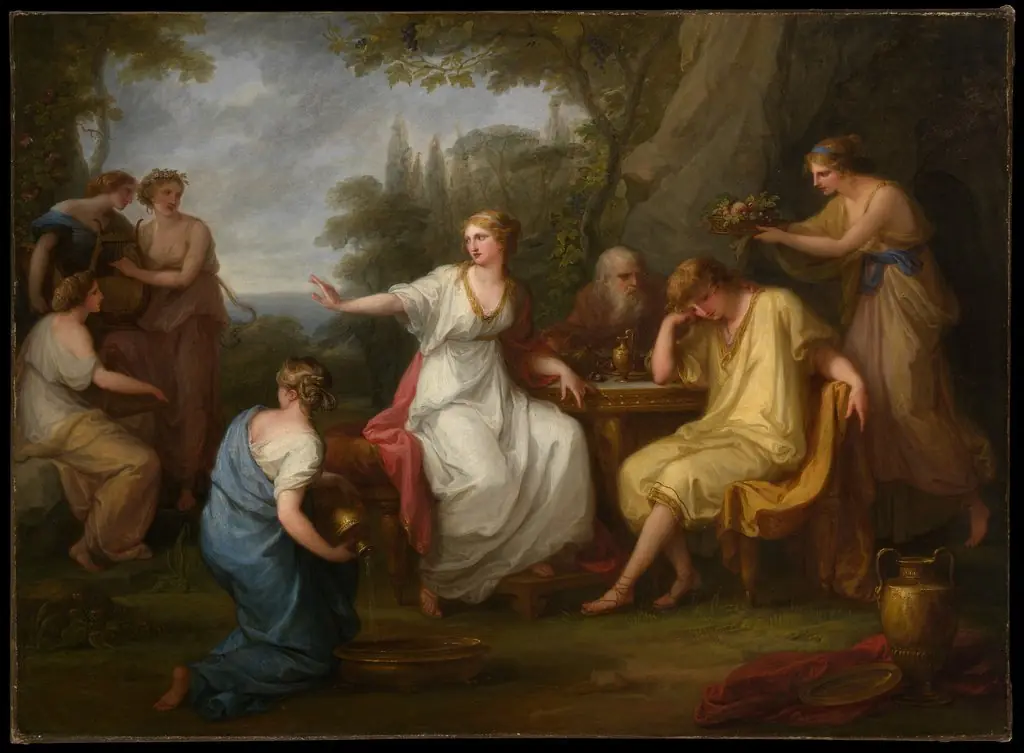 The Sorrow of Telemachus
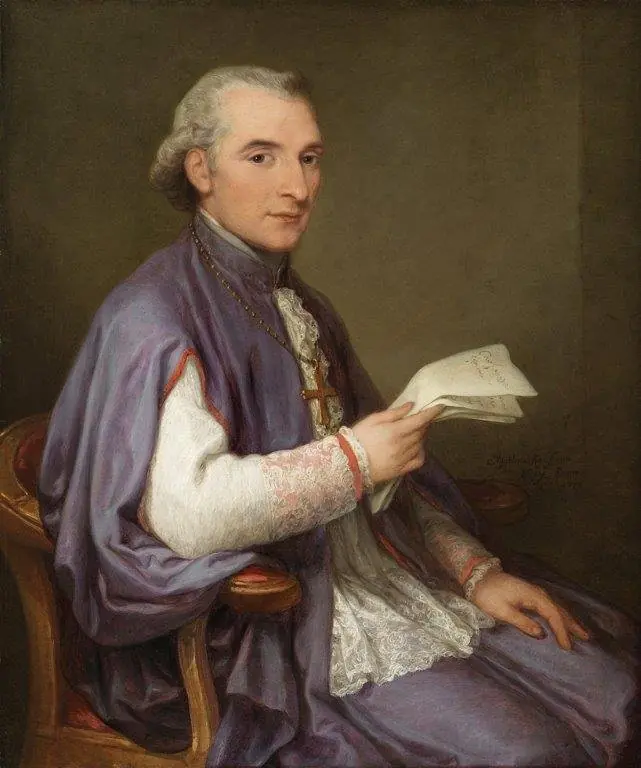 Monsignor Giuseppe Spina (1756–1828)
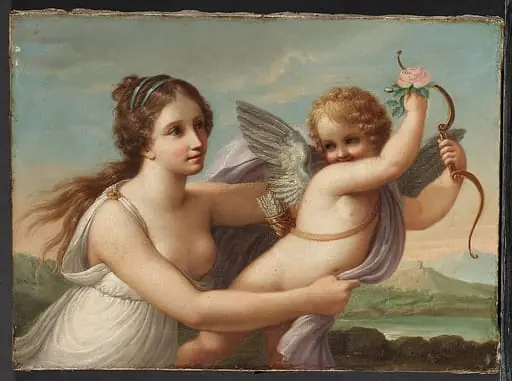 The Victory of Eros
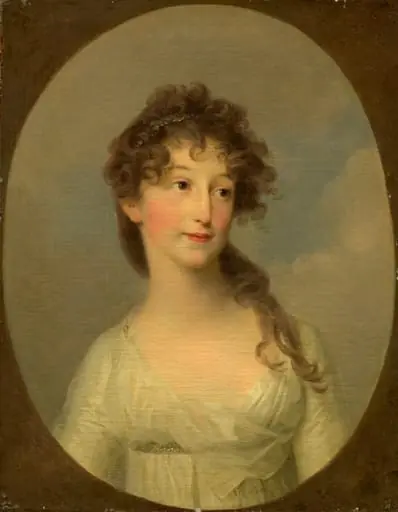 Possibly Franciska Krasinska, Duchess of Courland
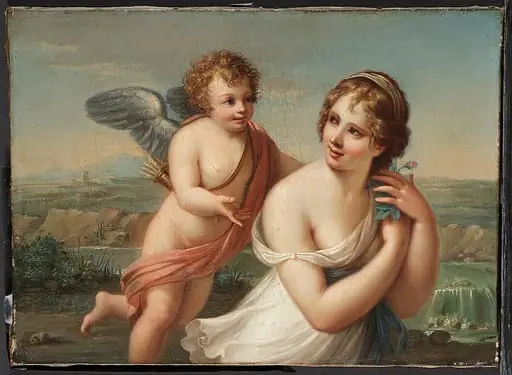 The Temptation of Eros
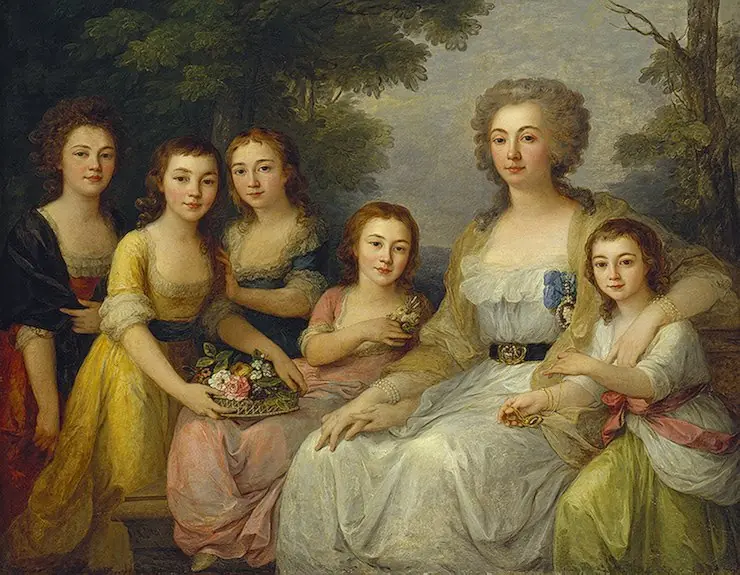 Portrait of Countess A.S. Protasova with her Nieces